Garcinia brasiliensis
Mart.
Bakupari, Bacupari
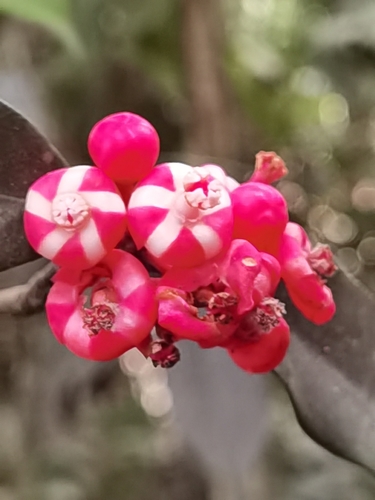
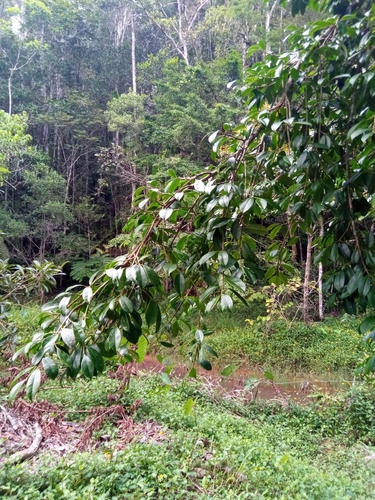
iNaturalist· cc-by-nc
(c) aapasa, some rights reserved (CC BY-NC)
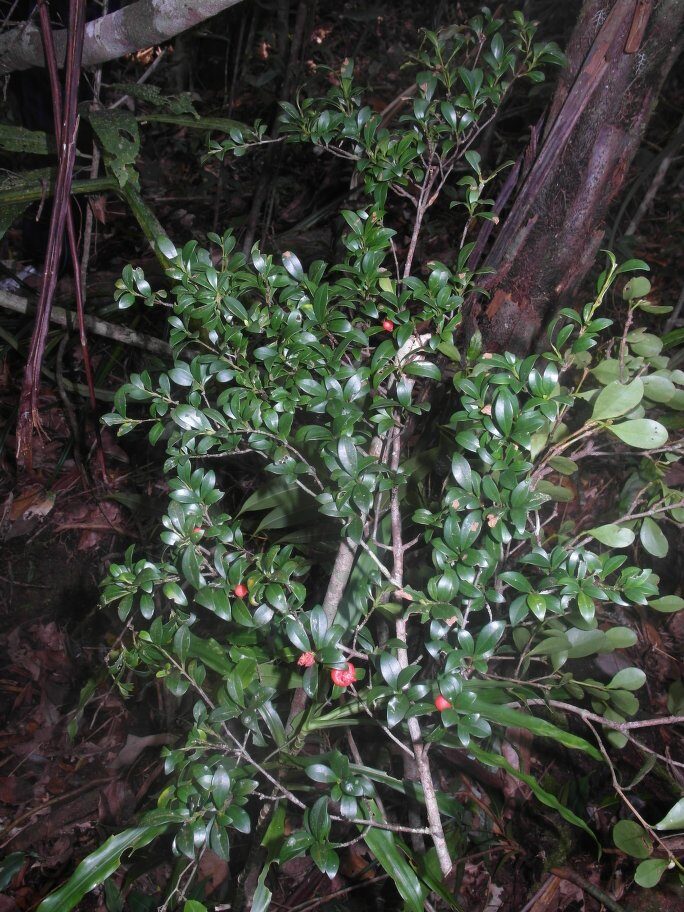
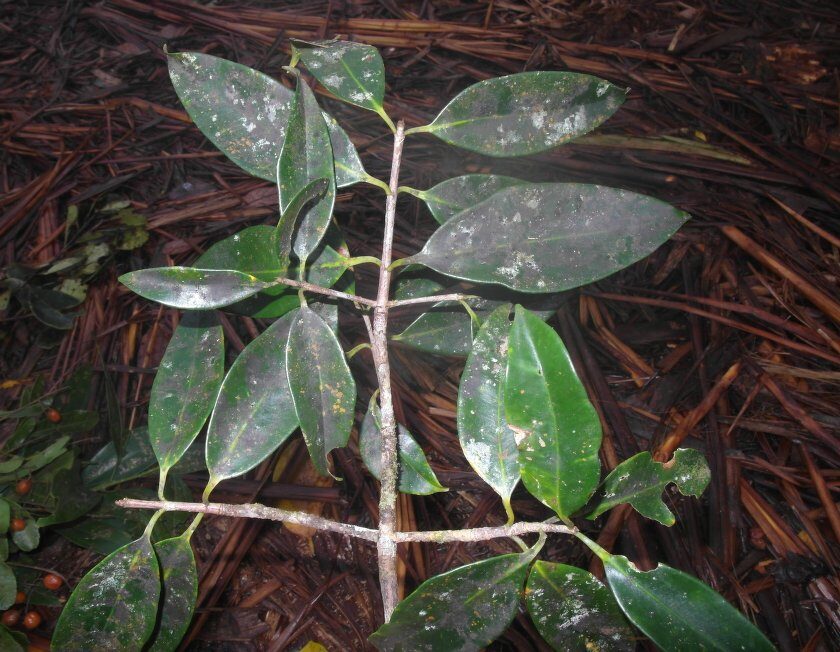
iNaturalist· cc-by-nc
(c) jlcartes, some rights reserved (CC BY-NC), uploaded by jlcartes
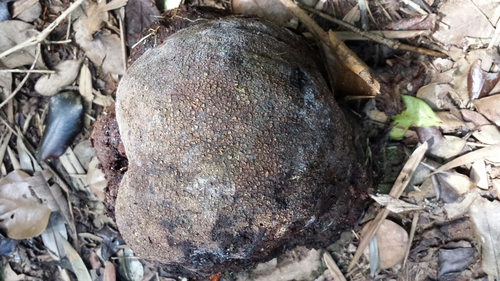
iNaturalist· cc-by-nc
(c) Francisco González Táboas, some rights reserved (CC BY-NC)
Summary
Source: WikipediaGarcinia brasiliensis is a species of plant in the mangosteen family Clusiaceae. It is native to moist lowland forests of Brazil.
Description
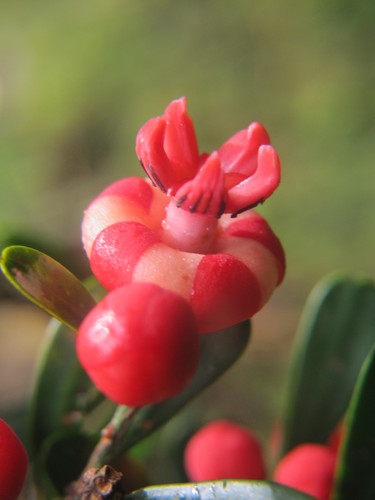
A small evergreen tree. It grows 5-7 m high. The trunk is 15-25 cm across. The bark is rough. The crown is round and the leaves are dense. The leaves are opposite. The leaves are leathery and smooth. They are 10-13 cm long by 5-7 cm wide. There are many male flowers and a few female flowers in a group. They are whitish. The fruit are small and oval. They are 2-4 cm across. The fruit are smooth and the fruit has a sweet, acid pulp. The fruit are orange coloured. They have a tough skin and white sub-acid pulp. There are 2 seeds inside.
Edible Uses
The fruit is eaten raw. Its aril-like, translucent white pulp is subacid with an excellent flavour reminiscent of mangosteen, making it a highly prized fruit typically enjoyed fresh, though it also makes an excellent jam. The ovate fruit is 32–40mm long with an orange-yellow, pliable, leathery skin 3mm thick that is easily removed.
Traditional Uses
The fruit is eaten raw. It is the fleshy layer or aril around the seeds that is eaten. They are also used for jams and jellies.
This uses section is brief — help expand it
Medicinal Uses
The seeds contain 8–9% oil by weight, which is applied in poultices to wounds, whitlows, tumours, and externally over an enlarged liver. An infusion of the pulp has a narcotic action similar in effect to nicotine. Root bark extract contains rheediaxanthone, a polyprenylated benzophenone, other lesser constituents, and 3 new prenylated xanthones.
Distribution
A tropical plant. It grows in dryland forests in the Amazon in Brazil. It does best and fruits more readily in full sun. It is an understorey tree. It can be in seasonally flooded forest. At Botanical Ark, Mossman.
Where It Grows
Amazon, Argentina, Australia, Bolivia, Brazil*, Colombia, Ecuador, French Guiana,Guianas, Paraguay*, Peru, South America,
Cultivation
Plants are grown from seeds. The seeds are collected from ripe fruit and these are put in a plastic bag to help them decay to make it easier to remove the pulp. The seeds are planted fresh. The seed can only be kept for about 4 months. Fresh seed are planted and germinate in 60-80 days.
Propagation
Sow seed on its side in a nursery seedbed or individual containers in a semi-shaded position, ideally as soon as it is ripe. Germination rates above 50% can be expected, with sprouting occurring within 15–25 days. Seed remains viable for approximately 4 months only.
Other Uses
The wood is irregular-grained, coarse-textured, heavy, and only moderately susceptible to rot, making it suitable for rural construction only. It is also used as fuel. More generally, wood from trees in the Americas formerly classified under Rheedia has dark yellow-brown, grayish- or pinkish-brown heartwood that merges gradually into the sapwood, sometimes specked with resinous exudations. The texture is medium to coarse, the grain straight to irregular and roey, with medium to rather low lustre and no discernible odour or taste. Surinam species are rated durable against decay fungi and fairly resistant to dry wood termites; Colombian species resist brown-rot fungus but not white-rot in laboratory assays, though under field conditions the wood is susceptible to decay and insect attack. It dries rapidly but tends to warp and check during air seasoning. Workability varies from moderate to high resistance to cutting, with variable finishing results. Uses include furniture, quarter-sawn flooring, heavy construction, and general carpentry.
Production
Plants grow slowly.
Other Information
It is a cultivated fruit tree. The fruit are popular. Fruit are sold in local markets.
Notes
Some authorities still use Rheedia. GRIN uses Garcinia.
Synonyms
Also Known As
Achachairu, Achachairu comun, Achachairu mediano, Achycharii, Acupari, Bacopare, Bacopari-miudo, Bacopari, Bacupari liso, Bacupari, Bacuri-mirim, Bacuri-miudo, Bacuri, Bacurizinho, Bulandir, Bulangi, Charichuelo, Cupari, Escropari, Guapom, Mangostao-amarelo, Pacura, Pacuri, Pakuri, Pakurisoso'y, Poroco, Remelento
References (45)
- Altschul, S.V.R., 1973, Drugs and Foods from Little-known Plants. Notes in Harvard University Herbaria. Harvard Univ. Press. Massachusetts. no. 2868 (As Rheedia spruceana)
- Ann. Sci. Nat. Bot. ser. 4, 14:310. 1860
- Bortolotto, I. M., et al, 2015, Knowledge and use of wild edible plants in rural communities along Paraguay River, Pantanal, Brazil. Journal or Ethnobiology and Ethnomedicine. 11:46 (As Garcinia gardneriana)
- Bortolotto, I. M., et al, 2018, Lista preliminar das plantas alimenticias nativas de Mato Grosso do Sul, Brasil. Iheringia, Serie Botanica, Porto Alegre, 73 (supl.):101-116 (As Garcinia gardneriana)
- Cavalcante, P.B. 1991. Frutas comestíveis da Amazônia. Edições CEJUP. (Also as Garcinia gardneriana)
Show all 45 references Hide references
- Etkin, N. L. (Ed.), 1994, Eating on the Wild Side, Univ. of Arizona. p 141
- Facciola, S., 1998, Cornucopia 2: a Source Book of Edible Plants. Kampong Publications, p 80
- Fagg, C. W. et al, 2015, Useful Brazilian plants listed in the manuscripts and publications of the Scottish medic and naturalist George Gardner (1812–1849). Journal of Ethnopharmacology 161 (2015) 18–29 (As Garcinia gardneriana)
- Flora 24(beibl. 2):34. 1841
- Fouqué, A. 1972. Espèces fruitières d'Amérique tropicale. Institut français de recherches fruitierès outre-mer (ifac) (As Garcinia gardneriana)
- Funk, V., T. Hollowell, P. Berry, C. Kelloff, and S.N. Alexander, 2007, Checklist of the Plants of the Guiana Shield (Venezuela: Amazonas, Bolivar, Delta Amacuro; Guyana, Surinam, French Guiana), Contributions from the United States National Herbarium, 55: 1-584 (As Rheedia)
- Grandtner, M. M. & Chevrette, J., 2013, Dictionary of Trees, Volume 2: South America: Nomenclature, Taxonomy and Ecology. Academic Press p 566 (As Garcinia brasiliensis)
- Hunter, D., et al, 2019, The potential of neglected and underutilized species for improving diets and nutrition. Planta (2019) 250:709-729
- Kermath, B. M., et al, 2014, Food Plants in the Americas: A survey of the domesticated, cultivated and wild plants used for Human food in North, Central and South America and the Caribbean. On line draft. p 740 (As Rheedia gardneriana)
- Kew Bull. 48:410. 1993 (As Garcinia gardneriana)
- Kinupp, V. F., 2007, Plantas alimenticias nao-convencionais da regiao metropolitana de Porto Alegre, RS, Brazil p 73 (As Garcinia gardneriana)
- Kiple, K.F. & Ornelas, K.C., (eds), 2000, The Cambridge World History of Food. CUP p 1725
- Kujawska, M. & Luczaj, L., 2015, Wild Edible Plants Used by the Polish Community in Misiones, Argentina. Human Ecology 43:855-869 (As Rheedia brasiliensis)
- Leal, M. L. et al, 2018, Knowledge, use, and disuse of unconventional food plants. Journal of Ethnobiology and Ethnomedicine (2018) 14:6
- Lopez-Diago, D. & Garcia, N., 2021, Wild edible fruits of Colombia. Biota ColomBiana 22 (2) p 35
- Lorenzi, H., 2009, Brazilian Trees. A Guide to the Identification and Cultivation of Brazilian Native Trees. Instituto Plantarum de Estuados da Flora Ltda. Vol. 3 p 92
- Lorenzi, H., 2002, Brazilian Trees. A Guide to the Identification and Cultivation of Brazilian Native Trees. Vol. 01 Nova Odessa, SP, Instituto Plantarum p 135 (As Rheedia gardneriana)
- Lorenzi, H., Bacher, L., Lacerda, M. & Sartori, S., 2006, Brazilian Fruits & Cultivated Exotics. Sao Paulo, Instituto Plantarum de Estuados da Flora Ltda. p 126 Also p 127 (As Garcinia gardneriana)
- Mabberley, D.J. 1990. The plant-book: a portable dictionary of the higher plants. Cambridge University Press. NY.
- Martin, F. W., et al, 1987, Perennial Edible Fruits of the Tropics. USDA Handbook 642 p 96
- Morton, J. F., 1987, Fruits of Warm Climates. Wipf & Stock Publishers p 309 (As Rheedia brasiliensis)
- NYBG herbarium "edible"
- Oliviera V. B., et al, 2012, Native foods from Brazilian biodiversity as a source of bioactive compounds. Food Research International 48 (2012) 170-179 (As Garcinia gardneriana)
- Paz, F. S., et al, 2021, Edible Fruit Plant Species in the Amazon Forest Rely Mostly on Bees and Beetles as Pollinators. Journal of Economic Entomology, XX(XX), 2021, 1–13 (As Garcinia brasiliensis)
- Popenoe,
- Reis, S. V. and Lipp, F. L., 1982, New Plant Sources for Drugs and Foods from the New York Botanical Garden herbarium. Harvard. p 188 (As Rheedia gardneriana)
- Rivero, J. A., y Brunner, B. R., 2007, Arborels frutales exoticas y poco conocidos en Puerto Rico. Universidad de Puerto Rico. p 59
- Roa, J. A. G. & Boada, D. S. G., 2018, Fundación para el Fortalecimiento de la Fruticultura y Plantas Alimenticias no Convencionales en Colombia.
- Rossato, S.,C., et al, 1999, Ethnobotany of Caicaras of the Atlantic Forest Coast (Brazil). Economic Botany Vol. 53. No. 4. pp. 387-395 (As Garcinia gardneriana)
- Shanley, P. et al, (Eds), 2011, Fruit trees and useful plants in Amazonian life. Non-wood Forest Products No 20. FAO, CIFOR and PPI. p 72
- Silva, S y H. Tassara.1996. Frutas no Brasil. Empresa das Artes. São Paulo (As Garcinia gardneriana)
- Smith, N., et al, 2007, Amazon River Fruits. Flavors for Conservation. Missouri Botanical Gardens Press. p 96, p 98 (As Garcinia gardneriana)
- Tankard, G., 1990, Tropical fruit. An Australian Guide to Growing and using exotic fruit. Viking p 105
- USDA, ARS, National Genetic Resources Program. Germplasm Resources Information Network - (GRIN). [Online Database] National Germplasm Resources Laboratory, Beltsville, Maryland. Available: www.ars-grin.gov/cgi-bin/npgs/html/econ.pl (10 April 2000)
- Vasquez, R. and Gentry, A. H., 1989, Use and Misuse of Forest-harvested Fruits in the Iquitos Area. Conservation Biology 3(4): 350f (As Rheedia brasiliensis and Rheedia gardneriana)
- Vasquez, Roberto Ch. & Coimbra, German S., 1996, Frutas Silvestres Comestibles de Santa Cruz. p 100
- Wiersema, J. H. & Leon, B., 2013, World Economic Plants. A Standard Reference CRC Press. 2nd Ed. p 317
- World Checklist of Useful Plant Species 2020. Royal Botanic Gardens, Kew
- www.colecionandofrutas.org
- www.tradewindsfruit.com (Also as gardneriana)