Frangula purshiana
Cooper
Cascara, California Buckthorn, Cascara buckthorn, Bearberry
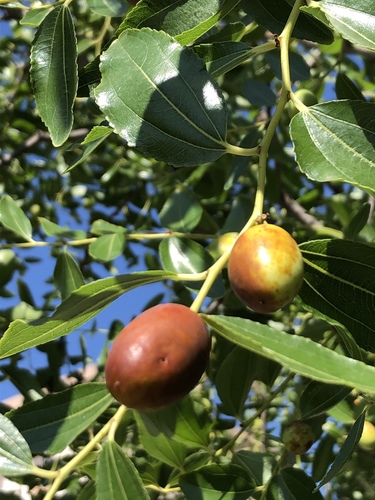
iNaturalist· cc-by-nc
(c) Noah Strycker, some rights reserved (CC BY-NC), uploaded by Noah Strycker
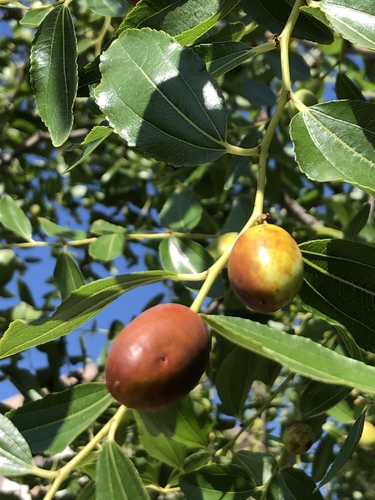
iNaturalist· cc-by-nc
(c) mhays, some rights reserved (CC BY-NC), uploaded by mhays
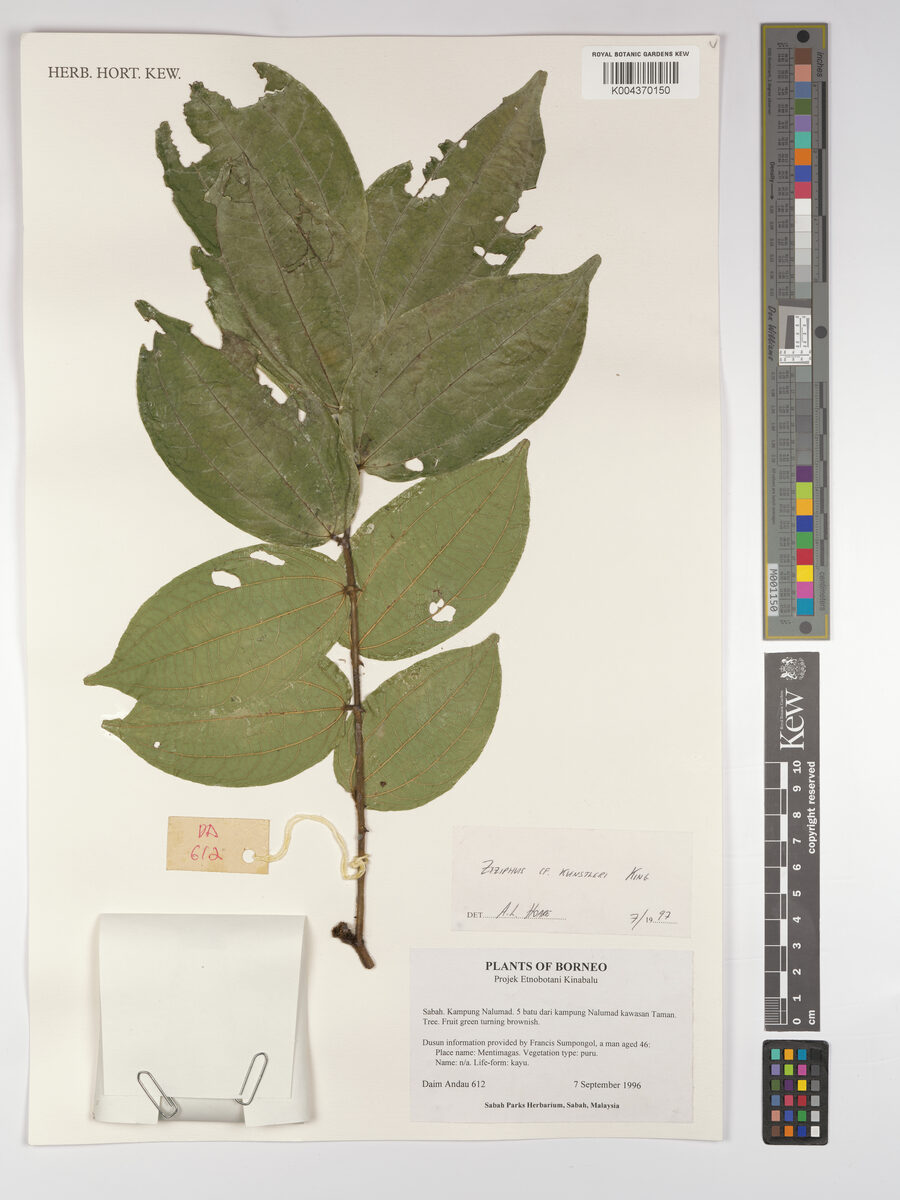
iNaturalist· cc-by-nc
(c) oxalismtp, some rights reserved (CC BY-NC), uploaded by oxalismtp
Summary
Source: WikipediaFrangula purshiana (cascara, cascara buckthorn, cascara sagrada, bearberry, and in the Chinook Jargon, chittem stick and chitticum stick; syn. Rhamnus purshiana) is a species of plant in the family Rhamnaceae. It is native to western North America from southern British Columbia south to central California, and eastward to northwestern Montana. The dried bark of cascara was used as a laxative in folk medicine by the indigenous peoples of the Pacific Northwest, and later worldwide in conventional medicines until 2002.
Description
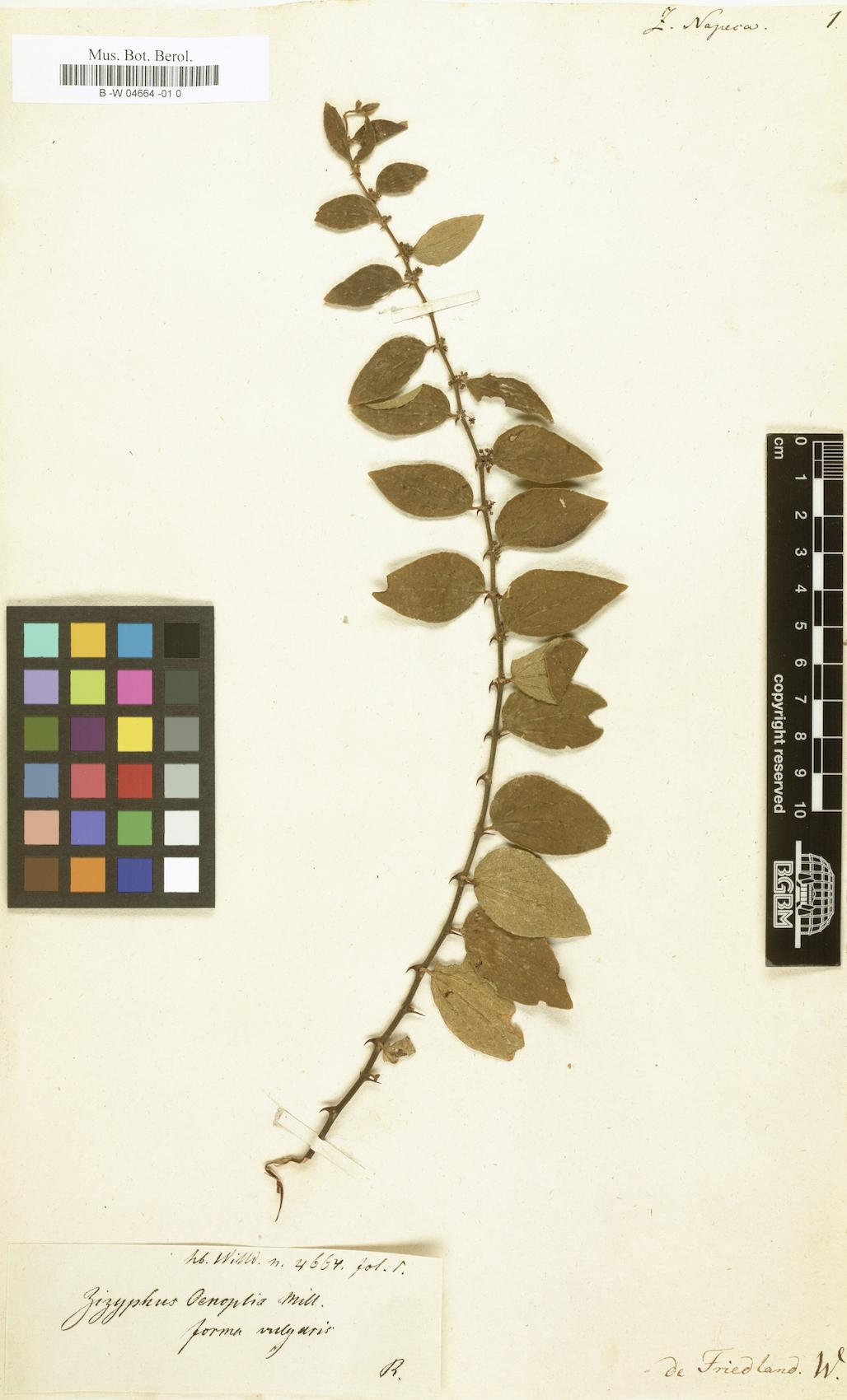
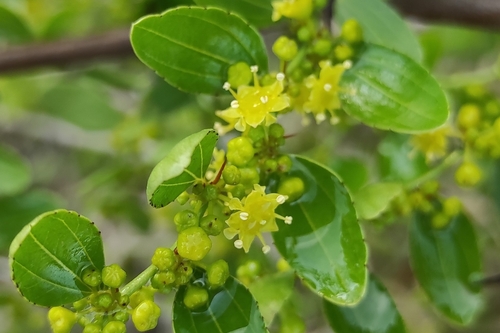
A very small tree. It grows to about 6 m high. The trunk can be 25 cm across. The bark is thin and greyish-brown. The leaves are alternate and simple. They are 4-16 cm long and usually widest just above the middle. The base is rounded and the tip is short. There are fine teeth along the edge. The flowers are yellowish green. They are small. The fruit are like berries. They are round and blackish. They are 8-14 mm across and contain 2-3 small nutlike seeds.
Edible Uses
Cascara is sold in the United States as a natural "dietary supplement" rather than a drug, and its common use is ingested by mouth to relieve constipation. Although it may be safe for use over a few days, there is insufficient scientific evidence to assure its safety and effectiveness. Use of cascara may adversely affect the actions of various prescribed drugs, such as digoxin, warfarin, corticosteroids, and diuretic agents.
Traditional Uses
The fruit are sometimes eaten. They are slightly bitter but can be used for jams, jellies and preserves. The bark has to have its bitterness removed and is then a flavouring for soft drinks, baked goods and ice cream.
Medicinal Uses
Numerous quinoid phytochemicals are present in cascara bark. The chemicals possibly contributing to a laxative effect are the hydroxyanthracene glycosides, which include cascarosides A, B, C, and D. Cascara contains approximately 8% anthranoids by mass, of which about two-thirds are cascarosides. The hydroxyanthracene glycosides may trigger peristalsis by inhibiting the absorption of water and electrolytes in the large intestine, which increases the volume of the bowel contents, leading to increased pressure. The hydroxyanthracene glycosides are not readily absorbed in the small intestine, but are hydrolyzed by intestinal flora to a form that is partly absorbed in the colon. Some of the chemical constituents present in the bark may be excreted by the kidneys. The extract from cascara bark also contains emodin, which may contribute to the laxative effect. Cascara was used in traditional medicine as a laxative. The dried, aged bark of R. purshiana used by indigenous native cultures and settler Euro-Americans as a laxative is similar to other anthraquinone-containing herbal preparations of leaves and fruits of senna, the latex of Aloe vera, and the root of the rhubarb plant. Commercially, it is called "cascara sagrada" ('sacred bark' in Spanish), while in the traditional Chinook Jargon it is known as "chittem bark" or "chitticum bark". Following its introduction to formal U.S. medicine in 1877, it replaced the berries of R. catharticus as the favored laxative. The historical interest in using cascara damaged native cascara populations during the 1900s due to overharvesting. The bark is collected in the spring or early summer, when it easily peels from the tree. Once stripped from the tree, the bark must be aged for several months, because fresh cut, dried bark causes vomiting and violent diarrhea. This drying is generally done in the shade to preserve its characteristic yellow color. This process can be quickened by simply baking the bark at a low temperature for several hours. Botanist J. Morton suggests using a dose of 10–30 grains, dissolved in water, or 0.6–2.0 cc for fluid extract. J.A. Duke suggests an effective dosage is approximately 1–3 grams (15–46 gr) dried bark, or 1–2.5 grams (15–39 gr) powdered bark.
Known Hazards
The fruit and bark contain a bitter chemical making them inedible to humans, although there are contested medicinal uses. Until 2002, cascara was the principal ingredient in commercial, over-the-counter (OTC) laxatives in North American pharmacies until the U.S. Food and Drug Administration (FDA) issued a final rule banning the use of aloe and cascara as laxative ingredients. Serious adverse effects may occur from using cascara, including dehydration, loss of electrolyte levels (such as potassium, sodium, chloride), heart rhythm irregularities, and muscle weakness. There is also concern for its potential carcinogenicity. Laxatives should also not be used by people with Crohn's disease, irritable bowel syndrome, colitis, hemorrhoids, appendicitis, or kidney problems. Use of cascara is a safety concern for pregnant or breastfeeding women, and for children.
Distribution
It is a temperate plant. It grows in moist organic soils. It can also grow on sandy or gravelly soils.
Where It Grows
Australia, Britain, Canada, Europe, Mexico, North America, Turkey, Türkiye, USA,
Notes
There are over 100 Rhamnus species.
Synonyms
Also Known As
Cascara sagrada
References (14)
- Beckstrom-Sternberg, Stephen M., and James A. Duke. "The Foodplant Database." http://probe.nalusda.gov:8300/cgi-bin/browse/foodplantdb.(ACEDB version 4.0 - data version July 1994) (As Rhamnus purshiana)
- Bodkin, F., 1991, Encyclopedia Botanica. Cornstalk publishing, p 875 (As Rhamnus purshiana)
- Esperanca, M. J., 1988. Surviving in the wild. A glance at the wild plants and their uses. Vol. 1. p 192 (As Rhamnus purshiana)
- Facciola, S., 1998, Cornucopia 2: a Source Book of Edible Plants. Kampong Publications, p 191 (As Rhamnus purshiana)
- Farrar, J.L., 1995, Trees of the Northern United States and Canada. Iowa State University press/Ames p 276 (As Rhamnus purshiana)
Show all 14 references Hide references
- Hedrick, U.P., 1919, (Ed.), Sturtevant's edible plants of the world. p 555 (As Rhamnus purshiana)
- Kermath, B. M., et al, 2014, Food Plants in the Americas: A survey of the domesticated, cultivated and wild plants used for Human food in North, Central and South America and the Caribbean. On line draft. p 740 (As Rhamnus purshiana)
- Moerman, D. F., 2010, Native American Ethnobotany. Timber Press. p 236 (As Rhamnus purshiana)
- Morton, (As Rhamnus purshiana)
- Plants for a Future database, The Field, Penpol, Lostwithiel, Cornwall, PL22 0NG, UK. http://www.scs.leeds.ac.uk/pfaf/ (As Rhamnus purshiana)
- Prodr. 2:25. 1825 "purshianus"
- MacKinnon, A., et al, 2009, Edible & Medicinal Plants of Canada. Lone Pine. p 71 (As Rhamnus purshiana)
- Wiersema, J. H. & Leon, B., 2013, World Economic Plants. A Standard Reference CRC Press. 2nd Ed. p 311
- World Checklist of Useful Plant Species 2020. Royal Botanic Gardens, Kew