Krugiodendron ferreum
(Vahl.) Urb.
Leadwood, Black ironwood, Acero
iNaturalist· cc-by-sa
(c) Douglas Goldman, some rights reserved (CC BY-SA), uploaded by Douglas Goldman
iNaturalist· cc-by-nc
(c) jrivera, some rights reserved (CC BY-NC)
iNaturalist· cc-by-nc
(c) marystarkp, some rights reserved (CC BY-NC), uploaded by marystarkp
Description
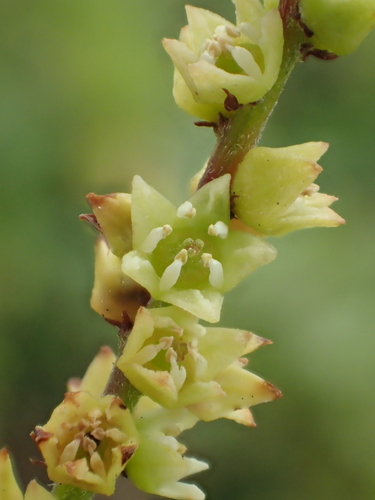
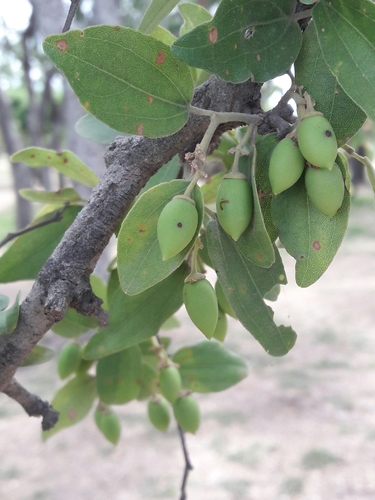
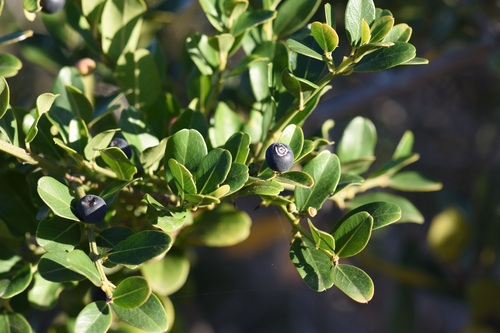
A tree. It grows 5-10 m high. The leaves are arranged opposite. The flowers are greenish. The fruit are The ripe fruit are black, juicy and sweet. The fruit are 5-7 mm long.
Edible Uses
Fruit - raw. The ripe fruits are juicy, with a sweet, agreeable flavour. The black fruit is about 8mm long.
Traditional Uses
The ripe fruit are eaten raw.
This uses section is brief — help expand it
Distribution
It is a tropical plant. It can tolerate drought.
Where It Grows
Bahamas, Belize, Central America, Costa Rica, Cuba, Curacao, Dominican Republic, El Salvador, Guatemala, Haiti, Honduras, Jamaica, Lesser Antilles*, Mexico, Nicaragua, North America, Panama, Puerto Rico, USA, West Indies*,
Cultivation
A plant of mainly low elevations in the tropics and subtropics. The plant can flower and fruit at different times through the year.
Other Uses
The heartwood is rich, orange-brown, the thin sapwood is lighter coloured. The wood is one of the densest in the world and the heaviest native wood in N. America. It is close-grained; very fine-textured; exceedingly heavy; exceedingly hard; strong but brittle; very resistant to decay and attacks from dry-wood termites; finishes smoothly. The wood is often of too small a size to be used for much more than posts, but where larger sizes are available it is valued for cabinet making, veneer, cross-ties and canes.
Synonyms
Also Known As
Baricao, Carey, Caushati, Ciguamo, Coushati, Espejuelo, Kaubati, Koubati, Quebrahacha
References (5)
- Facciola, S., 1998, Cornucopia 2: a Source Book of Edible Plants. Kampong Publications, p 191
- Grandtner, M. M., 2008, World Dictionary of Trees. Wood and Forest Science Department. Laval University, Quebec, Qc Canada. (Internet database http://www.wdt.qc.ca)
- Kermath, B. M., et al, 2014, Food Plants in the Americas: A survey of the domesticated, cultivated and wild plants used for Human food in North, Central and South America and the Caribbean. On line draft. p 464
- Morton,
- Plants of Haiti Smithsonian Institute http://botany.si.edu/antilles/West Indies