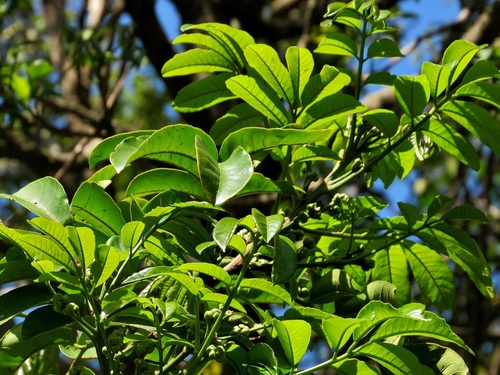
Reinwardtiodendron humile
(Hassk.) Mabb.
Tulanan, Tembangan tree
gbif· cc0
President and Fellows of Harvard College
gbif· cc0
President and Fellows of Harvard College
gbif· cc0
President and Fellows of Harvard College
Summary
Source: WikipediaReinwardtiodendron humile is a small tree species in the family Meliaceae. There are no subspecies listed in the Catalogue of Life.
Description
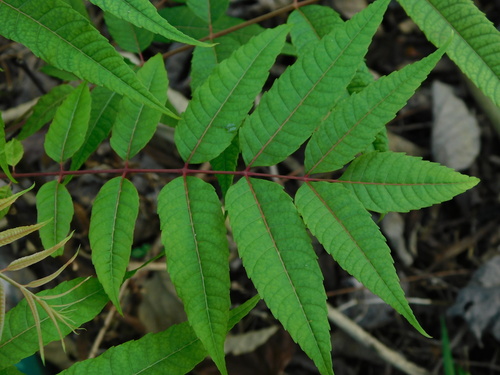
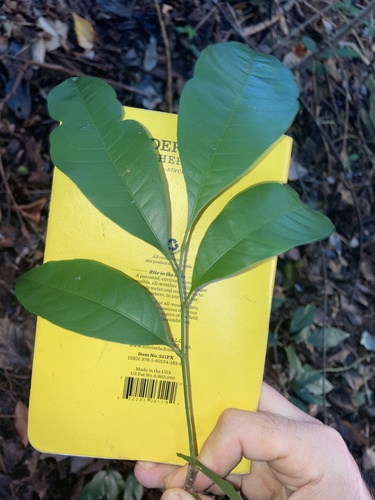
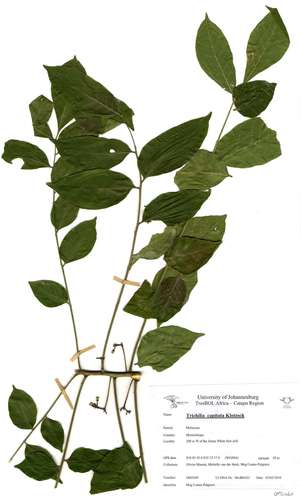
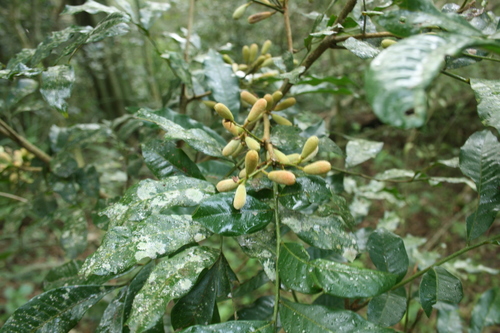
A tree. It grows 27 m high. The trunk is 40 cm across. There are buttresses 4 m tall. They extend 5 m from the tree. The bark is smooth with scaly patches. The leaves are alternate and compound. The leaves are 15-20 cm long. There are 2 or 3 leaflets on each side. The leaflets are 8.5-10 cm long by 1.8-3.5 cm wide. The uppermost one is larger. It is 18 cm long by 6.5 cm wide. The flowers are 5 mm across and white to orange. The fruit are about 2 cm across. They are green to yellow.
Edible Uses
The layer of tissue surrounding the seeds in the fruit is edible.
Traditional Uses
The layer around the seeds is edible.
This uses section is brief — help expand it
Distribution
A tropical plant. It grows in mixed forests up to 300 m above sea level. It can be up to 800 m above sea level. It can be in sandy or clay soils.
Where It Grows
Asia, Cambodia, China (Hainan), Indochina, Indonesia, Laos, Malaysia, Pacific, Philippines, SE Asia, Thailand,
Cultivation
Plants can be grown from seeds.
Synonyms
Also Known As
Arangan, Bintangor, Bubok, Kennuni, Mamata-babae, Pohon tembangan, Umtopak
References (6)
- Argent, G et al, nd, Manual of the Larger and More important non Dipterocarp Trees of Central Kalimantan Indonesia. Volume 2 Forest Research Institute, Samarinda, Indonesia. p 422
- Milow, P., et al, 2013, Malaysian species of plants with edible fruits or seeds and their evaluation. International Journal of Fruit Science. 14:1, 1-27
- PROSEA No. 2
- Slik, F., www.asianplant.net
- Sukarya, D. G., (Ed.) 2013, 3,500 Plant Species of the Botanic Gardens of Indonesia. LIPI p 489
Show all 6 references Hide references
- World Checklist of Useful Plant Species 2020. Royal Botanic Gardens, Kew