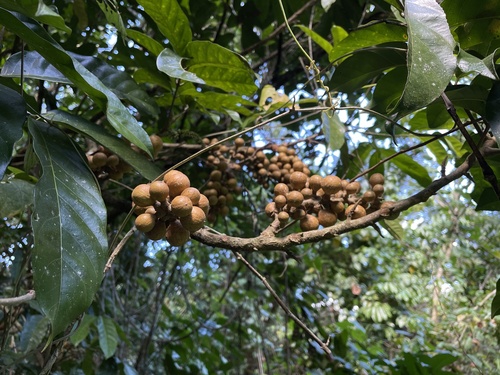
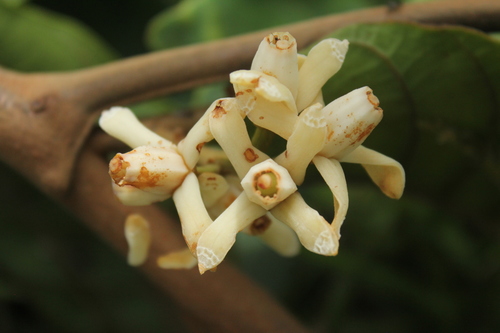
Trichilia catigua
A. Juss.
Catigua
iNaturalist· cc-by
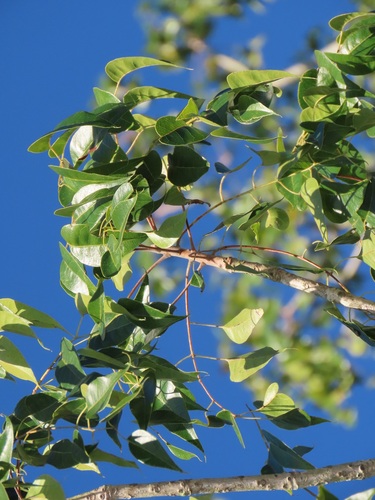
(c) Patricio Cowper Coles, some rights reserved (CC BY), uploaded by Patricio Cowper Coles
iNaturalist· cc-by-nc
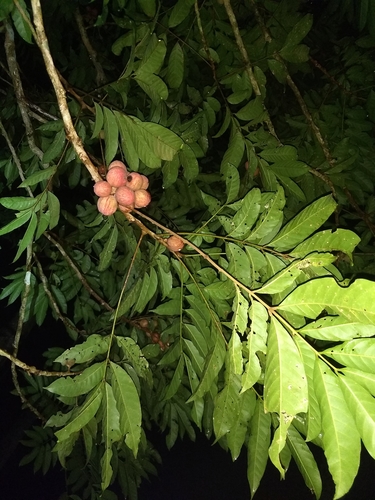
(c) Marcela Moré, some rights reserved (CC BY-NC)
Summary
Source: WikipediaTrichilia catigua is a flowering plant species in the genus Trichilia. The species is used in folk medicine and shamanism in the aphrodisiac and stimulant catuaba. Cinchonain-Ib is a flavonolignan found in the bark of T. catigua. Catuaba from Trichilia catigua was found to increase the release of Serotonin as well as Dopamine in rats. Additionally, Trichilia catigua was shown to have neuroprotective effects in rats.
Description
A tropical shrub or small tree in the Meliaceae family, growing 3–5 m tall.
This description is brief — help expand it
Edible Uses
The fruit is eaten.
Medicinal Uses
In small doses, the bark is a bitter tonic, in larger doses it is purgative. An infusion is used externally as a treatment against rheumatism and dropsy.
Distribution
It is a tropical plant.
Where It Grows
Bolivia, Brazil, South America,
Cultivation
A plant of the subtropics and tropics, found at elevations from near sea level to 1,100 metres. Prefers a position in dappled shade. Prefers a well-drained, moist soil. Newly planted young trees are slow to establish and grow away. A dioecious species, both male and female forms need to be grown if seed is required.
Propagation
Seed - it has a short viability and so should be sown as soon as it is ripe. Sow in a nursery seedbed in a partially shaded position. Germination rates are usually low, with the seed sprouting within 70 - 80 days.
Other Uses
A pale red dye is obtained from the bark. The heartwood is a pale yellow. The wood is fine-textured, straight-grained, moderately heavy, flexible, very resistant to wood-eating organisms. Because of its small dimensions, the wood is little used, but is used for making bows. The wood is used for fuel.
Synonyms
References (1)
- www.colecionandofrutas.org