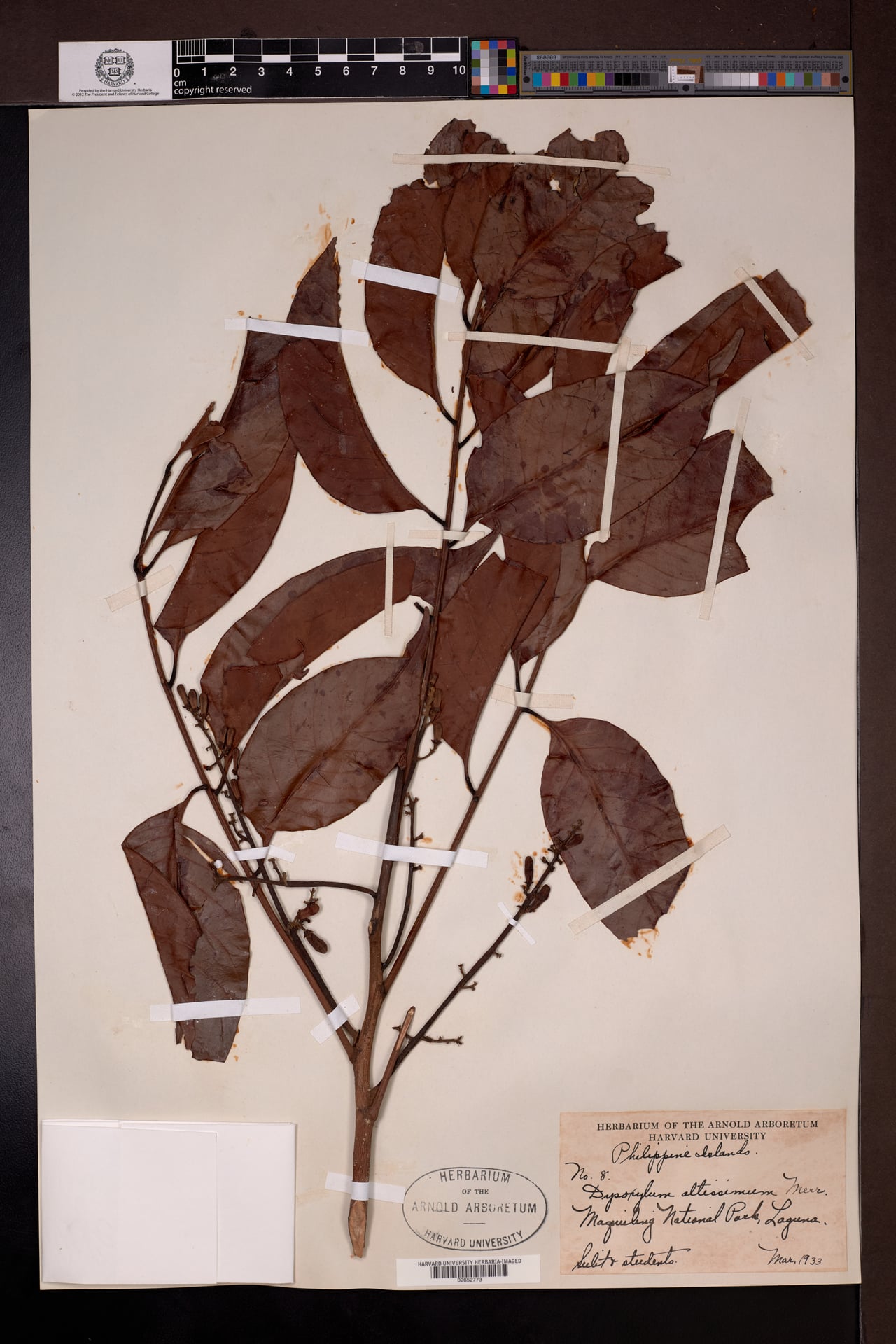
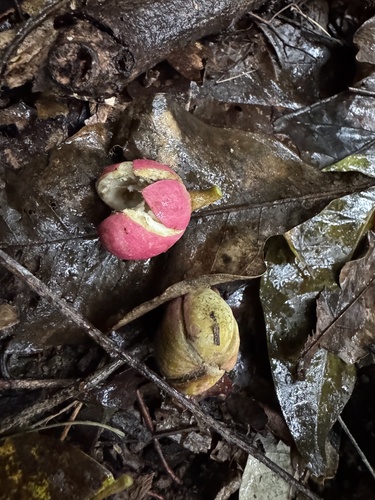
Trichilia dregeana
E. Mey. ex Harv. & Sond.
Forest Natal mahogany, White mahogany
iNaturalist· cc-by-nc
(c) Peter Vos, some rights reserved (CC BY-NC), uploaded by Peter Vos
iNaturalist· cc-by-nc
(c) Troos van der Merwe, some rights reserved (CC BY-NC)
iNaturalist· cc-by-nc
(c) Troos van der Merwe, some rights reserved (CC BY-NC)
Summary
Source: WikipediaTrichilia dregeana, commonly known as the forest natal-mahogany, is a tree in the family Meliaceae. These trees are found in forest areas from the Eastern Cape of South Africa to Tropical Africa.
Description
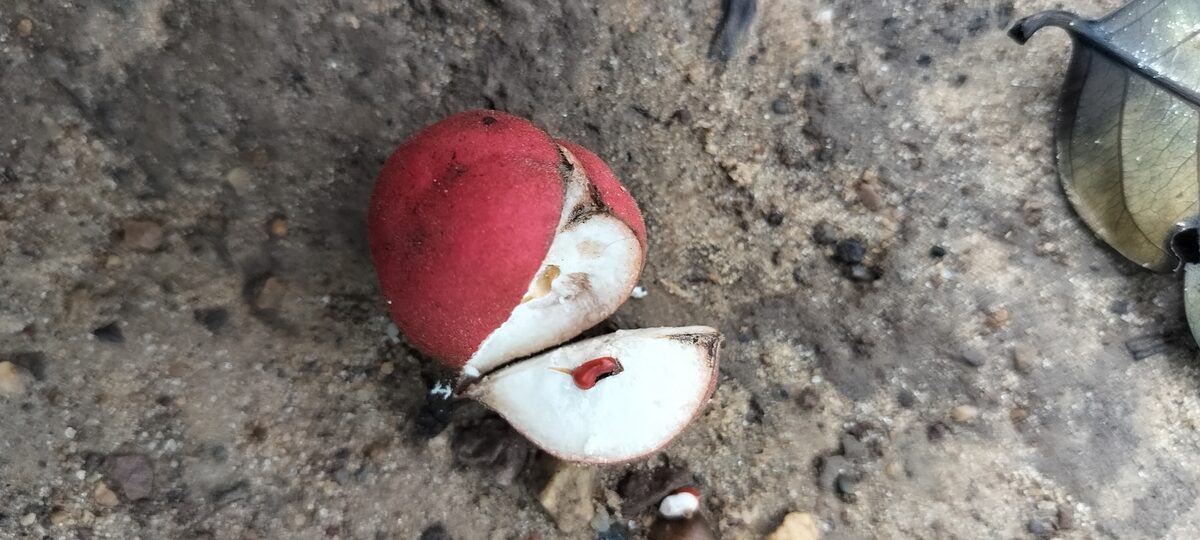
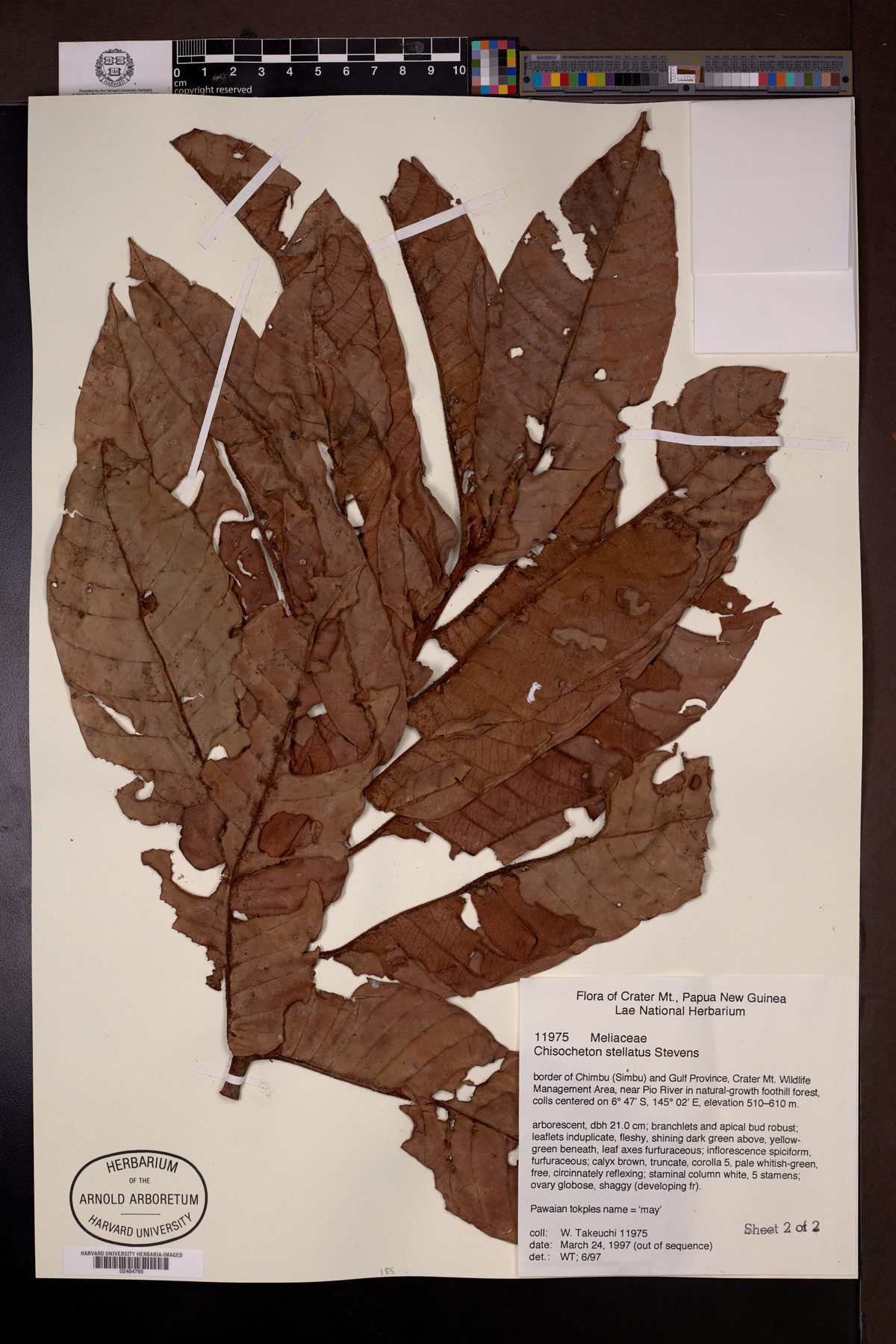
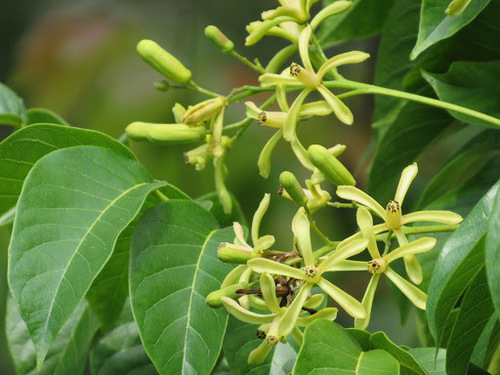
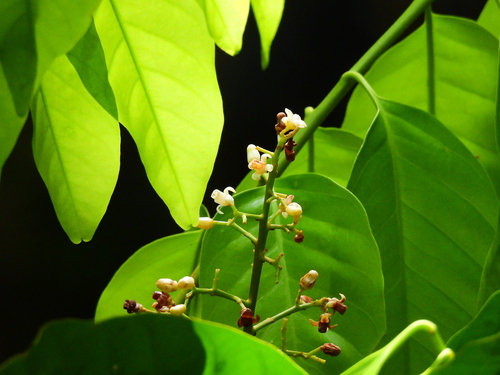
A very large tree. It grows up to 30 m tall. The bark is grey and smooth. The trunk can have small buttresses. The leaves are made up of 3-4 pairs of leaflets and a leaflet at the end. The leaflets are 21 cm long by 8.5 cm wide. They are dark glossy green above. The flowers are large and creamy-white. The petals are up to 2.4 cm long. They occur in short branched sprays in the axils of leaves. These are 5 cm long. The fruit is an almost round creamy-brown capsule. It is 3 cm across. It splits into 3-4 valves. The seeds are black and covered by a red seed coat (aril).
Edible Uses
The fruit can be eaten raw or cooked — either prepared as a vegetable or crushed into a sweet drink or sauce. Seeds are boiled and eaten as a side dish, but the seedcoat contains toxins and must be removed before cooking. The seeds also yield a cooking oil, though it has a bitter flavour. Only well-prepared oil is safe to consume, as the seedcoat is poisonous.
Traditional Uses
The seeds are eaten after removing the seed coat. The red aril is cooked as a vegetable. The seeds are rich in fat and used in cooking.
This uses section is brief — help expand it
Medicinal Uses
Across Africa, the seed oil, leaves, roots and bark are used medicinally in ways similar to Trichilia emetica, though generally considered inferior. They treat a range of complaints from lumbago to leprosy and sleeplessness. The seeds, especially the seedcoat, contain numerous limonoids including evodulone and prieurianin derivatives, which have antimicrobial and anti-inflammatory properties. The bark is highly toxic and contains inhibitors of prostaglandin synthesis, playing a role in inflammation and pain suppression. Seed oil is rubbed into cuts made over a fractured limb to hasten healing, used as a massage oil for rheumatism, and applied as a general body ointment. The fruit has emetic and purgative properties. Poultices of leaves or fruit are applied to bruises and eczema. A root decoction serves as a general tonic, fever treatment and purgative, and is also used to induce labour, and to treat intestinal worms, colds and infertility. A bark decoction is drunk as a purgative or abortifacient and to treat dysentery, diarrhoea, fevers and lumbago. The bark is applied externally against scabies. Bark decoctions administered as an enema act as a purgative and abortifacient, and treat back pain associated with kidney problems.
Known Hazards
The bark is very toxic. It is used in the preparation of fish poison.
Distribution
A tropical plant. It grows in evergreen forest. It grows between 775-1,525 m above sea level. It can grow in arid places.
Where It Grows
Africa, Angola, Cameroon, Central Africa, Congo, Côte d'Ivoire, East Africa, Eswatini, Ethiopia, Guinea, Guinée, Ivory Coast, Kenya, Malawi, Mozambique, Nigeria, South Africa, Southern Africa, Swaziland, Tanzania, Uganda, West Africa, Zambia, Zululand, Zimbabwe,
Cultivation
A plant of the moist tropics, but avoiding the wetter regions. It is found at elevations from 800 - 2,000 metres near the Equator, but descends to sea level as it enters the subtropics. It is usually found in areas where the mean annual rainfall is in the range 1,500 - 2,500 mm. The plant is sensitive to frost, but as long as the damage is not too severe, it recovers easily. Succeeds in full sun and dappled to fairly deep shade. Grows best in humus-rich, fertile, moist soils. Young trees grow fairly quickly, with a mean annual girth increment of 20 - 25mm. Older plants are fast growing and require little or no management. Trees growing in open positions start fruiting when about 10 years old, those in more shaded, forest-like conditions may not bear fruit before they are 20 years old. The tree is tolerant of fire. The tree coppices well. For ornamental purposes, it may be pruned into shrub form. Average seed yields per tree in Mozambique are about 20 - 25 kg/year, but in a good year a large tree may produce 180 kg. Trees that have produced heavily in one year tend to produce little in the next year. A dioecious species, both male and female forms need to be grown if seed is required.
Propagation
Seed should be sown as soon as it is ripe, as it cannot tolerate drying and has a short viability. It can be sown in situ or in a shaded nursery seedbed — no pre-treatment is required, though removing the fleshy outer seedcoat speeds up germination. A rich mix of sandy soil and compost with plenty of moisture is recommended. Seeds typically sprout within 2–4 weeks. Protect seedlings from frost. Natural regeneration is abundant due to regular, copious seeding from a relatively early age, comparative resistance to animal damage and a good ability to recover from injury. Seeds germinate with the early rains, and seedlings reach 10–20cm in length by the end of their first year.
Other Uses
The tree is grown to shade coffee plantations or left standing when forest is cleared. The seeds contain 55–65% oil, used as a body ointment and hair oil and to make candles, soap and cosmetics. The oil's approximate fatty acid composition is: palmitic acid 34%, stearic acid 3%, oleic acid 51%, linoleic acid 11%, linolenic acid 1%. To extract the oil, seeds are ground to a powder, pounded, boiled in water, and the oil skimmed off. The heartwood is pale brown to pink and the sapwood whitish, both darkening with age and exposure; oiling the wood darkens it considerably, reducing the distinction between heartwood and sapwood. The grain is generally straight with a medium-coarse texture and a distinct figure. The wood is not durable and is susceptible to borer attack, but it works and polishes easily. It is particularly valued for carvings in southern Africa and is also used for indoor furniture, household utensils, shelving, construction and dugout canoes. The wood is used for fuel and charcoal production.
Production
In Tanzania fruit are collected from April to July. Dried seeds can be stored for several months.
Other Information
The seeds and the oil are sold in local markets. It is cultivated.
Notes
There are about 92 Trichilia species. They grow in the tropics.
Synonyms
Also Known As
Cape-mahogany, Christmas-bells, Forest mahogany, Gereche, Kamoko, Kampakampaka, Luyaa, Mbamba, Mkungwina, Mnyongayonga, Mogotlho, Muchiquiri, Mulahu, Mushikiri, Mutshikili, Ngolimazi, Sekoba, Uagon, Umkuhlo, Yuya
References (32)
- Awas, T., 1997, A Study on the Ecology and Ethnobotany of Non-cultivated Food Plants and Wild Relatives of Cultivated crops in Gambella Region, Southwestern Ethiopia. Addis Ababa University. p 57
- Bekele-Tesemma A., Birnie, A., & Tengnas, B., 1993, Useful Trees and Shrubs for Ethiopia. Regional Soil Conservation Unit. Technical Handbook No 5. p 434
- Bruschi, P., et al, 2014, Traditional use of plants in a rural community of Mozambique and possible links with Miombo degradation and harvesting sustainability. Journal of Ethnobiology and Ethnomedicine. 2014, 10:59
- Burkill, H. M., 1985, The useful plants of west tropical Africa, Vol. 4. Kew.
- Exell, A.W. et al, (Ed), 1963, Flora Zambesiaca Vol 2 Part 1 Crown Agents, London. p 299
Show all 32 references Hide references
- Fl. cap. 1:246. 1860
- Fowler, D. G., 2007, Zambian Plants: Their Vernacular Names and Uses. Kew. p 82
- Fox, F. W. & Young, M. E. N., 1982, Food from the Veld. Delta Books. p 264
- HELY-HUTCHINSON,
- Long, C., 2005, Swaziland's Flora - siSwati names and Uses http://www.sntc.org.sz/flora/
- Lulekal, E., et al, 2011, Wild edible plants in Ethiopia: a review on their potential to combat food insecurity. Afrika Focus - Vol. 24, No 2. pp 71-121
- Mashile, S. P., et al, 2019, Indigenous fruit plants species of the Mapulana of Ehlanzeni district in Mpumalanga province, South Africa. South African Journal of Botany 122 (2019) 180–183
- Mokganya, M. G. et al, 2018, An evaluation of additional uses of some wild edible fruit plants of the Vhembe District Municipality in the Limpopo Province, South Africa. Indian Journal of Traditional Knowledge. Vol 17(2) April 2018, pp 276-281
- Palgrave, K.C., 1996, Trees of Southern Africa. Struik Publishers. p 384
- Palmer & Pitman, 1972,
- Peters, C. R., O'Brien, E. M., and Drummond, R.B., 1992, Edible Wild plants of Sub-saharan Africa. Kew. p 146
- Royal Botanic Gardens, Kew (1999). Survey of Economic Plants for Arid and Semi-Arid Lands (SEPASAL) database. Published on the Internet; http://www.rbgkew.org.uk/ceb/sepasal/internet [Accessed 3rd May 2011]
- Ruffo, C. K., Birnie, A. & Tengnas, B., 2002, Edible Wild Plants of Tanzania. RELMA p 672
- Ruiters-Welcome, A. K., 2019, Food plants of southern Africa. Ph.D. thesis. Univ. of Johannesburg p 78
- Schatz, G.E., 2001, Generic Tree Flora of Madagascar. Royal Botanical Gardens, Kew and Missouri Botanical Garden. p 266 (Genus)
- Schmidt, E., Lotter, M., & McCleland, W., 2007, Trees and shrubs of Mpumalanga and Kruger National Park. Jacana Media p 254
- Senbeta, F., et al, 2013, Diversity of Useful Plants in the Coffee Forests of Ethiopia. Ethnobotany Research & Applications 11:049-069
- Swaziland's Flora Database http://www.sntc.org.sz/flora
- Tredgold, M.H., 1986, Food Plants of Zimbabwe. Mambo Press. p 129
- van Wyk, B, van Wyk, P, and van Wyk B., 2000, Photographic guide to Trees of Southern Africa. Briza. p 310
- Van Wyk, Br. and van Wyk P., 2009, Field Guide to Trees of Southern Africa. Struik Nature. p 468
- van Wyk, B-E., 2011, The potential of South African plants in the development of new food and beverage products. South African Journal of Botany 77 (2011) 857–868
- Welcome, A. K. & Van Wyk, B.-E., 2019, An inventory and analysis of the food plants of southern Africa. South African Journal of Botany 122 (2019) 136–179
- White, F., Dowsett-Lemaire, F. and Chapman, J. D., 2001, Evergreen Forest Flora of Malawi. Kew. p 366
- Wiersema, J. H. & Leon, B., 2013, World Economic Plants. A Standard Reference CRC Press. 2nd Ed. p 693
- Wilson, A. L. & Downs, C. T., 2012, Fruit nutritional composition and non-nutritive traits of indigenous South African tree species. South African Journal of Botany. 78:30-36
- World Checklist of Useful Plant Species 2020. Royal Botanic Gardens, Kew