Quercus douglasii
Hook. & Arn.
Blue oak
iNaturalist· cc-by-sa
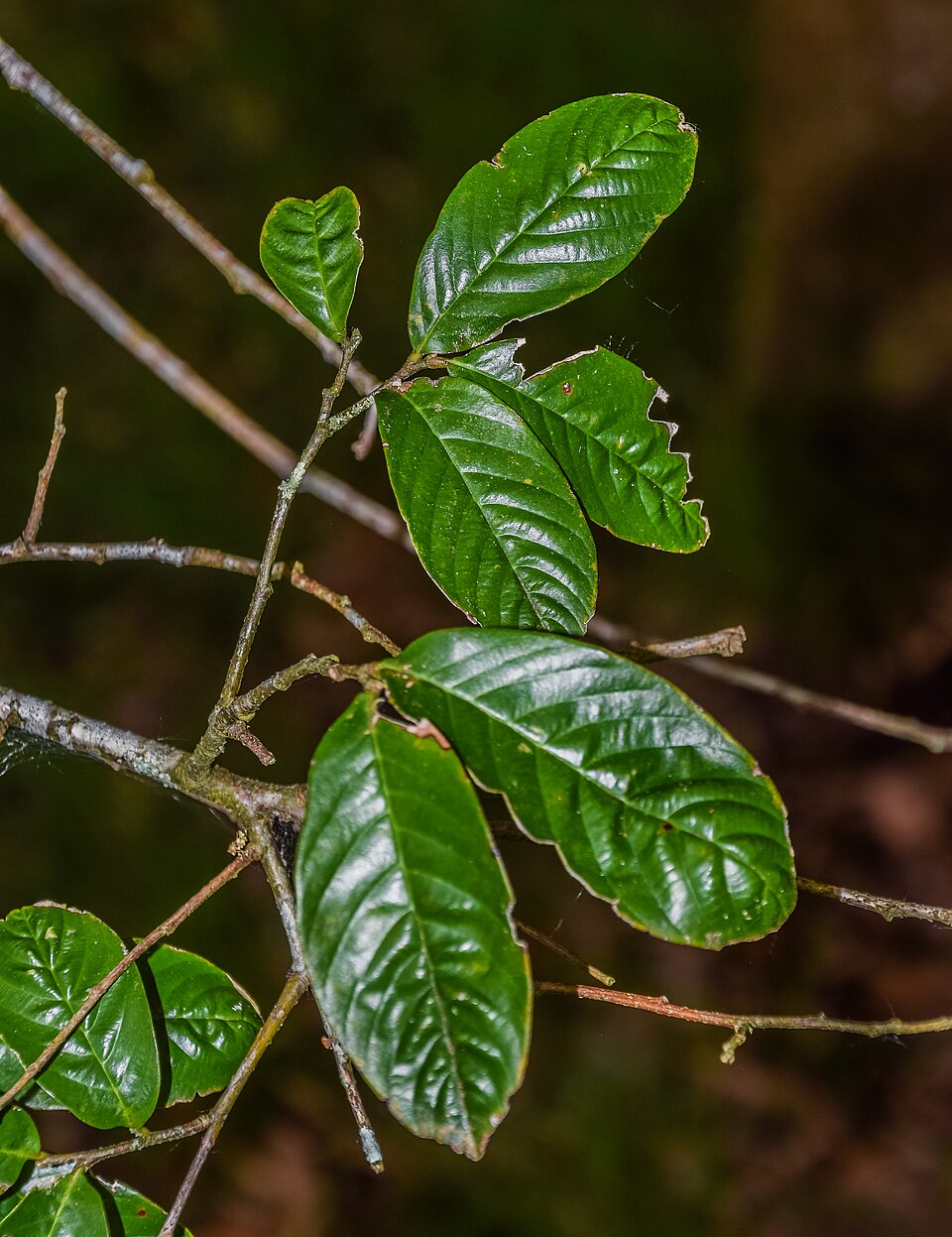
(c) Eugene Zelenko, some rights reserved (CC BY-SA)
iNaturalist· cc-by-nc
(c) Mart Hughes, some rights reserved (CC BY-NC), uploaded by Mart Hughes
iNaturalist· cc-by-nc
(c) Marisol Villarreal, some rights reserved (CC BY-NC), uploaded by Marisol Villarreal
Summary
Source: WikipediaQuercus douglasii, known as blue oak, is a species of oak endemic to California, common in the Coast Ranges and the foothills of the Sierra Nevada. It is California's most drought-tolerant deciduous oak, and is a dominant species in the blue oak woodland ecosystem. It is occasionally known as mountain oak and iron oak.
Description
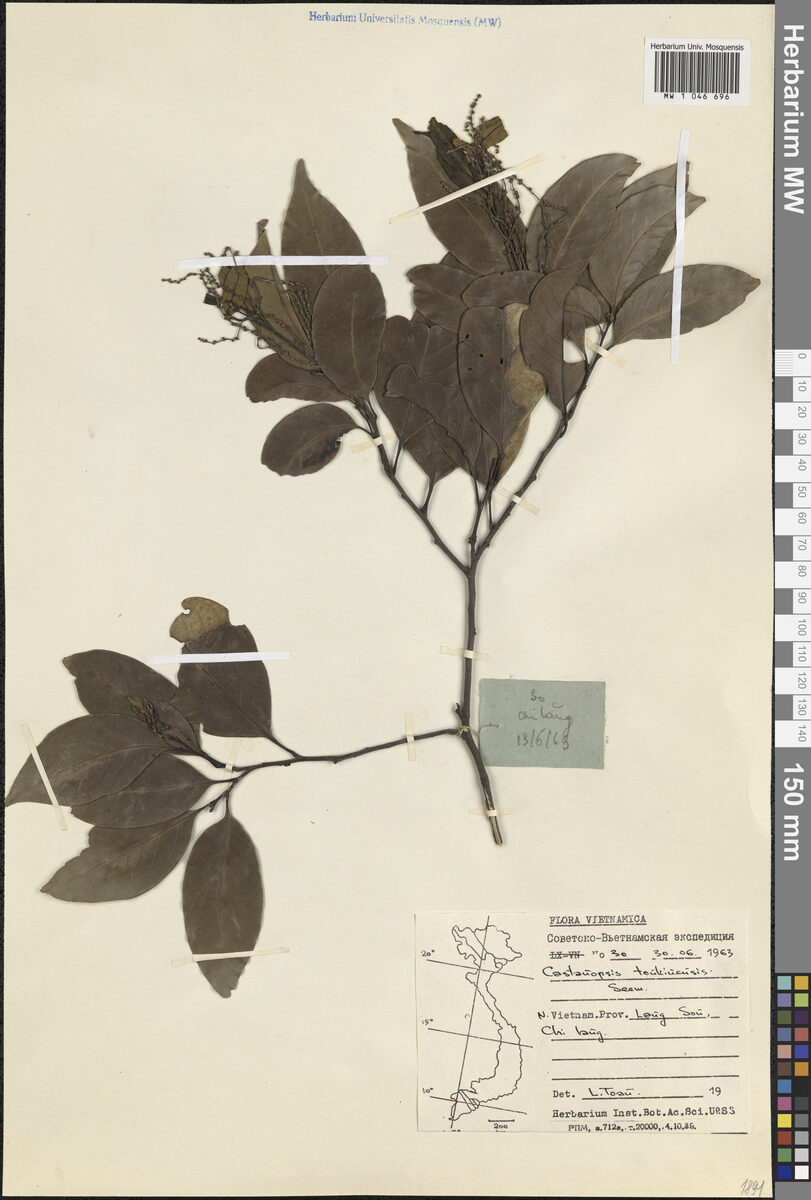
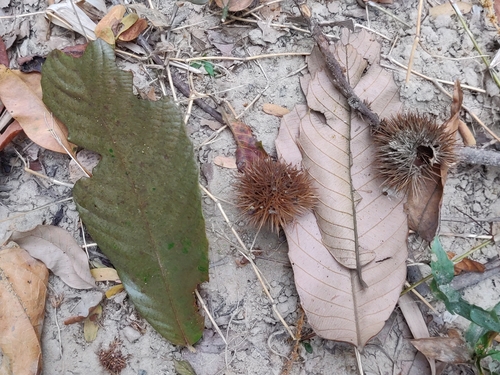
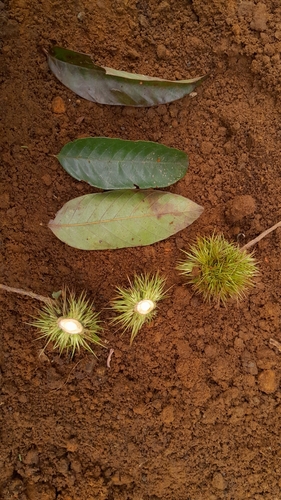
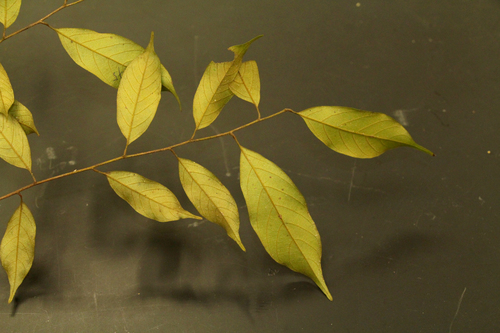
A large shrub or tree. It grows 21 m high and spreads 6 m wide. It loses its leaves during the year. It has a rounded crown. The bark is thin, grey and scaly. The leaves are bluish and have lobes along the edges. The fruit are cone shaped acorns. They are small and in a shallow hairy cup. The acorns are 2-3 cm long.
Edible Uses
The acorn was a staple food for some native North American tribes. Fairly sweet and good-sized — up to 25mm long and wide — it can be eaten cooked, dried and ground into flour for thickening stews, or mixed with cereals to make bread. Some trees produce acorns with bitter tannins that must be leached out by washing thoroughly in running water, though this also removes minerals. Whole seeds can take several days or weeks to leach; wrapping them in a cloth bag and placing it in a running stream is one traditional method. Ground meal leaches much faster. A simple taste test confirms when enough tannin has been removed. The traditional Native American technique was to bury the acorns in boggy ground over winter and dig them up in spring, by which point most of the astringency would be gone. The roasted seed makes a coffee substitute.
Traditional Uses
The acorns are ground into a meal, and used to make soup, bread or biscuits. They are also dried, pounded and leached. They are stored for later use.
Medicinal Uses
Any galls that form on the tree are strongly astringent and have been used to treat haemorrhages, chronic diarrhoea, and dysentery. A poultice of ground galls mixed with salt has been applied to burns, sores, and cuts, and the same preparation used as a wash for sore eyes. The leaves have been chewed to relieve sore throats.
Distribution
It is a temperate plant. Kyneton Botanical Gardens. It suits hardiness zones 6-11.
Where It Grows
Australia, North America, USA,
Cultivation
Prefers a good deep fertile loam which can be on the stiff side. Young plants tolerate reasonable levels of side shade. Tolerates moderate exposure, surviving well but being somewhat stunted. Prefers warmer summers than are usually experienced in Britain, trees often grow poorly in this country and fail to properly ripen their wood resulting in frost damage overwinter. A slow-growing but long-lived tree. Seed production is cyclic, a year of high yields being followed by 2 - 4 years of low production. The tree flowers on new growth produced in spring, the seed ripening in its first year. This species is notably resistant to honey fungus. Hybridizes freely with other members of the genus. Intolerant of root disturbance, trees should be planted in their permanent positions whilst young.
Propagation
Acorns lose viability quickly if allowed to dry out. They can be stored moist and cool over winter, but are best sown as soon as ripe in an outdoor seed bed with protection from mice and squirrels. Small quantities can be sown in deep pots in a cold frame. Because plants develop a deep taproot early, they should be moved to permanent positions as soon as possible — seed sown in situ produces the best trees. Do not leave trees in a nursery bed for more than 2 growing seasons, as they transplant very poorly after that point.
Other Uses
A mulch of the leaves repels slugs and grubs, though fresh leaves should be avoided as they can inhibit plant growth. Oak galls, formed by the larvae of various insects, can be harvested after the insect pupates and leaves — at that point they are a rich source of tannin that also functions as a dyestuff. Branches have been used to make rims for twined work baskets. Acorn meal has been used to fill and mend cracks in clay pots. The seed cups serve as buttons. The wood is hard, heavy, strong, and brittle, with a pronounced cross-grain that makes splitting difficult. It has little commercial value and is used mainly as fuel.
Notes
There are about 600 Quercus species.
Synonyms
References (9)
- Beckstrom-Sternberg, Stephen M., and James A. Duke. "The Foodplant Database." http://probe.nalusda.gov:8300/cgi-bin/browse/foodplantdb.(ACEDB version 4.0 - data version July 1994)
- Bodkin, F., 1991, Encyclopedia Botanica. Cornstalk publishing, p 863
- Bot. Beechey voy. 391. 1840
- Cundall, P., (ed.), 2004, Gardening Australia: flora: the gardener's bible. ABC Books. p 1123
- Elias, T.S. & Dykeman P.A., 1990, Edible Wild Plants. A North American Field guide. Sterling, New York p 231
Show all 9 references Hide references
- Grandtner, M. M., 2008, World Dictionary of Trees. Wood and Forest Science Department. Laval University, Quebec, Qc Canada. (Internet database http://www.wdt.qc.ca)
- Moerman, D. F., 2010, Native American Ethnobotany. Timber Press. p 459
- Plants for a Future database, The Field, Penpol, Lostwithiel, Cornwall, PL22 0NG, UK. http://www.scs.leeds.ac.uk/pfaf/
- www.desert-tropicals.com