Quercus myrsinifolia
Blume
Shira kashi, Japanese white oak
iNaturalist· cc-by-sa
(c) KENPEI, some rights reserved (CC BY-SA)
iNaturalist· cc-by-nc
(c) ryotaro_suzuki, some rights reserved (CC BY-NC)
iNaturalist· cc-by-nc-sa
(c) shizen.shigen, some rights reserved (CC BY-NC-SA)
Summary
Source: WikipediaQuercus myrsinifolia is an Asian species of tree in the beech family Fagaceae. It has several common names, including bamboo-leaf oak, Chinese evergreen oak, and Chinese ring-cupped oak. Its Chinese name is 小叶青冈; pinyin: xiǎo yè qīng gāng, which means little leaf ring-cupped oak (literally translated as little leaf green ridge tree), in Japan it is called white oak (白樫, shirakashi; not to be confused with Quercus alba) and in Korea it is known as gasinamu (가시나무). It is native to east central and southeast China, Japan, Korea, Laos, northern Thailand, and Vietnam. It is placed in subgenus Cerris, section Cyclobalanopsis.
Description
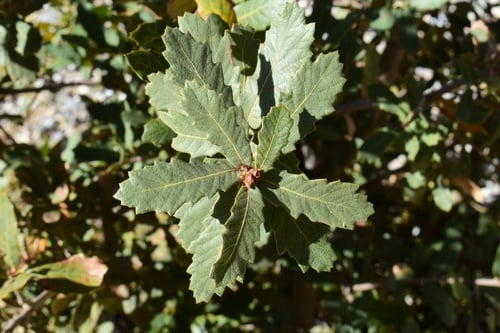
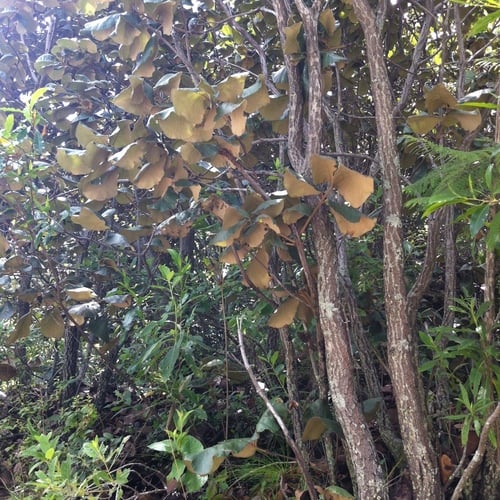
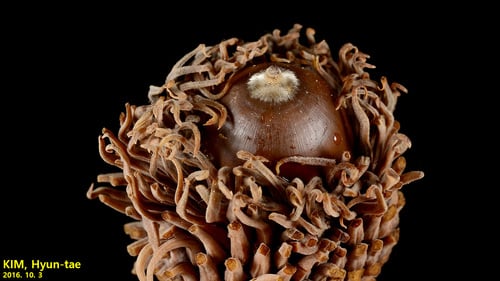
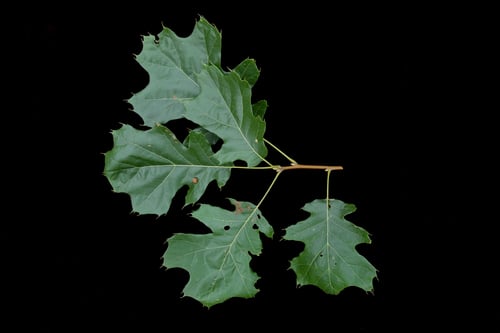
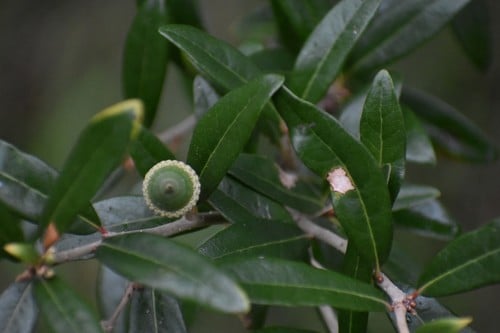
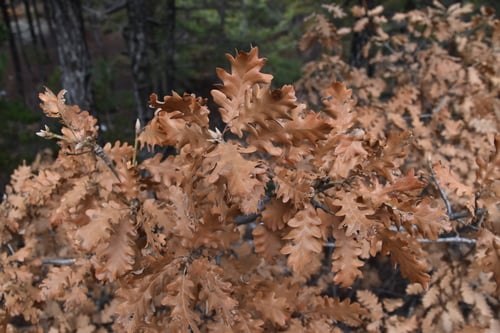
An evergreen tree. It grows 20 m high. It is a broadly spreading oak tree. The bark is dark grey and smooth. The leaves are sword shaped and 10 cm long by 3 cm wide. They are leathery and taper to a point. They have a few small teeth. They are deep bronze red when young and become dark green above and blue-green underneath. They are smooth on both sides. The male and female flowers are borne separately on the same plant. The male flowers are easier to see and are in yellow-green drooping catkins. The fruit is an acorn about 2 cm long. One third is enclosed in a cup. The cup has distinct rings around it.
Edible Uses
The seeds and nuts are edible.
Known Hazards
None documented in provided data.
Distribution
It is a temperate plant. It is native to China and Japan. In Melbourne Botanical Gardens. Mt Cootha Botanical Gardens. Arboretum Tasmania.
Where It Grows
Asia, Australia, Canada, China, Indochina, Japan, Korea, Laos, North America, SE Asia, Tasmania,
Cultivation
Plants are grown by seed. Stem cuttings are possible.
Notes
There are about 600 Quercus species.
References (4)
- Coombes, A.J., 2000, Trees. Dorling Kindersley Handbooks. p 166
- Lee, Y. M., 2014, Important Plants of East Asia II: Endemic Plant Stories. East Asia Biodiversity Conservation Network p 158
- Levy-Yamamori, R., & Taaffe, G., 2004, Garden Plants of Japan. Timber Press. p 205
- Mus bot. 1:305. 1851