Annona squamosa
L.
Sweetsop
iNaturalist· cc-by-nc
(c) Sèwanou Marc Tovihessi, some rights reserved (CC BY-NC), uploaded by Sèwanou Marc Tovihessi
iNaturalist· cc-by-sa
(c) Ton Rulkens, some rights reserved (CC BY-SA)
iNaturalist· cc-by-nc-sa
(c) Andres Hernandez S., some rights reserved (CC BY-NC-SA)
Summary
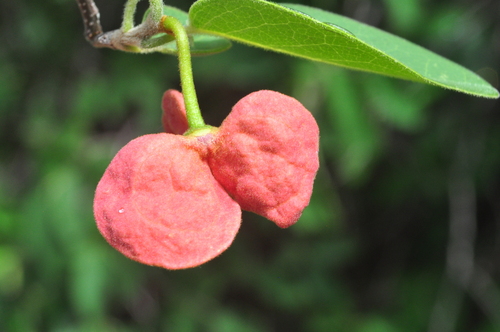
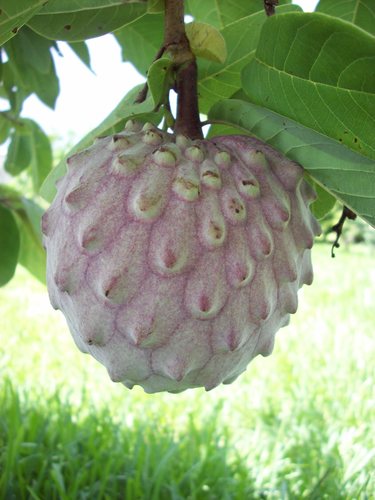
Source: WikipediaAnnona squamosa is a small, well-branched tree or shrub from the family Annonaceae that bears edible fruits called sugar apples or sweetsops or custard apples. It tolerates a tropical lowland climate better than its relatives Annona reticulata and Annona cherimola (whose fruits often share the same name) helping make it the most widely cultivated of these species. Annona squamosa is semi-(or late) deciduous, and 3 to 8 metres (10 to 26 feet) tall, similar to soursop (Annona muricata). It is a native of tropical climate in the Americas, and Spanish traders aboard the Manila galleons docking in the Philippines brought it to Asia. The fruit is spherical-conical, 5–10 centimetres (2–4 inches) in diameter and 6–10 cm (2+1⁄4–4 in) long, and weighing 100–240 grams (3.5–8.5 ounces), with a thick rind composed of knobby segments. The colour is typically pale green through blue-green, with a deep pink blush in certain varieties, and typically has a bloom. It is unique among Annona fruits in being segmented; the segments tend to separate when ripe, exposing the innards. The flesh is fragrant and sweet, creamy white through light yellow, and resembles and tastes like custard. The seeds are coated with the flesh, It is found adhering to 13-to-16-millimetre-long (1⁄2 to 5⁄8 in) seeds forming individual segments arranged in a single layer around a conical core. It is soft, slightly grainy, and slippery. The hard, shiny seeds may number 20–40 or more per fruit and have a brown to black coat, although varieties exist that are almost seedless. The seeds can be ground for use as an insecticide, although this has not been approved by the US EPA or EU authorities. The stems run through the centre of the fruit connecting it to the outside. The skin is shaped like a Reuleaux triangle coloured green and rough in texture. Due to the soft flesh and structure of the sugar apple it is very fragile to pressure when ripe. New varieties are also being developed in Taiwan and Hong Kong. The atemoya or "pineapple sugar-apple", a hybrid between the sugar-apple and the cherimoya, is popular in Taiwan, although it was first developed in the United States in 1908. The fruit is similar in sweetness to the sugar-apple, but has a very different taste. As its name suggests, it tastes like pineapple.
Description
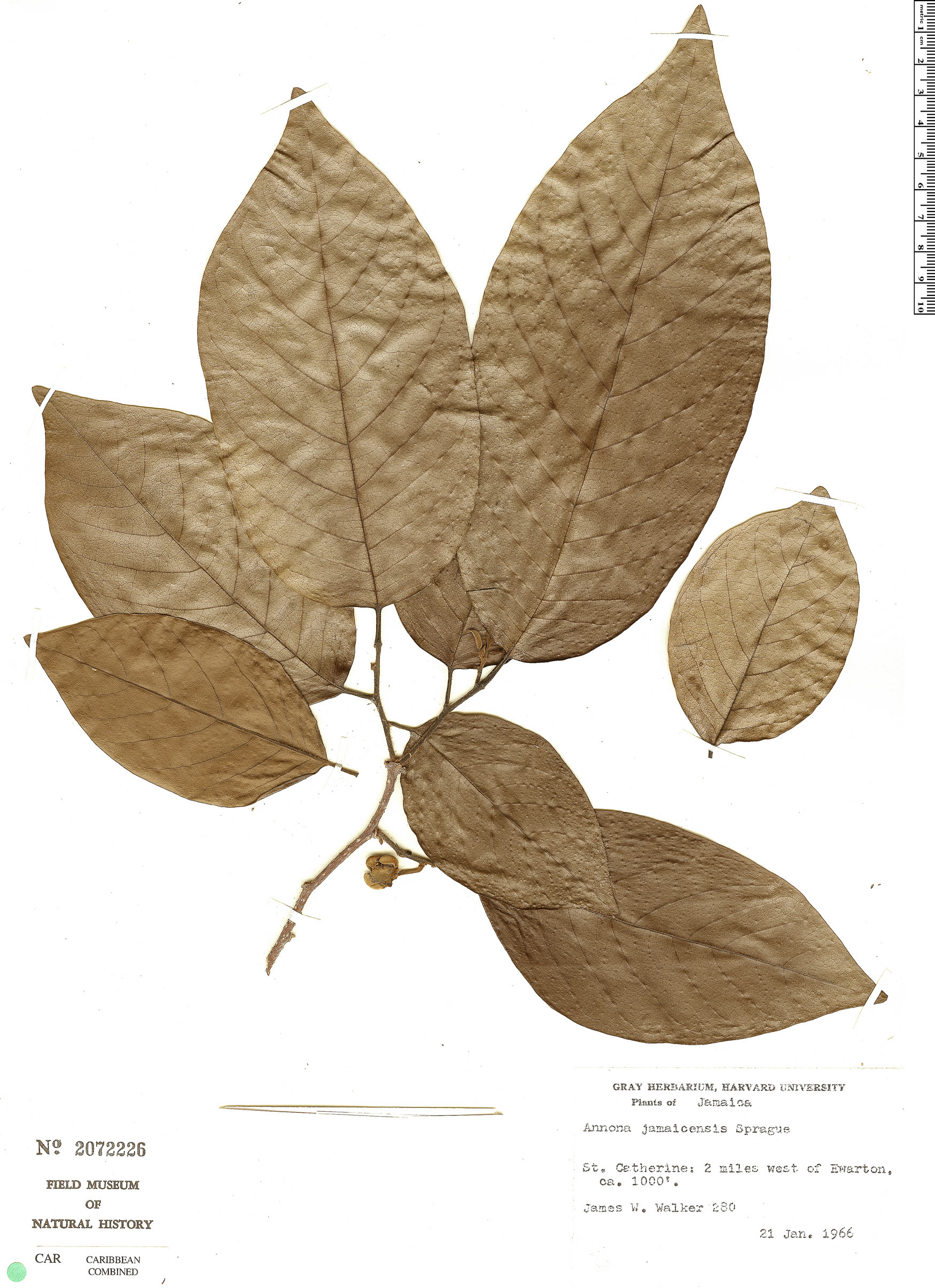
A bushy deciduous tree up to 6 m high. It has irregular spreading branches. The leaves are oblong and narrow, often 12 cm long by 4 cm wide. The leaves have fine hairs underneath. The leaves are dull green and smell when crushed. The flowers droop or hang from branches either singly or in groups of 2 or 3. The flowers are greenish colour. The fruit are 8-10 cm across and greenish in colour. The fruit is covered with round fleshy scales which drop off as the fruit ripens. Inside the fruit are several shiny black seeds about 1.5 cm long. The fruit flesh is white and soft.
Edible Uses
Edible Parts: Fruit Edible Uses: Fruit - raw. The sweet and creamy fruits are highly regarded as a dessert fruit. They can also be used to make sherbet, ice cream, jellies etc. The fruit is up to 10cm in diameter.
Traditional Uses
The fruit is eaten raw. It is also used in ice cream. The juice is used for drinks. CAUTION: The seeds, leaves and roots are poisonous. Both an alkaloid, and hydrocyanic acid have been shown to occur in these parts of the plant.
Medicinal Uses
Antidiarrhoeal Antirheumatic Astringent Cancer Dysentery Purgative Sedative Vermifuge Leaves, shoots, bark and roots have been reported to have medicinal properties. They are all strongly astringent and are used to treat diarrhoea and dysentery. The green fruits, seeds and leaves have effective vermicidal properties. The young shoots, combined with peppermint, are used in the West Indies to relieve colds and chills. In Cuba, the leaves are taken to lower uric acid levels in the blood. The unripe fruit is astringent. The root is a drastic purgative. The bark and leaves, combined with those of Annona muricata, are used in a sedative infusion. An infusion of the leaves and fruit is used to aid digestion and treat rheumatism. An oil distilled from the leaves is applied to the head for treating sleeplessness. The powdered seeds are an excellent vermifuge. Extracts of the plant have shown anticancer activity.
Known Hazards
The seeds, leaves and roots are poisonous. Both an alkaloid, and hydrocyanic acid have been shown to occur in these parts of the plant.
Distribution
A tropical plant. It suits lowland drier climates. It grows naturally in the dry hills around Port Moresby in Papua New Guinea. The trees will probably grow satisfactorily up to about 1000 metres altitude in equatorial zones. In Colombia it grows between 340-1,300 m above sea level. Sweetsops cannot stand frost but they are able to survive droughts better than many fruit trees. Trees do not like waterlogged soils. Sweetsops can grow on fairly poor, dry, stony soils. In Bolivia they grow in areas with rainfall or 500-1,000 mm per year. It suits hardiness zones 10-12.
Where It Grows
Africa, Amazon, Andaman Is., Antigua and Barbuda, Antilles, Aruba, Asia, Australia, Bahamas, Bangladesh, Belize, Bolivia, Brazil, Burkina Faso, Burundi, Cambodia, Cameroon, Cape Verde, Caribbean, Central Africa, Central Africam Republic, CAR, Central America, China, Colombia, Comoros, Congo DR, Cook Islands, Costa Rica, Cuba, Dominica, Dominican Republic, East Africa, East Timor, Ecuador, El Salvador, Eritrea, Ethiopia, Fiji, French Guiana, Gabon, Gambia, Ghana, Guadeloupe, Guam, Guatemala, Guinea, Guinea-Bissau, Guianas, Guyana, Haiti, Hawaii, Himalayas, Honduras, India, Indochina, Indonesia, Jamaica, Kenya, Kiribati, Laos, Leeward Is., Madagascar, Malawi, Malaysia, Maldives, Mariana Islands, Marquesas, Martinique, Mauritius, Mexico*, Middle East, Mozambique, Myanmar, Nauru, Nepal, New Caledonia, Nicaragua, Niger, Niue, Northeastern India, North America, Pacific, Pakistan, Panama, Papua New Guinea, PNG, Peru, Philippines, Puerto Rico, Reunion, Rotuma, Sahel, Sao Tome and Principe, Saudi Arabia, SE Asia, Senegal, Seychelles, Sierra Leone, Solomon Islands, Somalia, South Africa, Southern Africa, South America, Sri Lanka, St. Kitts and Nevis, St. Vincent and Grenadines, Sudan, Suriname, Taiwan, Tanzania, Thailand, Timor-Leste, Tonga, Trinidad-Tobago, Tuvalu, Uganda, USA, Vanuatu, Venezuela, Vietnam, West Africa, West Indies, Yemen,
Cultivation
They are normally grown from seeds and the seeds retain their viability for several years. It is better to grow sweetsops from fresh seeds and it is best to soak seeds for 3 days before sowing. Seeds germinate and start to grow 50 to 70 days after planting. The fruit is borne on old and new wood. As the fruit is more commonly on new wood, pruning is an advantage. Trees can be budded or grafted. A small branch of a selected variety is grafted onto another seedling sweetsop. Plants are very hard to get to grow from cuttings. A spacing of 6 m apart is suitable for sweetsop trees. The fruit is eaten raw. The sweet soft fleshy layer around the seeds can be eaten raw. When the fruit is ripe it is easy to separate the different soft fleshy parts of the fruit. Often it is easiest and best to harvest the fruit when they are nearly ripe and then let them ripen in a warm place.
Propagation
Seed - usually breeds true to type. Sow in individual pots, not deeper than 2cm, at 21c. They germinate within 2 - 4 weeks, and the seedlings are ready for planting out after 6 months. The seed of many species in this genus has a hard seedcoat and may benefit from scarification before sowing in order to speed up germination. This can usually be done by pouring a small amount of nearly boiling water on the seeds (being careful not to cook them!) and then soaking them for 12 - 24 hours in warm water. By this time they should have imbibed moisture and swollen - if they have not, then carefully make a nick in the seedcoat (being careful not to damage the embryo) and soak for a further 12 hours before sowing. Semi-ripe cuttings. Budding is done at the beginning of the growing season when the sap flows freely. Cleft-grafting is the method more commonly used. Air-layering
Other Uses
Fuel Insecticide String Other uses rating: Low (2/5). Other Uses Green fruits, seeds and leaves have effective vermicidal and insecticidal properties. The seeds contain the insecticide acetogin. The fibrous bark has sometimes been used locally for cordage. The light yellow sapwood and brownish heartwood are soft, light in weight and weak. The tree is a good source of firewood. Special Uses Food Forest
Production
The tree is slow growing. Trees can start to produce fruit 2 years after they are planted. A tree can produce 100 fruit. Fruit are often 200-300 g each. The pulp is 20% sugar.
Other Information
It is a cultivated fruit tree. It is popular. It is fairly common in coastal areas of Papua New Guinea especially near Port Moresby
Notes
There are about 100-150 Annona species. Chemicals in the seeds are being investigated as medicine. They have anticancer properties. The bark has chemicals against prostrate cancers.
Nutrition
| Part | Moisture | kJ | kcal | Protein | Vit A | Vit C | Iron | Zinc |
|---|---|---|---|---|---|---|---|---|
| Fruit | 76.4 | 441 | 106 | 2.09 | 1 | 40 | 0.6 | 0.1 |
Synonyms
Also Known As
Aanusari, Ai piol, Anon morado, Anona, Anona montes, Anuune, Apeli, 'atis, Ata, Atafol, Ates, Atis, Atta, Attier, Awzar, Buah nona, Chhitaphal, Chirimoya crespa, Dawatsip, Dhivehi atha, Fat manaova, Fruta-do-conde, Gam ja, Juructira, Kaneelappel, Khieb, Kok khiap, Konikony, Lanang, Makhiap, Man cau ta, Moumou, Mphosa, Mstafeli, Mufa, Na, Nameana Noi-nah, Noina, Nona sri kaya, Pinha, Pomme cannelle, Ram phal, Rinon, Saramuyo, Sarifa, Sarikaja, Seetaphal, Seethapazham, Shareefa, Sharifa, Sini-atta, Sirkaja, Sitafal, Sitaphal, Sita-phalo, Sitapalam, Sitappalm, Sittapan, Sri kaya, Sugar apple, Tiep baay, Tiep srok
References (158)
- Sweetsop references Annona squamosa
- Book Review: Classification of the Genus Annona with Descriptions of New and Imperfectly Known Species. 1988
- Alexander, D.M., Scholefield, P.B., Frodsham, A., 1982, Some tree fruits for tropical Australia. CSIRO, Australia. p 47
- Ambasta S.P. (Ed.), 2000, The Useful Plants of India. CSIR India. p 42
- Anderson, E. F., 1993, Plants and people of the Golden Triangle. Dioscorides Press. p 202
Show all 158 references Hide references
- Arora, R. K., 2014, Diversity in Underutilized Plant Species - An Asia-Pacific Perspective. Bioversity International. p 57
- Ashton, M. S., et al 1997, A Field Guide to the Common Trees and Shrubs of Sri Lanka. WHT Publications Ltd. p 100
- Awasthi, A.K., 1991, Ethnobotanical studies of the Negrito Islanders of Andaman Islands, India - The Great Andamanese. Economic Botany 45(2) pp274-280
- Bajpai, O., et al, 2015, Tree species of the Himalayan Terai region of Uttar Pradesh, India: a checklist. Check List 11(4): 1718
- Bandyopadhyay, S., et al, 2012, A Census of Wild Edible Plants from Howrah District, West Bengal, India. Proceedings of UGC sponsored National Seminar 2012
- Barwick, M., 2004, Tropical and Subtropical Trees. A Worldwide Encyclopedic Guide. Thames and Hudson p 27
- Bernegau 1911, Tropenpflanzer 15, p 23.
- Bernholt, H. et al, 2009, Plant species richness and diversity in urban and peri-urban gardens of Niamey, Niger. Agroforestry Systems 77:159-179
- Bircher, A. G. & Bircher, W. H., 2000, Encyclopedia of Fruit Trees and Edible Flowering Plants in Egypt and the Subtropics. AUC Press. p 32, p 29 (As Annona cinerea)
- Blench, R., 2004, Fruits and Arboriculture in the Indo-Pacific Region. Indo-Pacific Prehistory Association Bulletin 24. (Taipei Papers Volume 2) p 34
- Bodkin, F., 1991, Encyclopedia Botanica. Cornstalk publishing, p 86
- Bodner, C. C. and Gereau, R. E., 1988, A Contribution to Bontoc Ethnobotany. Economic Botany, 43(2): 307-369
- Borrell, O.W., 1989, An Annotated Checklist of the Flora of Kairiru Island, New Guinea. Marcellin College, Victoria Australia. p 50
- Bourret, D., 1981, Bonnes-Plantes de Nouvelle-Caledonie et des Loyaute. ORSTOM. p 38
- Brouk, B., 1975, Plants Consumed by Man. Academic Press, London. p 170
- Brown, 1951, Useful Plants of the Philippines. p 547
- 1977, Buah Buahan. Lembaga Biologi Nasional p 124
- Burkill, H. M., 1985, The useful plants of west tropical Africa, Vol. 1. Kew.
- Burkill, I.H., 1935, A Dictionary of the Economic Products of the Malay Peninsula. p 168
- Campbell, D., et al, 2021, Wild Food Harvest in Jamaica. Frontiers in Sustainable Food Systems. Vol. 5 Article 663863
- Chakraborty, S. & Chaturbedi, H. P., 2014, Some Wild Edible Fruits of Tripura- A Survey. Indian Journal of Applied research. (4) 9
- Chandrashekara, U. M., 2009, Tree species yielding edible fruit in the coffee-based homegardens of Kerala, India: their diversity, uses and management. Food Sec. 1:361-370
- Chatterjee, A. S., 1997, Fruit Trees in Cambodian Home Gardens. Trainers' training manual. Home garden series No.3 p 1
- Chauhan, S. H., et al, 2018, Consumption patterns of wild edibles by the Vasavas: a case study from Gujarat, India. Journal of Ethnobiology and Ethnomedicine (2018) 14:57
- Cheifetz, A., (ed), 1999, 500 popular vegetables, herbs, fruits and nuts for Australian Gardeners. Random House p 171
- Chin, H.F., & Yong, H.S., 1996, Malaysian Fruits in Colour. Tropical press, Kuala Lumpur p 56
- Chowdery, T., et al, 2014, Wild edible plants of Uttar Dinajpur District, West Bengal. Life Science Leaflets. 47:pp 20-36 http://lifesciencesleaflets.ning.com
- Cooper, W. and Cooper, W., 2004, Fruits of the Australian Tropical Rainforest. Nokomis Editions, Victoria, Australia. p 19
- Coronel, R.E., 1982, Fruit Collections in the Philippines. IBPGR Newsletter p 6
- Cruz, I. M., et al, 2015, Edible fruits and seeds in the State of Mexico. Revista Mexicana de Ciencias Agricolas. Vol. 6. Num. 2 pp 331-346
- Cundall, P., (ed.), 2004, Gardening Australia: flora: the gardener's bible. ABC Books. p 159
- Darley, J.J., 1993, Know and Enjoy Tropical Fruit. P & S Publishers. p 3
- Das, S. and De, B., 2013, Evaluation of Angiotension I-Converting Enzyme (ACE) inhibitory potential of some underutilized indigenous fruits of West Bengal using an in vitro model. Fruits, Vol. 68:499-506
- Dastur, H., 1858, Useful Plants of India. p 41.
- Dobriyal, M. J. R. & Dobriyal, R., 2014, Non Wood Forest Produce an Option for Ethnic Food and Nutritional Security in India. Int. J. of Usuf. Mngt. 15(1):17-37
- Duarte, M. C., et al, 2022, Diversity of Useful Plants in Cabo Verde Islands: A Biogeographic and Conservation Perspective. Plants 2022, 11, 1313 p 8
- Etherington, K., & Imwold, D., (Eds), 2001, Botanica's Trees & Shrubs. The illustrated A-Z of over 8500 trees and shrubs. Random House, Australia. p 96
- Facciola, S., 1998, Cornucopia 2: a Source Book of Edible Plants. Kampong Publications, p 12, (Also as Annona cinerea)
- FAO, 1993, Valor Nutritivo Y Usis en Alimantacion humana de Algunis Cultivos Autoctonos Subexplotados de Mesoamerica. FAO, Santiago, Chile. p 4
- Flowerdew, B., 2000, Complete Fruit Book. Kyle Cathie Ltd., London. p 157
- Focho, D. A., et al, 2009, Ethnobotanical survey of Trees in Fundong, Northwest Region, Cameroon. Journal of Ethnobiology and Ethnomedicine, 5:17
- French, B., 1986, Food Plants of Papua New Guinea, Asia Pacific Science Foundation p 214
- French, B.R., 2010, Food Plants of Solomon Islands. A Compendium. Food Plants International Inc. p 213
- Garner, R.J., and Chaudhri, S.A., (Ed.) 1976, The Propagation of Tropical fruit Trees. FAO/CAB. p 223. 236
- Ghorbani, A., et al, 2012, A comparison of the wild food plant use knowledge of ethnic minorities in Naban River Watershed Nature Reserve, Yunnan, SW China. Journal of Ethnobiology and Ethnomedicine; 8:17
- Global Plants JSTOR
- Hazarika, T. K., et al, 2012, Studies on wild fruits of Mizoram, India used as ethno-medicines. Genetic Resources and Crop Evolution. Published on line 03 February, 2012
- Hazarika, B. et al. (2020). An overview of the unexplored underutilized fruit crops of Assam, India. Journal of Applied and Natural Science, 12(3): 442 - 453
- Hearne, D.A., & Rance, S.J., 1975, Trees for Darwin and Northern Australia. AGPS, Canberra p 21, Pl 5 and Colour Pl 1
- Hedrick, U.P., 1919, (Ed.), Sturtevant's edible plants of the world. p 56 (Also as Anona asiatica), p 57 (As Annona cinerea) and p 690 (As Xylopia glabra)
- Hermano, A.J., 1934, Food values. Bureau of Sciences. Pop. Bull. 16
- Hermandez Bermejo, J.E., and Leon, J. (Eds.), 1994, Neglected Crops. 1492 from a different perspective. FAO Plant Production and Protection Series No 26. FAO, Rome. p14
- Heywood, V.H., Brummitt, R.K., Culham, A., and Seberg, O. 2007, Flowering Plant Families of the World. Royal Botanical Gardens, Kew. p 33
- http://palaeoworks.anu.edu.au/Nuno_PhD/04.pdf re Timor
- Hu, Shiu-ying, 2005, Food Plants of China. The Chinese University Press. p 398
- Janick, J. & Paul, R. E. (Eds.), 2008, The Encyclopedia of Fruit & Nuts. CABI p 48
- Jardin, C., 1970, List of Foods Used In Africa, FAO Nutrition Information Document Series No 2.p 121
- John, L., & Stevenson, V., 1979, The Complete Book of Fruit. Angus & Robertson p 273
- Kahlon, L. K. & Singh, R., 2019, Traditional knowledge & Dynamics of edible plants of primitive tribal group ‘Paudi Bhuyan’ with changing demography migration patterns in Northern Odisha. Indian Journal of Traditional Knowledge Vol 18(1), pp 7-15
- Katende, A.B., Birnie, A & Tengnas B., 1995, Useful Trees and Shrubs for Uganda. Identification, Propagation and Management for Agricultural and Pastoral Communities. Technical handbook No 10. Regional Soil Conservation Unit, Nairobi, Kenya. p 106
- Kew Plants of the World Online
- Khanal, R., et al, 2014, Documenting abundance and use of underutilized plant species in the mid hill region of Nepal. ECOPRINT 21: 63-71, 2014
- Kintzios, S. E., 2006, Terrestrial Plant-Derived Anticancer Agents and Plant Species Used in Anticancer research Critical Reviews in Plant Sciences. 25: pp 79-113
- Kiple, K.F. & Ornelas, K.C., (eds), 2000, The Cambridge World History of Food. CUP p 1864
- Kiran, K. C., et al, 2019, Diversity and Seasonal Availability of Potential Wild Edible Plants from Vidarbha Region of Maharashtra State, India. Int.J.Curr.Microbiol.App.Sci (2019) 8(2): 1434-1446
- Kohila, A. & Kensa, V. M., 2019, Survey of Wild Edible Plants of Dhanakarkulam Panchayath, Tirunelveli District, Tamil Nadu, India. Kong. Res. J. 6(2): 20-27, 2019
- Krishen P., 2006, Trees of Delhi, A Field Guide. DK Books. p 69
- Kumar, S. A., Manus, D. & Mallika, M., 2018, Impact of non-timber forest products on Forest and in Livelihood Economy of the People of Adjoining Areas of Jalpaiguri Forest Division, West Bengal, India. Int. J. of Life Sciences, 2018; 6 (2):365-385
- Latham, P., 2004, Useful Plants of Bas-Congo province. Latham & DFID p 34
- Latham, P. & Mbuta, A. K., 2014, Useful Plants of Bas-Congo Province, Democratic Republic of Congo. Volume 1. p 52
- Latham, P. & Mbuta, A. K., 2017, Plants of Kongo Central Province, Democratic Republic of Congo. Volume 1. 3rd ed p 56
- Lazarides, M. & Hince, B., 1993, Handbook of Economic Plants of Australia, CSIRO. p 21
- Lembaga Biologi Nasional, 1977, Buah-Buahan, Balai Pustaka, Jakarta. p 124
- Leon, J., 1968, Fundamentos Botanicos de los Cultivos tropicales. p 469
- Llamas, K.A., 2003, Tropical Flowering Plants. Timber Press. p 61
- Lorenzi, H., Bacher, L., Lacerda, M. & Sartori, S., 2006, Brazilian Fruits & Cultivated Exotics. Sao Paulo, Instituto Plantarum de Estuados da Flora Ltda. p 361
- Maas, P.J. M., et al, 2001, Annonaceae from Central-eastern Brazil. Rodriguesia 52(80): 65-98
- Macmillan, H.F. (Revised Barlow, H.S., et al) 1991, Tropical Planting and Gardening. Sixth edition. Malayan Nature Society. Kuala Lumpur. p 271
- Mahony, D., 1991, Trees of Somalia. A Field Guide for Development Workers. Oxfam Research Paper 3. p 9
- Manandhar, N.P., 2002, Plants and People of Nepal. Timber Press. Portland, Oregon. p 91
- Maranon, J., Nutrititive mineral values of Philippines food plants. Philipp. Journ. Sci. 58:317-358
- Martin, F. W., et al, 1987, Perennial Edible Fruits of the Tropics. USDA Handbook 642 p 18, p 80 (As Annona cinerea)
- Mbuya, L.P., Msanga, H.P., Ruffo, C.K., Birnie, A & Tengnas, B., 1994, Useful Trees and Shrubs for Tanzania. Regional Soil Conservation Unit. Technical Handbook No 6. p 106
- McMakin, P.D., 2000, Flowering Plants of Thailand. A Field Guide. White Lotus. p 105
- Milsum, 1919, Bull. 29, Dep Agric. F.M.S. p 51
- Morton, J. F., 1987, Fruits of Warm Climates. Wipf & Stock Publishers p 69
- Murillo-A, J., 2001, Annonaceae of Colombia. Biota Colombiana 2(1): 49-51
- Mutie, F. M., et al, 2023, Important Medicinal and Food Taxa (Orders and Families) in Kenya, Based on Three Quantitative Approaches. Plants 2023, 12, 1145
- Nicholson, D. H., et al, 1991, Fora of Dominica, Part 2: Dicotyledoneae. Smithsonian Institution Press. Washington DC. p 21
- Ochse, J.J., 1930, Fruits and Fruit Culture in the Dutch East Indies. p 25
- Ochse, J.J., Dijkman, M.J., Soule, M.J. & Wehlburg,C., 1961, Tropical and Subtropical Agriculture. p 563
- Omawale, 1973, Guyana's edible plants. Guyana University, Georgetown p 46
- Pasha, M. K. & Uddin, S. B., 2019, Minor Edible Fruits of Bangladesh. Bangladesh J. Plant Taxon. 26(2): 299–313
- Patiri, B. & Borah, A., 2007, Wild Edible Plants of Assam. Geethaki Publishers. p 18
- Paul, A., 2013, Minor and uncultivated fruits of Eastern India, 2nd International Symposium on Minor Fruits and Medicinal Plants
- Paz, F. S., et al, 2021, Edible Fruit Plant Species in the Amazon Forest Rely Mostly on Bees and Beetles as Pollinators. Journal of Economic Entomology, XX(XX), 2021, 1–13
- Peekel, P.G., 1984, (Translation E.E.Henty), Flora of the Bismarck Archipelago for Naturalists, Division of Botany, Lae, PNG. p 181, 182
- de Peralta, 1928, Philipp. Agriculturalist 17, p 333
- Peters, C. R., O'Brien, E. M., and Drummond, R.B., 1992, Edible Wild plants of Sub-saharan Africa. Kew. p 54
- Pham-Hoang Ho, 1999, An Illustrated Flora of Vietnam. Nha Xuat Ban Tre. p 243
- Phon, P., 2000, Plants used in Cambodia. © Pauline Dy Phon, Phnom Penh, Cambodia. p 39
- Piedra-Malagón, E. M. et al, 2022, Edible native plants of the Gulf of Mexico Province. Biodiversity Data Journal 10: e80565 p 9
- Plants of Haiti Smithsonian Institute http://botany.si.edu
- Poponoe, W., 1920, Manual of Tropical and Subtropical fruits. Macmillan. p 177
- Priyadi, H., et al, Five hundred plant species in Gunung Halimun Salak National Park West Java. A checklist including Sundanese names, distribution and use. CIFOR, FFPRI, SLU p 152
- PROSEA (Plant Resources of South East Asia) handbook, Volume 2, 1991, Edible fruits and nut. p 71
- Purseglove, J.W., 1968, Tropical Crops Dicotyledons, Longmans. p 625
- Rajapaksha, U., 1998, Traditional Food Plants in Sri Lanka. HARTI, Sri Lanka. p 62
- Raponda-Walker, A & Sillans, R., 1961, Les Plantes Utiles du Gabon. Editions Paul Lechevalier, Paris. p 63
- Rashid, H. E., 1977, Geography of Bangladesh. Westview. p 343
- Reddy, B. M., 2012, Wild edible plants of Chandrapur district, Maharashtra, India. Indian Journal of Natural Products and Resources. 3(1) pp 110-117
- Roa, J. A. G. & Boada, D. S. G., 2018, Fundación para el Fortalecimiento de la Fruticultura y Plantas Alimenticias no Convencionales en Colombia.
- Ruiters-Welcome, A. K., 2019, Food plants of southern Africa. Ph.D. thesis. Univ. of Johannesburg p 17
- Safford, W.E., 1905, Useful Plants of Guam. Contrib. US Nat. Herb., 9, p 185
- Segura, S. et al, 2018, The edible fruit species in Mexico. Genet Resour Crop Evol (2018) 65:1767–1793
- Selvam, V., 2007, Trees and shrubs of the Maldives. RAP Publication No. 2007/12 p 28
- Sharma, B.B., 2005, Growing fruits and vegetables. Publications Division. Ministry of Information and broadcasting. India. p 4
- Singh, G. K. & Ahirwar, R. K., 2013, An Ethnobotanical Survey for Certain Wild Edible Plants of Chanda Forest District Dindori Central India. International Journal of Science and Research. 6:14
- Smith, A.C., 1981, Flora Vitiensis Nova, Lawaii, Kuai, Hawaii, Volume 2 p 39
- Smith, P.M., 1979, Sweetsop, in Simmonds, N.W., (ed), Crop Plant Evolution. Longmans. London. p 302
- Sp. pl. 1:537. 1753
- Staples, G.W. and Herbst, D.R., 2005, A tropical Garden Flora. Bishop Museum Press, Honolulu, Hawaii. p 110
- Steggerda, M., Some Ethnological Data Concerning One Hundred Yucatan Plants. Smithsonian Institution Anthropological Papers, No. 29
- Sujanapal, P., & Sankaran, K. V., 2016, Common Plants of Maldives. FAO & Kerala FRI, p 37
- Sukarya, D. G., (Ed.) 2013, 3,500 Plant Species of the Botanic Gardens of Indonesia. LIPI p 127
- Suwardi, A. B., et al, 2020, Ethnobotany and conservation of indigenous edible fruit plants in South Aceh, Indonesia. Biodiversitas Vol. 21, No. 5, pp 1850-1860
- Swaminathan, M.S., and Kochnar, S.L., 2007, An Atlas of Major Flowering Trees in India. Macmillan. p 25
- Tankard, G., 1990, Tropical fruit. An Australian Guide to Growing and using exotic fruit. Viking p 102
- Tate, D., 1999, Tropical Fruit. Archipelago Press. Singapore. p 22
- Thaman, R.R., 1976, The Tongan Agricultural System, University of the South Pacific, Suva, Fiji. p 380
- Thaman, R. R., et al, 1994, The Flora of Nauru. Atoll Research Bulletin No. 392. Smithsonian Institute p 89
- Torre, de la L., et al, 2008, Enciclopedia de las Plantas Útiles del Ecuador. Herbario QCA. Pontificia Universidad Católica del Ecuador. p 164
- Trimurti, 1924, Journ. Ind. Instit Sci. 7 p 232
- Thaman, R. R, 2016, The flora of Tuvalu. Atoll Research Bulletin No. 611. Smithsonian Institute p 63
- Tomar, A., Kumar, A., & Dubey, K., 2002, Underutilized Wild Edible fruits of Nutritional and Medicinal Value. J. Res. Educ. Indian Med., Vol XX1
- Toppo, P. et al, 2016, Wild edible plants of Dhamtari district of Chhattisgarh, India. Van Sangyan Vol. 3, No. 4
- Ulian, T., et al, 2020, Unlocking plant resources to support food security and promote sustainable agriculture. Plants, People, Planet. 2020;2:421–445.
- Uphof, (As Annona cinerea)
- Upreti, K., et al, 2010, Diversity and Distribution of Wild Edible Fruit Plants of Uttarakhand. Bioversity Potentials of the Himalaya. p 161
- Van den Eynden, V., et al, 2003, Wild Foods from South Ecuador. Economic Botany 57(4): 576-603
- van Roosmalen, M.G.M., 1985, Fruits of the Guianan Flora. Utrecht Univ. & Wageningen Univ. p 8
- Vasquez, R. and Gentry, A. H., 1989, Use and Misuse of Forest-harvested Fruits in the Iquitos Area. Conservation Biology 3(4): 350f
- Vasquez, Roberto Ch. & Coimbra, German S., 1996, Frutas Silvestres Comestibles de Santa Cruz. p 46
- Walter, A. & Lebot, V., 2007, Gardens of Oceania. ACIAR Monograph No. 122. p 116
- Welcome, A. K. & Van Wyk, B.-E., 2019, An inventory and analysis of the food plants of southern Africa. South African Journal of Botany 122 (2019) 136–179
- Wiersema, J. H. & Leon, B., 2013, World Economic Plants. A Standard Reference CRC Press. 2nd Ed. p 56
- Williams, C.N., Chew, W.Y., and Rajaratnam, J.A., 1989, Tree and Field Crops of the Wetter Regions of the Tropics. Longman, p 139
- Wong, K. C., 1995, Collection and Evaluation of Under-Utilized Tropical and Subtropical Fruit Tree Genetic Resources in Malaysia. JIRCAS International Symposium Series No. 3: 27-38
- World Checklist of Useful Plant Species 2020. Royal Botanic Gardens, Kew
- www.worldagroforestrycentre.org/sea/products/afdbases/af/asp/SpeciesInfo.asp?SpID=214
- Young, J., (Ed.), 2001, Botanica's Pocket Trees and Shrubs. Random House. p 94
- Yuncker, T. G., 1943, The Flora of Niue Island. Bernice P. Bishop Museum Bulletin 178 p 55
- Yuncker, T.G., 1959, Plants of Tonga, Bernice P. Bishop Museum, Hawaii, Bulletin 220. p 116