Xymalos monospora
(Harv.) Baill. ex Warb.
Lemonwood
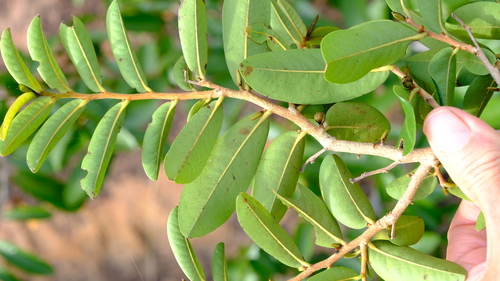
iNaturalist· cc-by-nc
(c) Nick Helme, some rights reserved (CC BY-NC), uploaded by Nick Helme
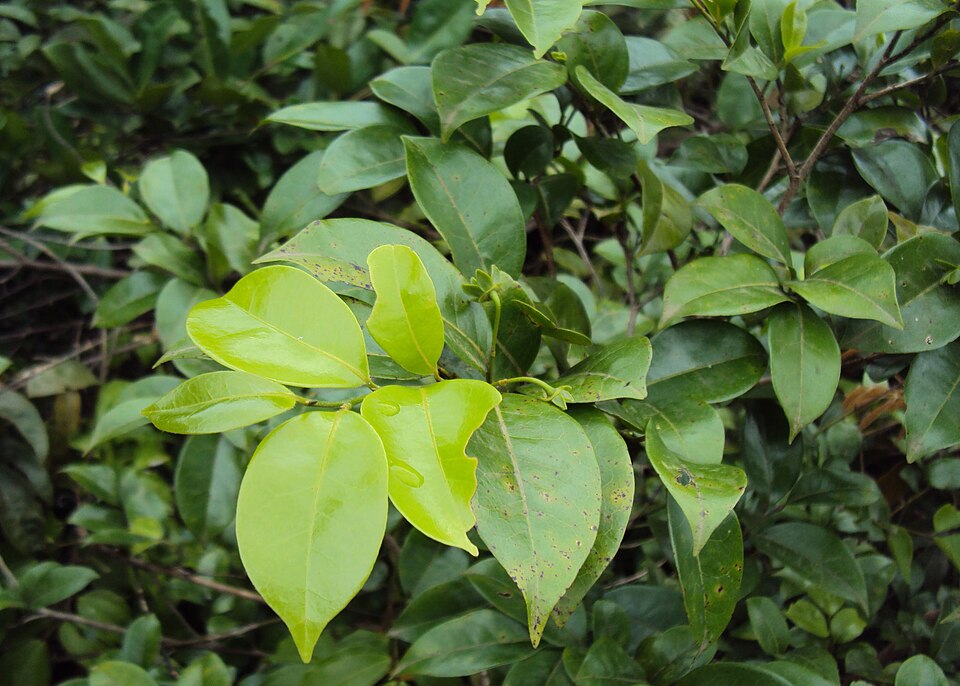
iNaturalist· cc-by-nc
(c) Richard Gill, some rights reserved (CC BY-NC)
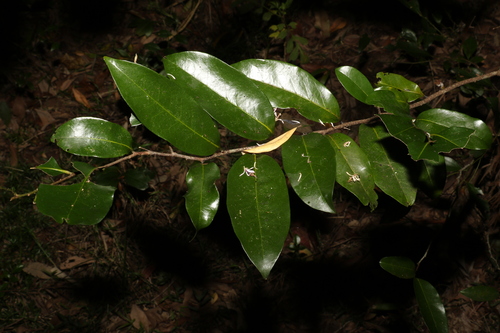
iNaturalist· cc-by-nc
(c) Craig Peter, some rights reserved (CC BY-NC)
Description
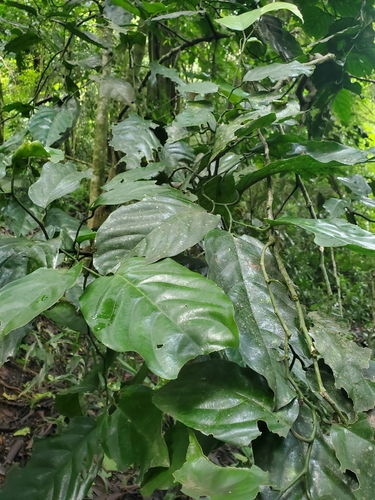
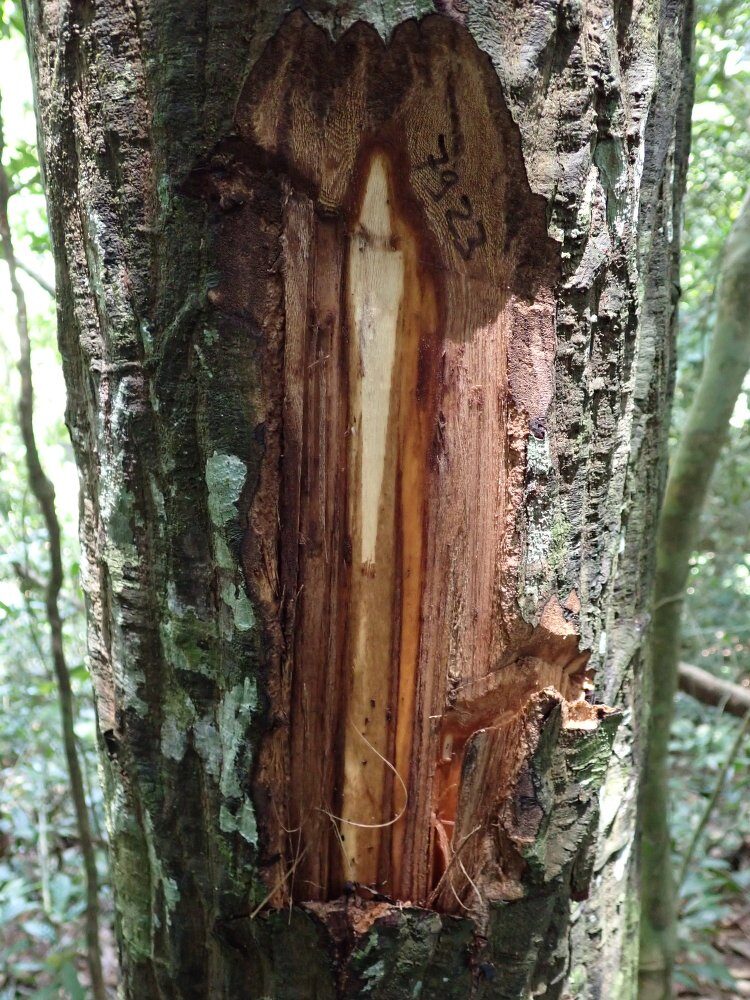
A medium to large tree. It grows 8-25 m tall. It is often poorly shaped. The bark is light greyish-brown. It is marked with rings and circles. The leaves are opposite and simple. They are broad and oval. Leaves are 5-18 cm long by 2-6.2 cm wide. They are dark green. The leaves smell of lemon. The edges are irregularly toothed. The flowers are in short spikes in the axils of leaves near the ends of branches. The sexes are separate on separate trees. The fruit are oval and 1.5 cm long. They are fleshy and orange but red when ripe.
Edible Uses
The fruit (berries) are edible.
Traditional Uses
The fruit (berries) are edible.
This uses section is brief — help expand it
Distribution
A tropical plant. It grows in moist evergreen forest, especially mountain forest. Trees are resistant to fire. In Nigeria it has been recorded at 1,500 m above sea level.
Where It Grows
Africa, Asia, Burundi, Cameroon, Central Africa, Congo, East Africa, India, Kenya, Malawi, Mozambique, Nigeria, Rwanda, South Africa, Southern Africa, Sudan, Tanzania, Uganda, West Africa, Zambia, Zimbabwe,
Notes
There is only one Xymalos species.
Synonyms
Also Known As
Chikalaka, Mblaka, Mpekeso, Mulaka, Nakaswaga, Nyaruboombwe
References (10)
- Ambasta, S.P. (Ed.), 2000, The Useful Plants of India. CSIR India. p 695
- Chapman, J. D. & Chapman, H. M., 2001, The Forest Flora of Taraba and Andamawa States, Nigeria. WWF & University of Canterbury. p 188
- Fowler, D. G., 2007, Zambian Plants: Their Vernacular Names and Uses. Kew. p 48
- Jardin, C., 1970, List of Foods Used In Africa, FAO Nutrition Information Document Series No 2.p 169
- Keay, R.W.J., 1989, Trees of Nigeria. Clarendon Press, Oxford. p 34
Show all 10 references Hide references
- Palgrave, K.C., 1996, Trees of Southern Africa. Struik Publishers. p 174
- Peters, C. R., O'Brien, E. M., and Drummond, R.B., 1992, Edible Wild plants of Sub-saharan Africa. Kew. p 147
- White, F., Dowsett-Lemaire, F. and Chapman, J. D., 2001, Evergreen Forest Flora of Malawi. Kew. p 379
- Williamson, J., 2005, Useful Plants of Malawi. 3rd. Edition. Mdadzi Book Trust. p 269
- World Checklist of Useful Plant Species 2020. Royal Botanic Gardens, Kew