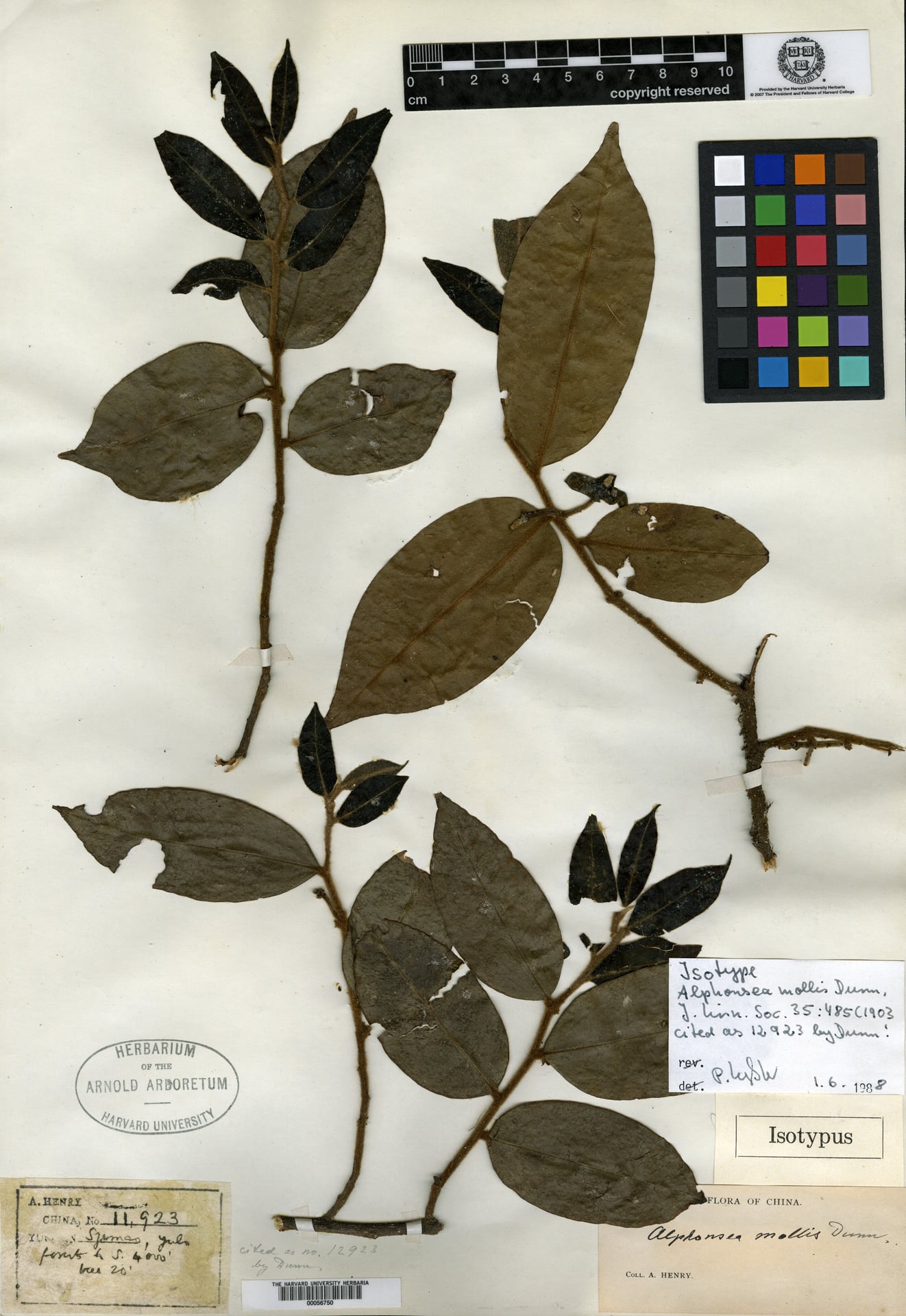
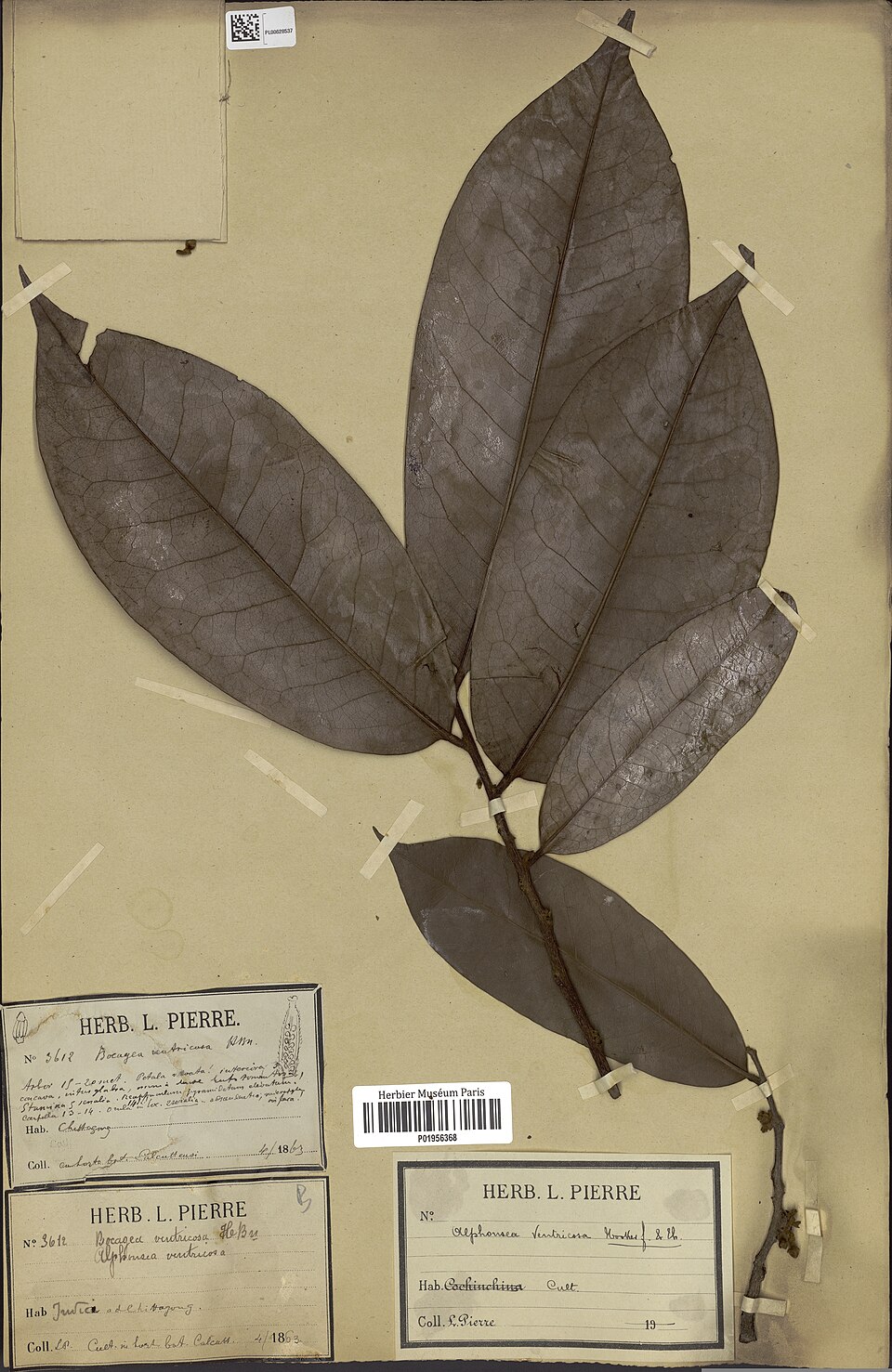
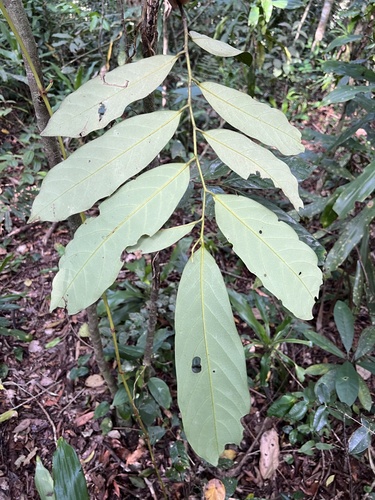
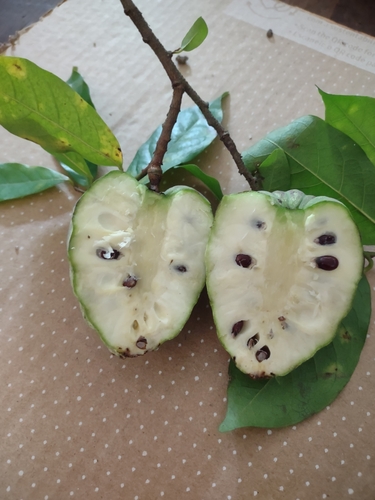
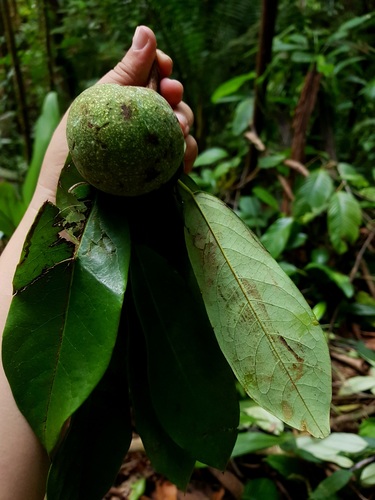
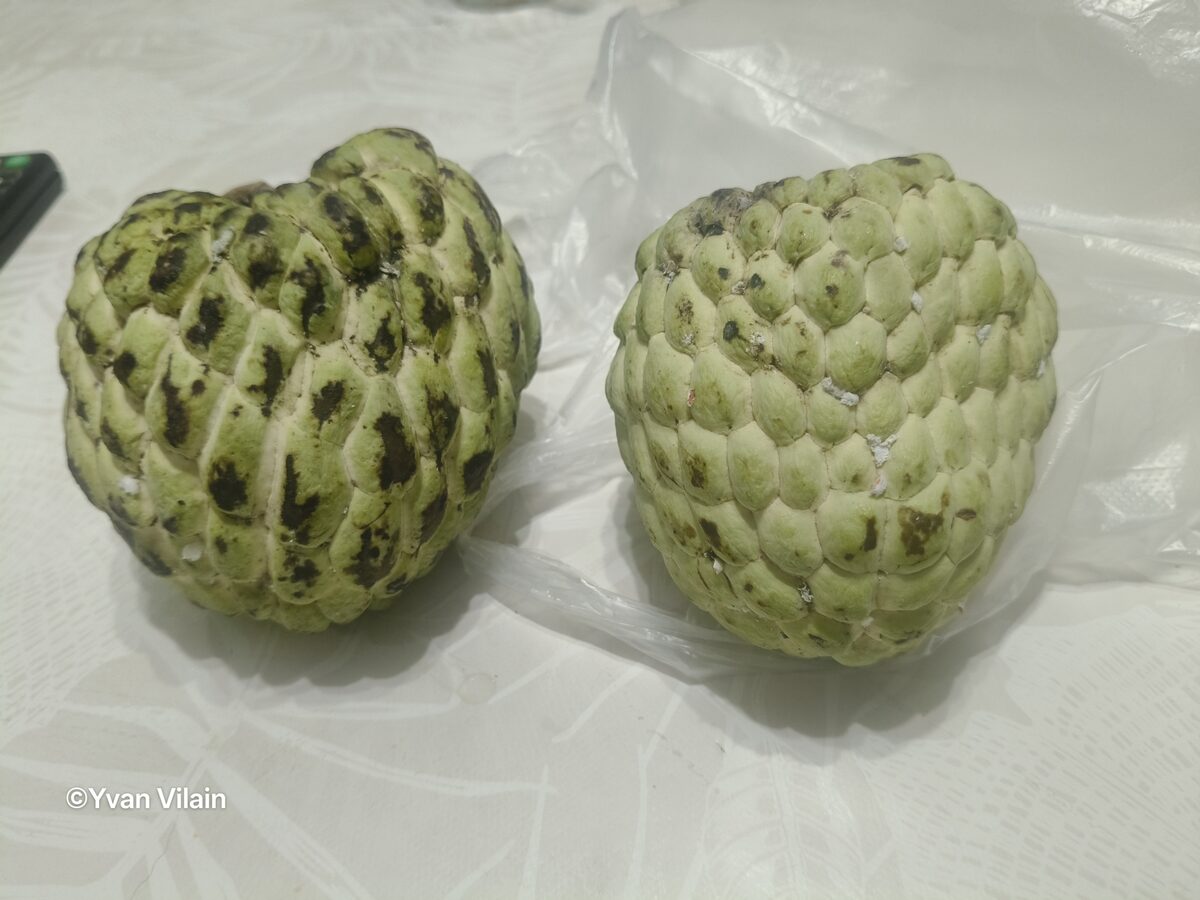
Annona glabra
L.
Pond apple, Monkey apple
iNaturalist· cc-by-nc
(c) cvice1, some rights reserved (CC BY-NC)
iNaturalist· cc-by-nc
(c) Armando Feliciano, some rights reserved (CC BY-NC), uploaded by Armando Feliciano
iNaturalist· cc-by-nc
(c) Jonathan Sellman, some rights reserved (CC BY-NC), uploaded by Jonathan Sellman
Summary
Source: WikipediaAnnona glabra is a tropical fruit tree in the family Annonaceae, in the same genus as the soursop and cherimoya. Common names include pond apple, alligator apple (so called because American alligators often eat the fruit), swamp apple, corkwood, bobwood, and monkey apple. The tree is native to Florida in the United States, the Caribbean, Central and South America, and West Africa. It is common in the Everglades. The A. glabra tree is considered an invasive species in Sri Lanka and Australia. It grows in swamps, is tolerant of saltwater, and cannot grow in dry soil.
Description
A small to medium sized tree. It grows 6-12 m high. The leaves are simple and 6-25 cm long. They are alternate. They vary in size. The flowers occur singly. The fruit is large and yellow. It is 70-80 mm across. They occur single in the axils of leaves. There are several seeds inside. These are about 12 mm long. The flesh is orange when ripe and edible.
Edible Uses
Unlike the other Annona species, the pulp of the fruit when ripe is yellow through orange instead of whitish. The fruit is edible for humans and its taste is reminiscent of ripe honeydew melon. It can be made into jam, and it is a popular ingredient of fresh fruit drinks in Maldives. In the past, the seeds were crushed and cooked in coconut oil and applied to hair to get rid of lice The flesh is sweet-scented and agreeable in flavor, but it has never attained general popular use unlike soursop and other related fruits. Experiments in South Florida have been conducted to use it as a superior rootstock for sugar-apple or soursop. While the grafts initially appear to be effective, a high percentage of them typically fail over time; and Soursop on pond-apple rootstock has a dwarfing effect. Recent research suggests that its alcoholic seed extract contains anticancer compounds that could be used pharmaceutically.
Traditional Uses
The fruit are used for jellies and eaten raw. The flavour can be improved by boiling. The fruit is often used for juice.
This uses section is brief — help expand it
Medicinal Uses
The leaves are anthelmintic and antirheumatic. The leaves and young stems, sometimes combined with the leaves and stems of Passiflora foetida, are boiled to make a tea which is drunk to destroy flatworms and nematodes. An infusion of the leaves and the flowers is used to treat rheumatism, liver diseases, hepatitis etc. The bark and the leaves, combined with the bark and leaves of Annona squamosa, are used as a sedative and cardiotonic infusion. The fruit is used as a treatment for dysentery. A syrup made from the fruit is used to treat chest colds, dry coughs and tuberculosis.
Distribution
A tropical plant. It grows in a range of tropical countries. It is widely cultivated between 100-200 m altitude in southern China. In Colombia it grows between sea level and 200 m above sea level. It suits the humid lowlands and grows in the mangrove swamps. It can grow in arid places. It can tolerate salt soils. It suits hardiness zones 10-12. In Yunnan.
Where It Grows
Africa, Aruba, Asia, Australia, Bahamas, Belize, Brazil*, Cambodia, Cameroon, Caribbean, Central Africa, Central America, China, Colombia, Congo, Cook Islands, Costa Rica, Côte d'Ivoire, Cuba, Curacao, Dominica, Dominican Republic, East Timor, Ecuador, El Salvador, Fiji, French Guiana, Gambia, Guatemala, Guianas, Guinea-Bissau, Guyana, Haiti, Hispaniola, Honduras, India, Indochina, Indonesia, Ivory Coast, Jamaica, Liberia, Malaysia, Maldives, Mexico, Micronesia, Nicaragua, Nigeria, North America, Pacific, Panama, Ponape, Puerto Rico, Sao Tome and Principe, SE Asia, Senegal, Sierra Leone, South America, Sri Lanka, St. Kitts and Nevis, Suriname, Taiwan, Timor-Leste, USA, Venezuela, Vietnam, West Africa, West Indies,
Cultivation
Plants are grown from seed. The seeds should be planted fresh and are best scratched to break the hard seed coat. Seeds germinate in 50-60 days. Seedlings can be transplanted after 7-8 months.
Propagation
Seed - it has a hard seedcoat and may benefit from scarification before sowing to speed up germination. This can usually be done by pouring a small amount of nearly boiling water on the seeds (being careful not to cook them!) and then soaking them for 12 - 24 hours in warm water. By this time they should have imbibed moisture and swollen - if they have not, then carefully make a nick in the seedcoat (being careful not to damage the embryo) and soak for a further 12 hours before sowing. The plant usually breeds true to type. Sow in individual pots, not deeper than 2cm, at 21c. Seeds may be sown directly into the field or in a nursery bed. A germination rate of 60 - 70% can be expected from fresh seeds, with the seeds sprouting within 50 - 60 days. Seedlings are ready to plant out 7 - 8 months later. The seeds remain viable for several months when kept moist. Semi-ripe cuttings.
Other Uses
Seedlings are useful as a rootstock for other Annona species in wet soils. The seeds serve as insecticide. The molluscicidal properties of Annona spp,. including Annona glabra have been proven. A useful fibre is obtained from the bark. It is sometimes used locally. The roots are quite long and thick, numerous, very light in weight and spongy,. They can be used as a cork substitute for purposes such as lifesavers, buoys on nets, shoe insoles , knife sharpeners etc, though they do not work as bottle stoppers because their extreme porosity does not allow them to retain liquids. The bark of the root is brownish, very fibrous, exhaling a pleasant aroma that could serve the perfumery industry; The sapwood and heartwood are not clearly demarcated. The dark brown wood has narrow, yellowish veins, it is very light in weight, soft, weak and easily sawn, moderately resistant to rot. It is used for making bottle stoppers, oars and as a substitute for cork in fishing nets. The wood is docile to the brush but rebellious to the saw, suitable for carpentry, boxing and slats, being special for masts of small boats and for oars, thanks to its flexibility, but it is not yet used. The wood is used for fuel. This species is a naturally invasive, pioneer species; establishing itself both in open areas and relatively undisturbed areas. It is a very effective plant for restoring native woodland, though it should not be used as a pioneer outside of its native range because of the risk of invasiveness. The plant is not eaten by the Giant African snail, (Achatina fulica), and so it is planted as low dense hedges around desirable crops to prevent infestations of the snail.
Other Information
It is popular in fresh fruit drinks in Maldives. It is cultivated.
Notes
It is not a very edible fruit. There are about 100-150 Annona species. It has anticancer and antioxidant properties.
Nutrition
| Part | Moisture | kJ | kcal | Protein | Vit A | Vit C | Iron | Zinc |
|---|---|---|---|---|---|---|---|---|
| Fruit | 86.6 | — | 52 | 0.4 | — | — | 2.3 | — |
Synonyms
Also Known As
Anon de agua, Anona de corcho, Araticum-da-agua, Araticum-de-jangada, Araticum-do-brejo, Araticum-do-mangue, Araticum-do-mangue, Araticupana, Baga, Cayuda, Fruta-conde, Gasima, Guanabana cimarrona, Guanabanito de playa, Kalhuthumeyvaa, Kayuda, Pohon apel rawa, Punu, Tiep khnao, Zwampzuurzak
References (68)
- References Annona glabra L. Pond-apple Synonyms for species: Annona palustris L.
- Ambasta S.P. (Ed.), 2000, The Useful Plants of India. CSIR India. p 42
- Arora, R. K., 2014, Diversity in Underutilized Plant Species - An Asia-Pacific Perspective. Bioversity International. p 56
- Ashton, M. S., et al 1997, A Field Guide to the Common Trees and Shrubs of Sri Lanka. WHT Publications Ltd. p 99
- Barwick, M., 2004, Tropical and Subtropical Trees. A Worldwide Encyclopedic Guide. Thames and Hudson p 27
Show all 68 references Hide references
- Bircher, A. G. & Bircher, W. H., 2000, Encyclopedia of Fruit Trees and Edible Flowering Plants in Egypt and the Subtropics. AUC Press. p 30
- Brack, P., et al, 2020, Frutas nativas do Rio Grande do Sul, Brasil: riqueza e potencial alimentício. Native fruits of Rio Grande do Sul, Brazil: richness and potential as food. Rodriguésia 71: e03102018.
- Burkill, H. M., 1985, The useful plants of west tropical Africa, Vol. 1. Kew.
- Catarino, L., et al, 2016, Ecological data in support of an analysis of Guinea-Bissau's medicinal flora. Data in Brief 7 (2016):1078-1097
- Chizmar Fernandez, C., et al, 2009, Plantas comestibles de Centroamerica. Instituto de Biodiversidad, Costa Rica. p 33
- Cribb, A.B. & J.W., 1976, Wild Food in Australia, Fontana. p 21
- Coe, F. G. & Anderson, G. J., 1997, Ethnobotany of the Miskitu of Eastern Nicaragua. Journal of Ethnobiology 17(2): 171-214
- Coe, F. G. and Anderson, G. J., 1999, Ethnobotany of the Sumu (Ulwa) of Southeastern Nicaragua and Comparisons with Miskitu Plant Lore. Economic Botany Vol. 53. No. 4. pp. 363-386
- Condit, R., et al, 2011, Trees of Panama and Costa Rica. PrincetonField Guides. p 38
- Cooper W & Cooper W T, 1994, Fruits of the Rain Forest. RD Press p 34
- Cooper, W. and Cooper, W., 2004, Fruits of the Australian Tropical Rainforest. Nokomis Editions, Victoria, Australia. p 19
- Cowie, I, 2006, A Survey of Flora and vegetation of the proposed Jaco-Tutuala-Lore National Park. Timor-Lests (East Timor) www.territorystories.nt/gov.au p 42
- Dalziel, J. M., 1937, The Useful plants of west tropical Africa. Crown Agents for the Colonies London.
- Darley, J. J., 1993, Know and Enjoy Tropical Fruit. P & S Publishers. p 3
- Etherington, K., & Imwold, D., (Eds), 2001, Botanica's Trees & Shrubs. The illustrated A-Z of over 8500 trees and shrubs. Random House, Australia. p 96
- Facciola, S., 1998, Cornucopia 2: a Source Book of Edible Plants. Kampong Publications, p 12
- Food Composition Tables for use in East Asia FAO http://www.fao.org/infoods/directory No. 984
- Garner, R.J., and Chaudhri, S.A., (Ed.) 1976, The Propagation of Tropical fruit Trees. FAO/CAB. p 242
- Global Plants JSTOR
- Grandtner, M. M., 2008, World Dictionary of Trees. Wood and Forest Science Department. Laval University, Quebec, Qc Canada. (Internet database http://www.WDT.QC.ca)
- Grandtner, M. M. & Chevrette, J., 2013, Dictionary of Trees, Volume 2: South America: Nomenclature, Taxonomy and Ecology. Academic Press p 37
- Hedrick, U.P., 1919, (Ed.), Sturtevant's edible plants of the world. p 57 (As Anona palustris)
- Hoehne. 1946. Frutas indigenas, Inst. Bot. Sao Paulo.
- Huxley, ed. The new Royal Horticultural Society dictionary of gardening.1992
- Jardin, C., 1970, List of Foods Used In Africa, FAO Nutrition Information Document Series No 2.p 120
- Kunkel, G., Plants for human consumption
- Leal, M. L. et al, 2018, Knowledge, use, and disuse of unconventional food plants. Journal of Ethnobiology and Ethnomedicine (2018) 14:6
- Liberty Hyde Bailey Hortorium. 1976. Hortus third.
- Li Ping-Tao, Annonaceae, Flora China
- Little, E. L., et al, 1974, Trees of Puerto Rico and the Virgin Islands. USDA Handbook 449. Forestry Service. p 184
- Lopez-Diago, D. & Garcia, N., 2021, Wild edible fruits of Colombia. Biota ColomBiana 22 (2) p 28
- Lorenzi, H., Bacher, L., Lacerda, M. & Sartori, S., 2006, Brazilian Fruits & Cultivated Exotics. Sao Paulo, Instituto Plantarum de Estuados da Flora Ltda. p 46
- Lorenzi, H., 2009, Brazilian Trees. A Guide to the Identification and Cultivation of Brazilian Native Trees. Instituto Plantarum de Estuados da Flora Ltda. Vol. 3 p 25
- Maas, P.J. M., et al, 2001, Annonaceae from Central-eastern Brazil. Rodriguesia 52(80): 65-98
- Mansf. 1959. Die Kulturpflanze, Beiheft 2.
- Martin, F. W., et al, 1987, Perennial Edible Fruits of the Tropics. USDA Handbook 642 p 80
- McLaughlin, J., Woody and Herbaceus Plants Native to Haiti. University of Florida. p 3
- Murillo-A, J., 2001, Annonaceae of Colombia. Biota Colombiana 2(1): 49-51
- NYBG herbarium "edible"
- Oliviera V. B., et al, 2012, Native foods from Brazilian biodiversity as a source of bioactive compounds. Food Research International 48 (2012) 170-179
- Omawale, 1973, Guyana's edible plants. Guyana University, Georgetown p 30
- Peters, C. R., O'Brien, E. M., and Drummond, R.B., 1992, Edible Wild plants of Sub-saharan Africa. Kew. p 53
- Pham-Hoang Ho, 1999, An Illustrated Flora of Vietnam. Nha Xuat Ban Tre. p 244
- Phon, P., 2000, Plants used in Cambodia. © Pauline Dy Phon, Phnom Penh, Cambodia. p 38
- Plants of Haiti Smithsonian Institute http://botany.si.edu
- Recher, P, 2001, Fruit Spirit Botanical Gardens Plant Index. www.nrg.com.au/~recher/ seedlist.html p 1
- Roa, J. A. G. & Boada, D. S. G., 2018, Fundación para el Fortalecimiento de la Fruticultura y Plantas Alimenticias no Convencionales en Colombia.
- Romanowski, N., 2007, Edible Water Gardens. Hyland House. p 104
- Royal Botanic Gardens, Kew (1999). Survey of Economic Plants for Arid and Semi-Arid Lands (SEPASAL) database. Published on the Internet; http://www.rbgkew.org.uk/ceb/sepasal/internet [Accessed 28th March 2011]
- Segura, S. et al, 2018, The edible fruit species in Mexico. Genet Resour Crop Evol (2018) 65:1767–1793
- Selvam, V., 2007, Trees and shrubs of the Maldives. RAP Publication No. 2007/12
- Sp. pl. 1:537. 1753
- Smith, A.C., 1981, Flora Vitiensis Nova, Lawaii, Kuai, Hawaii, Volume 2 p 39
- Sujanapal, P., & Sankaran, K. V., 2016, Common Plants of Maldives. FAO & Kerala FRI, p 32
- Sukarya, D. G., (Ed.) 2013, 3,500 Plant Species of the Botanic Gardens of Indonesia. LIPI p 127
- Terrell et al. 1986. Agric. Handb. no. 505.
- Torre, de la L., et al, 2008, Enciclopedia de las Plantas Útiles del Ecuador. Herbario QCA. Pontificia Universidad Católica del Ecuador. p 163
- Turrill et al., eds. 1952-. Flora of tropical East Africa.
- Unwin, A. H., 1920, West African Forests and Forestry. Fisher Unwin Ltd. pdf on Internet p 70 (As Annona palustris)
- van Roosmalen, M.G.M., 1985, Fruits of the Guianan Flora. Utrecht Univ. & Wageningen Univ. p 6
- Wiersema, J. H. & Leon, B., 2013, World Economic Plants. A Standard Reference CRC Press. 2nd Ed. p 56
- World Checklist of Useful Plant Species 2020. Royal Botanic Gardens, Kew
- www.colecionandofrutas.org