Asteranthe asterias
(S. Moore) Engl. & Diels
Community photo· cc-by
Thomas Couvreur
Summary
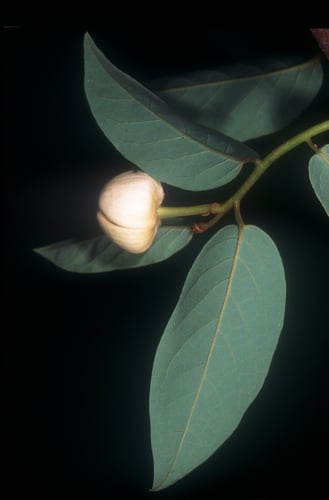
Source: WikipediaAsteranthe asterias is a species of plant in the family Annonaceae. It is native to Kenya and Tanzania. Spencer Le Marchant Moore, the English botanist who first formally described the species using the basionym Uvaria asterias, did not explicitly explain the epithet, but was likely referencing the star-like appearance of its flower's petals.
Description
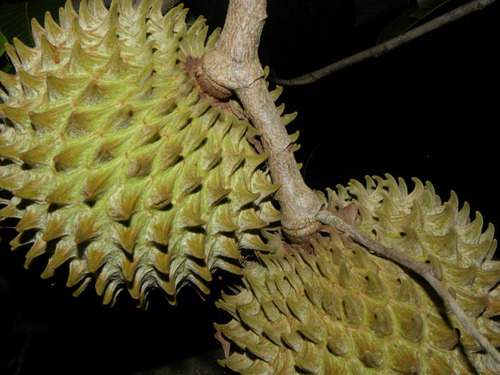
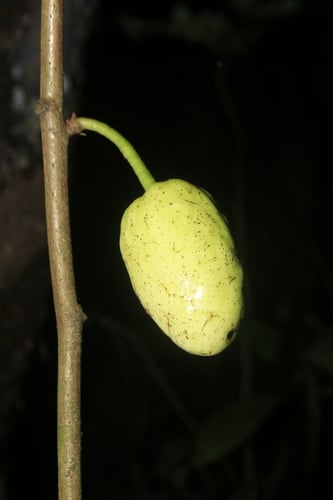
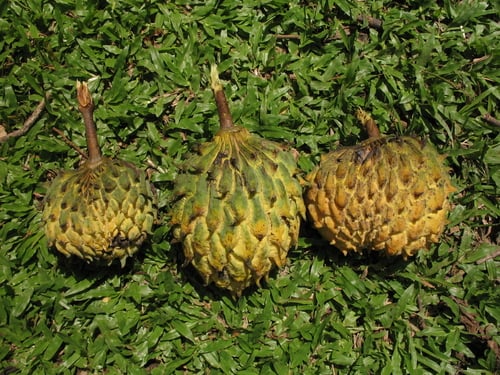
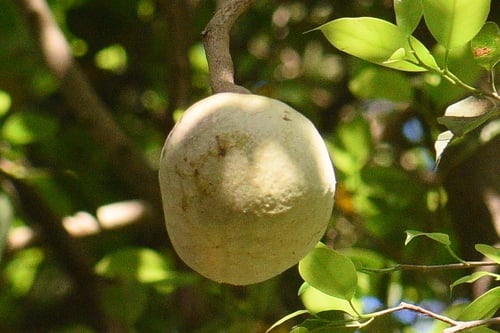
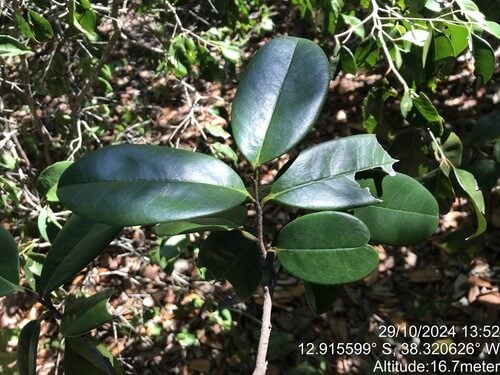
A shrub or small tree. It grows 2-8 m tall. The bark is grey to black with fine lines along it. The young branches have rusty hairs. The leaves are oval and 4-17 cm long by 2-6 cm wide. They taper to the tip. Young leaves are hairy underneath. The flowers have an unpleasant smell. The petals are green at first then creamy white. The fruit are 2-4 cm long by 1 cm wide. They have velvety brown hairs. The seeds are yellow to brown and 7-8 mm long by 4-5 mm wide.
Edible Uses
The bark and leaves are used as flavouring.
Medicinal Uses
A paste made from the pounded roots is applied to swellings. The bark of the stems and roots has shown in-vitro activity against Plasmodium falciparum and Trypanosoma brucei rhodesiense, the parasites that cause malaria and sleeping sickness, respectively. Two diprenylated indoles, 2’,3’-epoxyasteranthine and 2’, 3’-dihydroxyasteranthine, were isolated from the stem bark and root bark. These compounds exhibited remarkable antifungal activity against Saprolegnia and Rhizoctonia spp., comparable with that of the standard antimycotic agent naftifine.
Distribution
It is a tropical plant. It grows in lowland forests up to 650 m above sea level. It is often on limestone soils and near streams.
Where It Grows
Africa, East Africa, Kenya, Tanzania,
Other Uses
The stems are used as building poles.
Synonyms
References (2)
- PROTA4U
- World Checklist of Useful Plant Species 2020. Royal Botanic Gardens, Kew