Asimina triloba
(L.) Dunal
Asimoya, Custard apple, Pawpaw
iNaturalist· cc-by
(c) Wendell Smith, some rights reserved (CC BY)
iNaturalist· cc-by-nc
(c) Barbara Katzenberg, some rights reserved (CC BY-NC), uploaded by Barbara Katzenberg
iNaturalist· cc-by-nc-sa
(c) Rob Curtis, some rights reserved (CC BY-NC-SA), uploaded by Rob Curtis
Summary
Source: WikipediaAsimina triloba, the American papaw, pawpaw, paw paw, or paw-paw, among many regional names, is a species of small deciduous tree. It has large leaves and produces a large, yellowish-green to brown fruit. The species is native to eastern North America, in a more temperate range than its tropical relatives. It is a patch-forming (clonal) understory tree of hardwood forests, being found in well-drained, deep, fertile bottomland and also hilly upland habitat. Although much of the plant contains the neurotoxin annonacin, the ripe fruits are edible. They are sweet, with a custard-like texture and a flavor somewhat similar to banana or pineapple. They are commonly eaten raw, but are also used to make ice cream and baked desserts.
Description
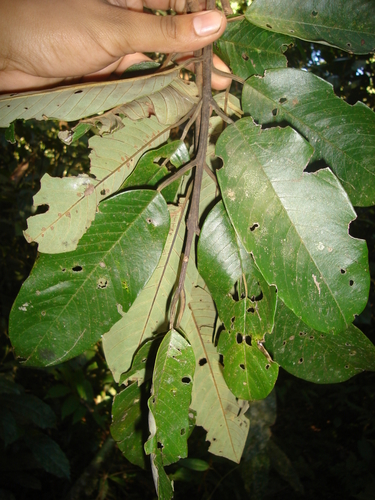
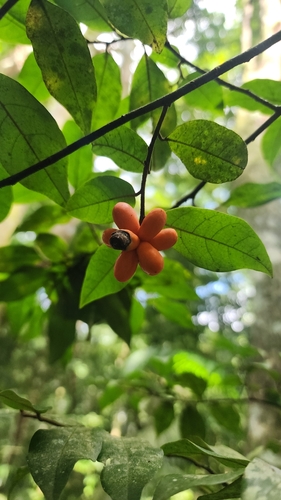
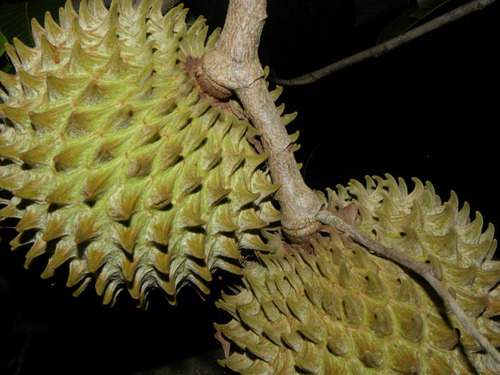
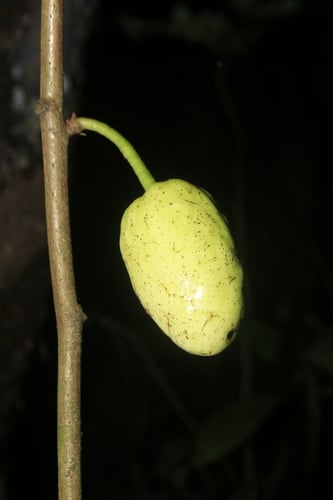
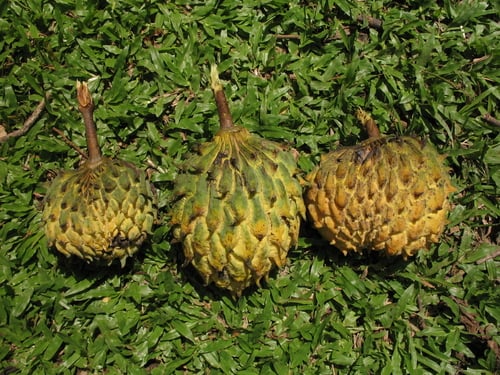
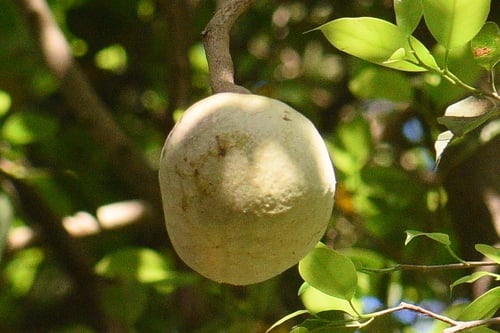
A medium sized tree. It grows to 8-15 m tall. It has straight spreading branches. It loses its leaves during the year. The leaves are narrow and oval. They are up to 25 cm long. They are widest above the middle. The upper surface is green and they are more pale underneath. The flowers are deep red-brown. They are 5 cm long and hang down. They are carried in clusters of 2-5 flowers. The fruit is black-brown. They are elongated. They are 5-15 cm long. The fruit are edible. They have soft orange flesh. The seeds are small, long, hard and black. There are several named cultivated varieties.
Edible Uses
Edible Parts: Fruit Edible Uses: Edible fruit - raw or cooked. A very good size, it can be up to 16cm long and 4cm wide. Of variable quality, some forms (with orange skins) are exquisite with the flavour of banana custard whilst others (with yellow, white or dark brown skins) can be unpleasant. Another report says that the white fruits are mildly flavoured and later ripening than the orange fruits. The fruit can also be used for making preserves, pies, ice cream and other sweet desserts. The fruit falls from the tree in autumn and is then stored until fully ripe. The fruit can cause gastro-intestinal upsets for some people.
Traditional Uses
The ripe fruit have the consistency of a custard and are eaten. They are also used for preserves, ice cream, cakes and sweet desserts. Caution: The seeds are toxic. Some people are allergic to this fruit.
Medicinal Uses
Antiemetic Diuretic Emetic Laxative Narcotic Parasiticide The fruit is used as a laxative. The leaves are diuretic. They are applied externally to boils, ulcers and abscesses. The seed contains the alkaline asiminine, which is emetic and narcotic. They have been powdered and applied to hair to kill lice. The bark is a bitter tonic. It contains the alkaline analobine, which is used medicinally.
Known Hazards
The bark, twigs, leaves, and seeds of pawpaw have long been assumed to be poisonous to humans, as they are not consumed by vertebrate animals native to their range. However, some herbal concoctions have contained leaf tissue. Laboratory research isolating annonacin in pawpaw fruit led to speculation that it may be a neurotoxic factor in causing atypical parkinsonism. One study reported low concentrations (approximately 70 micrograms per gram) in frozen pulp, but it is unclear whether this difference is due to the freezing process, the cultivar used, or the fruit's stage of maturity. A 2015 study cautioned that some standard methods of isolating the known toxins also isolated isomers of those toxins, thereby inflating the toxic concentrations reported in fruit pulp. Because it is reproductively harmful for fruit skin and pulp to attract coevolved mammalian herbivores before the seeds are fully ripened, unripe fruit would be expected to include toxins or other repellents in its skin and pulp. Thus analysis of pulp nutrition and other chemicals must be restricted to fully ripe fruit. While consumption of annonacin-containing plant products has been linked to atypical parkinsonism, the populations most at risk are those who consume large amounts of fruit products year-round from the Annonaceae family. Specifically, there is concern that the pulp of such tropical fruits "may have caused atypical parkinsonism on the Caribbean island of Guadeloupe and the Pacific islands of Guam and New Caledonia". In parallel, researchers have been probing the degree to which consumption of the roots of tropical cycad plants native to these islands may be the primary cause of neurodegenerative disease.
Distribution
It is a temperate plant. It is native to North America. It prefers rich soil. It is best with some shade. It will tolerate reasonable frost. It needs a growing season of 6-8 months but then can tolerate temperatures. It suits hardiness zones 5-10. Arboretum Tasmania.
Where It Grows
Afghanistan, Australia, Britain, Canada, Europe, North America*, Tasmania, USA,
Cultivation
They are grown from seed. They seed need cold treatment before they will grow. Plants do not transplant easily because of the deep taproot.
Propagation
Seed - best sown as soon as it is ripe in a cold frame. The seed usually germinates in 1 - 3 months at 15°c. Stored seed requires stratification, it has embryo dormancy and an impermeable seedcoat and can take up to 18 months to germinate. Dried seed quickly loses its viability. As soon as the seedlings are large enough to handle, prick them out into individual pots and grow them on in the greenhouse for t least their first winter. If trying them outdoors, plant them into their permanent positions in early summer once the plants are more than 15cm tall. Consider giving them some protection from winter cold for their first winter outdoors. Layering.
Other Uses
Dye Fibre Insecticide Parasiticide Wood A fibre from the inner bark is used for making strong rope and string. The seed has insecticidal properties. A yellow dye is made from the ripe flesh of the fruit. Wood - light, soft, weak, spongy, coarse grained. It weighs 24lb per cubic foot. It is not used commercially. Landscape Uses: Border, Pest tolerant, Specimen, Woodland Forest garden - a good understory tree. Shelter for wildlife [1-2]. Special Uses Food Forest
Production
Trees are fairly slow growing. Plants commence after about 5 years. The fruit need to be very ripe before eating. They take 4-5 months to mature after fruit set. Trees can produce 50-100 fruit per tree each year. Fruit only store for 2-3 days at room temperature but for 3 weeks with refrigeration.
Other Information
The fruit is nutritious.
Notes
There are 7 or 8 Asimina species.
Nutrition
| Part | Moisture | kJ | kcal | Protein | Vit A | Vit C | Iron | Zinc |
|---|---|---|---|---|---|---|---|---|
| Fruit | — | 80 | 1.2 | 8.5 | 18.3 | 7 | 0.9 | — |
| Fruit | — | — | — | — | — | — | — | — |
Synonyms
Also Known As
Dog-banana, Hoosier Banana, Indian-banana, Michigan banana, North American pawpaw, Poor Man's Banana
References (40)
- Beckstrom-Sternberg, Stephen M., and James A. Duke. "The Foodplant Database." http://probe.nalusda.gov:8300/cgi-bin/browse/foodplantdb.(ACEDB version 4.0 - data version July 1994)
- Bircher, A. G. & Bircher, W. H., 2000, Encyclopedia of Fruit Trees and Edible Flowering Plants in Egypt and the Subtropics. AUC Press. p 44
- Bodkin, F., 1991, Encyclopedia Botanica. Cornstalk publishing, p 107
- Brickell, C. (Ed.), 1999, The Royal Horticultural Society A-Z Encyclopedia of Garden Plants. Convent Garden Books. p 145
- Coombes, A.J., 2000, Trees. Dorling Kindersley Handbooks. p 107
Show all 40 references Hide references
- Cundall, P., (ed.), 2004, Gardening Australia: flora: the gardener's bible. ABC Books. p 196
- Duke, J.A., 1992, Handbook of Edible Weeds. CRC Press. p 42
- Elias, T.S. & Dykeman P.A., 1990, Edible Wild Plants. A North American Field guide. Sterling, New York p 198
- Esperanca, M. J., 1988. Surviving in the wild. A glance at the wild plants and their uses. Vol. 2. p 128
- Etherington, K., & Imwold, D., (Eds), 2001, Botanica's Trees & Shrubs. The illustrated A-Z of over 8500 trees and shrubs. Random House, Australia. p 106
- Facciola, S., 1998, Cornucopia 2: a Source Book of Edible Plants. Kampong Publications, p 13
- Farrar, J.L., 1995, Trees of the Northern United States and Canada. Iowa State University press/Ames p 398
- Flowerdew, B., 2000, Complete Fruit Book. Kyle Cathie Ltd., London. p 188
- Gouldstone, S., 1978, Australian and New Zealand Guide to food bearing plants. Books for Pleasure. p 37
- Grandtner, M. M., 2008, World Dictionary of Trees. Wood and Forest Science Department. Laval University, Quebec, Qc Canada. (Internet database http://www.WDT.QC.ca)
- Hedrick, U.P., 1919, (Ed.), Sturtevant's edible plants of the world. p 79
- Heywood, V.H., Brummitt, R.K., Culham, A., and Seberg, O. 2007, Flowering Plant Families of the World. Royal Botanical Gardens, Kew. p 34
- Hibbert, M., 2002, The Aussie Plant Finder 2002, Florilegium. p 34
- Jackes, D. A., Edible Forest Gardens
- Janick, J. & Paul, R. E. (Eds.), 2008, The Encyclopedia of Fruit & Nuts. CABI p 62
- John, L., & Stevenson, V., 1979, The Complete Book of Fruit. Angus & Robertson p 290
- Kiple, K.F. & Ornelas, K.C., (eds), 2000, The Cambridge World History of Food. CUP p 1828
- Little, E.L., 1980, National Audubon Society Field Guide to North American Trees. Alfred A. Knopf. p 447
- Lyle, S., 2006, Discovering fruit and nuts. Land Links. p 82
- MacKinnon, A., et al, 2009, Edible & Medicinal Plants of Canada. Lone Pine. p 101
- Medsger, O. P., 1939, Edible Wild Plants. Macmillan Company. p 9
- Monog. Anonac. 83. 1817
- Phillips, R. & Rix, M., 2002, The Botanical Garden Vol. 1. Trees and Shrubs. MacMillan. p 65
- Plants for a Future database, The Field, Penpol, Lostwithiel, Cornwall, PL22 0NG, UK. http://www.scs.leeds.ac.uk/pfaf/
- Ryan, S., 2008, Dicksonia. Rare Plants Manual. Hyland House. p 8
- Saunders, C.F., 1948, Edible and Useful Wild Plants. Dover. New York. p 100
- Self, M., 199, Phoenix Seeds catalogue. p 15
- Toupal, R. S. & Hollenback, K., 2009, An Ethnobotany of Indiana Dunes National Lakeshore: Plant Uses of the Ojibwa People. Bureau of Applied Research in Anthropology. University of Arizona
- Tozer, F., 2007, The Uses of Wild Plants. Green Man Publishing. p 41
- USDA, ARS, National Genetic Resources Program. Germplasm Resources Information Network - (GRIN). [Online Database] National Germplasm Resources Laboratory, Beltsville, Maryland. Available: www.ars-grin.gov/cgi-bin/npgs/html/econ.pl (10 April 2000)
- Wiersema, J. H. & Leon, B., 2013, World Economic Plants. A Standard Reference CRC Press. 2nd Ed. p 74
- Wild Edible Plants of the Whitmire Wildflower Garden. Missouri Botanical Gardens.
- World Checklist of Useful Plant Species 2020. Royal Botanic Gardens, Kew
- www.worldagroforestrycentre.org/treedb/
- Young, J., (Ed.), 2001, Botanica's Pocket Trees and Shrubs. Random House. p 110