Mosiera longipes
(O. Berg.) Small
Guayabilla, Caloosa huckleberry, Long stalk guava
iNaturalist· cc-by
(c) Andrés Ramírez-Barrera, some rights reserved (CC BY), uploaded by Andrés Ramírez-Barrera
iNaturalist· cc-by-nc
(c) icalbert, some rights reserved (CC BY-NC)
iNaturalist· cc-by-nc
(c) Bronzit_poet, some rights reserved (CC BY-NC), uploaded by Bronzit_poet
Summary
Source: WikipediaMosiera longipes is a species of plant in the Myrtle family. Its common names include Mangroveberry, Bahama Stopper, and Long-stalked Stopper. It is listed as Near Threatened on the IUCN Red List and shows a declining population trend.
Description
A shrub or small tree. It is erect. The branches are slender. The leaves are oval and greyish-green. The twigs are dark brown and the leaf stalks are yellow. The flowers are white or pink. The fruit is a red berry. It is 10 mm across. The fruit are edible.
Edible Uses
The fruit are eaten fresh or made into jellies, jams, sauces, shortcakes, and wines.
Traditional Uses
The fruit are eaten fresh or made into jellies, jams, sauces, shortcakes and wines.
This uses section is brief — help expand it
Distribution
It is a tropical plant. It grows well by the seaside.
Where It Grows
Antilles, Bahamas, Barbados, Central America, North America, Puerto Rico, South America, USA, West Indies,
Production
It is slow growing.
Notes
There are about 150 Psidium species.
Synonyms
Also Known As
Bahama stopper, Mangrove berry, Stopper
References (12)
- Barwick, M., 2004, Tropical and Subtropical Trees. A Worldwide Encyclopedic Guide. Thames and Hudson p 348
- Beckstrom-Sternberg, Stephen M., and James A. Duke. "The Foodplant Database." http://probe.nalusda.gov:8300/cgi-bin/browse/foodplantdb.(ACEDB version 4.0 - data version July 1994)
- Facciola, S., 1998, Cornucopia 2: a Source Book of Edible Plants. Kampong Publications, p 159 (As Psidium littorale var. longipes)
- Grandtner, M. M., 2008, World Dictionary of Trees. Wood and Forest Science Department. Laval University, Quebec, Qc Canada. (Internet database http://www.wdt.qc.ca)
- Hedrick, U.P., 1919, (Ed.), Sturtevant's edible plants of the world. p 299 (As Eugenia longipes)
Show all 12 references Hide references
- J. Arnold Arbor. 54:312. 1973
- Kermath, B. M., et al, 2014, Food Plants in the Americas: A survey of the domesticated, cultivated and wild plants used for Human food in North, Central and South America and the Caribbean. On line draft. p 722 (As Psidium longipes)
- Kiple, K.F. & Ornelas, K.C., (eds), 2000, The Cambridge World History of Food. CUP p 1820 (As Myrtus verrucosa)
- Macmillan, H.F. (Revised Barlow, H.S., et al) 1991, Tropical Planting and Gardening. Sixth edition. Malayan Nature Society. Kuala Lumpur. p 317
- Morton,
- Popenoe,
- Uphof,
More from Myrtaceae
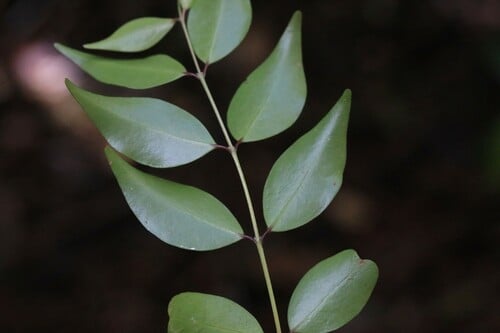
Archirhodomyrtus beckleri
Pink myrtle, Rose myrtle, Beckler's myrtle
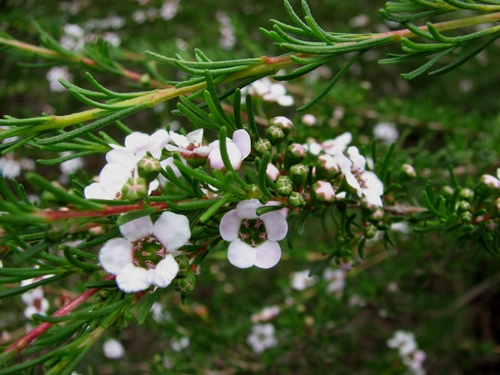
Astartea fascicularis
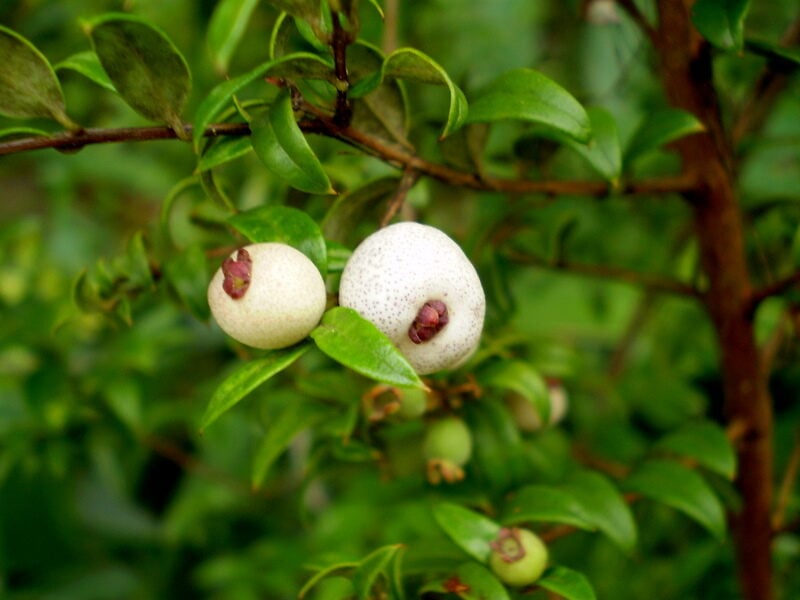
Austromyrtus dulcis
Midjin, Midjimberry, Midgen Berry, Quaker’s Cherry
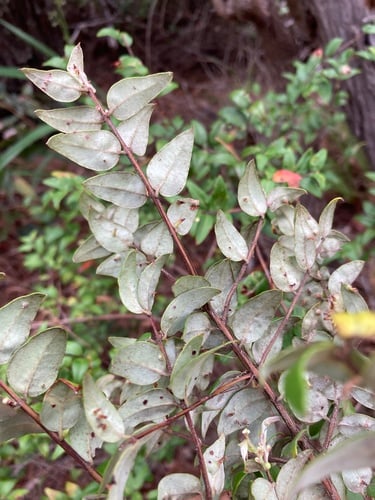
Austromyrtus dulcis x tenuifolia
Hybrid midyim
Austromyrtus glabra
Austromyrtus tenuifolia
Narrow leafed myrtle, Narrow-leafed midgenberry