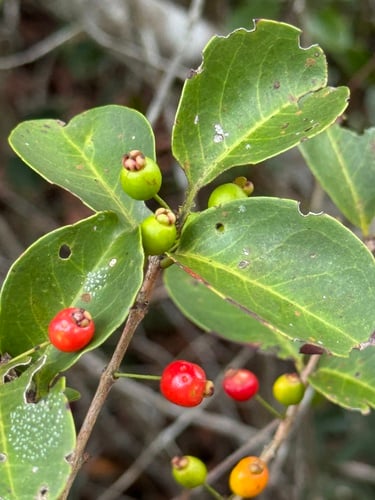
Syzygium tierneyanum
(F. Muell.) T.G. Hartley & L.M. Perry
Bamaga satinash, River cherry
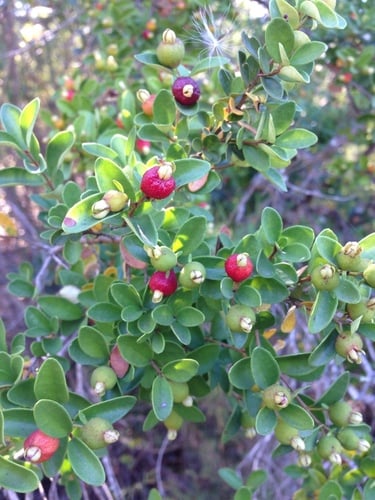
iNaturalist· cc-by-nc
(c) Graham Bell, some rights reserved (CC BY-NC), uploaded by Graham Bell
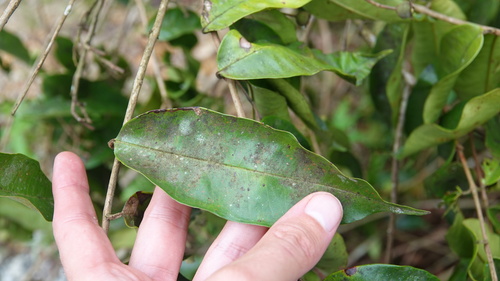
iNaturalist· cc-by-nc
(c) apteryxrowi, some rights reserved (CC BY-NC), uploaded by apteryxrowi
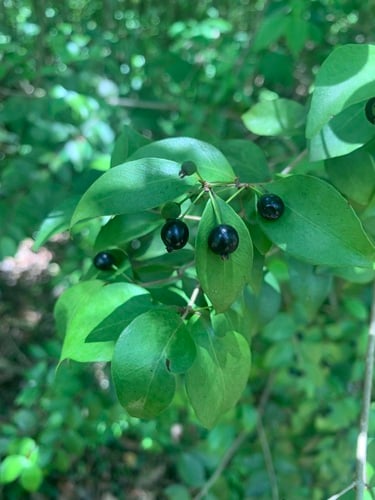
iNaturalist· cc-by-nc
(c) Russell Cumming, some rights reserved (CC BY-NC), uploaded by Russell Cumming
Summary
Source: WikipediaSyzygium tierneyanum, commonly known as river cherry, water cherry, or Bamaga satinash, is a tree in the family Myrtaceae which is native to New Guinea, the Solomon Islands, Vanuatu and north east Queensland. It often grows along watercourses where it is a facultative rheophyte.
Description
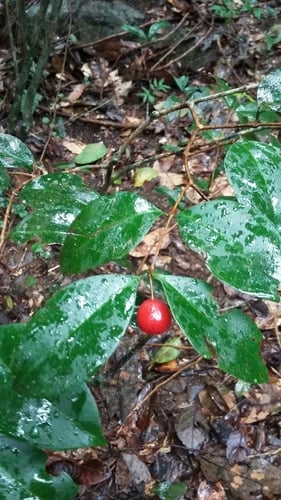
A small tree. It grows to 10-25 m tall. It has a spreading dense crown. The bark is flaky. The young shoots are coppery brown. The leaves are sword shaped and thin. They are smooth and without hairs. They are 9-18 cm long by 6 cm wide. They are dark glossy green on the upper surface and paler underneath. The flowers are fairly large. They are cream and borne in small clusters in the axils of the older leaves. The fruit are round and 2 cm across. They are usually pink or red but may be white. The fruit are edible. There is one seed inside. It is 5-8 mm across. The cut seed is red-purple.
Edible Uses
Fruit. Edible, but not very appealing. The red or white, globular fruit is about 20mm in diameter; the succulent flesh surrounding a solitary seed about 5 - 8mm in diameter.
Traditional Uses
The fruit are eaten.
This uses section is brief — help expand it
Distribution
A tropical tree. It occurs in north east Queensland in Australia. It grows between sea level and 460 m altitude. Plants will grow in a range of soils. They need plenty of moisture. They occur in rainforests. Adelaide Botanical Gardens. In Townsville palmetum.
Where It Grows
Asia, Australia*, Pacific, Papua New Guinea, PNG, SE Asia, Singapore, Solomon Islands, Vanuatu,
Cultivation
Plants can be grown from fresh seed.
Propagation
Seed - sown fresh, the germination is rapid and reliable.
Other Uses
The wood is a structural timber. We do not have any more specific information for the wood of this species, but the various species of Syzygium tend to have somewhat similar timber. The general description of syzygium timber is as follows:- The heartwood is a golden brown, greyish brown or brown, with pink or purplish glints; it is not clearly demarcated from the 1 - 4cm wide band of sapwood. The texture is fine; the grain slightly interlocked, sometimes wavy or irregular; there are resin deposits. The wood is heavy; moderately hard; somewhat durable, being moderately resistant to fungi and termites, but susceptible to dry wood borers. It seasons slowly, with a high risk of checking and distortion; once dry it is moderately stable in service. It works well with ordinary tools, nailing and screwing are good so long as the wood is pre-bored; gluing is correct. The wood is used for musical instruments, tool handles, furniture components, ship building, heavy carpentry, flooring, joinery etc. The tree is often planted along the sides of streams in order to stabilize the banks.
Production
In Australia the fruit are ripe in January and February.
Other Information
It is cultivated.
Synonyms
Also Known As
Kaisungaga
References (19)
- Beasley, J., 2011, Plants of Tropical North Queensland - the compact guide. Footloose publications. p 170
- Cherikoff V. & Isaacs, J., The Bush Food Handbook. How to gather, grow, process and cook Australian Wild Foods. Ti Tree Press, Australia p 51
- Cooper W & Cooper W T, 1994, Fruits of the Rain Forest. RD Press p 278
- Cooper, W. and Cooper, W., 2004, Fruits of the Australian Tropical Rainforest. Nokomis Editions, Victoria, Australia. p 369
- Doran, J.C., & Turnbull, J.W. (Eds), 1997, Australian Trees and Shrubs: species for land rehabilitation and farm plantings in the tropics. ACIAR Monograph No 24. p 358
Show all 19 references Hide references
- Foreman, D. B., 1971, A checklist of the Vascular Plants of Bougainville with Descriptions of some Common Forest Trees. Botany Bulletin No. 5. Department of Botany. p 118 (As Eugenia tierneyana)
- French, B.R., 2010, Food Plants of Solomon Islands. A Compendium. Food Plants International Inc. p 240
- Hartley, T. G. & Perry, L. M., 1973, Syzygium (Myrtaceae) from Papuasia J. Arn. Arb. Vol 54 p 200
- Hibbert, M., 2002, The Aussie Plant Finder 2002, Florilegium. p 296
- Jackes, B.R., 2001, Plants of the Tropics. Rainforest to Heath. An Identification Guide. James Cook University. p 69
- Jones D, L, 1986, Ornamental Rainforest Plants in Australia, Reed Books, p 82, 340
- Leach, G. J., 1988, Bush Food Plants of the Blackwater and Karawari Rivers Area, East Sepik Province, Papua New Guinea. Science in New Guinea 14(2). p 105
- Nicholson, N & H., 1996, Australian Rainforest Plants 3, Terania Rainforest Publishing. NSW. p 61
- Plants of Papua New Guinea LAE herbarium record
- Queensland Forest Service, 1991, Trees and Shrubs. Department of Primary Industries. p 117
- Radke, P & A, Sankowsky, G & N., 1993, Growing Australian Tropical Plants. Frith & Frith, Australia. p 64
- Scarth-Johnson, V., 2000, National Treasures. Flowering Plants of Cooktown and Northern Australia. Vera Scarth-Johnson Gallery Association. Cooktown, Australia. p 124
- Townsend, K., 1994, Across the Top. Gardening with Australian Plants in the tropics. Society for Growing Australian Plants, Townsville Branch Inc. p 350
- World Checklist of Useful Plant Species 2020. Royal Botanic Gardens, Kew