Syzygium tetragonum
(Wight) Wall. ex Walp.
Kaumi
iNaturalist· cc-by-nc
(c) Phuentsho, some rights reserved (CC BY-NC), uploaded by Phuentsho
Description
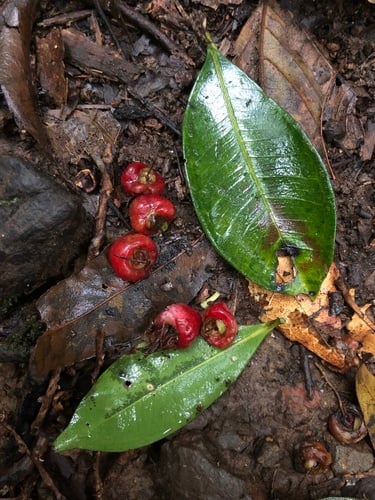
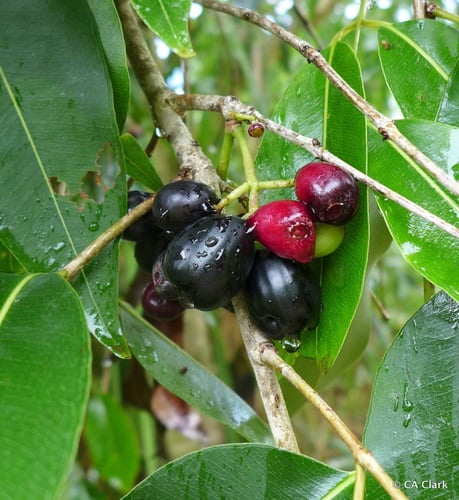
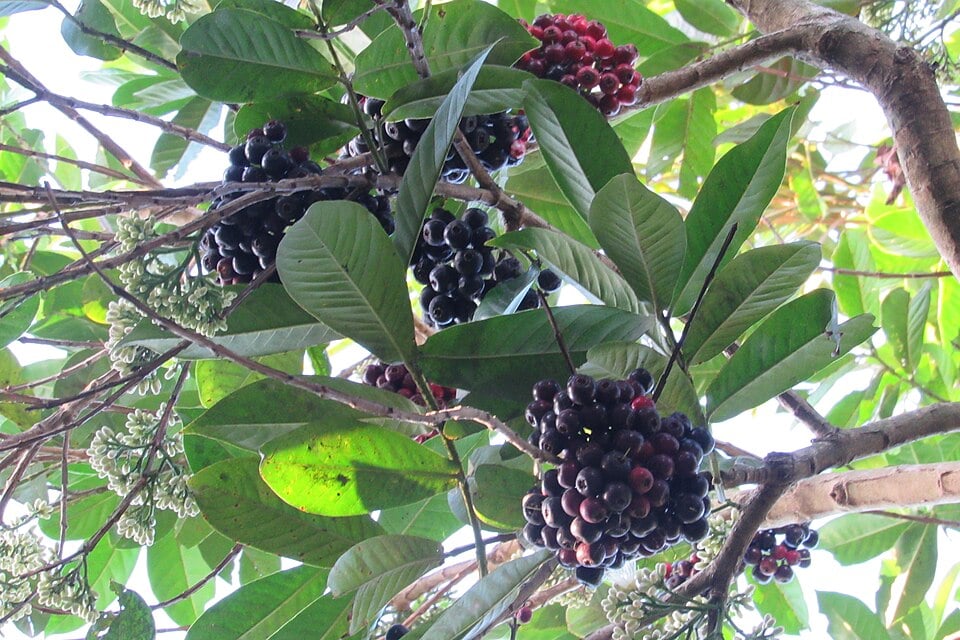
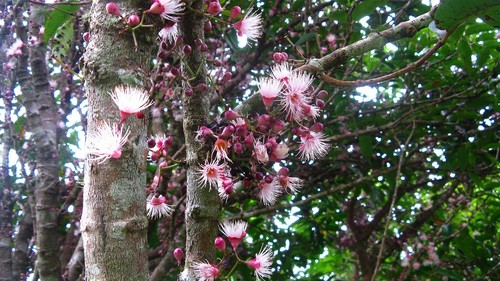
A tree. It grows 20 m tall. The small branches are four angled. The leaves do not have stalks. The leaves are leathery. They are oval and 12-18 cm long by 6-8 cm wide. They have a vein around the edge. The flowers are on the side of leaflet branches. The flowers are in groups 3-5 cm long. The petals are white. The fruit are yellow and round. They are 1 cm across.
Edible Uses
We have no specific information on edibility for the fruit of this species, but the fruits of many members of this genus are edible.
Traditional Uses
The fruit are eaten raw.
This uses section is brief — help expand it
Distribution
It grows in subtropical broadleaved evergreen forest. It grows at 1550 m altitude in Yunnan in China. In Sikkim it grows between 1,200-1,800 m above sea level.
Where It Grows
Asia, Bangladesh, Bhutan, China, Himalayas, India, Indochina, Myanmar, Nepal, Northeastern India, SE Asia, Sikkim, Thailand, Tibet,
Propagation
Seed - best sown as soon as it is ripe.
Other Uses
The brownish-grey to olive-grey wood is hard. It is used in construction and for making tool handles. The wood is used for making charcoal.
Production
In China flowers occur in July to August and fruit from November to January.
Nutrition
| Part | Moisture | kJ | kcal | Protein | Vit A | Vit C | Iron | Zinc |
|---|---|---|---|---|---|---|---|---|
| Fruit | — | — | — | — | 12 | — | — | — |
Synonyms
Also Known As
Chamlaney, Charjam, Dieng-soh-sarlei, Dieng-sohumkynthei, Dieng-sogthiangum, Gonojam, Karphal, Smyrlein, Sunom
References (10)
- Ambasta, S.P. (Ed.), 2000, The Useful Plants of India. CSIR India. p 615
- Jin, Chen et al, 1999, Ethnobotanical studies on Wild Edible Fruits in Southern Yunnan: Folk Names: Nutritional Value and Uses. Economic Botany 53(1) pp 2-14
- Pasha, M. K. & Uddin, S. B., 2019, Minor Edible Fruits of Bangladesh. Bangladesh J. Plant Taxon. 26(2): 299–313
- Phawa, G. M., Dkhar, E. K. & Marbaniang, D., 2019, Indigenous Wild Edible Plants of Bataw Village, East Jaintia Hills District, Meghalaya. International Journal of Arts, Science and Humanities. 7(2)
- Reis, S. V. and Lipp, F. L., 1982, New Plant Sources for Drugs and Foods from the New York Botanical Garden herbarium. Harvard. p 208
Show all 10 references Hide references
- Savita, et al, 2006, Studies on wild edible plants of ethnic people in east Sikkim. Asian J. of Bio Sci. (2006) Vol. 1 No. 2 : 117-125 (As Eugenia tetragona)
- Sawian, J. T., et al, 2007, Wild edible plants of Meghalaya, North-east India. Natural Product Radiance Vol. 6(5): p 422
- Sundriyal, M., et al, 1998, Wild edibles and other useful plants from the Sikkim Himalaya, India. Oecologia Montana 7:43-54
- Sundriyal, M., et al, 2004, Dietary Use of Wild Plant Resources in the Sikkim Himalaya, India. Economic Botany 58(4) pp 626-638
- Wild edible plants of Himachal Pradesh