Prunus ussuriensis
Kovalev & Kostina
Ussurian plum
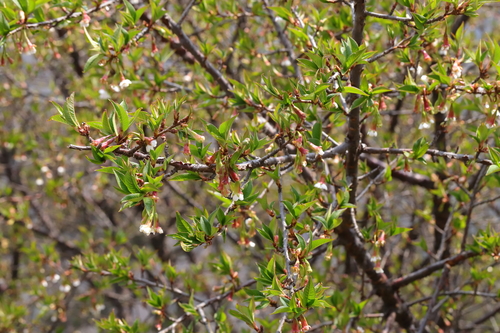
iNaturalist· cc-by-nc
(c) sergeyprokopenko, some rights reserved (CC BY-NC)
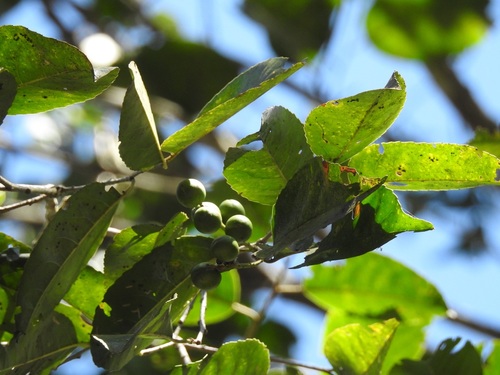
iNaturalist· cc-by-nc
(c) Марина Горбунова-Ëлкина, some rights reserved (CC BY-NC)
iNaturalist· cc-by-nc
(c) Марина Горбунова-Ëлкина, some rights reserved (CC BY-NC)
Summary
Source: WikipediaA deciduous shrub reaching 2.5 m tall with hermaphroditic flowers blooming April to May and seeds ripening July to September. Insect-pollinated and adaptable to light sandy, medium loamy, and heavy clay soils with good drainage. Tolerates mildly acidic to basic soil pH and grows in semi-shade or full sun with preference for moist conditions.
Description
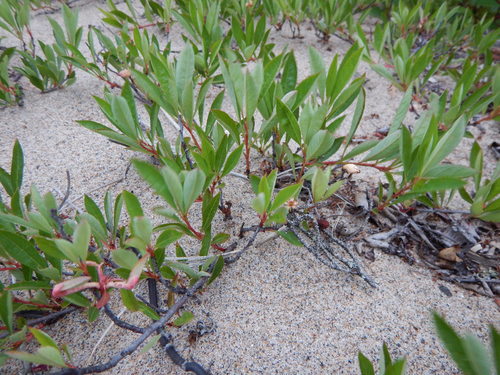
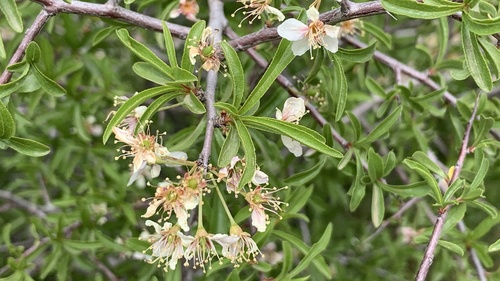
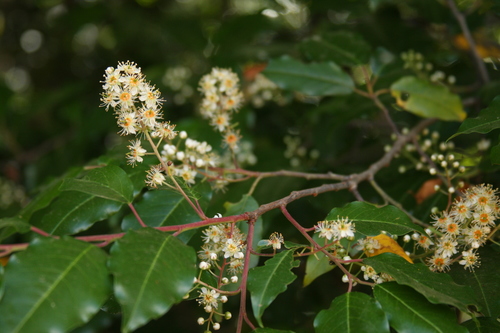
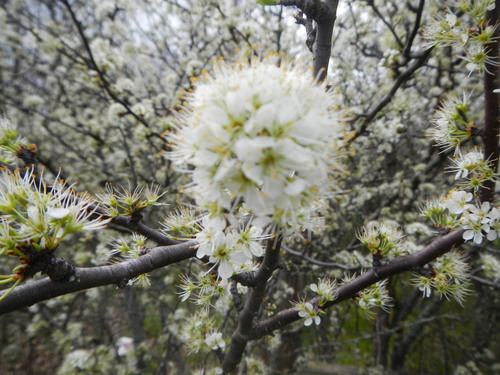
A small tree. It grows 3 m tall. The leaves are oval and 4-7 cm long by 2-4 cm wide. They are pale green underneath. The flowers are in groups of 2 or 3 and are 1 cm across. The petals are white. The fruit are purplish red. They are oval and 1.5-2.5 cm across.
Edible Uses
The fruit, which can reach up to 25mm in diameter, can be eaten raw or cooked and contains a single large seed. The seed can also be eaten raw or cooked, but avoid it if it tastes too bitter.
Traditional Uses
The fruit are preserved in sugar and eaten. They are also eaten raw.
This uses section is brief — help expand it
Medicinal Uses
No specific medicinal uses have been recorded for this species, but like all members of the genus it contains amygdalin and prunasin, compounds that break down in water to release hydrocyanic acid (prussic acid). In small amounts this highly toxic compound can stimulate respiration, aid digestion and produce a sense of well-being.
Known Hazards
As with other stone fruits, the pit and leaves are poisonous to humans, as they contain amygdalin, which breaks down to hydrogen cyanide. While poisoning from unintentional ingestion of a few pits is unlikely, it recommended to avoid ingestion, and to never consume crushed up pits.
Distribution
Temperate. It grows near streams in north China between 400-800 m above sea level. It is resistant to extreme cold.
Where It Grows
Asia, China, Korea, Manchuria, Russia, Siberia,
Cultivation
Thrives in a well-drained moisture-retentive loamy soil. Prefers some lime in the soil but is likely to become chlorotic if too much lime is present. Succeeds in sun or partial shade though it fruits better in a sunny position. A very frost resistant plant when dormant, tolerating temperatures down to about -27°c. This species is resistant to extreme cold and is cultivated in N China as a frost hardy fruit tree. This species is probably no more than a variety or sub-species of P. salicina. Another report says that this species is crossed with P. salicina to produce commercial varieties. Most members of this genus are shallow-rooted and will produce suckers if the roots are damaged. Plants in this genus are notably susceptible to honey fungus.
Propagation
Seed requires 2–3 months of cold stratification and is best sown in a cold frame as soon as it is ripe. Stored seed should be sown in a cold frame as early in the year as possible, with protection from mice. Germination can be slow, sometimes taking up to 18 months. Prick seedlings out into individual pots when large enough to handle, overwinter in a greenhouse or cold frame, and plant out in late spring or early summer the following year. Cuttings of half-ripe wood with a heel can be taken in July/August in a frame. Softwood cuttings from vigorous plants can be taken in spring to early summer in a frame. Layering can be done in spring.
Other Uses
A green dye can be obtained from the leaves. A dark grey to green dye can be obtained from the fruit.
Production
In northern China it flowers in April to May and fruits in June to September.
Other Information
It is cultivated.
Notes
There are about 200 Prunus species.
Synonyms
References (9)
- Arora, R. K., 2014, Diversity in Underutilized Plant Species - An Asia-Pacific Perspective. Bioversity International. p 83
- Pemberton, R. W. & Lee, N. S., 1996, Wild Food Plants in South Korea: Market Presence, New Crops, and Exports to the United States. Economic Botany, Vol. 50, No. 1, pp. 57-70
- Plants for a Future, The Field, Penpol, Lostwithiel, Cornwall, PL22 0NG, UK. http://www.scs.leeds.ac.uk/pfaf/
- Reis, S. V. and Lipp, F. L., 1982, New Plant Sources for Drugs and Foods from the New York Botanical Garden herbarium. Harvard. p 102
- Trudy Prikl. Bot., Ser. 8, Plodovye Jagodnye Kul't. 4:75. 1935
Show all 9 references Hide references
- Wiersema, J. H. & Leon, B., 2013, World Economic Plants. A Standard Reference CRC Press. 2nd Ed. p 564 (As Prunus salicina var. mandshurica)
- World Checklist of Useful Plant Species 2020. Royal Botanic Gardens, Kew
- www.efloras.org Flora of China Volume 9
- Zeven, A. C. & de West, J. M. J., 1982, Dictionary of cultivated plants and their regions of diversity. Wageningen. p 41