Angelica decursiva
(Miq.) Franch. & Sav.
Padinamul, Wild parsnip
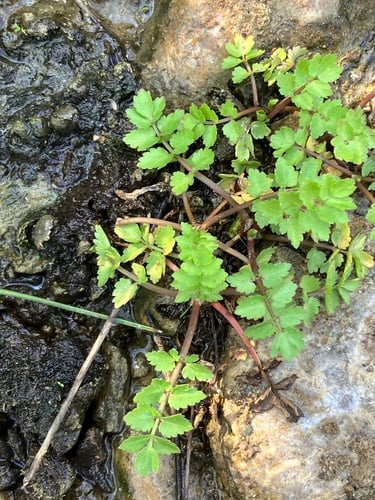
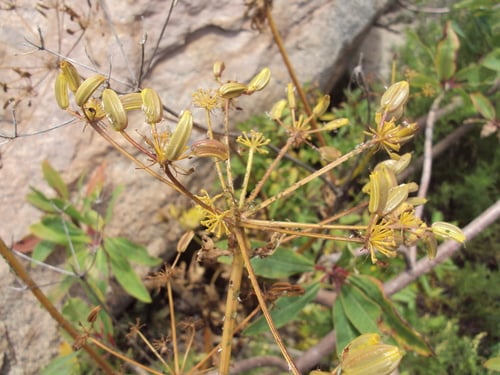
iNaturalist· cc0
no rights reserved, uploaded by Takashi KOIKE
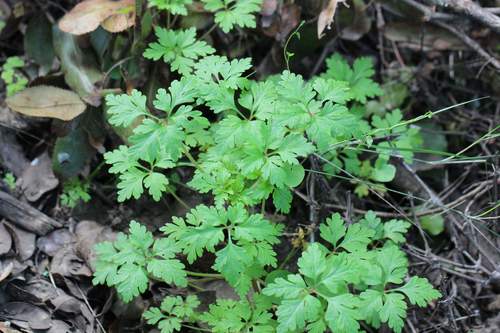
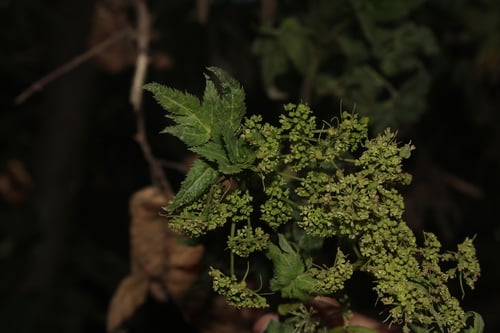
iNaturalist· cc-by-nc
(c) V.S. Volkotrub, some rights reserved (CC BY-NC), uploaded by V.S. Volkotrub
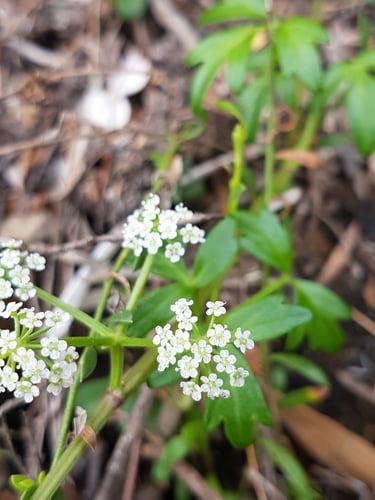
iNaturalist· cc-by-nc
(c) onidiras-iNaturalist, some rights reserved (CC BY-NC), uploaded by onidiras-iNaturalist
Summary
A perennial herb growing to 1.5 m tall, not frost tender. Flowers appear August to September with seeds maturing September to November. Hermaphrodite, insect-pollinated, and self-fertile. Adapts to light sandy, medium loamy, or heavy clay soils with mildly acidic to mildly alkaline pH. Tolerates semi-shade or full sun and prefers moist soil.
Description
A herb. It keeps growing from year to year. It grows 1-2 m tall. The roots are brown and cone shaped. They are brown, 1-2 cm thick and have a strong smell. The leaf stalks are 13-36 cm long and have purple sheaths. The leaves are oval or triangle shaped and 10-25 cm long. The leaflets are oval and 5-15 cm long by 2-5 cm wide.
Edible Uses
The leaves and shoots are cooked and have a fragrant aroma.
Traditional Uses
The leaves are boiled and then eaten with oil and salt.
This uses section is brief — help expand it
Medicinal Uses
The root is analgesic, antipyretic, antispasmodic, antitussive, expectorant, and stimulant. It is used in the treatment of coughs with thick phlegm, asthma, and upper respiratory tract infections. The plant is also antiseptic, antiarthritic, carminative, lenitive, stomachic, and tonic.
Distribution
It is a temperate to subtropical plant. It grows near streams between 200-800 m above sea level.
Where It Grows
Asia, China, Indochina, Japan, Korea, Russia, SE Asia, Siberia, Taiwan, Vietnam,
Propagation
Seed is best sown in a cold frame as soon as it is ripe, as viability is short. Spring sowing is possible but germination rates will be lower. Light is required for germination. Once seedlings are large enough to handle, prick them out into individual pots and grow on in a cold frame through their first winter, then plant out into permanent positions in spring. Seed can also be sown in situ as soon as it is ripe.
Other Uses
None known.
Notes
There are 50 Angelica species. They are temperate plants.
Synonyms
References (8)
- Altschul, S.V.R., 1973, Drugs and Foods from Little-known Plants. Notes in Harvard University Herbaria. Harvard Univ. Press. Massachusetts. no. 3159
- Enum. pl. Jap. 1:187. 1873
- Famine foods. (As Peucedanum decursivum)
- Hwang, H., et al, 2013, A Study on the Flora of 15 Islands in the Western Sea of Jeollanamdo Province, Korea. Journal of Asia-Pacific Biodiversity Vol. 6, No. 2 281-310
- Hwang, HS, et al, 2014, Distribution characteristics of plant in the Ungseokbong Mountain, Gyeongsangnam-do, Korea. Journal of Asia-Pacific Biodiversity. 7(2014) e164-e178
Show all 8 references Hide references
- Melanges Biol. Bull. Phys.-Math. Acad. Imp. Sci. Saint-Petersbourg 12:472. 1886 (As Peucedanum decursivum)
- Pemberton, R. W. & Lee, N. S., 1996, Wild Food Plants in South Korea: Market Presence, New Crops, and Exports to the United States. Economic Botany, Vol. 50, No. 1, pp. 57-70
- READ, W. A., 1904, (As Peucedanum decursivum)