Cymopterus bulbosus
A. Nelson
Bulbous springparsley
iNaturalist· cc-by-nc
(c) wingedchimera, some rights reserved (CC BY-NC)
iNaturalist· cc-by-nc
(c) jetpike, some rights reserved (CC BY-NC)
iNaturalist· cc-by-nc
(c) Walter Fertig, some rights reserved (CC BY-NC)
Summary
Low perennial growing 20 cm tall and wide. Hardy to UK zone 5, hermaphroditic, self-fertile, and insect-pollinated. Prefers light sandy or medium loamy, well-drained soils with mildly acidic to basic pH. Requires full sun. Tolerates dry or moist soil. An early spring plant, often appearing as snow retreats.
Description
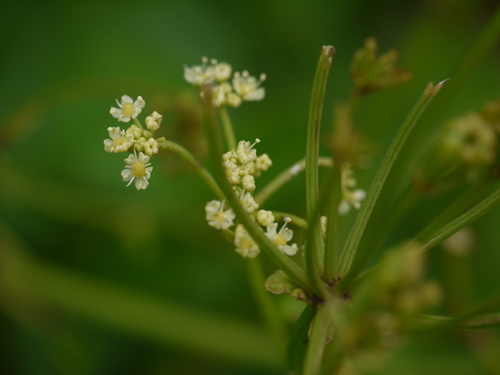
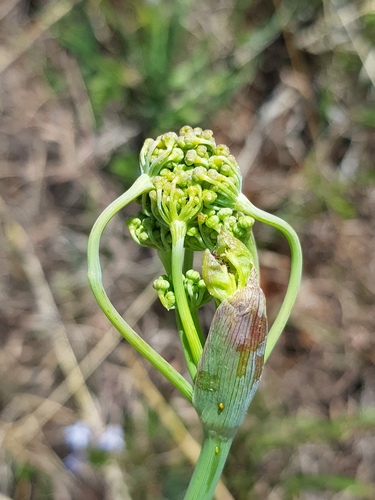
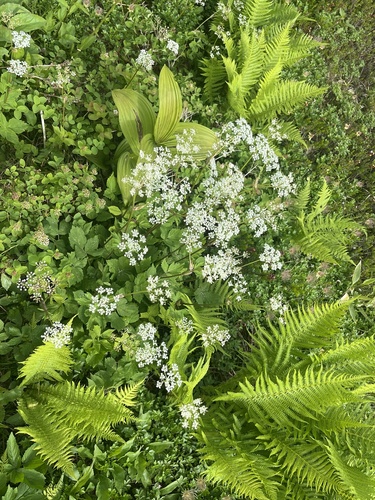
A herb. It grows about 20 cm tall. The leaves are twice divided. The flowers have white bracts and pink to purple flowers. The flowers are in clusters.
Edible Uses
Condiment. This is primarily a root plant, with leaves as a secondary edible. Used thoughtfully, it can provide a genuinely useful early-spring carbohydrate and a mild green. Edible Uses & Rating. The roots are the main edible part and are rated good to excellent for a wild root in its habitat context; the leaves are usable but generally rated fair and are better treated as a cooked green than as a salad staple. Taste, Processing & Kitchen Notes. Roots tend to read as potato-starchy with a parsnip-like accent, and they can carry an alkaline or “mineral” edge that improves markedly when the skins are peeled and the root is cooked in water. Boiling produces a good, hearty result and can yield a pleasant broth; baking works unusually well for a wild Apiaceae root, and can produce a meal-like, floury interior that invites mash, thick soups, or drying and grinding for a rustic flour. Leaves can be mildly bitter when raw in small amounts, but usually improve with cooking, which rounds off the sharper, more alkaline tones. Seasonality (Phenology). An early spring plant, often appearing as the snow retreats. Roots are best when the plant is actively growing and hydrated; as flowering progresses and conditions dry, quality can slide toward fibrousness in some soils. Safety & Cautions (Food Use). Cymopterus species can contain furanocoumarins (phototoxins) that can cause photosensitivity or dermatitis in susceptible individuals, and they are reported to be heat-resistant but water-soluble, making soaking or boiling (and discarding the water if you have any concern) the most conservative approach. Avoid handling large quantities with bare skin in intense sun if you are sensitive, and avoid tasting raw foliage widely across populations. Harvest & Processing Workflow. Harvest roots with a digging tool that lifts soil broadly, because root bodies can snap if pulled. Trim tops, wash thoroughly, and peel if an alkaline/bitter edge is present. For maximum caution, slice and blanch/boil, optionally discarding the first water, then finish by boiling, steaming, or sautéing. Leaves should be washed carefully (they can trap sand), then blanched and used as a potherb. Cultivar/Selection Notes. There are no true cultivars in common circulation; the practical “selection” is ecological—choose vigorous colonies in cleaner soils with healthier, thicker roots and milder foliage. Look-Alikes & Confusion Risks. Apiaceae is a high-stakes family for misidentification. The genus is best confirmed by fruit (the characteristic winged schizocarps). Do not rely on “parsley-like” appearance alone; avoid any uncertain plant, especially anything with disagreeable odor, unusual sap, or atypical fruiting structures. Traditional/Indigenous Use Summary. Your notes indicate Native American use of roots and leaves across the genus; bulb wavywing, in particular, fits the classic “early-season root” role in landscapes where spring moisture is brief. The root can be eaten raw, cooked or dried for later use. The dried leaves are used as a flavouring. A celery flavouring. Leaves - cooked.
Traditional Uses
The young roots, young stems and leaves are eaten raw or cooked.
This uses section is brief — help expand it
Medicinal Uses
Cymopterus bulbosus has documented traditional medicinal uses among Native American peoples. The Keres used the plant as a remedy for stomach ailments, and the Navajo used it as a 'life medicine.' The roots can also be eaten raw, cooked, or dried as a nutritious food, and the plant is often among the first to emerge in spring, making it a valuable early food source. It has been eaten specifically as a stomach medicine.
Distribution
It is a temperate plant. It grows between 1,200-2,100 m above sea level.
Where It Grows
North America, USA,
Cultivation
Bulb wavywing is a legitimately useful early-season root that can be cooked into satisfying, starchy food when gathered carefully and prepared conservatively, with leaves as an occasional cooked green rather than a primary vegetable. Growing Conditions. It favors open, well-drained sites that retain sufficient spring moisture to promote early growth, often on sandy to gravelly soils and in areas that dry quickly by early summer. Habitat & Range. As you described, it is centered on the Four Corners region and extends north into the Rockies/Intermountain West, occurring where early spring conditions and open soils coincide. Size & Landscape Performance. Visually modest but ecologically tough, it performs as a small, early-blooming spring herb that finishes quickly as soils dry. Cultivation (Horticulture). Rare in horticulture, but in principle suited to rock-garden style cultivation: sharp drainage, lean soil, full sun, and a spring-wet/summer-dry rhythm. Pests & Problems. The most common “problem” is grit and sand in foliage, and variability in leaf palatability across sites; drought stress can also push roots toward tougher texture. Identification & Habit. A small perennial from a thickened underground rootstock, with mostly basal, dissected leaves and early umbels; fruiting wings are the key confirmation feature for wavywings. Pollinators. Like many small-flowered Apiaceae, it is typically serviced by generalist small bees, flies, and wasps that forage on open umbels in early season. Bulb Wavywing (Cymopterus bulbosus). Family: Apiaceae (Parsley family). Genus: Cymopterus. Common names: Bulb wavywing, bulb spring-parsley. USDA Hardiness Zones: approximately Zones 4–8 (cold-hardy Intermountain spring ephemeral; exact zone data is rarely published for this wild species). Approximate size: about 5–20 cm tall in flower, typically 10–25 cm spread as a basal clump.
Propagation
Best propagated by seed under habitat-mimicking conditions, typically benefiting from natural cold stratification and spring moisture. Division is generally impractical as the food value is concentrated in the rootstock.
Other Uses
Rare in horticulture but in principle suited to rock-garden style cultivation. Serves as an early spring resource in dry landscapes, offering nectar and pollen to small insects and contributing to the brief spring pulse of productivity before summer drought sets in.
Synonyms
Also Known As
Globe springparsley
References (3)
- Beckstrom-Sternberg, Stephen M., and James A. Duke. "The Foodplant Database." http://probe.nalusda.gov:8300/cgi-bin/browse/foodplantdb.(ACEDB version 4.0 - data version July 1994) (As Phellopterus bulbosus)
- Kermath, B. M., et al, 2014, Food Plants in the Americas: A survey of the domesticated, cultivated and wild plants used for Human food in North, Central and South America and the Caribbean. On line draft. p 292
- Plants for a Future database, The Field, Penpol, Lostwithiel, Cornwall, PL22 0NG, UK. http://www.scs.leeds.ac.uk/pfaf/