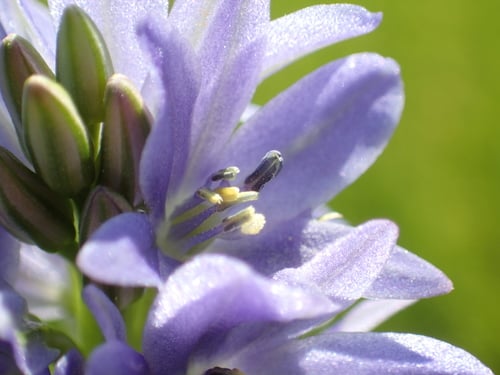
Pontederia cordata
L.
Pickerelweed, Pickerel Rush
iNaturalist· cc-by
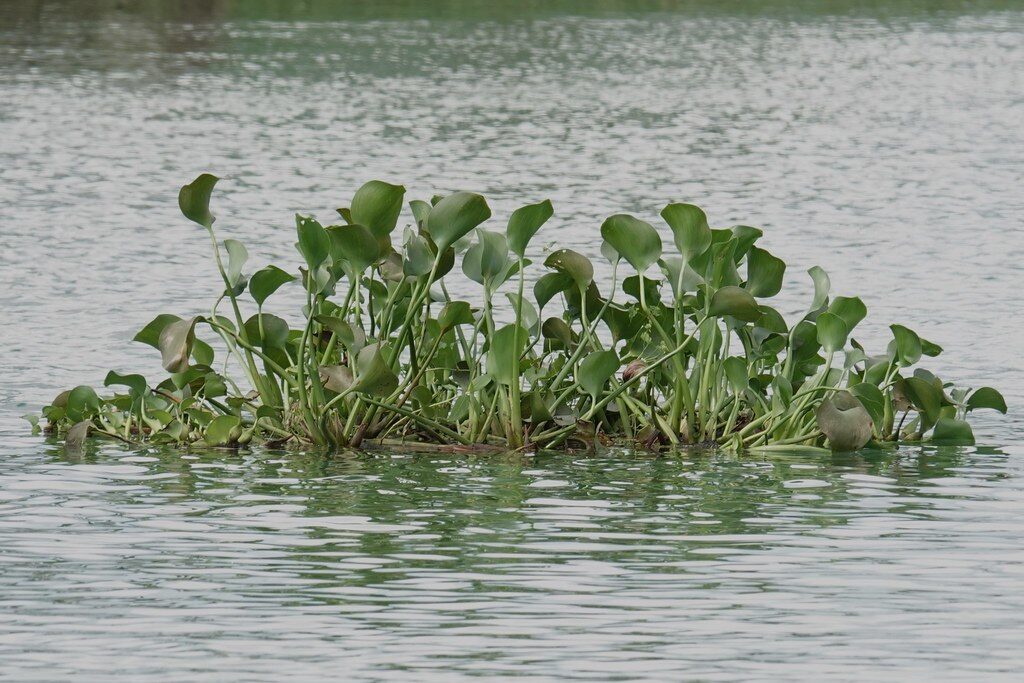
(c) Michael J. Papay, some rights reserved (CC BY), uploaded by Michael J. Papay
iNaturalist· cc-by
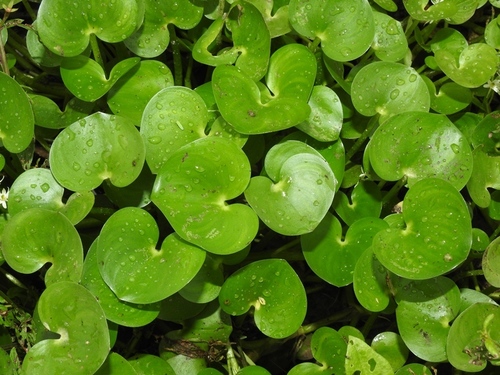
(c) Michael J. Papay, some rights reserved (CC BY), uploaded by Michael J. Papay
iNaturalist· cc-by
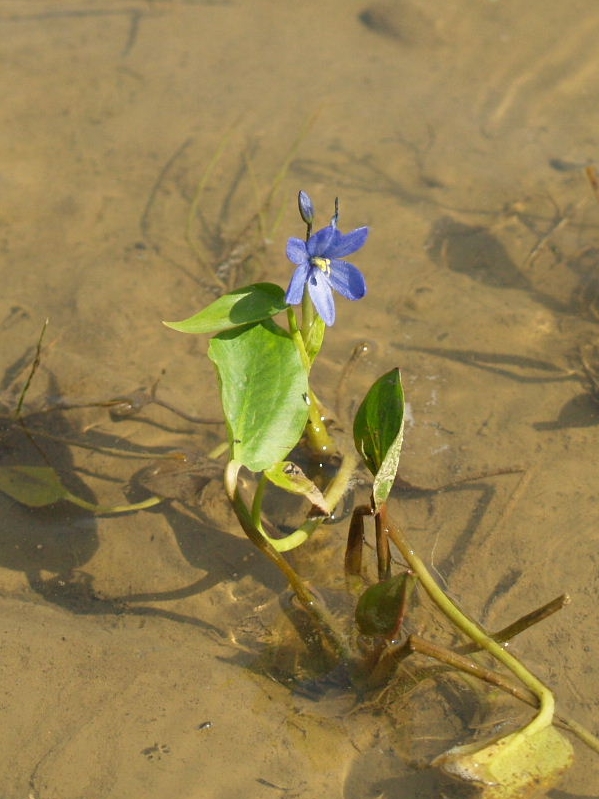
(c) Michael J. Papay, some rights reserved (CC BY), uploaded by Michael J. Papay
Summary
Source: WikipediaPontederia cordata, common name pickerelweed (USA) or pickerel weed (UK), is a monocotyledonous aquatic plant native to the Americas. It grows in a variety of wetlands, including pond and lake margins across an extremely large range from eastern Canada south to Argentina. A few examples include northern rivers, the Everglades and Louisiana.
Description
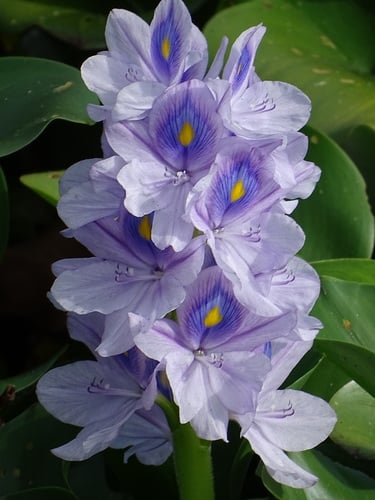
A perennial herb. It is an erect plant which grows in water. It has underground stems or rhizomes. It grows 90-120 cm high and 60-75 cm wide. The leaves develop from the base and have long leaf stalks. The leaf blade normally sticks out of the water. The first leaves may be floating. The mature leaf blades may be 20 cm long and 10 cm wide. They can be heart shaped or sword shaped. There is a small leaf below the flowering stalk. This can clasp the stem. The flower is a spike like panicle. It is dense and 5-15 cm long. It is blue. The flowers have both sexes. The flowers are funnel shaped. The fruit are hard egg shaped capsules 5-10 mm long.
Edible Uses
The seeds can be eaten raw — they have a very acceptable nutty flavour and texture — or cooked like rice, or dried and ground into a powder. Lightly roasting the seed in an oven is said to produce excellent results. Young leafstalks can be eaten raw or cooked. The whole plant is edible raw or cooked: it can be added to salads, cooked like spinach, or added to soups.
Traditional Uses
The seeds are eaten raw or boiled like rice. They can be dried and ground into flour for making bread. They can be slightly parched in an oven and eaten. Young leaves are cooked as a potherb. They are also added to salads, soups, and stews.
Medicinal Uses
An infusion of the plant has been used as a contraceptive.
Distribution
It is a temperate plant. It grows in stationary or slow flowing water up to about 1 m deep. It grows in the edges of lakes and ponds and along streams. It grows in warm places. In Argentina it grows from sea level to 1,000 m above sea level. It suits hardiness zones 2-5 (?).
Where It Grows
Africa, Argentina, Asia, Australia, Bolivia, Brazil, Britain, Canada, Central America*, Eswatini, Europe, Indonesia, Mexico* North America, Paraguay, SE Asia, Singapore, Southern Africa, South America, Swaziland, Uruguay, USA,
Cultivation
Plants are hardy to about -25°c. A very ornamental plant, it forms spreading patches by means of a thick creeping rhizome. There is a species of bee (Dufourea novae-angliae) which visits this plant for nectar and pollen and does not visit any other species of plant. The reproductive biology of Pontederia cordata has been well studied. It is a tristylous species, and most populations contain all three forms. At least some degree of self-incompatibility exists, being strongest with the short-style forms and weakest with the midstyle forms.
Propagation
Sow seed as soon as it is ripe in pots standing in 2 cm of water in a cold frame, covering it lightly with silver sand. After seedlings emerge, submerge the pots in 3 cm of water. Prick out into individual pots once large enough to handle and grow on in water in the greenhouse through the first winter. Plant out in late spring or early summer after the last expected frosts. Division is best done in April but can be carried out at almost any time of year. Larger divisions can go directly into permanent positions; smaller ones are better potted up and grown on in light shade in a cold frame until well established before planting out in late spring or early summer. Lateral shoots can also be used.
Other Uses
None known.
Notes
There are 5-6 Pontederia species. They grow in temperate and subtropical places.
Synonyms
Also Known As
Aguape, Camalote, Gulma pikerel, Lance-leaved pickerelweed, Lirio de agua, Lirio de laguna, Murure, Orelha-de-veado, Rainha-do-lago, Wampee
References (29)
- Bodkin, F., 1991, Encyclopedia Botanica. Cornstalk publishing, p 822
- Brickell, C. (Ed.), 1999, The Royal Horticultural Society A-Z Encyclopedia of Garden Plants. Convent Garden Books. p 820
- Cundall, P., (ed.), 2004, Gardening Australia: flora: the gardener's bible. ABC Books. p 1071
- Elias, T.S. & Dykeman P.A., 1990, Edible Wild Plants. A North American Field guide. Sterling, New York p 130 and p 133 (As Pontederia lanceolata)
- Esperanca, M. J., 1988. Surviving in the wild. A glance at the wild plants and their uses. Vol. 2. p 45 (As Pontederia lanceolata)
Show all 29 references Hide references
- Facciola, S., 1998, Cornucopia 2: a Source Book of Edible Plants. Kampong Publications, p 187
- Heywood, V.H., Brummitt, R.K., Culham, A., and Seberg, O., 2007, Flowering Plant Families of the World. Royal Botanical Gardens, Kew. p 396
- Hibbert, M., 2002, The Aussie Plant Finder 2002, Florilegium. p 238
- Hussey, B.M.J., Keighery, G.J., Cousens, R.D., Dodd, J., Lloyd, S.G., 1997, Western Weeds. A guide to the weeds of Western Australia. Plant Protection Society of Western Australia. p 74
- Kermath, B. M., et al, 2014, Food Plants in the Americas: A survey of the domesticated, cultivated and wild plants used for Human food in North, Central and South America and the Caribbean. On line draft. p 677
- Kinupp, V. F., 2007, Plantas alimenticias nao-convencionais da regiao metropolitana de Porto Alegre, RS, Brazil p 94
- Lazarides, M. & Hince, B., 1993, Handbook of Economic Plants of Australia, CSIRO. p 196
- Llamas, K.A., 2003, Tropical Flowering Plants. Timber Press. p 319
- Loughmiller, C & L., 1985, Texas Wildflowers. A Field Guide. University of Texas, Austin. p 200
- MacKinnon, A., et al, 2009, Edible & Medicinal Plants of Canada. Lone Pine. p 305
- Malezas Comestibles del Cono Sur, INTA, 2009, Buernos Aires
- Morley, B. & Everard, B., 1970, Wild Flowers of the World. Ebury press. Plate 166
- Morley, B.D., & Toelken, H.R., (Eds), 1983, Flowering Plants in Australia. Rigby. p 345
- Paczkowska, G. & Chapman, A.R., 2000, The Western Australian Flora. A Descriptive Catalogue. Western Australian Herbarium. p 123
- Plants for a Future database, The Field, Penpol, Lostwithiel, Cornwall, PL22 0NG, UK. http://www.scs.leeds.ac.uk/pfaf/
- Recher, P, 2001, Fruit Spirit Botanical Gardens Plant Index. www.nrg.com.au/~recher/ seedlist.html p 7
- Romanowski, N., 2007, Edible Water Gardens. Hyland House. p 113
- Sainty, G.R. & Jacobs, S.W.L., 1981, Waterplants of New South Wales. Water Resources Commission. NSW p 363
- Slocum, P.D. & Robinson, P., 1999, Water Gardening. Water Lilies and Lotuses. Timber Press. p 99 and p 100 (As Pontederia cordata var. lanceolata)
- Smith, N., Mori, S.A., et al, 2004, Flowering Plants of the Neotropics. Princeton. p 474 (Drawing)
- Sp. pl. 1:288. 1753
- Sukarya, D. G., (Ed.) 2013, 3,500 Plant Species of the Botanic Gardens of Indonesia. LIPI p 1153
- Swaziland's Flora Database http://www.sntc.org.sz/flora (As var. ovalis)
- www.wildediblefood.com