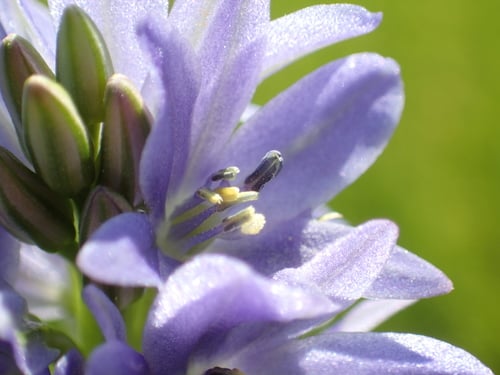
Pontederia crassipes
(Mart.) Solms
Water hyacinth
iNaturalist· cc0
no rights reserved, uploaded by 葉子
iNaturalist· cc-by-nc
(c) angiebg, some rights reserved (CC BY-NC)
iNaturalist· cc0
no rights reserved, uploaded by 葉子
Summary
Source: WikipediaPontederia crassipes (formerly Eichhornia crassipes), commonly known as common water hyacinth, is an aquatic plant native to South America, naturalized throughout the world, and often invasive outside its native range. It is the sole species of the subgenus Oshunae within the genus Pontederia. Anecdotally, it is known as the "terror of Bengal" due to its invasive growth tendencies.
Description
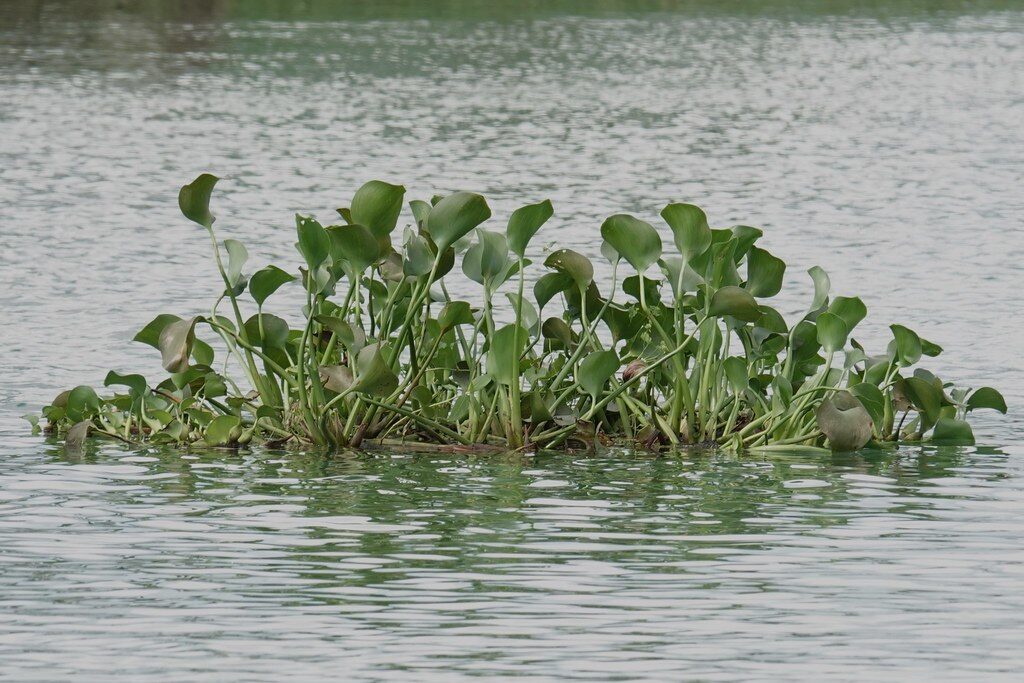
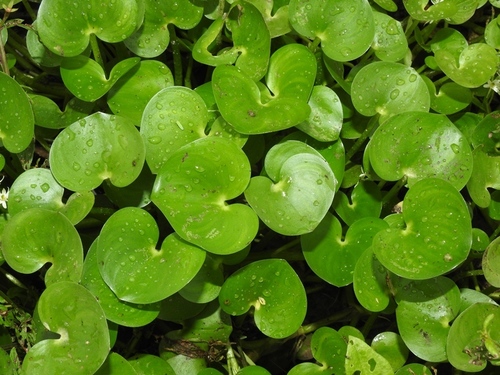
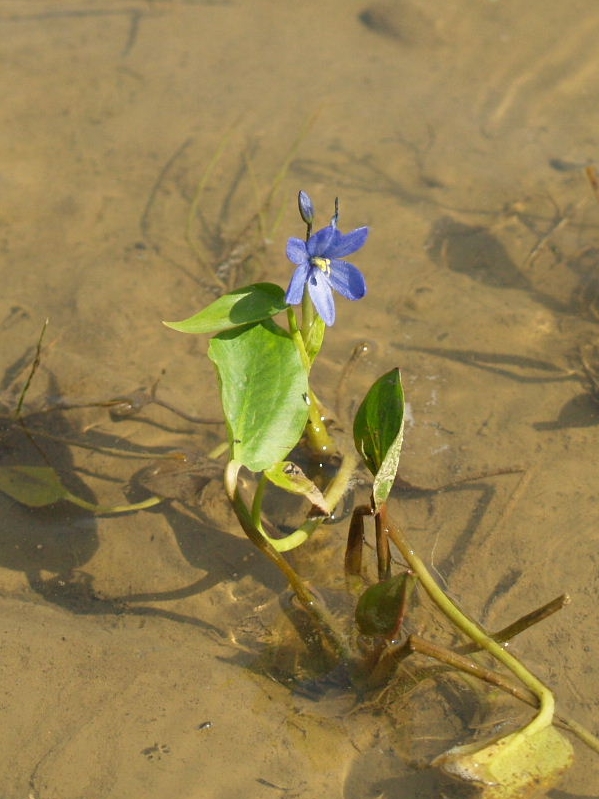
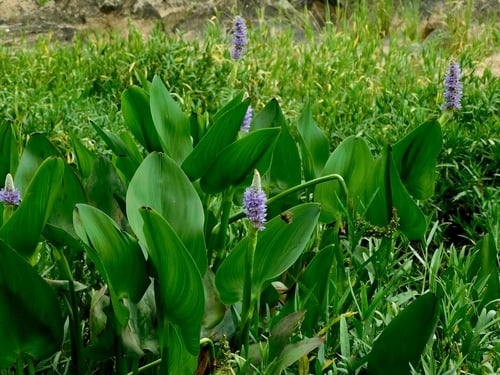
A plant which grows in water. It is 45 cm tall. It floats and continues to grow from year to year. It has stolons or runners. It has rings of rounded leaves up to 15 cm across. The stalks are inflated and pale green. The roots are long and purplish and hang down. They hang 30-100 cm into the water. Roots are shorter when nutrients are plentiful in the water. The leaves are cup shaped. The flowers are pale blue or violet and have yellow markings on the upper petals. The flowers are produced in spikes. The flowers are 3 cm across and the spikes can be 15 cm tall.
Edible Uses
The leaf stalks are used to sour soups, tender buds are cooked as a vegetable, and flowers are used to prepare snacks. Leaves are also sold in local markets, and ash is used as salt.
Traditional Uses
The leaf stalks are used to sour soups. The tender buds are cooked as a vegetable. The flowers are used to prepare snacks. CAUTION: The plant can cause itching. This is partly removed by cooking.
Known Hazards
The plant can cause itching; this is partly removed by cooking.
Distribution
A tropical plant. In Nepal it grows from 200-1500 m altitude. In Indonesia it grows up to 1,600 m above sea level. It grows in moist and boggy areas. It grows in pools and rice fields in S China between 200-500 m altitude. It grows in quiet or slow moving water. It grows in wetlands. Rapid growth occurs in nutrient rich water. It grows to latitudes of 40°. It needs plenty of sunlight. It is damaged by frost. In Argentina it grows up to 1,600 m above sea level. It suits hardiness zones 10-12. In Yunnan.
Where It Grows
Africa, Argentina, Asia, Australia, Belize, Bhutan, Bolivia, Brazil*, Burkina Faso, Cambodia, Central Africa, Central African Republic, CAR, Central America, Chile, China, Costa Rica, Cuba, Dominican Republic, East Africa, Ethiopia, Fiji, Guam, Guiana, Guianas, Guyana, Haiti, Hawaii, Himalayas, India, Indochina, Indonesia, Jamaica, Korea, Laos, Madagascar, Maldives, Marquesas, Mexico, Mozambique, Myanmar, Nauru, Nepal, Norfolk Island, North America, Northeastern India, Pacific, Pakistan, Papua New Guinea, PNG, Paraguay, Puerto Rico, SE Asia, South America, Sri Lanka, Suriname, Taiwan, Thailand, Uruguay, USA, Venezuela, Vietnam, West Africa, West Indies, Zambia, Zimbabwe,
Cultivation
Plants grow easily from offshoots of the plant. They need a temperature above 15°C and 30-40 cm deep water.
Other Information
Leaves are sold in local markets.
Notes
There are 7-9 Eichhornia species. They are mainly in tropical America. It becomes a major weed problem in tropical lakes, lagoons and rivers. It can be very invasive.
Synonyms
Also Known As
Aguapey, beda-pin, Bunga jamban, Camalote, Fen oakidu, Feng yan lan, Gachili, Jacinta de agua, Jalkumbhi, Jasintandrano, Kam ploek, Lirio de agua, Luc binh, Meteka, Muxie, Pabuduo, Pak-top-chawa, Phak katok, Phak paud, Phak tob
References (65)
- Awas, T., 1997, A Study on the Ecology and Ethnobotany of Non-cultivated Food Plants and Wild Relatives of Cultivated crops in Gambella Region, Southwestern Ethiopia. Addis Ababa University. p 78 (As Eichhornia speciosa)
- Bodkin, F., 1991, Encyclopedia Botanica. Cornstalk publishing, p 375 (As Eichhornia speciosa)
- Bortolotto, I. M., et al, 2018, Lista preliminar das plantas alimenticias nativas de Mato Grosso do Sul, Brasil. Iheringia, Serie Botanica, Porto Alegre, 73 (supl.):101-116 (As Eichhornia speciosa)
- Bremness, L., 1994, Herbs. Collins Eyewitness Handbooks. Harper Collins. p 167 (As Eichhornia speciosa)
- Brickell, C. (Ed.), 1999, The Royal Horticultural Society A-Z Encyclopedia of Garden Plants. Convent Garden Books. p 392 (As Eichhornia speciosa)
Show all 65 references Hide references
- Burkill, H. M., 1985, The useful plants of west tropical Africa, Vol. 2. Kew. (As Eichhornia speciosa)
- Burkill, I.H., 1966, A Dictionary of the Economic Products of the Malay Peninsula. Ministry of Agriculture and Cooperatives, Kuala Lumpur, Malaysia. Vol 1 (A-H) p 905 (As Eichhornia speciosa)
- Calvert, G. & Liessman, L., 2014, Wetland Plants of the Townsville - Burdekin Flood Plain. LBLCA Ayr, Queensland, p 57 (As Eichhornia speciosa)
- Cribb, A.B. & J.W., 1976, Wild Food in Australia, Fontana. p 120 (As Eichhornia speciosa)
- Cruz-Garcia, G. S., & Price, L. L., 2011, Ethnobotanical investigation of 'wild' food plants used by rice farmers in Kalasin, Northeast Thailand. Journal of Ethnobiology and Ethnomedicine 7:33 (As Eichhornia speciosa)
- Cundall, P., (ed.), 2004, Gardening Australia: flora: the gardener's bible. ABC Books. p 531 (As Eichhornia speciosa)
- A. L. P. P. de Candolle & A. C. de Candolle, Monogr. phan. 4:527. 1883 (As Eichhornia speciosa)
- Flora of Australia Volume 49, Oceanic Islands 1, Australian Government Publishing Service, Canberra. (1994) p 502 (As Eichhornia speciosa)
- Flora of China. www.eFloras.org (As Eichhornia speciosa)
- Flora of Pakistan. www.eFloras.org (As Eichhornia speciosa)
- Food Composition Tables for use in East Asia FAO http://www.fao.org/infoods/directory No. 796 (As Eichhornia speciosa)
- Ghorbani, A., et al, 2012, A comparison of the wild food plant use knowledge of ethnic minorities in Naban River Watershed Nature Reserve, Yunnan, SW China. Journal of Ethnobiology and Ethnomedicine; 8:17 (As Eichhornia speciosa)
- Grubben, G. J. H. and Denton, O. A. (eds), 2004, Plant Resources of Tropical Africa 2. Vegetables. PROTA, Wageningen, Netherlands. p 561 (As Eichhornia speciosa)
- Henty, E.E., & Pritchard, G.S., 1973, Weeds of New Guinea and their control. Botany Bulletin No 7, Division of Botany, Lae, PNG. p 49 (As Eichhornia speciosa)
- Heywood, V.H., Brummitt, R.K., Culham, A., and Seberg, O., 2007, Flowering Plant Families of the World. Royal Botanical Gardens, Kew. p 396 (As Eichhornia speciosa)
- Hussey, B.M.J., Keighery, G.J., Cousens, R.D., Dodd, J., Lloyd, S.G., 1997, Western Weeds. A guide to the weeds of Western Australia. Plant Protection Society of Western Australia. p 74 (As Eichhornia speciosa)
- Hu, Shiu-ying, 2005, Food Plants of China. The Chinese University Press. p 310 (As Eichhornia speciosa)
- Huxley, A. (Ed.), 1977, The Encyclopedia of the Plant Kingdom. Chartweil Books. p 190 (As Eichhornia speciosa)
- Jacquat, C., 1990, Plants from the Markets of Thailand. D.K. Book House p 102 (As Eichhornia speciosa)
- Johns, R.J. & Hay, A., 1976, Monocotyledons of Papua New Guinea. Part 1 , Forestry College Bulolo, PNG p 29 (As Eichhornia speciosa)
- Kinupp, V. F., 2007, Plantas alimenticias nao-convencionais da regiao metropolitana de Porto Alegre, RS, Brazil p 94 (As Eichhornia speciosa)
- Lamp, C & Collet F., 1989, Field Guide to Weeds in Australia. Inkata Press. p 113 (As Eichhornia speciosa)
- Lazarides, M. & Hince, B., 1993, Handbook of Economic Plants of Australia, CSIRO. p 88 (As Eichhornia speciosa)
- Leach, G.J., & Osborne, P.L., 1985, Freshwater Plants of Papua New Guinea. UPNG Press, p 219 (As Eichhornia speciosa)
- Liu, Yi-tao, & Long, Chun-Lin, 2002, Studies on Edible Flowers Consumed by Ethnic Groups in Yunnan. Acta Botanica Yunnanica. 24(1):41-56 (As Eichhornia speciosa)
- Llamas, K.A., 2003, Tropical Flowering Plants. Timber Press. p 319 (As Eichhornia speciosa)
- Loughmiller, C & L., 1985, Texas Wildflowers. A Field Guide. University of Texas, Austin. p 199 (As Eichhornia speciosa)
- Luczaj, L., et al, 2021, Wild food plants and fungi sold in the markets of Luang Prabang, Lao PDR. Journal of Ethnobiology and Ethnomedicine (2021) 17:6 (As Eichhornia speciosa)
- Malezas Comestibles del Cono Sur, INTA, 2009, Buernos Aires (As Eichhornia speciosa)
- Manandhar, N.P., 2002, Plants and People of Nepal. Timber Press. Portland, Oregon. p 212 (As Eichhornia speciosa)
- Marinelli, J. (Ed), 2004, Plant. DK. p 453 (As Eichhornia speciosa)
- Martin, F.W. & Ruberte, R.M., 1979, Edible Leaves of the Tropics. Antillian College Press, Mayaguez, Puerto Rico. p 80, 214 (As Eichhornia speciosa)
- McMakin, P.D., 2000, Flowering Plants of Thailand. A Field Guide. White Lotus. p 85 (As Eichhornia speciosa)
- Morley, B.D., & Toelken, H.R., (Eds), 1983, Flowering Plants in Australia. Rigby. p 344 (As Eichhornia speciosa)
- Ochse, J. J. et al, 1931, Vegetables of the Dutch East Indies. Asher reprint. p 610 (As Eichhornia speciosa)
- Ogle, B. M., et al, 2003, Food, Feed or Medicine: The Multiple Functions of Edible Wild Plants in Vietnam. Economic Botany 57(1): 103-117 (As Eichhornia speciosa)
- Paczkowska, G. & Chapman, A.R., 2000, The Western Australian Flora. A Descriptive Catalogue. Western Australian Herbarium. p 121 (As Eichhornia speciosa)
- Pagag, K. & Borthakur, S.K., 2012, Wild edible wetland plants from Lakhimpur district of Assam, India. Pleione 6(2): 322 - 327 (As Eichhornia speciosa)
- Pegu, R., et al, 2013, Ethnobotanical study of Wild Edible Plants in Poba Reserved Forest, Assam, India. Research Journal of Agriculture and Forestry Sciences 1(3):1-10 (As Eichhornia speciosa)
- Phon, P., 2000, Plants used in Cambodia. © Pauline Dy Phon, Phnom Penh, Cambodia. p 268 (As Eichhornia speciosa)
- Pickering, H., & Roe, E., 2009, Wild Flowers of the Victoria Falls Area. Helen Pickering, London. p 99 (As Eichhornia speciosa)
- Plants of Haiti Smithsonian Institute http://botany.si.edu/antilles/West Indies (As Eichhornia speciosa)
- Romanowski, N., 2007, Edible Water Gardens. Hyland House. p 106 (As Eichhornia speciosa)
- Sainty, G.R. & Jacobs, S.W.L., 1981, Waterplants of New South Wales. Water Resources Commission. NSW p 357 (As Eichhornia speciosa)
- Sainty, G., and Jacobs, S., 2003, Waterplants in Australia. A Field Guide. Sainty Books. p 7 (As Eichhornia speciosa)
- Sangma, A. j. T., 2018, Non-timber forest products (NTFPs) used by Garo tribe of Rongram block in West Garo Hills, Meghalaya. Indian Journal of Traditional Knowledge Vol 18 (1), pp 151-161 (As Eichhornia speciosa)
- Slocum, P.D. & Robinson, P., 1999, Water Gardening. Water Lilies and Lotuses. Timber Press. p 64 (As Eichhornia speciosa)
- Smith, A.C., 1979, Flora Vitiensis Nova, Lawaii, Kuai, Hawaii, Volume 1 p 175 (As Eichhornia speciosa)
- Smith, N., Mori, S.A., et al, 2004, Flowering Plants of the Neotropics. Princeton. p 475, Plate 61 (Photo) (As Eichhornia speciosa)
- Srichaiwong, P., et al, 2014, A Study of the Biodiversity of Natural Food Production to Support Community Upstream of Chi Basin, Thailand. Asian Social Science 10 (2): (As Eichhornia speciosa)
- Staples, G.W. and Herbst, D.R., 2005, A tropical Garden Flora. Bishop Museum Press, Honolulu, Hawaii. p 751 (As Eichhornia speciosa)
- Stephens, K.M., & Dowling, R.M., 2002, Wetland Plants of Queensland. A field guide. CSIRO p 77 (As Eichhornia speciosa)
- Stone, B. C., 1970, The Flora of Guam. A Manual for the Identification of the Vascular Plants of the Island. Micronesica. Journal of the University of Guam. p 116 (As Eichhornia speciosa)
- Sujanapal, P., & Sankaran, K. V., 2016, Common Plants of Maldives. FAO & Kerala FRI, p 117 (As Eichhornia speciosa)
- Tanaka, Y & Van Ke, N., 2007, Edible Wild Plants of Vietnam. Orchid Press. p 123 (As Eichhornia speciosa)
- Thaman, R. R., et al, 1994, The Flora of Nauru. Atoll Research Bulletin No. 392. Smithsonian Institute p 74 (As Eichhornia speciosa)
- World Checklist of Useful Plant Species 2020. Royal Botanic Gardens, Kew
- Xu, You-Kai, et al, 2004, Wild Vegetable Resources and Market Survey in Xishuangbanna, Southwest China. Economic Botany. 58(4): 647-667. (As Eichhornia speciosa)
- Zhang, Y., et al, 2014, Diversity of wetland plants used traditionally in China: a literature review. Journal of Ethnobiology and Ethnomedicine. 10:72 (As Eichhornia speciosa)
- Zuchowski W., 2007, Tropical Plants of Costa Rica. A Zona Tropical Publication, Comstock Publishing. p 253 (As Eichhornia speciosa)