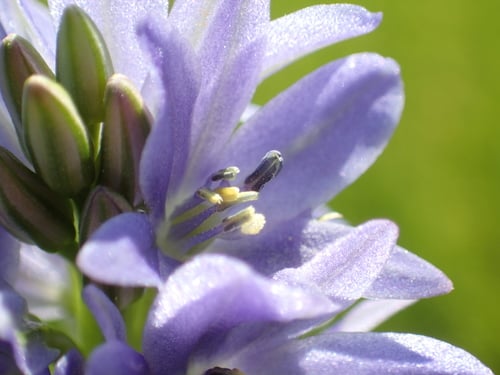
Heteranthera reniformis
Ruiz et Pav.
Mud plantain
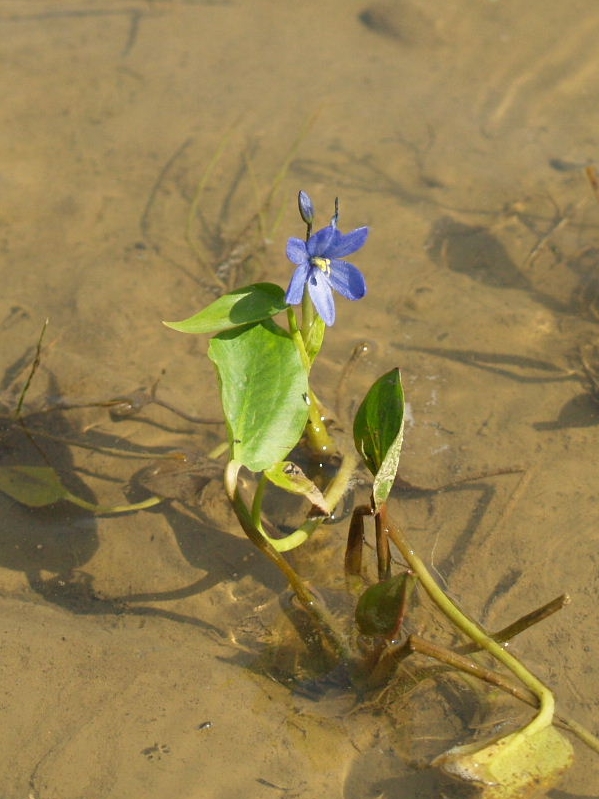
iNaturalist· cc-by-nc
(c) Edson Guilherme, some rights reserved (CC BY-NC), uploaded by Edson Guilherme
iNaturalist· cc-by-nc-sa
(c) Roberto Sindaco, some rights reserved (CC BY-NC-SA), uploaded by Roberto Sindaco
Summary
Source: WikipediaHeteranthera reniformis common name kidneyleaf mud-plantain, and mud plantain; is a species of flowering plant in the family Pontederiaceae. It is found in North America. It is listed as a special concern and believed extirpated in Connecticut. It listed as endangered in Illinois and Ohio.
Description
A scrambling plant. The stems are long and branching. The leaves are kidney shaped and are about 2.5 cm across. The flowers occur in bunches and are pale blue.
Edible Uses
The leaves and leaf stalks are cooked and eaten.
Traditional Uses
The leaves and leaf stalks are cooked and eaten.
This uses section is brief — help expand it
Known Hazards
This species can be invasive.
Distribution
It grows in warm and tropical places. It can grow along the edges of ponds. In Argentina it grows from sea level to 1,000 m above sea level.
Where It Grows
Argentina, Asia, Australia, Brazil, Caribbean, Central America, Costa Rica, Cuba, Dominican Republic, Ecuador, El Salvador, Greece, Guatemala, Haiti, Hawaii, Honduras, Italy, Jamaica, Mexico, Nicaragua, North America, Panama, Paraguay, Portugal, Puerto Rico, South America, Spain, Sri Lanka, Uruguay, USA, Venezuela, West Indies,
Notes
There are 10 Heteranthera species. They grow in water and are mostly in tropical America. It can be invasive.
Nutrition
| Part | Moisture | kJ | kcal | Protein | Vit A | Vit C | Iron | Zinc |
|---|---|---|---|---|---|---|---|---|
| Leaves | — | — | 23 | — | — | — | — | — |
Synonyms
Also Known As
Agriao-de-brejo, Aguape, Berdolaga de agua, Berro de ciervo, Kidneyleaf mud-plantain, Lechuca, Pavoa, Tora sira
References (9)
- Alimenticias - FloraSBS
- Heywood, V.H., Brummitt, R.K., Culham, A., and Seberg, O., 2007, Flowering Plant Families of the World. Royal Botanical Gardens, Kew. p 396
- Hibbert, M., 2002, The Aussie Plant Finder 2002, Florilegium. p 128
- Kermath, B. M., et al, 2014, Food Plants in the Americas: A survey of the domesticated, cultivated and wild plants used for Human food in North, Central and South America and the Caribbean. On line draft. p 415
- Kew Plants of the World Online
Show all 9 references Hide references
- Kinupp, V. F., 2007, Plantas alimenticias nao-convencionais da regiao metropolitana de Porto Alegre, RS, Brazil p 94
- Kinupp, V. F. & Bergman, I., 2008, Protein and minerals of native species, potential vegetables and fruits. Cienc.Tecnol. Aliment. Vol. 28 No. 4 Campinas Oct/Dec.
- Martin, F.W. & Ruberte, R.M., 1979, Edible Leaves of the Tropics. Antillian College Press, Mayaguez, Puerto Rico. p 214
- Slocum, P.D. & Robinson, P., 1999, Water Gardening. Water Lilies and Lotuses. Timber Press. p 94