Pontederia vaginalis
Burm.f.
iNaturalist· cc0
no rights reserved, uploaded by 葉子
iNaturalist· cc-by-nc
(c) H.T.Cheng, some rights reserved (CC BY-NC), uploaded by H.T.Cheng
iNaturalist· cc-by-nc
(c) vincelai, some rights reserved (CC BY-NC)
Summary
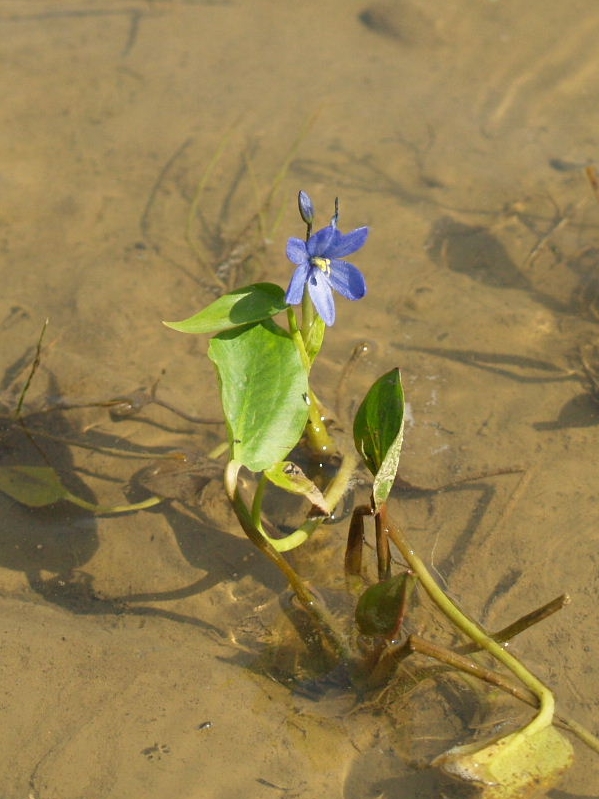
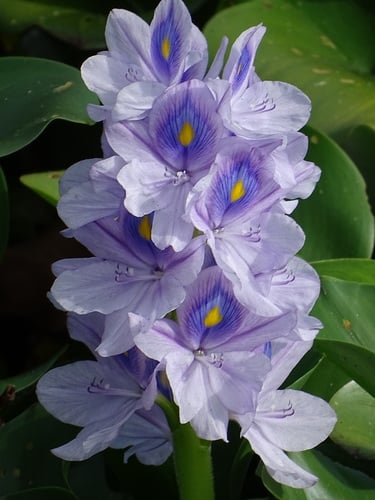
Source: WikipediaMonochoria vaginalis is a species of flowering plant in the water hyacinth family known by several common names, including heartshape false pickerelweed and oval-leafed pondweed. It is native to much of Asia and across many of the Pacific Islands, and it is known in other areas as an introduced species. It is often an invasive noxious weed, and is listed on the United States Federal Noxious Weed List. An aquatic plant, it is invasive in rice paddies and other water bodies. This is an annual or perennial herb growing in water from a small rhizome. It is quite variable in morphology. The shiny green leaves are up to about 12 centimeters long and 10 wide and are borne on rigid, hollow petioles. The inflorescence bears 3 to 25 flowers which open underwater and all around the same time. Each has six purple-blue tepals just over a centimeter long. The fruit is a capsule about a centimeter long which contains many tiny winged seeds.
Description
See Monochoria vaginalis
This description is brief — help expand it
Edible Uses
In northern Luzon in the Philippines, where it is called hahalung, hakhaklung (Ilocano), or saksaklung (Kalinga), the whole young plant is eaten as a vegetable, except for the roots.
References (1)
- World Checklist of Useful Plant Species 2020. Royal Botanic Gardens, Kew