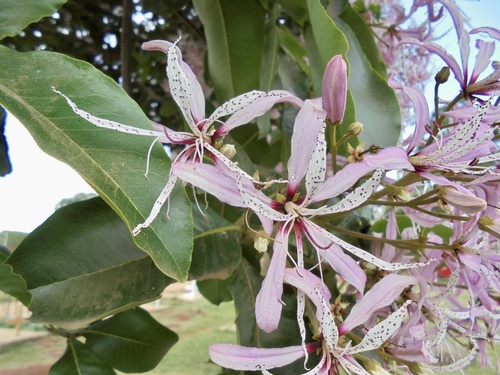
Citrus trifoliata
Linn.
Trifoliate orange, Japanese bitter orange
iNaturalist· cc-by-nc-sa
(c) Josh*m, some rights reserved (CC BY-NC-SA)
iNaturalist· cc-by-nc
(c) Chuangzao, some rights reserved (CC BY-NC), uploaded by Chuangzao
iNaturalist· cc-by-nc
(c) Ansel Oommen, some rights reserved (CC BY-NC), uploaded by Ansel Oommen
Description
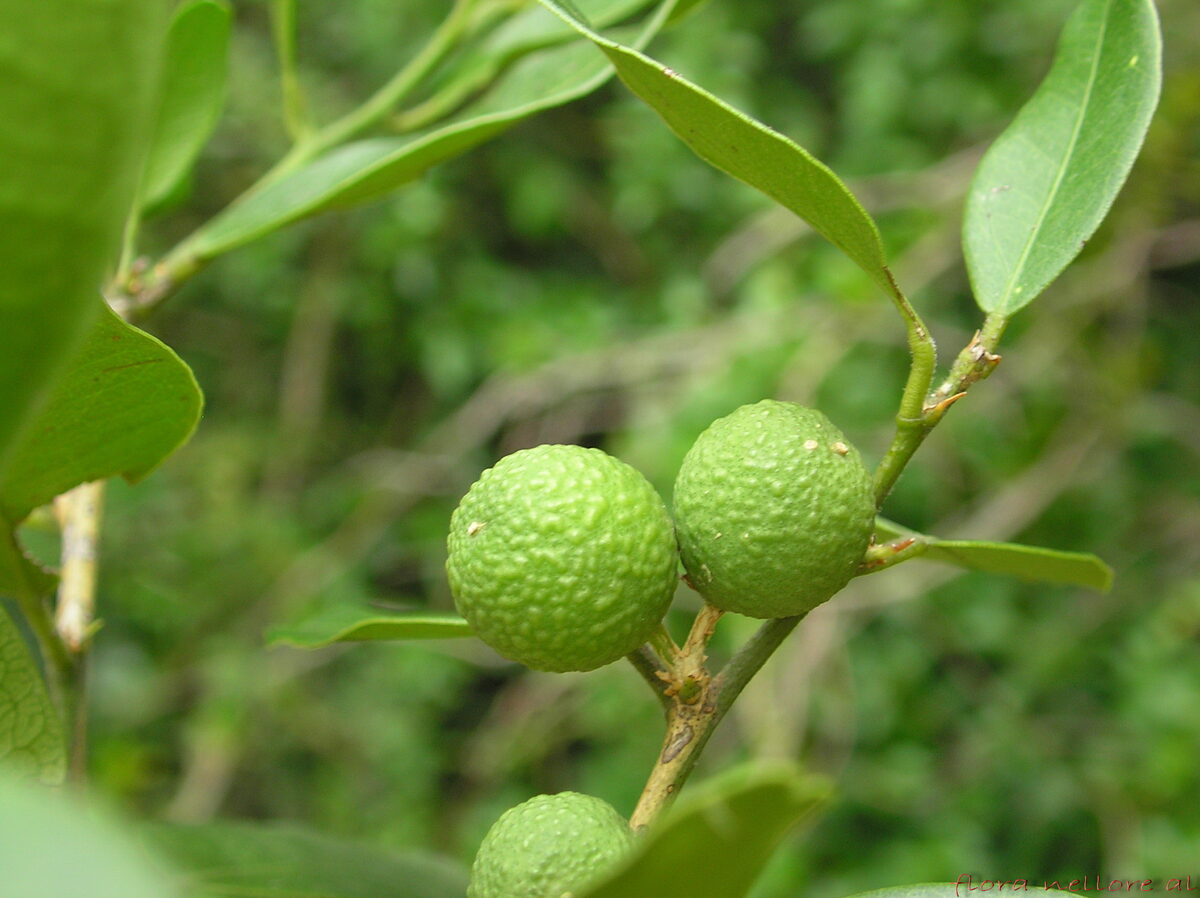
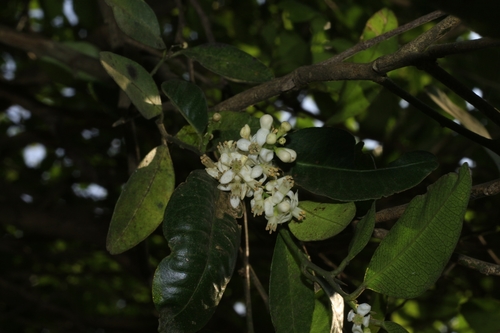
A small to medium sized tree. It grows 2-4 m tall. It has many branches. It is thorny. It loses its leaves. The flower buds form in summer then over-winter on the bare branches. The flowers are white. They are 4-5 cm across. The fruit are small and like citrus. They become yellow when ripe.
Edible Uses
Trifoliate orange fruits are very bitter, due in part to their poncirin content. Most people consider them inedible fresh, but they can be made into marmalade. When dried and powdered, they can be used as a condiment.
Traditional Uses
The fruit are used for a syrup used for flavouring. The peel can be candied. The peel makes a spicy flavouring for cakes. The flesh is used for jellies. A drink can be made from the diluted juice. The fruit need to be kept for about 2 weeks to become juicy. Young leaves are occasionally boiled and eaten.
Distribution
It grows on chalk soils. It can grow on heavy clay soils with poor drainage. It is very cold hardy. In Brisbane Botanical Gardens. It suits hardiness zones 5-11.
Where It Grows
Asia, Australia, Balkans, Britain, Central Asia, China, Europe, Hawaii, India, Japan, Korea, Macedonia, Mexico, North America, Pacific, Pakistan, Philippines, SE Asia, Taiwan, Tajikistan, USA,
Cultivation
Plants can be grown from seed or cuttings.
Other Information
It is a cultivated food plant.
Notes
It is used as rootstock for other citrus. There are 20 Citrus species. Several hybrids have been formed.
Synonyms
Also Known As
Gou Ju, Gou orange, Karatachi, Naranjo trebol, Naranjo trofoliado
References (22)
- Ambasta, S.P. (Ed.), 2000, The Useful Plants of India. CSIR India. p 483
- Bodkin, F., 1991, Encyclopedia Botanica. Cornstalk publishing, p 822
- Bremness, L., 1994, Herbs. Collins Eyewitness Handbooks. Harper Collins. p 75
- Brickell, C. (Ed.), 1999, The Royal Horticultural Society A-Z Encyclopedia of Garden Plants. Convent Garden Books. p 819
- Coronel, R.E., 1982, Fruit Collections in the Philippines. IBPGR Newsletter p 8
Show all 22 references Hide references
- Cundall, P., (ed.), 2004, Gardening Australia: flora: the gardener's bible. ABC Books. p 384
- Facciola, S., 1998, Cornucopia 2: a Source Book of Edible Plants. Kampong Publications, p 218 (As Poncirus trifoliata)
- Flora of Pakistan. www.eFloras.org
- Gouldstone, S., 1983, Growing your own Food-bearing Plants in Australia. Macmillan p 93
- Hibbert, M., 2002, The Aussie Plant Finder 2002, Florilegium. p 238
- Lazarides, M. & Hince, B., 1993, Handbook of Economic Plants of Australia, CSIRO. p 196
- Lord, E.E., & Willis, J.H., 1999, Shrubs and Trees for Australian gardens. Lothian. p 64
- Lyle, S., 2006, Discovering fruit and nuts. Land Links. p 143
- Plants for a Future database, The Field, Penpol, Lostwithiel, Cornwall, PL22 0NG, UK. http://www.scs.leeds.ac.uk/pfaf/
- Purseglove, J.W., 1968, Tropical Crops Dicotyledons, Longmans. p 494
- Recher, P, 2001, Fruit Spirit Botanical Gardens Plant Index. www.nrg.com.au/~recher/ seedlist.html p 3 (As Poncirus trifoliata)
- Segura, S., et al, 2018, The edible fruit species in Mexico. Genet Resour Crop Evol (2018) 65:1767–1793 (As Poncirus trifoliata
- Sp. pl. ed. 2, 2:1101. 1763
- Staples, G.W. and Herbst, D.R., 2005, A tropical Garden Flora. Bishop Museum Press, Honolulu, Hawaii. p 509 (As Poncirus trifoliata)
- Valder, P., 1999, The Garden Plants of China. Florilegium. p 257
- Woo, Y., et al, 2017, Antioxidant Potential of Selected Korean Edible Plant Extracts. Hindawi BioMed Research International Volume 2017, Article ID 7695606 (As Poncirus trifoliata)
- Zeven, A. C. & de West, J. M. J., 1982, Dictionary of cultivated plants and their regions of diversity. Wageningen. p 45 (As Poncirus trifoliata)