Citrus aurantium
L.
Seville orange
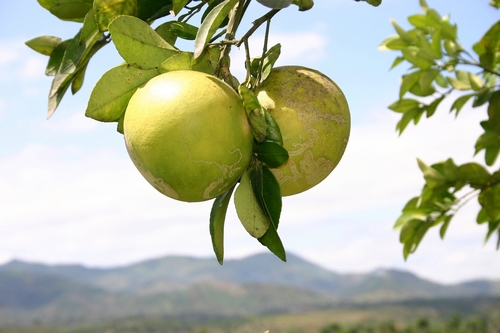
iNaturalist· cc-by
(c) Brandon Corder, some rights reserved (CC BY)
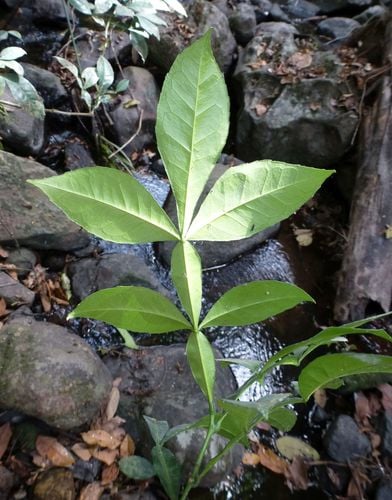
iNaturalist· cc-by-nc
(c) Audrey Lux, some rights reserved (CC BY-NC)
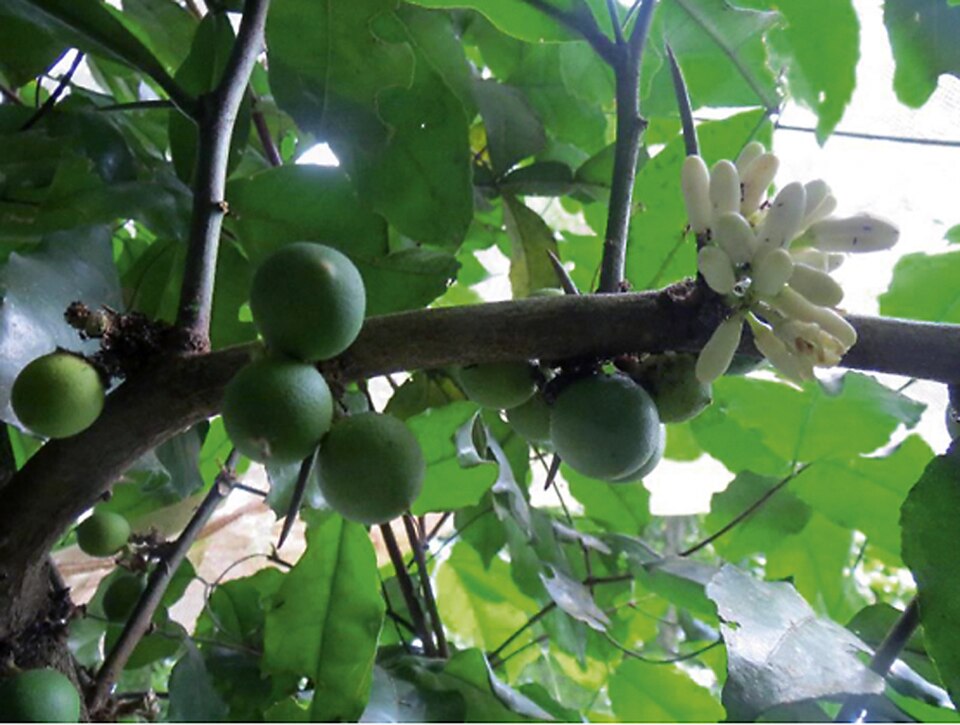
iNaturalist· cc-by-nc
(c) Audrey Lux, some rights reserved (CC BY-NC)
Summary
Source: WikipediaAn evergreen tree reaching 9 m tall by 6 m wide, growing at a medium rate. Hardy to UK zone 9 and frost tender. In leaf year-round with flowers from April to June. Hermaphroditic and self-fertile, pollinated apomictically and by insects. Noted for attracting wildlife. Grows in medium loamy and heavy clay soils, preferring well-drained conditions. Suitable for mildly acid and neutral soils, tolerating very alkaline soils. Requires full sun and prefers moist soil.
Description
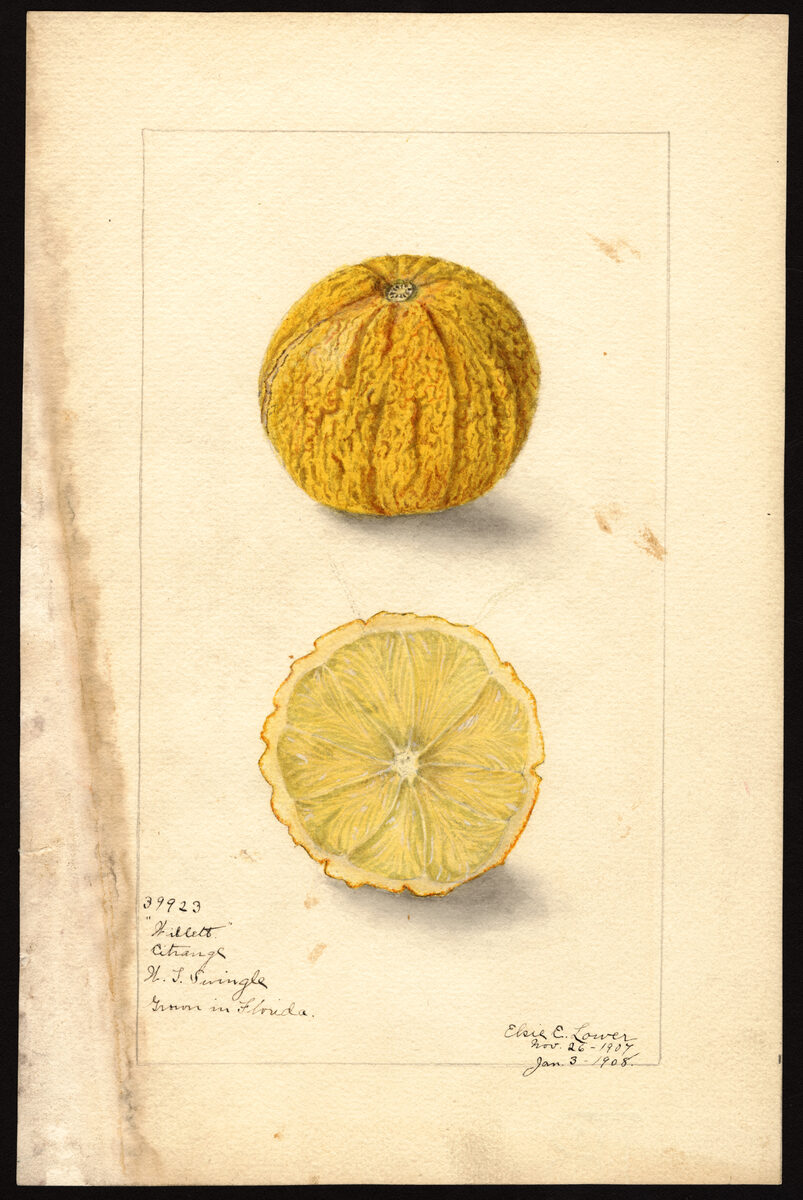
An evergreen tree up to 10-15 m high and with slender thorns. It spreads to 5 m across. The stem is stout and erect. It is covered with smooth greyish-brown bark. The leaf stalks have broad wings. The leaves are glossy green, oval and 10 cm long. The leaves taper towards the base and are paler under the leaf. There are spines in the axils of the leaves. The flowers are white and have a sweet smell. They are 2 cm across and there can be 1, 2 or a cluster, in the axils of leaves. The fruit is often green with a reddish tinge and fairly juicy but sour. The fruit are 5-7 cm long. The fruit is often rough skinned. The flesh is divided into segments with sour pulp.
Edible Uses
The fruit is very bitter and is mainly used in making marmalade and other preserves; it measures approximately 5–7cm in diameter. The rind is used as a flavouring in cakes and as an ingredient in bouquet garni. An oil from the seeds contains linolenic acid and is increasingly used as a food due to its ability to reduce blood cholesterol levels. The flowers are used to scent tea. An essential oil from the dried peel of immature fruits is used as a food flavouring.
Traditional Uses
The fruit is bitter, therefore mostly used for marmalade or flavouring. The fruit are used for peel and for sherry and wine. The tree is used as a rootstock for budding or grafting other citrus on to. The oil from the flowers is used for flavouring. The flowers are used for flavouring tea. Immature fruit are pickled in salt or vinegar or fried in coconut oil.
Medicinal Uses
Citrus species contain a wide range of active ingredients, including vitamin C, flavonoids, acids, and volatile oils, and research into their uses is ongoing. They also contain coumarins such as bergapten, which sensitizes the skin to sunlight and is sometimes added to tanning preparations to promote pigmentation, though it can cause dermatitis or allergic reactions in some people. The plants contain umbelliferone, which is antifungal, as well as antibacterial and antifungal essential oils, and the pyrone citrantin, which shows antifertility activity and was once used in contraceptives. Both leaves and flowers are antispasmodic, digestive, and sedative; an infusion treats stomach problems and sluggish digestion. The fruit is antiemetic, antitussive, carminative, diaphoretic, digestive, and expectorant — used either immature (Zhi Shi) or mature with seeds and endocarp removed (Zhi Ke), with the immature fruit having the stronger action. These preparations treat dyspepsia, constipation, abdominal distension, stuffy sensation in the chest, and prolapse of the uterus, rectum, or stomach. The fruit peel is bitter, digestive, and stomachic. Seeds and pericarp treat anorexia, chest pains, colds, and coughs. The essential oil is used in aromatherapy for depression, tension, and skin problems, with the keyword 'Radiance'.
Distribution
A tropical and subtropical plant. Mostly in coastal areas in the tropics. It is drought and frost resistant. It does best in a protected sunny position. It must have a temperature above 3-5°C to grow. It suits hardiness zones 9-11.
Where It Grows
Africa, Argentina, Asia, Australia, Balkans, Bangladesh, Belize, Brazil, British Indian Ocean Terr., BIOT, Burkina Faso, Cambodia, Cameroon, Central Africa, Central America, China, Colombia, Congo DR, Costa Rica, Croatia, Cuba, East Africa, Ecuador, Ethiopia, Europe, Fiji, France, Grenada, Guam, Guatemala, Guyana, Haiti, Hawaii, Himalayas, India, Indochina, Indonesia, Italy, Japan, Kenya, Laos, Madagascar, Malawi, Malaysia, Maldives, Marquesas, Mediterranean, Mexico, Micronesia, Middle East, Morocco, Mozambique, Myanmar, Nepal, New Caledonia, Nicaragua, North Africa, North America, Northeastern India, Pacific, Pakistan, Papua New Guinea, PNG, Paraguay, Peru, Philippines, Puerto Rico, Samoa, Sao Tome and Principe, Saudi Arabia, SE Asia, Senegal, Sierra Leone, Slovenia, Solomon Islands, South Africa, Southern Africa, South America, Spain, Sri Lanka, Suriname, Tanzania, Thailand, Taiwan, Tokelau, Tonga, Trinidad, Turkey, Türkiye, USA, Vanuatu, Vietnam*, West Africa, West Indies, Zimbabwe,
Cultivation
Prefers a moderately heavy loam with a generous amount of compost and sand added and a very sunny position. Prefers a pH between 5 and 6. Tolerates a pH in the range 4.8 to 8.3. Plants are intolerant of water logging. When growing plants in pots, a compost comprising equal quantities of loam and leafmould plus a little charcoal should produce good results. Do not use manure since Citrus species dislike it. When watering pot plants it is important to neither overwater or underwater since the plant will soon complain by turning yellow and dying. Water only when the compost is almost dry, but do not allow it to become completely dry. Dormant plants can withstand temperatures down to about -6°c so long as this is preceded by cool weather in order to harden off the plant. The young growth in spring, even on mature plants, is frost-tender and so it is best to grow the plants in a position sheltered from the early morning sun. A tree grown outdoors on the coast at Salcombe in Devon lived for over 200 years. The bitter orange is often grown for its edible fruit in warm temperate and tropical zones, there are many named varieties. In Britain it can be grown in a pot that is placed outdoors in the summer and brought into a greenhouse during the winter. Plants dislike root disturbance and so should be placed into their permanent positions when young. If growing them in pots, great care must be exercised when potting them on into larger containers. Most Citrus species are self-fertile, meaning they can produce fruit without needing another plant for cross-pollination, though cross-pollination can improve fruit set in some varieties. Citrus fruits are generally harvested in late autumn to early spring, depending on the specific variety and local climate. Citrus trees usually flower in the spring. Some species may have a second flowering period in late summer.
Propagation
Sow fresh seed in a greenhouse after thoroughly rinsing. Sow stored seed in March in a greenhouse. Germination usually takes place within 2–3 weeks at 13°C. Seedlings are prone to damping off and must be watered carefully and kept well ventilated. Seed is usually polyembryonic — two or more seedlings arise from each seed, genetically identical to the parent and typically free of any virus present in the parent. Prick out into individual pots when large enough to handle and grow on in the greenhouse for at least three growing seasons before attempting to establish outdoors. Plant out in summer with cold protection for the first few winters. Half-ripe cuttings can be taken in July–August in a frame. Layering in October.
Other Uses
This species is widely used as a rootstock for sweet orange (C. sinensis) due to its disease resistance and greater hardiness. It is also grown as a hedging plant in North America. A semi-drying oil from the seed is used in soap making. Essential oils from the peel, petals, and leaves are used as food flavourings and in perfumery and medicines. The flower oil, called neroli oil, is produced in very low yields from this species and is often adulterated with inferior oils. The oil from leaves and young shoots, called petit-grain, requires around 400 kilos of plant material to yield approximately 1 kilo of oil and is also frequently adulterated. Neroli oil mixed with vaseline is used in India as a preventative against leeches.
Other Information
Trees are scattered in a number of coastal areas in Papua New Guinea but fruit are not used and just left lying under the tree. It is cultivated.
Notes
This plant is mostly used as rootstock for other citrus. There are 20 Citrus species. Several hybrids have been formed.
Nutrition
| Part | Moisture | kJ | kcal | Protein | Vit A | Vit C | Iron | Zinc |
|---|---|---|---|---|---|---|---|---|
| Fruit | 86 | 205 | 49 | 0.9 | 4 | 53 | 0.5 | — |
Synonyms
Also Known As
Apepu, Arancio amaro, Bigarade, Bitter orange, Daidai, Embul-dodan, Gwanggyul, Heralay, Jeruk manis, Kabala, Kadarai, Karna, Khatta, Laoranjy, Laranja-azeda, Laranja-cavalo, Laranja-pocan, Ljuta naranca, Mallikanarangi, Moli jamu, Moli kula, Mshuza, Naaringu, Nandam, Narang, Narangam, Naranja amargo, Naranjo agrio, Narattai, Satkora, Sour orange, Suan cheng, Taitai, Turunc, Voangdy, Zure oranjes
References (90)
- AAK, 1980, Bertanam Pohon Buah-buahan. Penerbitan Yayasan Kanisius, Jogyakarta. p 29
- AAK, 1994, Jeruk, Penerbit Kanisius, Jogyakarta. p 189
- Ambasta, S.P. (Ed.), 2000, The Useful Plants of India. CSIR India. p 128
- Amin, M. et al, 2023, Edible wild plant species used by different linguistic groups of Kohistan Upper Khyber Pakhtunkhwa (KP), Pakistan. Journal of Ethnobiology and Ethnomedicine 19:6 p 8
- Barwick, M., 2004, Tropical and Subtropical Trees. A Worldwide Encyclopedic Guide. Thames and Hudson p 117
Show all 90 references Hide references
- Benvenuti, S. & Mazzoncini, M., 2021, The Biodiversity of Edible Flowers: Discovering New Tastes and New Health Benefits. Frontiers in Plant Science Article 569499.
- Blamey, M and Grey-Wilson, C., 2005, Wild flowers of the Mediterranean. A & C Black London. p 123
- Bodkin, F., 1991, Encyclopedia Botanica. Cornstalk publishing, p 261
- Bourret, D., 1981, Bonnes-Plantes de Nouvelle-Caledonie et des Loyaute. ORSTOM. p 23
- Bremness, L., 1994, Herbs. Collins Eyewitness Handbooks. Harper Collins. p 46
- Brickell, C. (Ed.), 1999, The Royal Horticultural Society A-Z Encyclopedia of Garden Plants. Convent Garden Books. p 272
- Brouk, B., 1975, Plants Consumed by Man. Academic Press, London. p 189
- Brouk, B., 1975, Plants Consumed by Man. Academic Press, London. p 189 (As Citrus aurantium ssp. aurantium)
- Brown, D., 2002, The Royal Horticultural Society encyclopedia of Herbs and their uses. DK Books. p 172
- Burkill, H. M., 1985, The useful plants of west tropical Africa, Vol. 4. Kew.
- Burkill, I.H., 1966, A Dictionary of the Economic Products of the Malay Peninsula. Ministry of Agriculture and Cooperatives, Kuala Lumpur, Malaysia. Vol 1 (A-H) p 573
- Caballero-Serrano, V., et al, 2019, Traditional ecological knowledge and medicinal plant diversity in Ecuadorian Amazon home gardens. Global Ecology and Conservation 17 (2019) e00524 p 12
- Cameron, J.W. & Soost, R.K., 1979, Citrus, in Simmonds, N.W., (ed), Crop Plant Evolution. Longmans. London. p 261
- Chandrashekara, U. M., 2009, Tree species yielding edible fruit in the coffee-based homegardens of Kerala, India: their diversity, uses and management. Food Sec. 1:361-370
- Cheifetz, A., (ed), 1999, 500 popular vegetables, herbs, fruits and nuts for Australian Gardeners. Random House p 180
- Clarke, W.C. & Thaman, R.R., 1993, Agroforestry in the Pacific Islands: Systems for sustainability. United Nations University Press. New York. p 230
- Cobley, L.S. (rev. Steele, W.M.) 2nd Ed., 1976, An Introduction to the Botany of Tropical Crops. Longmans. p 168
- Coronel, R.E., 1982, Fruit Collections in the Philippines. IBPGR Newsletter p 9 (As Citrus myrtifolia)
- Cruz, I. M., et al, 2015, Edible fruits and seeds in the State of Mexico. Revista Mexicana de Ciencias Agricolas. Vol. 6. Num. 2 pp 331-346
- Cundall, P., (ed.), 2004, Gardening Australia: flora: the gardener's bible. ABC Books. p 383
- Dolina, K. & Luczaj, L., 2014, Wild food plants used on the Dubrovnik coast (south-eastern Croatia) Acta Soc Bot Pol 83(3):175–181
- Elevitch, C.R.(ed.), 2006, Traditional Trees of the Pacific Islands: Their Culture, Environment and Use. Permanent Agriculture Resources, Holualoa, Hawaii. p 245
- Etherington, K., & Imwold, D., (Eds), 2001, Botanica's Trees & Shrubs. The illustrated A-Z of over 8500 trees and shrubs. Random House, Australia. p 214
- Facciola, S., 1998, Cornucopia 2: a Source Book of Edible Plants. Kampong Publications, p 215
- Food Composition Tables for use in East Asia FAO http://www.fao.org/infoods/directory No. 945 (As Citrus iyo)
- French, B.R., 1986, Food Plants of Papua New Guinea, A Compendium. Asia Pacific Science Foundation p 224
- Gillaumin, R., 1954, Les Plantes utiles des Nouvelles-Hebrides (fin et complement) In: Journal d'agriculture tropicale et de botanique appliquee Vol. 1, No. 10-12 pp 453-460
- Gunes, S. et al, 2018, Survey of wild food plants for human consumption in Karaisali (Adana-Turkey). Indian Journal of Traditional Knowledge. Vol. 17(2), April 2018, pp 290-298
- Hedrick, U.P., 1919, (Ed.), Sturtevant's edible plants of the world. p 198
- Heywood, V.H., Brummitt, R.K., Culham, A., and Seberg, O. 2007, Flowering Plant Families of the World. Royal Botanical Gardens, Kew. p 287
- Hu, Shiu-ying, 2005, Food Plants of China. The Chinese University Press. p 492
- Huxley, A. (Ed.), 1977, The Encyclopedia of the Plant Kingdom. Chartweil Books. p 78
- Japanese International Research Centre for Agricultural Science www.jircas.affrc.go.jp/project/value_addition/Vegetables
- Jardin, C., 1970, List of Foods Used In Africa, FAO Nutrition Information Document Series No 2.p 128 (As Citrus aurantium ssp. aurantium)
- Kapelle, M., et al, 2000, Useful plants within a Campesino Community in a Costa Rican Montane Cloud Forest. Mountain Research and Development, 20(2): 162-171
- Khan, D. & Shaukat, S.S., 2006, The Fruits of Pakistan: Diversity, Distribution, Trends of Production and Use. Int. J. Biol. Biotech., 3(3):463-499
- Kiple, K.F. & Ornelas, K.C., (eds), 2000, The Cambridge World History of Food. CUP p 433, 1822
- Lazarides, M. & Hince, B., 1993, Handbook of Economic Plants of Australia, CSIRO. p 60
- Lembaga Biologi Nasional, 1977, Buah-Buahan, Balai Pustaka, Jakarta. p 52
- Lorenzi, H., Bacher, L., Lacerda, M. & Sartori, S., 2006, Brazilian Fruits & Cultivated Exotics. Sao Paulo, Instituto Plantarum de Estuados da Flora Ltda. p 530
- Lyle, S., 2006, Discovering fruit and nuts. Land Links. p 142
- Macmillan, H.F. (Revised Barlow, H.S., et al) 1991, Tropical Planting and Gardening. Sixth edition. Malayan Nature Society. Kuala Lumpur. p 277
- Manandhar, N.P., 2002, Plants and People of Nepal. Timber Press. Portland, Oregon. p 156
- Martin, F.W. & Ruberte, R.M., 1979, Edible Leaves of the Tropics. Antillian College Press, Mayaguez, Puerto Rico. p 107
- Medhi, P. & Borthakur, S. K., 2012, Phytoresources from North Cachur Hills of Assam -3: Edible plants sold at Hflong market. Indian Journal of Natural Products and Resources. 3(1) pp 84-109
- Mengistu, F. & Hager, H., 2008, Wild Edible Fruit Species Cultural Domain, Informant Species Competence and Preference in Three Districts of Amhara Region, Ethiopia. Ethnobotany Research & Applications 6:487-502
- Miguel, E., et al, 1989, A checklist of the cultivated plants of Cuba. Kulturpflanze 37. 1989, 211-357
- Morley, B. & Everard, B., 1970, Wild Flowers of the World. Ebury press. Plate 119
- Morton, J. F., 1987, Fruits of Warm Climates. Wipf & Stock Publishers p 130
- Mulherin, J., 1994, Spices and natural flavourings. Tiger Books, London. p 106
- Omawale, 1973, Guyana's edible plants. Guyana University, Georgetown p 44
- Pasha, M. K. & Uddin, S. B., 2019, Minor Edible Fruits of Bangladesh. Bangladesh J. Plant Taxon. 26(2): 299–313
- Peekel, P.G., 1984, (Translation E.E.Henty), Flora of the Bismarck Archipelago for Naturalists, Division of Botany, Lae, PNG. p 277, 274
- Phon, P., 2000, Plants used in Cambodia. © Pauline Dy Phon, Phnom Penh, Cambodia. p 158
- Plants for a Future database, The Field, Penpol, Lostwithiel, Cornwall, PL22 0NG, UK. http://www.scs.leeds.ac.uk/pfaf/
- Plants of Haiti Smithsonian Institute http://botany.si.edu/antilles/West Indies
- PROSEA handbook Volume 13 Spices. p 275
- PROSEA (Plant Resources of South East Asia) handbook, Volume 2, 1991, Edible fruits and nuts.
- Purseglove, J.W., 1968, Tropical Crops Dicotyledons, Longmans. p 502
- Rajapaksha, U., 1998, Traditional Food Plants in Sri Lanka. HARTI, Sri Lanka. p 426
- Ruiters-Welcome, A. K., 2019, Food plants of southern Africa. Ph.D. thesis. Univ. of Johannesburg p 98
- Segura, S., et al, 2018, The edible fruit species in Mexico. Genet Resour Crop Evol (2018) 65:1767–1793
- Seidemann J., 2005, World Spice Plants. Economic Usage, Botany, Taxonomy. Springer. p 105
- Selvam, V., 2007, Trees and shrubs of the Maldives. RAP Publication No. 2007/12 p 64
- Small, E., 2009, Top 100 Food Plants. The world's most important culinary crops. NRC Research Press. p 390
- Song, M., et al, 2013, Traditional knowledge of wild edible plants in Jeju Island, Korea. Indian Journal of Traditional Knowledge. 12(2) pp 177-194
- Sp. pl. 2:782. 1753
- Staples, G.W. and Herbst, D.R., 2005, A tropical Garden Flora. Bishop Museum Press, Honolulu, Hawaii. p 506
- Styger, E., et al, 1999, Indigenous fruit trees of Madagascar: potential components of agroforestry systems to improve human nutrition and restore biological diversity. Agroforestry Systems 46: 289-310
- Sujanapal, P., & Sankaran, K. V., 2016, Common Plants of Maldives. FAO & Kerala FRI, p 84
- Thaman, R.R., 1976, The Tongan Agricultural System, University of the South Pacific, Suva, Fiji. p 389
- Timyan, J., 1996, Bwa Yo: Important Trees of Haiti. SE Consortium for International Development. Washington. p 100
- Topp, J. M. W., 1988, An Annotated Check List of the Flora of Diego Garcia, British Ocean Territory. Atoll Research Bulletin No. 313
- USDA, ARS, National Genetic Resources Program. Germplasm Resources Information Network - (GRIN). [Online Database] National Germplasm Resources Laboratory, Beltsville, Maryland. Available: www.ars-grin.gov/cgi-bin/npgs/html/econ.pl (10 April 2000)
- Valder, P., 1999, The Garden Plants of China. Florilegium. p 248
- van Wyk, B., 2005, Food Plants of the World. An illustrated guide. Timber press. p 138
- Vickery, M.L. and Vickery, B., 1979, Plant Products of Tropical Africa, Macmillan. p
- Walter, A. & Lebot, V., 2007, Gardens of Oceania. ACIAR Monograph No. 122. CD-ROM minor species p 8
- Welcome, A. K. & Van Wyk, B.-E., 2019, An inventory and analysis of the food plants of southern Africa. South African Journal of Botany 122 (2019) 136–179
- Wiersema, J. H. & Leon, B., 2013, World Economic Plants. A Standard Reference CRC Press. 2nd Ed. p 179
- Whistler, W. A., 1988, Ethnobotany of Tokelau: The Plants, Their Tokelau Names, and Their Uses. Economic Botany 42(2): 155-176
- Yamamoto, Masashi, 2014, Citrus Genetic Resources Grown on the Ryuku Uslands, Japan. Kagoshima University Research Center for the Pacific Islands. Occasional Papers No. 54 p 9
- Young, J., (Ed.), 2001, Botanica's Pocket Trees and Shrubs. Random House. p 251
- Zeven, A. C. & de West, J. M. J., 1982, Dictionary of cultivated plants and their regions of diversity. Wageningen. p 62
- Zuchowski W., 2007, Tropical Plants of Costa Rica. A Zona Tropical Publication, Comstock Publishing. p 200