Persicaria lapathifolia
(L.) Delarbe
Pale Smartweed, Pale Knotweed
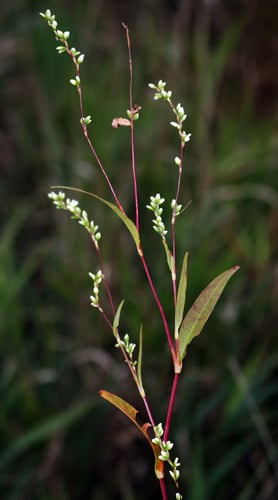
iNaturalist· cc-by
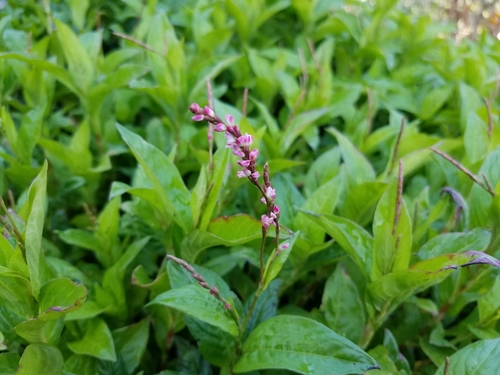
(c) Sandy Wolkenberg, some rights reserved (CC BY), uploaded by Sandy Wolkenberg
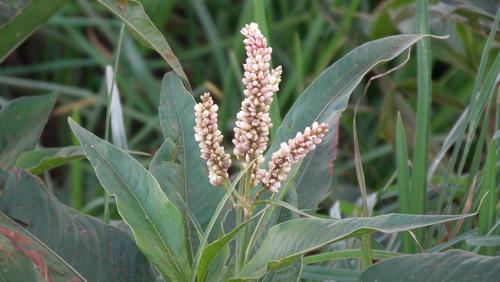
iNaturalist· cc-by
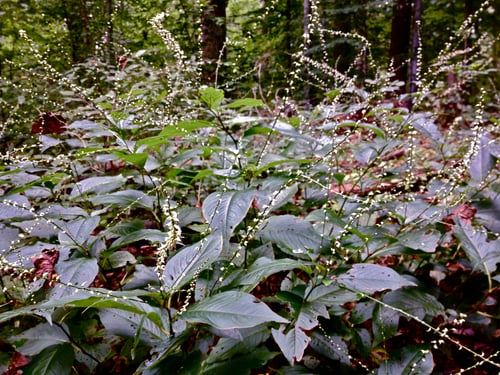
(c) Roberto Daniel Avila, some rights reserved (CC BY), uploaded by Roberto Daniel Avila
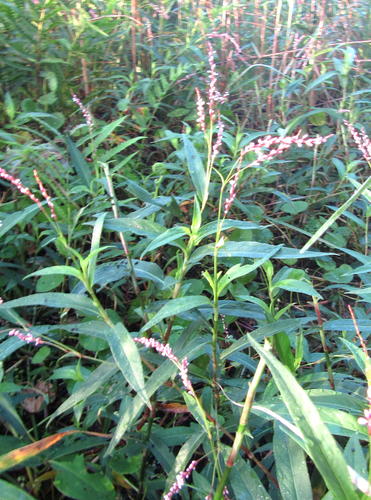
iNaturalist· cc-by
(c) Sandy Wolkenberg, some rights reserved (CC BY), uploaded by Sandy Wolkenberg
Summary
Source: WikipediaPersicaria lapathifolia (syn. Polygonum lapathifolium), known as pale persicaria, is a plant of the family Polygonaceae. It is considered to be native throughout most of the world, from arctic to tropical realms, except South America and Southern Africa. It is closely related to Persicaria maculosa and as such is considered a weed in Britain and Europe. Other common names for the plant include pale smartweed, curlytop knotweed, and willow weed. It is a species complex made up of a great many varying forms, sometimes considered varieties. The environment also has a strong influence on the morphology of an individual plant.
Description
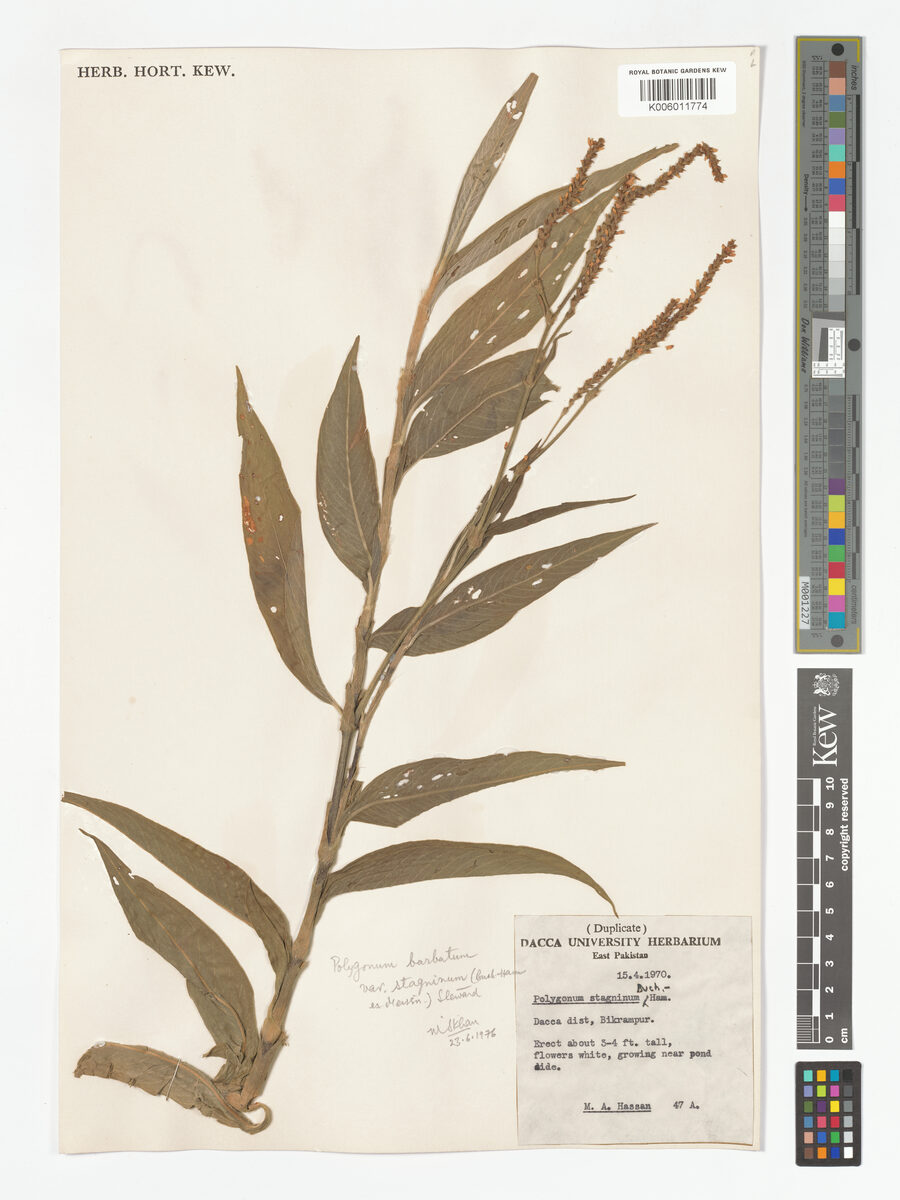
An erect herb. It can grow for one year or for several years. It can lie along the ground or be erect. It grows to 1 m high. The stems are slender. They can be 2.4 cm across. The leaves are sword shaped and 12 cm long. They can be 25 cm long by 5 cm wide but are mostly smaller. There can be hairs along the larger veins on the upper surface of the leaf. The base is narrowly wedge shaped and they taper to the tip. The flower arrangement is at the top. The false spikes are like cylinders. They are dense. The fruit are flattened and flask shaped. It has flat faces with round edges. They are 2 mm long. They are black or brown and shiny.
Edible Uses
It has been found in analysis of the intestinal contents of the Tollund Man body, found in peat in Denmark in 1950.
Traditional Uses
CAUTION: It can damage the skin and is suspected of causing death in cattle. (Often animals forget to cook their food!) The shoots are scalded and then fried with butter, cream, flour or eggs. The seeds can be ground and used to thicken soups. The leaves are slightly sour and chewed as a snack.
Medicinal Uses
The whole plant is antiseptic and astringent. An infusion has been used in the treatment of stomach complaints, VD and fevers. The plant produces a soft white mass, a froth like that of soap. It is applied externally to burns.
Known Hazards
Although no specific mention has been made for this species, there have been reports that some members of this genus can cause photosensitivity in susceptible people. Many species also contain oxalic acid (the distinctive lemony flavour of sorrel) - whilst not toxic this substance can bind up other minerals making them unavailable to the body and leading to mineral deficiency. Having said that, a number of common foods such as sorrel and rhubarb contain oxalic acid and the leaves of most members of this genus are nutritious and beneficial to eat in moderate quantities. Cooking the leaves will reduce their content of oxalic acid. People with a tendency to rheumatism, arthritis, gout, kidney stones or hyperacidity should take especial caution if including this plant in their diet since it can aggravate their condition.
Distribution
It is a temperate and subtropical plant. It grows in wet areas above 1500 m altitude in Papua New Guinea. It grows in wetlands. It grows in Inner Mongolia in China. In Argentina it grows from sea level to 1,000 m above sea level. In Sichuan and Yunnan.
Where It Grows
Africa, Argentina, Asia, Australia, Bangladesh, Belgium, Bhutan, Botswana, Britain, Cambodia, Central Asia, Chile, China, East Africa, Eswatini, Europe, France, Himalayas, Hungary, India, Indochina, Indonesia, Ireland, Japan, Kazakhstan, Korea, Kyrgyzstan, Luxembourg, Malawi, Malaysia, Manchuria, Mongolia, Mozambique, Myanmar, Nepal, New Zealand, North Africa, North America, Northeastern India, Pacific, Pakistan, Papua New Guinea, PNG, Paraguay, Philippines, Poland, Russia, SE Asia, Siberia, Sikkim, South Africa, Southern Africa, Swaziland, Tajikistan, Tasmania, Thailand, Turkey, Türkiye, Turkmenistan, Uruguay, USA, Uzbekistan, Vietnam, Zambia, Zimbabwe,
Cultivation
The plant can be found from the temperate zone through to the tropics. Succeeds in an ordinary garden soil but prefers a moisture retentive not too fertile soil in sun or part shade. Repays generous treatment. Stems in contact with damp soil or water may develop adventitious roots from the nodes. Plants seem to be immune to the predations of rabbits.
Propagation
Seed - germination is usually free and easy. When they are large enough to handle, prick the seedlings out into individual pots and plant them out when they have reached sufficient size.
Other Uses
The plant produces a soft white mass, a froth like that of soap. It is used for bathing and washing clothes.
Other Information
It is a main wild vegetable in the Hexi corridor QiLian mountains China.
Notes
It can irritate the skin. There are about 50 Polygonum species.
Synonyms
Also Known As
Curlytop knotweed, Hurangan chihi, Savanyu keserufu, Tirson, Willow smartweed
References (23)
- "Chinese Nutrition Journal", 2002, Vol 23(8) p 298
- Caton, J.M. & Hardwick, R. J., 2016, Field Guide to Useful Native Plants from Temperate Australia. Harbour Publishing House. p 168
- Dashorst, G.R.M., and Jessop, J.P., 1998, Plants of the Adelaide Plains & Hills. Botanic Gardens of Adelaide and State Herbarium. p 52
- Denes, A., et al, 2012, Wild plants used for food by Hungarian ethnic groups living in the Carpathian Basin. Acta Societatis Botanicorum Poloniae 81 (4): 381-396 (As Polygonum lapathifolium)
- Duke, J.A., 1992, Handbook of Edible Weeds. CRC Press. p 154
Show all 23 references Hide references
- Ertug, F, Yenen Bitkiler. Resimli Türkiye Florası -I- Flora of Turkey - Ethnobotany supplement (As Polygonum lapathifolium)
- Flora of China @ efloras.org Volume 5 (As Polygonum lapathifolium)
- Flora of Pakistan. www.eFloras.org
- Irving, M., 2009, The Forager Handbook, A Guide to the Edible Plants of Britain. Ebury Press p 175
- Khasbagan, Hu-Yin Huai, and Sheng-Ji pei, 2000, Wild Plants in the Diet of Athorchin Mongol Herdsmen in Inner Mongolia. Economic Botany 54(4): 528-536 (As Polygonum lapathifolium)
- Łuczaj, L. and Wojciech M Szymański, 2007, Wild vascular plants gathered for consumption in the Polish countryside: a review. Journal of Ethnobiology and Ethnomedicine 2007, 3:17 (As Polygonum lapathifolium)
- Lazarides, M. & Hince, B., 1993, Handbook of Economic Plants of Australia, CSIRO. p 194
- Leach, G.J., & Osborne, P.L., 1985, Freshwater Plants of Papua New Guinea. UPNG Press, p 213
- Moerman, D. F., 2010, Native American Ethnobotany. Timber Press. p 424
- Nat. arr. Brit. pl. 2:270. 1821
- Plants for a Future database, The Field, Penpol, Lostwithiel, Cornwall, PL22 0NG, UK. http://www.scs.leeds.ac.uk/pfaf/
- Sainty, G.R. & Jacobs, S.W.L., 1981, Waterplants of New South Wales. Water Resources Commission. NSW p 349
- Swaziland's Flora Database http://www.sntc.org.sz/flora
- Tasmanian Herbarium Vascular Plants list p 45
- Wang, J. et al, 2013, A Study on the Utilization of Wild Plants for Food in Liangshan Yi Autonomous Prefecture. Plant Diversity and Resources. 35(4): 416-471 (As Polygonum lapathifolia)
- Wujisguleng, W., & Khasbagen. K., 2010, An integrated assessment of wild vegetable resources in Inner Mongolian Autonomous Region, China. Journal of Ethnobiology and Ethnomedicine 6:34 (As Polygonum lapathifolium)
- www.eflora.org Flora of China (As Polygonum lapathifolia)
- Zhang, Y., et al, 2014, Diversity of wetland plants used traditionally in China: a literature review. Journal of Ethnobiology and Ethnomedicine. 10:72