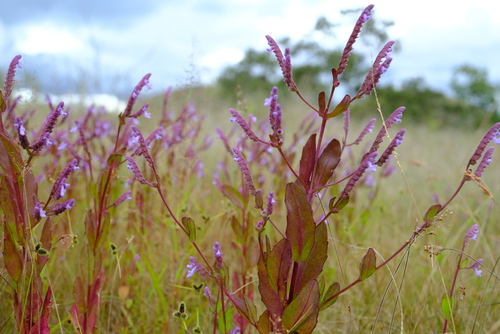
Plectranthus barbatus
Andrews
Indian coleus
iNaturalist· cc-by-nc
(c) Chinmay Pathak, some rights reserved (CC BY-NC)
iNaturalist· cc-by-nc
(c) Chinmay Pathak, some rights reserved (CC BY-NC)
iNaturalist· cc-by-nc
(c) Chinmay Pathak, some rights reserved (CC BY-NC)
Description
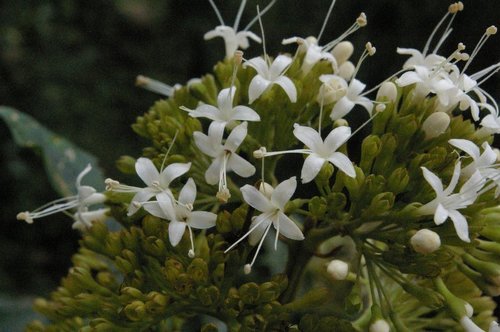
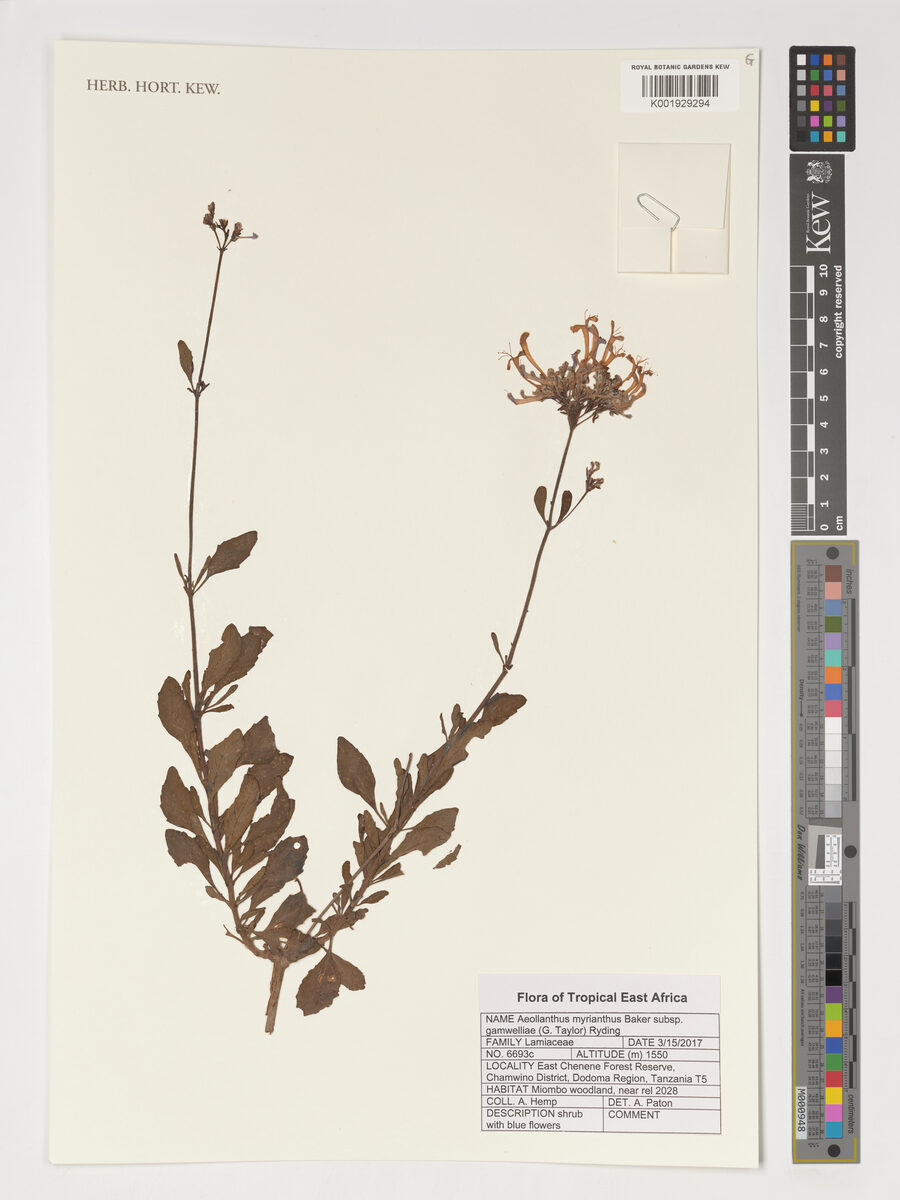
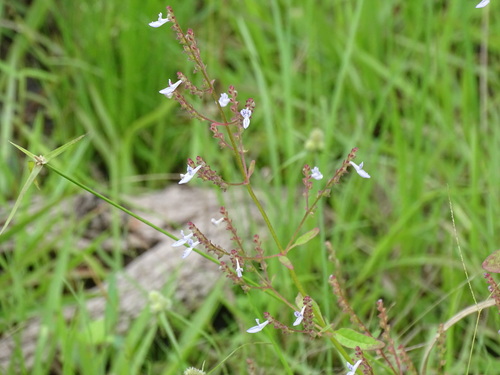
A herb. It has a thickened fleshy rootstock. It keeps growing from year to year. The stems are erect. They only have a few branches. It is 20-30 cm high. It can be 75 cm high. The leaves have short stalks. The leaves are oval and have teeth along the edge. They are 4-8 cm long by 2-4.5 cm wide. They are hairy on both surfaces. The flowers are in spike like groups 10-20 cm long. The flowers are pale blue in spikes forming a ring.
Edible Uses
The tuberous roots are eaten as a condiment in India, where they are often prepared as a pickle. Leaves - cooked and eaten as a vegetable. The powdered nutlets (seed capsules) are added as a flavouring to pickles and roasted foods.
Traditional Uses
The young nutlets are added as flavouring to pickles and roasted foods. The tubers are eaten.
This uses section is brief — help expand it
Medicinal Uses
In traditional medicine in Brazil, Plectranthus barbatus is commonly used as an analgesic, a remedy for malaria, and to cure liver and stomach diseases. In India it is considered to have anti-allergenic activity. The diterpene forskolin, obtained from the root tubers, is used in the preparation of drugs against cardiomyopathy, glaucoma, asthma and certain cancers. The plant contains an essential oil that exhibits anti-allergic activities through passive cutaneous anaphylaxis inhibition. Studies have shown that extracts of the plant reverse allergic bronchospasm. The plant, especially the leaves, is used to treat a wide variety of digestive complaints, including stomach aches, nausea, gastritis and intestinal spasms. It is also used to relieve a range of respiratory complaints including colds, coughs, bronchitis and pneumonia. It is used to treat heart, blood and circulation conditions, such as myalgia, angina, haemorrage and hypertension. It is also used to treat psychiatric problems, insomnia and convulsions. It is used to treat a range of infections including throat and mouth infections, tonsillitis, gastro-intestinal infections, genitourinary infections, as well as ear and eye infections. It is used to treat malaria in Brazil and to break fevers in East Africa and India. The plant is a recognized source of useful antiglaucoma agents. The leaves are used to treat conjunctivitis and earache. The whole plant is said to have antibacterial, antiviral and antifungal activity, and antiprotozoic activity against protozoa, such as Giardia. The plant is used in the treatment of syphilis. It is used as an emmenagogue and oral abortifacient or contraceptive, and as an aphrodisiac. The contraceptive property of this species is corroborated by the fact that the leaves were found to have an anti-implantation effect in rats. It is applied externally in the treatment of burns, wounds, sores, insect bites, ringworm and skin allergies. It reduces swelling on bruises and is used to bathe babies suffering from measles. It is used for treating rheumatism, stiff neck, backache and dislocated bones. The leaves, when burned a little and placed on the skin of the neck, are said to relieve stiffness. The plant is used in the treatment of teeth and gum disorders. The plant has cytotoxic and anti-tumour promoting activity and can be used in the treatment of cancer. The plant is used to treat snakebites. The plant is reported to stimulate the immune system. The plant is antiinflammatory and purgative.
Known Hazards
The plant is known to have embryo- and fetotoxic activities on rodents. It can sometimes cause perianal dermatitis.
Distribution
A tropical and subtropical plant. It grows throughout Nepal between 1000-2500 m altitude. It grows in openings in pine forests. It is rare in Swaziland.
Where It Grows
Africa, Arabia, Asia, Bhutan, East Africa, Eswatini, Ethiopia, Himalayas, India, Indonesia, Madagascar, Malaysia, Middle East, Nepal, Pakistan, SE Asia, South Africa, Southern Africa, Sri Lanka, Swaziland,
Cultivation
Plants are grown from seeds or suckers.
Propagation
Seed - sow in well-drained soil, covering lightly with a thin layer of sand, and place in a warm but shaded spot. The seed germinates in about three weeks. Cuttings - soft tips root faster than semi-hardwood growth but both root easily. Cuttings are best taken 60 - 100mm long with three or four nodes, making the cut just below a node. Place them in sand, perlite, vermiculite or peat, or any mixture of these, keep them moist and shaded and they should root in 2 - 3 weeks Division.
Other Uses
The soft velvety leaves have a camphorous aroma and are used as a body rub to cleanse and deodorize the skin. An extract of the roots is used as a skin conditioner in commercial cosmetic preparations. Both the leaves and the stems are used to hasten the ripening of bananas. The whole plant contains a forskolin-like compound that is used in hair dyeing The plant is used as a small hedge and is planted on hillsides to act as a soil stabilizer in eastern Africa, India and Sri Lanka. The plant, when composted, makes a good manure. When growing well in the wild, the plant is said to be a good indicator of fertile soils. The flowers are attractive to bees.
Other Information
It is widely cultivated.
Notes
There are about 250 Plectranthus species. They are mainly in the tropics.
Synonyms
Also Known As
Gandhe jhar
References (13)
- Bot. Repos. 10: t. 594. 1810
- Hedrick, U.P., 1919, (Ed.), Sturtevant's edible plants of the world. p 211
- Lim, T. K., 2015, Edible Medicinal and Non Medicinal Plants. Volume 9, Modified Stems, Roots, Bulbs. Springer p 66
- Lukhoba, C. W., et al, 2006, Plectranthus: A review of ethnobotanical uses. Journal of Ethnopharmacology 103 (2006) 1–24
- Manandhar, N.P., 2002, Plants and People of Nepal. Timber Press. Portland, Oregon. p 165
Show all 13 references Hide references
- PROSEA handbook Volume 13 Spices. p 279
- Samy, J., Sugumaran, M., Lee, K. L. W., 2009, Herbs of Malaysia, Marshall Cavendish. p 192
- Swaziland's Flora Database http://www.sntc.org.sz/flora
- USDA, ARS, National Genetic Resources Program. Germplasm Resources Information Network - (GRIN). [Online Database] National Germplasm Resources Laboratory, Beltsville, Maryland. Available: www.ars-grin.gov/cgi-bin/npgs/html/econ.pl (10 April 2000)
- Valdes, L. J. et al, 1987, Coleus barbatus (C. forskohlii) and the Potential New Drug (Coleonol). Economic Botany 41(4): 474-483
- N. Wallich, Pl. asiat. rar. 2:15. 1830
- Wiersema, J. H. & Leon, B., 2013, World Economic Plants. A Standard Reference CRC Press. 2nd Ed. p 541
- World Checklist of Useful Plant Species 2020. Royal Botanic Gardens, Kew