Aeollanthus suaveolens
Mart. ex Spreng.
Bwalangino
iNaturalist· cc-by-nc
(c) Nick Helme, some rights reserved (CC BY-NC), uploaded by Nick Helme
iNaturalist· cc-by-nc
(c) Nick Helme, some rights reserved (CC BY-NC), uploaded by Nick Helme
Description
An erect herb. It is short lived. It is bushy and grows 80 cm tall. It has many branches. It has an aroma. The leaves are 5 cm long and thin without a stalk. The flowers are small and violet. The fruit are 4 dry nutlets.
Edible Uses
The aromatic leaves are used for flavouring and in sauces.
Traditional Uses
The leaves are used for flavouring and in sauces.
This uses section is brief — help expand it
Medicinal Uses
The plant is used in the treatment of skin, ear and eye diseases in Brazil. Employed as a medicinal plant in tropical Africa.
Distribution
It is a tropical plant. It grows in shallow soils over rock.
Where It Grows
Africa, Botswana, Brazil, Cameroon, Central Africa, Congo DR, Nigeria, South America, Sudan, West Africa,
Cultivation
Plants are grown from seed. It can also be grown from leafy cuttings.
Other Uses
The plant is used as a soap-substitute in tropical Africa. The essential oil of the plant is of potential value in perfumery.
Other Information
It is cultivated as a vegetable.
Notes
There are about 35 Aeolanthus species. They occur in Africa.
Synonyms
References (8)
- Bircher, A. G. & Bircher, W. H., 2000, Encyclopedia of Fruit Trees and Edible Flowering Plants in Egypt and the Subtropics. AUC Press. p 11 (As Aeollanthus heliotropoides)
- Burkill, H. M., 1985, The useful plants of west tropical Africa, Vol. 3. Kew.
- Latham, P. & Mbuta, A. K., 2017, Plants of Kongo Central Province, Democratic Republic of Congo. 3rd ed p
- Martin, F.W. & Ruberte, R.M., 1979, Edible Leaves of the Tropics. Antillian College Press, Mayaguez, Puerto Rico. p 195 (As Aeollanthus heliotropoides)
- Okigbo, B.N., Vegetables in Tropical Africa, in Opena, R.T. & Kyomo, M.L., 1990, Vegetable Research and development in SADCC countries. Asian Vegetable Research and development Centre. Taiwan. p 42 (As Aeollanthus heliotropoides)
Show all 8 references Hide references
- Seidemann J., 2005, World Spice Plants. Economic Usage, Botany, Taxonomy. Springer. p 6 (As Aeollanthus heliotropoides)
- Terra, G.J.A., 1973, Tropical Vegetables. Communication 54e Royal Tropical Institute, Amsterdam, p 19 (As Aeollanthus heliotropoides)
- Uphof, 1968,
More from Lamiaceae
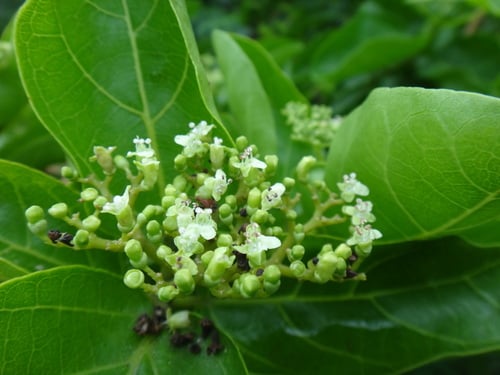
Premna serratifolia
Creek Premna, Coastal premna
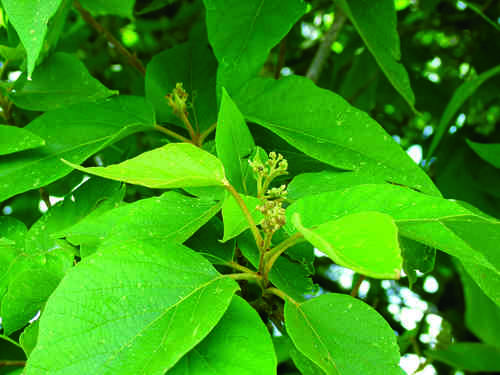
Premna tomentosa
Woolly-leaved fire tree
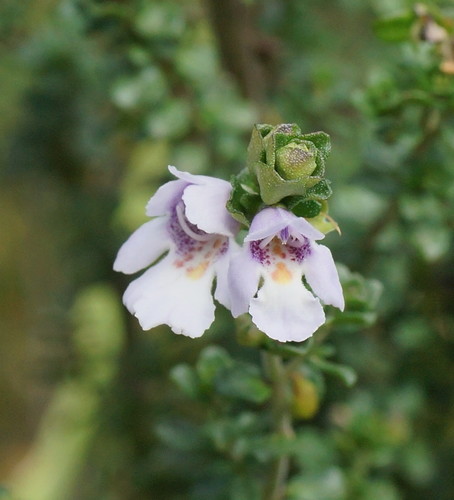
Prostanthera cuneata
Alpine mint bush
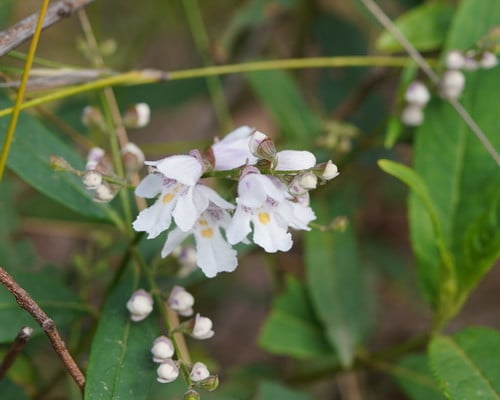
Prostanthera lasianthos
Victorian Christmas bush
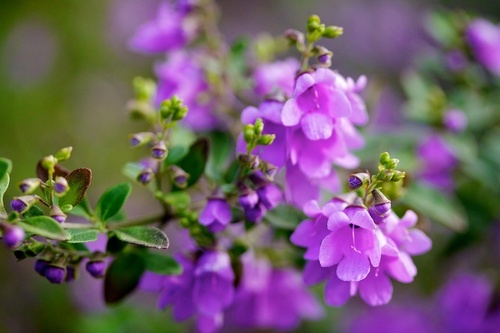
Prostanthera ovalifolia
Purple Mint-bush, Oval leafed mint bush
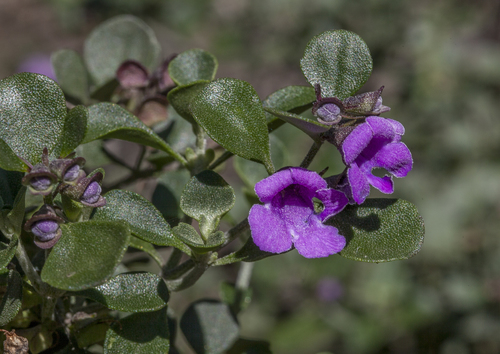
Prostanthera rotundifolia
Native mint, Round leafed mintbush, Australian mint bush