Platysace cirrosa
Bunge
Kahno, Karna, Kanna, Native Potato
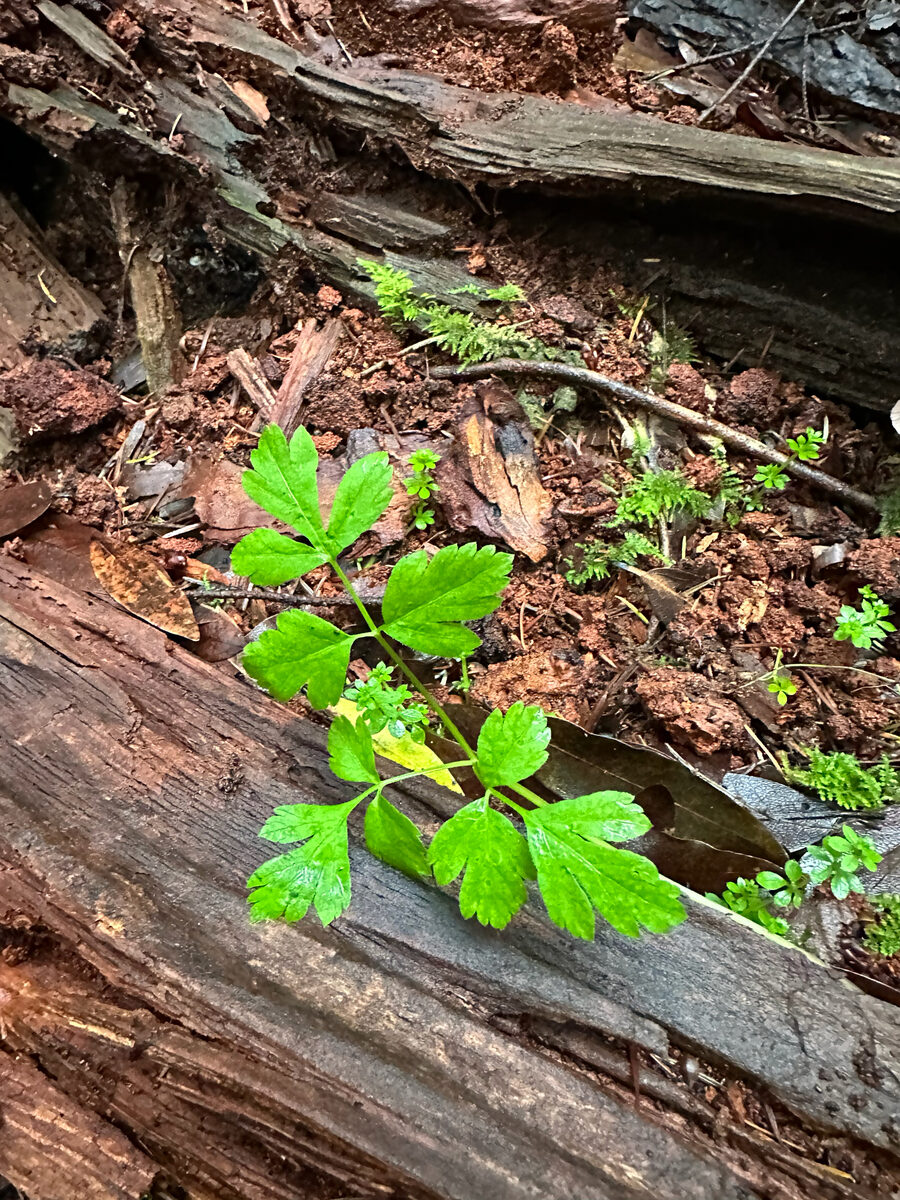
iNaturalist· cc-by-nc
(c) Russ Chambers, some rights reserved (CC BY-NC)
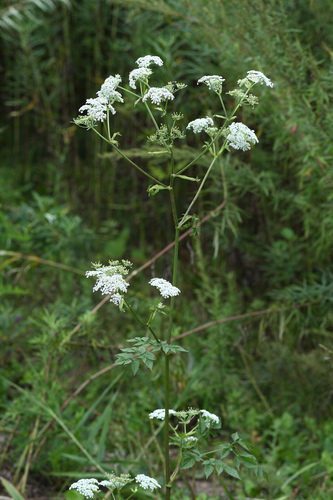
iNaturalist· cc-by-nc
(c) Russ Chambers, some rights reserved (CC BY-NC)
iNaturalist· cc-by-nc
(c) Russ Chambers, some rights reserved (CC BY-NC)
Summary
Source: WikipediaPlatysace cirrosa, commonly known as karna, is a twining, perennial herb or climber that is endemic to the south-west of Western Australia. The Noongar name for the plant is kanna. It is leafless, sometimes with a few very small scale-like leaves, and flowers arranged in umbels with overlapping yellow petals and flattened fruit.
Description
A climbing herb. It produces tubers. It re-grows from the underground rootstock. The branches are wiry and 50 cm long. They twine and climb. The leaves are 2-3 cm long by 0.3 cm wide. They are alternate and do not have stalks. They are green. The flowers are about 0.2 cm across. They are yellow. They occur in groups near the ends of leafless stalks. The fruit are small and flattened.
Edible Uses
The tubers and roots are edible.
Distribution
It grows in stony soils in open forest. It suits warm temperate regions. They need well drained soils. They can grow in sun or light shade. They can tolerate frost.
Where It Grows
Australia*,
Cultivation
They can be grown from seed or cuttings. They can probably also be grown by division of the tuber.
Notes
There are about 25 Platysace species. They grow in Australia.
References (3)
- Bindon, P., 1996, Useful Bush Plants. Western Australian Museum. p 202
- Elliot, W.R., & Jones, D.L., 1997, Encyclopedia of Australian Plants suitable for cultivation. Vol 7. Lothian. p 367
- Paczkowska, G. & Chapman, A.R., 2000, The Western Australian Flora. A Descriptive Catalogue. Western Australian Herbarium. p 148