Platonia esculenta
(Arruda) Rickett & Stafleu
Bakuri, Guiana orange
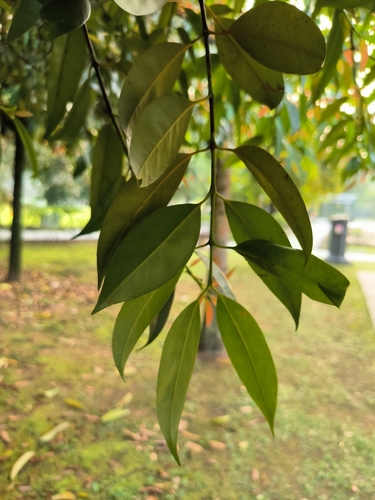
iNaturalist· cc-by-nc
(c) Lucas C. Marinho, some rights reserved (CC BY-NC)
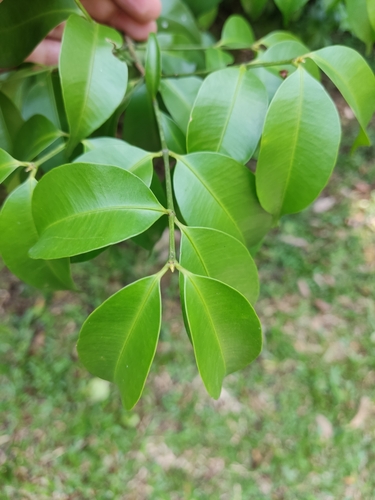
iNaturalist· cc-by-nc
(c) Lucas C. Marinho, some rights reserved (CC BY-NC)
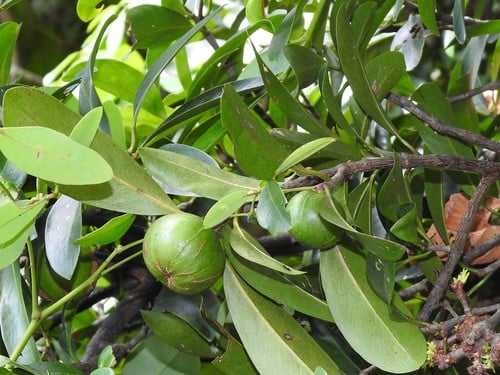
iNaturalist· cc-by-nc
(c) Geison Mesquita, some rights reserved (CC BY-NC)
Description
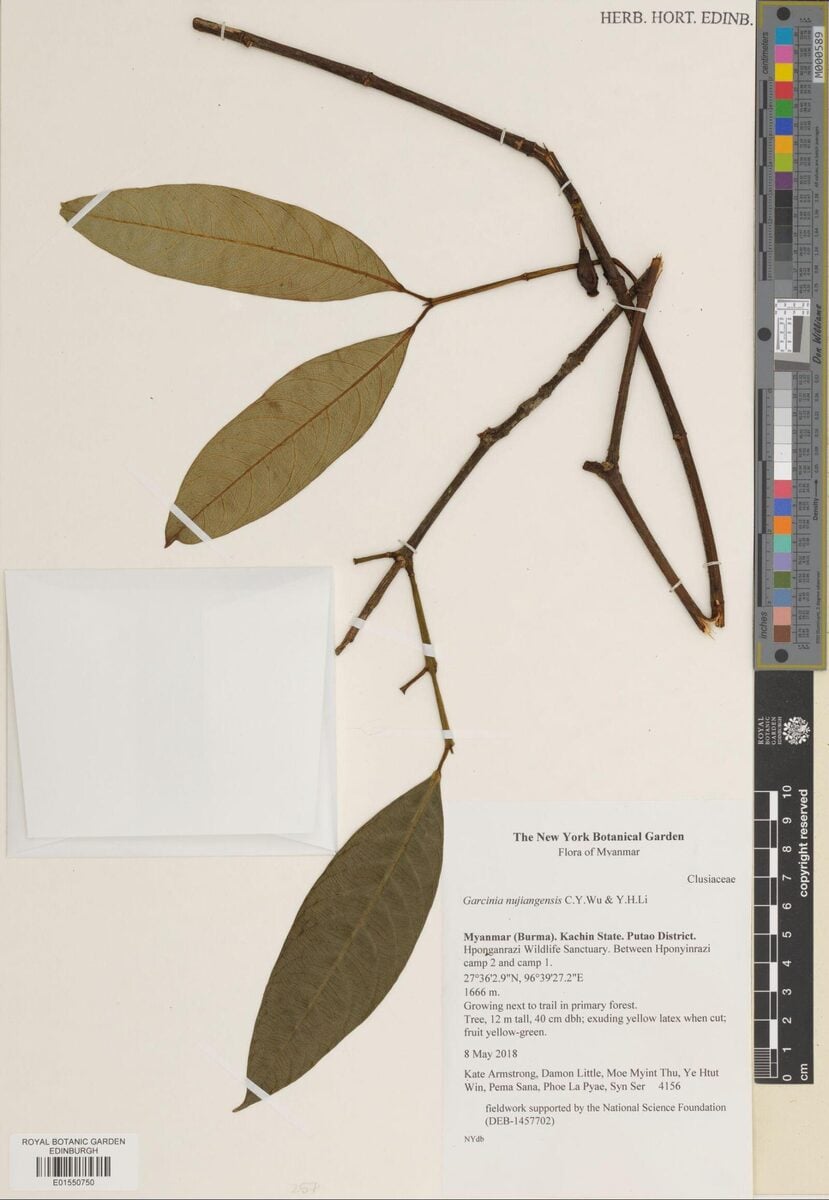
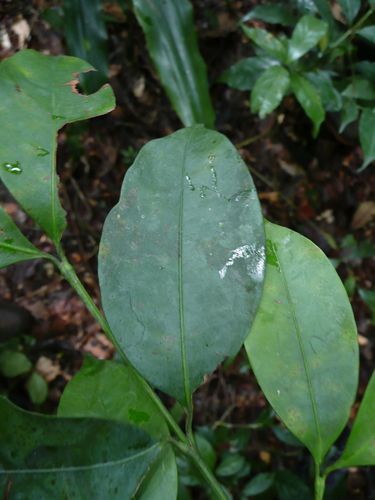
A tall timber tree. It grows 15-25 m tall. The trunk can be 50-80 cm across. It has a bright yellow latex. The leaves are simple and oval. They are 8-14 cm long. The flowers are large. They are 7 cm long. The fruit is yellow. The flesh is creamy white and sweet. The fruit is oval and 7-15 cm long by 5-15 cm wide. The fruit have 1-5 seeds. The seeds are oblong and angular. The aril or fleshy layer around the seeds is white, succulent, sweet and edible.
Edible Uses
The fruits are eaten fresh, used for ice cream and milkshakes, and made into jams and jellies. The aril (fleshy layer around the seeds) and seeds are also edible.
Traditional Uses
The fruit are eaten fresh. They are also used for ice cream and milkshakes. They can be used for jams and jellies.
This uses section is brief — help expand it
Distribution
It is a tropical plant. It grows naturally in the estuary of the Amazon River. It grows in areas with 1300-3000 mm rain per year. The temperatures are 25-26°C. It needs good soil moisture.
Where It Grows
Africa, Amazon, Brazil, Colombia, Ecuador, Guiana, Guianas, Guyana, Paraguay, Peru, Sao Tome and Principe, South America, Suriname, Venezuela,
Cultivation
Plants can be grown from seed. The fruit are harvested and the seeds are planted fresh without drying out. Seed will not store more than 30 days. Fresh seed are planted and germinate in 20-40 days. Plants can also be grafted.
Production
Plants grow quickly. A fruit can weigh 1 kg.
Other Information
The fruit are popular. It is a cultivated crop.
Nutrition
| Part | Moisture | kJ | kcal | Protein | Vit A | Vit C | Iron | Zinc |
|---|---|---|---|---|---|---|---|---|
| Fruit | 72.3 | 439 | 105 | 1.9 | — | 33 | 2.2 | — |
Synonyms
Also Known As
Bacuri, Bacury, Geelhart, Ger'ati, Landirana, Makasoe, Matazona, Mongo-mataaki, Pakoeli, Pakuri, Parcouri
References (18)
- Mabberley, D.J. 1990. The plant-book: a portable dictionary of the higher plants. Cambridge University Press. NY.
- Campbell, R.J. 1996. South American fruits deserving further attention. Pp. 431-439 In Progress in new crops. (J. Janick,eds.). ASHS Press, Arlington, VA.
- Hedrick, U.P., 1919, (Ed.), Sturtevant's edible plants of the world. p 507 (As Platonia insignis)
- Hermandez Bermejo, J.E., and Leon, J. (Eds.), 1994, Neglected Crops. 1492 from a different perspective. FAO Plant Production and Protection Series No 26. FAO, Rome. p15, 30 (As Platonia insignis)
- Heywood, V.H., Brummitt, R.K., Culham, A., and Seberg, O. 2007, Flowering Plant Families of the World. Royal Botanical Gardens, Kew. p 104
Show all 18 references Hide references
- Kermath, B. M., et al, 2014, Food Plants in the Americas: A survey of the domesticated, cultivated and wild plants used for Human food in North, Central and South America and the Caribbean. On line draft. p 670
- Kiple, K.F. & Ornelas, K.C., (eds), 2000, The Cambridge World History of Food. CUP p 1725
- Kiple, K.F. & Ornelas, K.C., (eds), 2000, The Cambridge World History of Food. CUP p 1725 (As Platonia insignis)
- Lorenzi, H., 2002, Brazilian Trees. A Guide to the Identification and Cultivation of Brazilian Native Trees. Vol. 01 Nova Odessa, SP, Instituto Plantarum p 134 (As Platonia insignis)
- Lorenzi, H., Bacher, L., Lacerda, M. & Sartori, S., 2006, Brazilian Fruits & Cultivated Exotics. Sao Paulo, Instituto Plantarum de Estuados da Flora Ltda. p 130 (As Platonia insignis)
- Nagy, S., P.E. Shaw and W.F. Wardowski. 1990. Fruits of tropical and subtropical origin. Composition, properties and uses. Florida Science Source, INC. Florida.
- Rufino, M. M. et al, 2010, Bioactive compounds and antioxidant capacities of 18 non-traditional tropical fruit from Brazil. Food Chemistry 121: 996-1002
- Smith, N., Mori, S.A., et al, 2004, Flowering Plants of the Neotropics. Princeton. p 107
- Taxon 8:313. 1959 - replaces P. insignis Mart., an illegitimate, superfluous name (ICBN Art. 52)
- USDA, ARS, National Genetic Resources Program. Germplasm Resources Information Network - (GRIN). [Online Database] National Germplasm Resources Laboratory, Beltsville, Maryland. Available: www.ars-grin.gov/cgi-bin/npgs/html/econ.pl (10 April 2000)
- van Roosmalen, M.G.M., 1985, Fruits of the Guianan Flora. Utrecht Univ. & Wageningen Univ. p 138 (As Platonia insignis)
- Villachica, H., (Ed.), 1996, Frutales Y hortalizas promisorios de la Amazonia. FAO, Lima. p 51 (As Platonia insignis)
- Villachica, H. 1996. Frutales y hortalizas promisorios de la Amazonía. Tratado de Cooperación Amazónica.