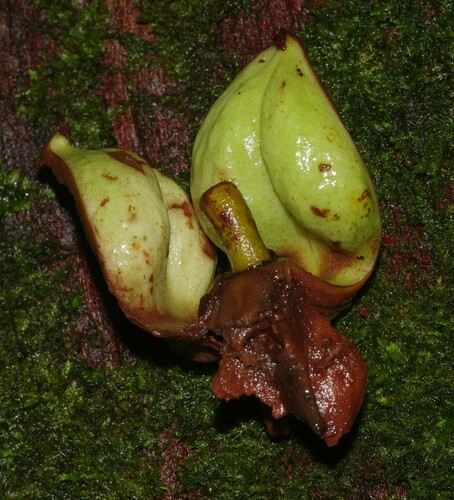
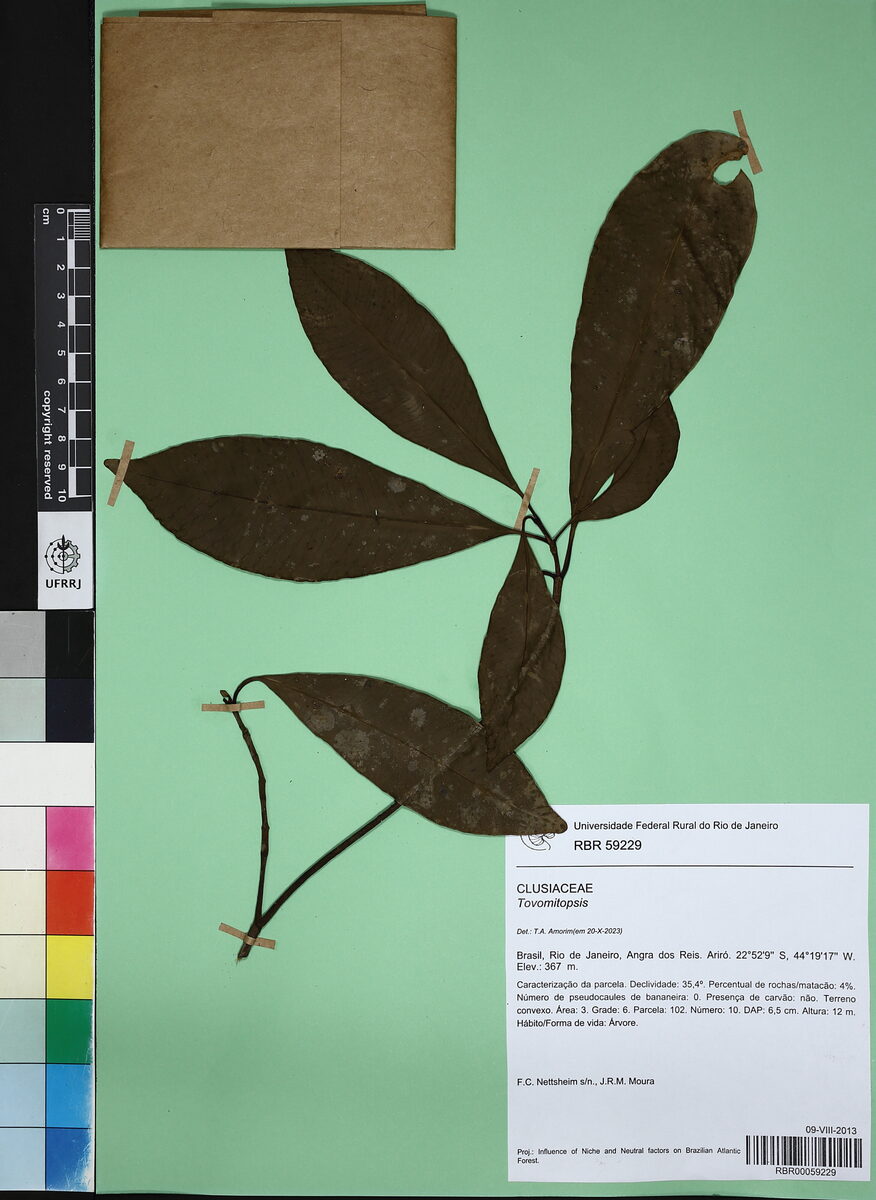
Garcinia dives
Pierre
Balukuk, Pildes
gbif· cc0
Botanical Research Institute of Texas
gbif· cc-by
Royal Botanic Gardens, Kew
gbif· cc0
Botanical Research Institute of Texas
Description
A small tree or shrub. The branches are numerous and brownish. They are not angular and are smooth. The leaves are opposite and scattered. They are oblong with a blunt base. The flowers are white and mostly borne singly. The fruit are egg shaped to round and 2 to 3 cm long. They are one seeded.
Edible Uses
Fruit raw. An acid flavour, the peel is removed before the fruit is eaten. The fruit is an ellipsoid to globose berry, 2 - 3cm long, containing one seed.
Traditional Uses
The fruit are eaten raw. They need to be skinned well.
This uses section is brief — help expand it
Distribution
A tropical plant. They are found at low altitudes throughout the Philippines.
Where It Grows
Asia, Indochina, Indonesia, Pacific, Philippines, SE Asia,
Propagation
Seed - we have no specific information on this species, but the seed of most members of the genus can be slow to germinate, even if sown fresh, often taking 6 months or more.
Notes
There are about 300 Garcinia species.
Synonyms
References (5)
- Bodner, C. C. and Gereau, R. E., 1988, A Contribution to Bontoc Ethnobotany. Economic Botany, 43(2): 307-369
- Fl. forest. Cochinch. 1(fasc. 6): t. 90, fig. B. 1883
- Monsalud, M.R., Tongacan, A.L., Lopez, F.R., & Lagrimas, M.Q., 1966, Edible Wild Plants in Philippine Forests. Philippine Journal of Science. p 481
- PROSEA (Plant Resources of South East Asia) handbook, Volume 2, 1991, Edible fruits and nuts.
- Uji, T., 2007, Keanekaragaman, Persebaran dan Potensi Jenis-jenis Garcinia. Berk. Penel. Hayati: 12 (129–135), 2007