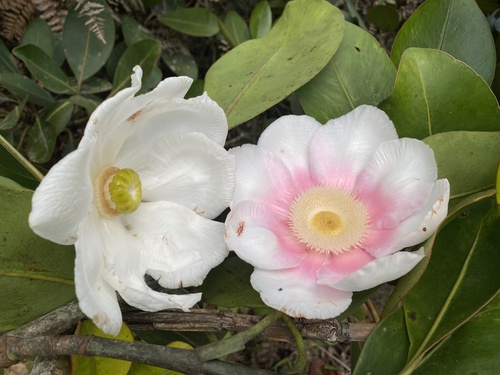
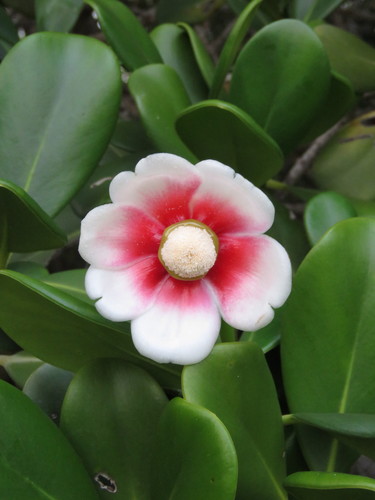
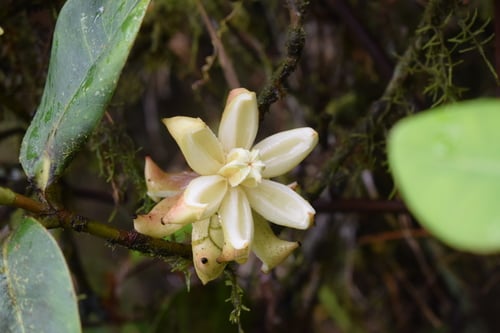
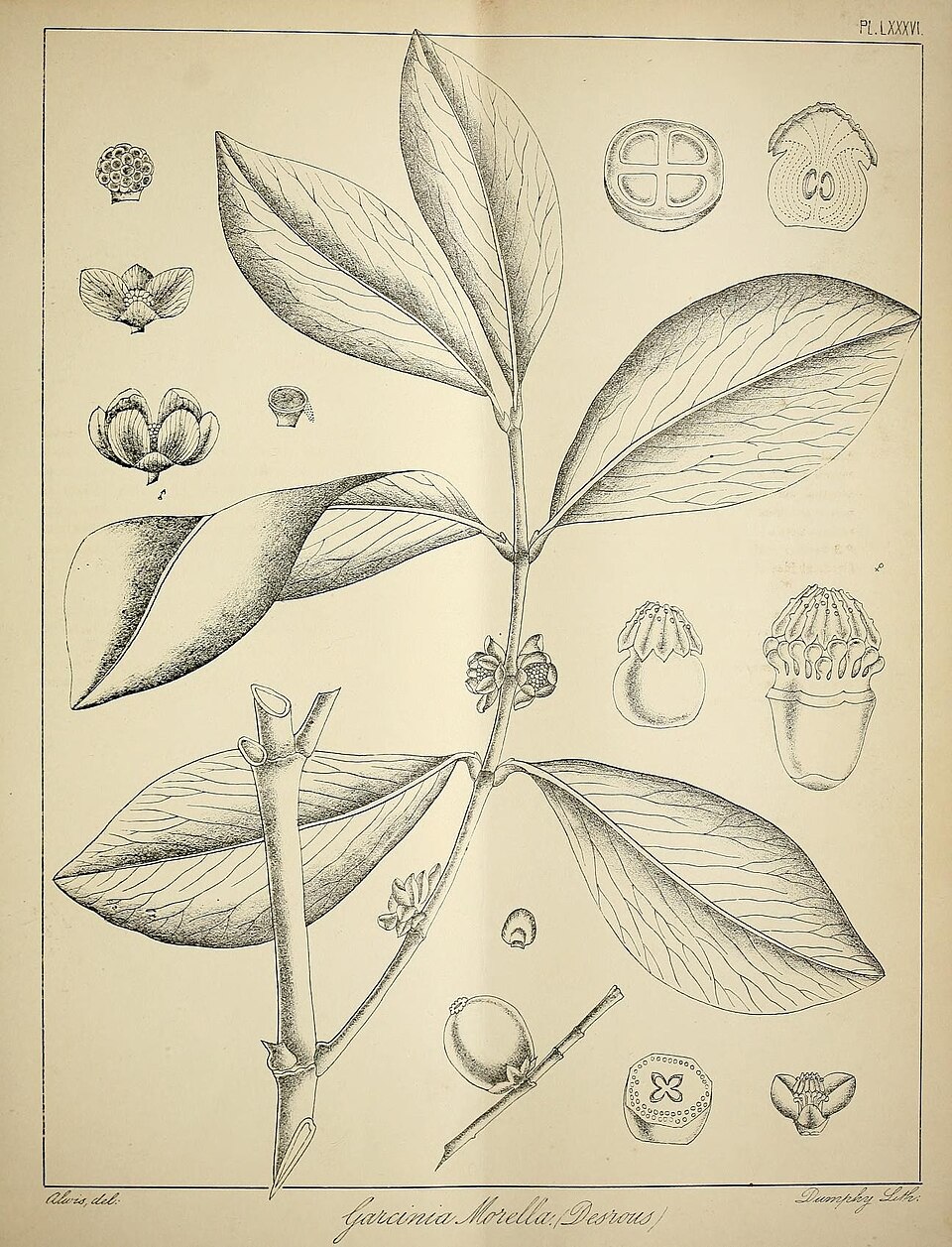
Garcinia cowa
Roxb. ex DC.
Cowa
iNaturalist· cc-by-nc
(c) lordworm_cryptopsy, some rights reserved (CC BY-NC)
iNaturalist· cc-by-nc
(c) michael-ma, some rights reserved (CC BY-NC)
iNaturalist· cc-by-nc
(c) Pinky Rani Sarkar, some rights reserved (CC BY-NC), uploaded by Pinky Rani Sarkar
Summary
Source: WikipediaGarcinia cowa, commonly known as cowa fruit or cowa mangosteen is an evergreen plant with edible fruit native to Asia, India, Bangladesh, Myanmar, Malaysia, Thailand, Vietnam, Laos, Cambodia, and southwest China. The tree is harvested from the wild for its edible fruits and leaves, which are used locally. Flowers are yellow, male & female flowers are separated. It is locally known as Kau Thekera (কাও থেকেৰা) in Assamese, Kawa or kau in Bengali and Malayalam, Kau in Manipuri.
Description
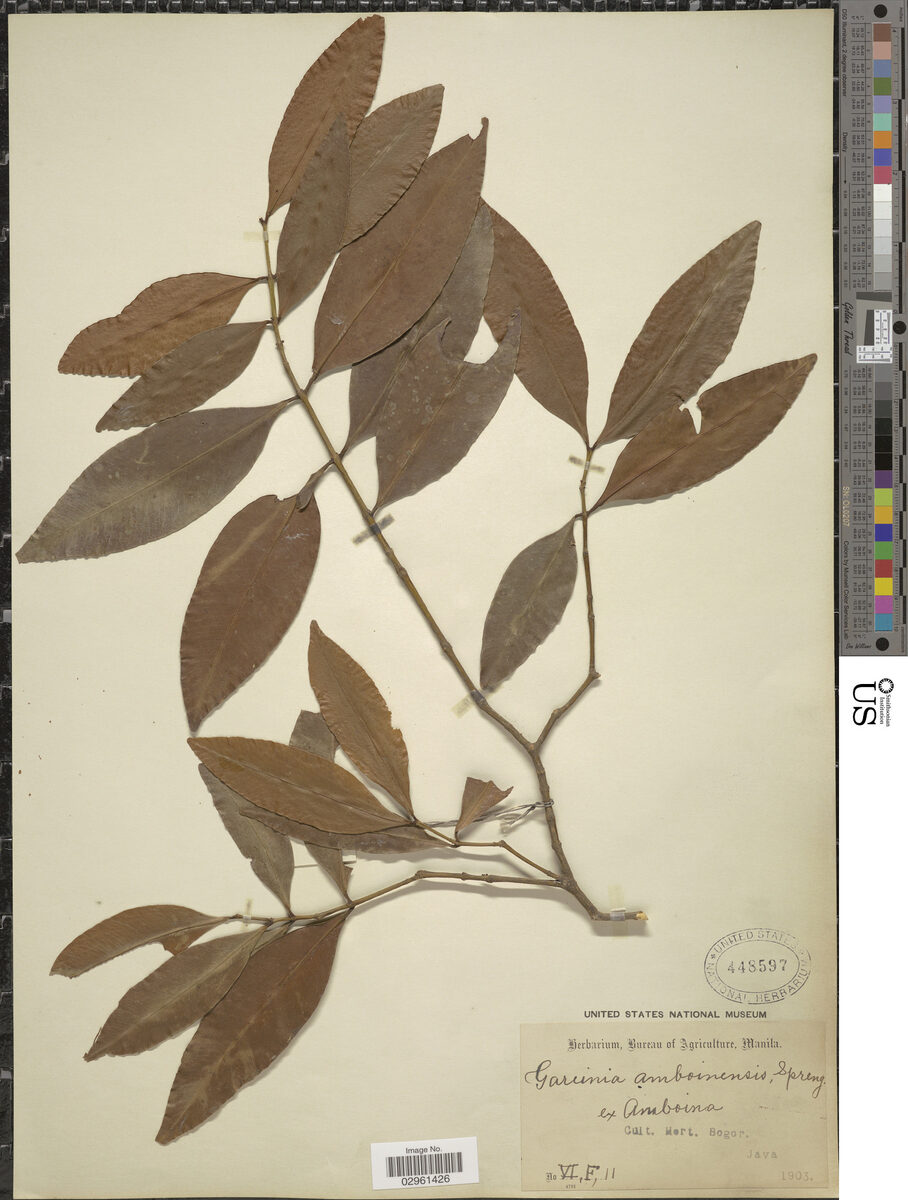
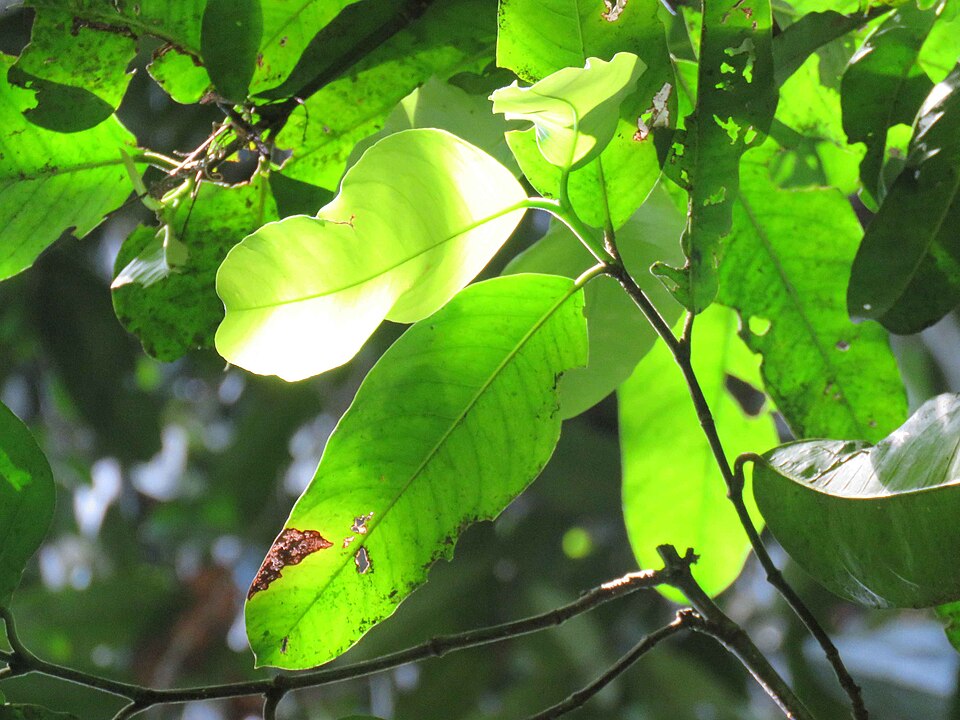
A tree. It grows 8-12 m tall. The trunk can be 30-50 cm across. The trunk is straight but usually with many knots. The crown is oval and the leaves are dark green. The small branches are often 4 sided. The leaves are narrowly sword shaped and 7-12 cm long by 3-5 cm wide. The flowers are yellow and 1 cm across. Male and female flowers are separate. The fruit is rounded with 4-8 segments. It is 3-4 cm across. There are 6-10 seeds with a layer around them.
Edible Uses
The fruit can be eaten raw and has an acidic flavor. It is used in curries as a tamarind-like flavoring, as well as being used for making pickles. It can be made into slices and sun-dried as a way to preserve it. Its leaves can also be cooked and eaten.
Traditional Uses
The mature fruit are eaten. They are eaten raw. They are sticky. They are also used for jams and preserves. The fruit can be sliced and dried and stored. They are also used for pickles. They are also used in soups. The young leaves are cooked and used as a vegetable. They are used in pork curry and also with fish. The seeds of the ripe fruit are eaten.
Medicinal Uses
In Thailand Garcinia cowa has been used in the local folk medicine, the bark as an antipyretic and antimicrobial, the latex as an antipuretic, and the fruits and leaves to improve blood circulation, as an expectorant for coughs and indigestion, and a laxative. The roots are believed to relieve fevers, and in East India, sun-dried slices of the fruit have been used as a treatment for dysentery.
Distribution
A tropical plant. It grows in humid mixed forests on hills or in valleys from 100 m altitude but mostly between 400-900 and occasionally to 1300 m in southern China. In XTBG Yunnan.
Where It Grows
Africa, Andamans, Asia, Bangladesh, Cambodia, China, East Africa, Himalayas, India, Indochina, Indonesia, Laos, Malaysia, Myanmar, Northeastern India, SE Asia, Sikkim, Singapore, Thailand, Vietnam, Zambia,
Cultivation
Plants can be grown from seeds. They can also be grown by grafting.
Propagation
Seed - we have no specific information on this species, but the seed of most members of the genus can be slow to germinate, even if sown fresh, often taking 6 months or more.
Other Uses
The plant is sometimes grown, especially in the Philippines, as a grafting stock for the mangosteen (Garcinia mangostana). The tree yields a yellow gum, insoluble in water, but soluble in spirits. It is, therefore, likely to prove useful as a varnish, but not as a pigment. The yield of gum is low. The stem yields a gum resin that can be used to prepare a yellow varnish. The fruit yields a gum resin that can be used to prepare a yellow varnish. The seeds yield around 9% oil. The greyish-white wood is moderately hard with many wavy, fine, concentric bands of soft tissue. It is not used.
Production
Trees take 3 years before having leaves ready for harvest. In NE Thailand fruit are available August to September.
Notes
There are about 300 Garcinia species.
Synonyms
Also Known As
Aghatsa, Bak moong, Ban suntala, Cha muang, Chamuang, Chengkek, Cowa-Mangosteen, Cowphal, Dengadote, Gava, Gehahao, Guo da, Guyei, Haibung, Huang xin shu, Kagyi, Kao, Kao-gola, Kaphal, Kau thekera, Kau, Kauba, Kauthekera, Kaw, Ke diu biu, Kemenjing, Kouthekera, Kujitherekera, Maksommong, Pala-kye, Phak moong, Phelamesong, Pohon manggis kemenjing, Pradang, Rengran, Sommong, Tai chua, Taika, Taung-thale, Tromeng, Tromoung, Ye-kabyin, Yi ka bu duo si, Yun shu
References (71)
- Aiguo, C. & Zhiling, D., 2001, Managing Agricultural Resources for Biodiversity Conservation. Case Study Yunnan, Southwest China. Environment Liaison Center International. p 15
- Ambasta, S.P. (Ed.), 2000, The Useful Plants of India. CSIR India. p 229 Anderson, E. F., 1993, Plants and people of the Golden Triangle. Dioscorides Press. p 212
- Arora, K., Indigenous Forest Management in the Andaman and Nicobar Islands, India. (As Garcinia kawa)
- BARC, 2016, State of Biodiversity for Food and Agriculture in Bangladesh. Bangladesh Agricultural Research Council.
- Brahma, S., et al, 2013, Wild edible fruits of Kokrajhar district of Assam, North-East India, Asian Journal of Plant Science and Research 3(6):95-100
Show all 71 references Hide references
- Burkill, I.H., 1966, A Dictionary of the Economic Products of the Malay Peninsula. Ministry of Agriculture and Cooperatives, Kuala Lumpur, Malaysia. Vol 1 (A-H) p 1064, 1066
- Cao, Y., et al, 2020, Ethnobotanical study on wild edible plants used by three trans-boundary ethnic groups in Jiangcheng County, Pu’er, Southwest China. Journal of Ethnobiology and Ethnomedicine (2020) 16:66
- Chaudhury, R.H.N., et al, 1980, Ethnobotanical Uses of Herbaria - 2. J. Econ, Tax Bot Vol 1 p 166
- Cruz-Garcia, G. S., & Price, L. L., 2011, Ethnobotanical investigation of 'wild' food plants used by rice farmers in Kalasin, Northeast Thailand. Journal of Ethnobiology and Ethnomedicine 7:33
- Das, S. and Mohiuddin, M., 2012, Gender role in Home Garden Management in the Indigenous Community: A case study in Bandarban Hill District, Bangladesh. International Journal of Social Forestry. 5(1):22-37
- Dobriyal, M. J. R. & Dobriyal, R., 2014, Non Wood Forest Produce an Option for Ethnic Food and Nutritional Security in India. Int. J. of Usuf. Mngt. 15(1):17-37
- Eiadthong, W., et al, 2010, Management of the Emerald Triangle Protected Forests Complex. Botanical Consultant Technical Report. p 49
- Ethnobotany of Karbis. Chapter 4 in p 104
- Flora of China. www.eFloras.org
- Flowerdew, B., 2000, Complete Fruit Book. Kyle Cathie Ltd., London. p 161
- Forest Inventory and Planning Institute, 1996, Vietnam Forest Trees. Agriculture Publishing House p 96
- Fowler, D. G., 2007, Zambian Plants: Their Vernacular Names and Uses. Kew. p 78
- Fu, Yongneng, et al, 2003, Relocating Plants from Swidden Fallows to Gardens in Southwestern China. Economic Botany, 57(3): 389-402
- Gardner, S., et al, 2000, A Field Guide to Forest Trees of Northern Thailand, Kobfai Publishing Project. p 51
- Ghorbani, A., et al, 2012, A comparison of the wild food plant use knowledge of ethnic minorities in Naban River Watershed Nature Reserve, Yunnan, SW China. Journal of Ethnobiology and Ethnomedicine; 8:17
- Hazarika, B. et al. (2020). An overview of the unexplored underutilized fruit crops of Assam, India. Journal of Applied and Natural Science, 12(3): 442 - 453.
- Hedrick, U.P., 1919, (Ed.), Sturtevant's edible plants of the world. p 323
- Hu, Shiu-ying, 2005, Food Plants of China. The Chinese University Press. p 558
- Japanese International Research Centre for Agricultural Science www.jircas.affrc.go.jp/project/value_addition/Vegetables
- Jeeva, S., 2009, Horticultural potential of wild edible fruits used by the Khasi tribes of Meghalaya. Journal or Horticulture and Forestry Vol. 1(9) pp. 182-192
- Jin, Chen et al, 1999, Ethnobotanical studies on Wild Edible Fruits in Southern Yunnan: Folk Names: Nutritional Value and Uses. Economic Botany 53(1) pp 2-14
- Kachenchart, B., et al, 2008, Phenology of Edible Plants at Sakaerat Forest. In Proceedings of the FORTROP II: Tropical Forestry Change in a Changing World. Bangkok, Thailand.
- Khumgratok, S., Edible Plants in Cultural Forests of Northeastern Thailand. Mahasarakham University Thailand.
- Lalfakzuala, R., 2007, Ethnobotanical usages of plants in western Mizoram. Indian Journal of Traditional Knowledge. Vol 6(3) pp 480-493
- Li Xi-wen & Li Jie; Peter F. Stevens, Clusiaceae, Flora of China Vol. 13 p 45
- Luo, B., et al, 2019, Wild edible plants collected by Hani from terraced rice paddy agroecosystem in Honghe Prefecture, Yunnan, China. Journal of Ethnobiology and Ethnomedicine 15:56
- Macmillan, H.F. (Revised Barlow, H.S., et al) 1991, Tropical Planting and Gardening. Sixth edition. Malayan Nature Society. Kuala Lumpur. p 301
- Majumdar, K and Datta, N., 2009, Traditional wild edible fruits for the forest dwellers of Tripura, India. Pleione 3(2) 167-178
- Martin, F.W. & Ruberte, R.M., 1979, Edible Leaves of the Tropics. Antillian College Press, Mayaguez, Puerto Rico. p 194
- Meitei, L. R., et al, 2022, An ethnobotanical study on the wild edible plants used by forest dwellers in Yangoupokpi Lokchao Wildlife Sanctuary, Manipur, India. Ethnobotany Research and Application 23:15
- Menninger, E.A., 1977, Edible Nuts of the World. Horticultural Books. Florida p 46
- Milow, P., et al, 2013, Malaysian species of plants with edible fruits or seeds and their evaluation. International Journal of Fruit Science. 14:1, 1-27
- Mozhui, R., et al, 2011, Wild edible fruits used by the tribals of Dimapur district of Nagaland, India. Pleione 5(1): 56 - 64.
- Nakahara, K. et al, 2002, Antimutagenicity of Some Edible Thai Plants, and a Biocative Carbazole Alkaloid, Mahanine, Isolated from Micromelum minutum. Journal of Agricultural and Food Chemistry. 50: 4796-4892
- Partha, P., 2014, Ethnobotany of the Laleng (Patra) Community in Bangladesh. Journal of Pharmacognosy and Phytochemistry. 2(6):173-184
- Pasha, M. K. & Uddin, S. B., 2019, Minor Edible Fruits of Bangladesh. Bangladesh J. Plant Taxon. 26(2): 299–313
- Patiri, B. & Borah, A., 2007, Wild Edible Plants of Assam. Geethaki Publishers. p 10
- Pegu, R., et al, 2013, Ethnobotanical study of Wild Edible Plants in Poba Reserved Forest, Assam, India. Research Journal of Agriculture and Forestry Sciences 1(3):1-10
- Pham-Hoang Ho, 1999, An Illustrated Flora of Vietnam. Nha Xuat Ban Tre. p 450
- Phatlamphu, N., et al, 2021, Ethnobotany of edible plants in Muang District, Kalasin Province, Thailand, Biodiversitas Vol. 22, No. 12 pp 5432-5444
- Pradheep, K., et al, 2016, Wild edible plants used by Konyak tribe in Mon district of Nagaland: Survey and inventorisation. Indian Journal of Natural Products and Resources. Vol 7(1) pp 74-81
- Prodr. 1:561. 1824 (Roxb., Fl. ind. 2:622. 1832)
- PROSEA handbook Volume 13 Spices. p 276
- PROSEA (Plant Resources of South East Asia) handbook, Volume 2, 1991, Edible fruits and nut. p 177
- Sakunpak, A. & Panichayupakaranant, P., 2012, Antibacterial activity of Thai edible plants against gastrointestinal pathogenic bacteria and isolation of a new broad spectrum antibacterial polyisoprenylated benzophenone, chamuangone. Food Chemistry 130 (2012) 826–831
- Sangma, A. j. T., 2018, Non-timber forest products (NTFPs) used by Garo tribe of Rongram block in West Garo Hills, Meghalaya. Indian Journal of Traditional Knowledge Vol 18 (1), pp 151-161
- Sarma, H., et al, 2010, Updated Estimates of Wild Edible and Threatened Plants of Assam: A Meta-analysis. International Journal of Botany 6(4): 414-423
- Sawian, J. T., et al, 2007, Wild edible plants of Meghalaya, North-east India. Natural Product Radiance Vol. 6(5): p 417
- Singh, H.B., Arora R.K.,1978, Wild edible Plants of India. Indian Council of Agricultural Research, New Delhi. p 61
- Singh, V. B., et al, (Ed.) Horticulture for Sustainable Income and Environmental Protection. Vol. 1 p 217
- Somnasang, P., Moreno, G and Chusil K., 1998, Indigenous knowledge of wild hunting and gathering in north-east Thailand. Food and Nutrition Bulletin 19(4) p 359f
- Sosef, M. S. M., Hong, L. T., & Prawirohatmodjo, S., (Eds.), 1998, Timber tree: Lesser-known timbers. Plant Resources of South-East Asia, 5(3), p 231
- Srichaiwong, P., et al, 2014, A Study of the Biodiversity of Natural Food Production to Support Community Upstream of Chi Basin, Thailand. Asian Social Science 10 (2):
- Suksri, S., et al, 2005, Ethnobotany in Bung Khong Long Non-Hunting Area, Northeast Thailand. Kasetsart J., (Nat. Sci) 39: 519-533
- Sukarya, D. G., (Ed.) 2013, 3,500 Plant Species of the Botanic Gardens of Indonesia. LIPI p 299
- Suresh, C. P. et al, 2014, Wild Edible Tree Fruits of Sikkim Himalayas. Journal of Tree Sciences 33(1): 43-48
- Teron, R. & Borthakur, S. K., 2016, Edible Medicines: An Exploration of Medicinal Plants in Dietary Practices of Karbi Tribal Population of Assam, Northeast India. In Mondal, N. & Sen, J.(Ed.) Nutrition and Health among tribal populations of India. p 150
- Terra, G.J.A., 1973, Tropical Vegetables. Communication 54e Royal Tropical Institute, Amsterdam, p 49
- Thitiprasert, W., et al, 2007, Country report on the State of Plant Genetic Resources for Food and Agriculture in Thailand (1997-2004). FAO p 95, 98
- Thorng, R., et al, 2015, Roles of Wild Food Plants in Ethnic Group Communities in Mondulkiri Province, Northeastern Cambodia. Journal of Mekong Societies Vol.11 No.2 May-August 2015 pp. 1-17
- Tyagi, R. K., et al, 2004, Conservation of Spices Germplasm in India. Indian J. Plant Genet. Resour. 17(3): 163-174
- Van Sam, H. et al, 2008, Uses and Conservation of Plant Species in a National Park. A case study of Ben En, Vietnam. Economic Botany 62:574-593
- Wickens, G.E., 1995, Edible Nuts. FAO Non-wood forest products. FAO, Rome. p 131
- Wiersema, J. H. & Leon, B., 2013, World Economic Plants. A Standard Reference CRC Press. 2nd Ed. p 317
- World Checklist of Useful Plant Species 2020. Royal Botanic Gardens, Kew
- Zawiah, N. & Othaman, H., 2012, 99 Spesies Buah di FRIM. Institut Penyelidikan Perhutanan Malaysia. p 126