Plantago coronopus
L.
Buck's-horn plantain, Star-of-the-earth, Crowfoot plantain
iNaturalist· cc-by-nc
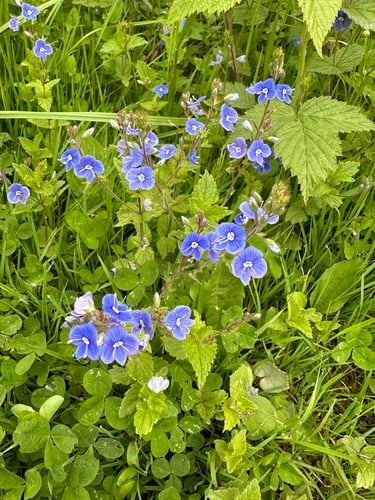
(c) Norbert Sauberer, some rights reserved (CC BY-NC), uploaded by Norbert Sauberer
iNaturalist· cc-by-nc
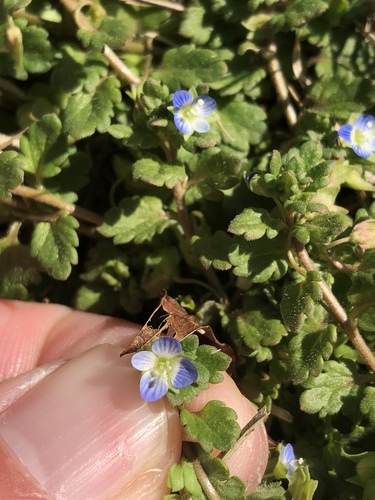
(c) Benjamin Langlois, some rights reserved (CC BY-NC), uploaded by Benjamin Langlois
iNaturalist· cc-by-nc
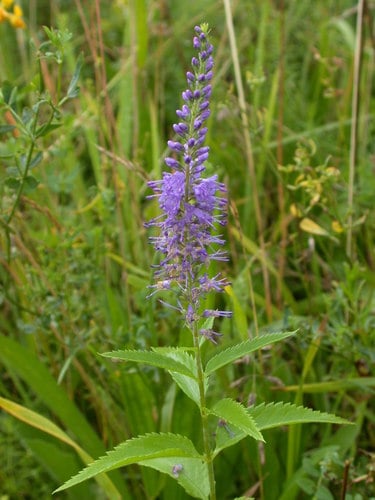
(c) John D Reynolds, some rights reserved (CC BY-NC), uploaded by John D Reynolds
Summary
Source: WikipediaPlantago coronopus, the buck's-horn plantain, is a herbaceous annual to perennial flowering plant in the family Plantaginaceae. Other common names in the US and Italy include minutina and erba stella.
Description
A low hairy herb. It has a long tap root. It usually grows over 2 years. The leaves grow from the base and spread out. The leaves are highly divided. They are in a ring around the stem. The leaves are green but can turn red with age. The leaves vary in size and shape but are often 4-10 cm long. The flowers are small and occur in large numbers. They form a dense narrow spike. This is 1-8 cm long. It is in a long hairy stalk.
Edible Uses
Young leaves can be eaten raw or cooked and the plant is high yielding. This is one of the better-tasting members of the genus — the leaves are fairly tender with a slight bitterness. Some people blanch the leaves in boiling water for a few seconds before adding them to salads to improve tenderness. This leaf is one of the traditional ingredients of 'misticanze', a salad mixture of wild and cultivated leaves originating in the Marche region of Italy.
Traditional Uses
The very young shoots are used in tossed salads. They are blanched for a few seconds in boiling water. They are also used in stews.
This uses section is brief — help expand it
Medicinal Uses
The leaves are antiperiodic and ophthalmic, used as a remedy for ague and sore eyes. Plantain seeds contain up to 30% mucilage, which swells in the gut and acts as a bulk laxative while soothing irritated membranes; sometimes the husks are used without the seeds.
Distribution
A temperate plant. A common seaside plant. It grows in salt marshes. It grows amongst rocks above the high water mark on shorelines. It also grows on inland salty soils. It suits hardiness zones 6-10. Tasmania Herbarium.
Where It Grows
Africa, Albania, Australia, Bahrain, Balkans, Bosnia, Britain, Central Asia, Croatia, Europe, Falklands, France, Greece, Italy, Luxembourg, Mediterranean, Middle East, New Zealand, North Africa, North America, Pakistan, Scandinavia, Sicily, Slovenia, Spain, Tajikistan, Tasmania, Turkey, Türkiye,
Cultivation
Plants self seed if allowed. Young leaves are normally blanched for a few seconds in boiling water before using.
Propagation
Seed - sow in spring in a cold frame. Prick seedlings into individual pots when large enough to handle and plant out in early summer. A direct sowing outdoors in situ can be made in mid to late spring if sufficient seed is available.
Other Uses
Dynamic accumulator.
Production
It needs to be picked while young when there is a ring of young leaves but no flower.
Other Information
It is a commercially cultivated vegetable. It is sold in local markets.
Notes
The plantains or Plantaginaceae are mostly in temperate regions. There are about 165 Plantago species.
Also Known As
Bogaotu, Buckshorn Plantain, Capuchin's beard, Cornopiu, Cua de rata, Deljenolistni trpotec, Erva di stidda, Herba estreta, Herba Stella, Lingua te cane, Minuta, Minutina, Muixana, Rampetes, Rebla, Vranina noga, Wedaina
References (41)
- Biscotti, N. et al, 2018, The traditional food use of wild vegetables in Apulia (Italy) in the light of Italian ethnobotanical literature. Italian Botanist 5:1-24
- Bianchini, F., Corbetta, F., and Pistoia, M., 1975, Fruits of the Earth. Cassell. p 54
- Blamey, M and Grey-Wilson, C., 2005, Wild flowers of the Mediterranean. A & C Black London. p 421
- Bonet, M. A. & Valles, J., 2002, Use of non-crop food vascular plants in Montseny biosphere reserve (Catalonia, Iberian Peninsula). International Journal of Food Sciences and Nutrition (2002) 53, 225–248
- Breidahl H., 1997, Australian Southern Shores. Lothian. p 82
Show all 41 references Hide references
- Centofanti, T. & Banuelos, G., 2019, Practical uses of Halophytic Plants as Sources of Food and Fodder. CAB International. p 331
- Cerne, M., 1992, Wild Plants from Slovenia used as Vegetables. Acta Horticulturae 318
- Crawford, M., 2012, How to grow Perennial Vegetables. Green Books. p 150
- Cundall, P., (ed.), 2004, Gardening Australia: flora: the gardener's bible. ABC Books. p 1056
- Curtis, W.M., 1993, The Student's Flora of Tasmania. Part 3 St David's Park Publishing, Tasmania, p 560
- Dashorst, G.R.M., and Jessop, J.P., 1998, Plants of the Adelaide Plains & Hills. Botanic Gardens of Adelaide and State Herbarium. p 134
- Ertug, F, Yenen Bitkiler. Resimli Türkiye Florası -I- Flora of Turkey - Ethnobotany supplement
- Facciola, S., 1998, Cornucopia 2: a Source Book of Edible Plants. Kampong Publications, p 173
- Flora of Pakistan. www.eFloras.org
- Harris, S., Buchanan, A., Connolly, A., 2001, One Hundred Islands: The Flora of the Outer Furneaux. Tas Govt. p 204
- Hedrick, U.P., 1919, (Ed.), Sturtevant's edible plants of the world. p 507
- Hibbert, M., 2002, The Aussie Plant Finder 2002, Florilegium. p 236
- http://www.botanic-gardens-ljubljana.com/en/plants
- Hussey, B.M.J., Keighery, G.J., Cousens, R.D., Dodd, J., Lloyd, S.G., 1997, Western Weeds. A guide to the weeds of Western Australia. Plant Protection Society of Western Australia. p 196
- Hyde-Wyatt, B.H. & Morris D.I., 1975, Tasmanian Weed Handbook. Dept of Ag Tasmania. p 86
- Irving, M., 2009, The Forager Handbook, A Guide to the Edible Plants of Britain. Ebury Press p 249
- Kays, S. J., and Dias, J. C. S., 1995, Common Names of Commercially Cultivated Vegetables of the World in 15 languages. Economic Botany, Vol. 49, No. 2, pp. 115-152 (As var. sativa)
- Lamp, C & Collet F., 1989, Field Guide to Weeds in Australia. Inkata Press. p 218
- Lazarides, M. & Hince, B., 1993, Handbook of Economic Plants of Australia, CSIRO. p 192
- Licata, M., et al, 2016, A survey of wild plant species for food use in Sicily (Italy) – results of a 3-year study in four Regional Parks. Journal of Ethnobiology and Ethnomedicine 12:12
- Low, T., 1991, Wild Herbs of Australia and New Zealand. Angus & Robertson. p 49 (Drawing)
- Luczaj et al, 2013, Wild vegetable mixes sold in the markets of Dalmatia (southern Croatia). Journal of Ethnobiology and Ethnomedicine. 8:2
- Luczaj, L. et al, 2014, Wild Food Plants of Dalmatia (Croatia). in A. Pieroni, C. L. Quave (eds.), Ethnobotany and Biocultural Diversities in the Balkans, p 142
- Morley, B.D., & Toelken, H.R., (Eds), 1983, Flowering Plants in Australia. Rigby. p 285
- Paczkowska, G . & Chapman, A.R., 2000, The Western Australian Flora. A Descriptive Calatogue. Western Australian Herbarium. p 457
- Pasta, S., et al, 2020, An Updated Checklist of the Sicilian Native Edible Plants: Preserving the Traditional Ecological Knowledge of Century-Old Agro-Pastoral Landscapes. Frontiers in Plant Science. Volume 11|Article 388
- Phillips, D.C., 1988, Wild Flowers of Bahrain. A Field Guide to Herbs, Shrubs, and Trees. Privately published. p 155
- Plants for a Future database, The Field, Penpol, Lostwithiel, Cornwall, PL22 0NG, UK. http://www.scs.leeds.ac.uk/pfaf/
- Redzic, S. J., 2006, Wild Edible Plants and their Traditional Use in the Human Nutrition in Bosnia-Herzegovina. Ecology of Food and Nutrition, 45:189-232
- Rivera, D. et al, 2006, Gathered Mediterranean Food Plants - Ethnobotanical Investigations and Historical Development, in Heinrich M, Müller WE, Galli C (eds): Local Mediterranean Food Plants and Nutraceuticals. Forum Nutr. Basel, Karger, 2006, vol 59, pp 18–74
- Self, M., 199, Phoenix Seeds catalogue. p 6
- Signorini, M. A., et al, 2009, Plants and traditional knowledge: An ethnobotanical investigation on Monte Ortobene (Nuoro, Sardinia). Journal or Ethnobiology and Ethnomedicine, 5:6
- Sp. pl. 1:115. 1753
- Tasmanian Herbarium Vascular Plants list p 44
- Tardio, J., et al, Ethnobotanical review of wild edible plants in Spain. Botanical J. Linnean Soc. 152 (2006), 27-71
- Upson, R., & Lewis R., 2014, Updated Vascular Plant Checklist and Atlas for the Falkland Islands. Falklands Conservation and Kew.