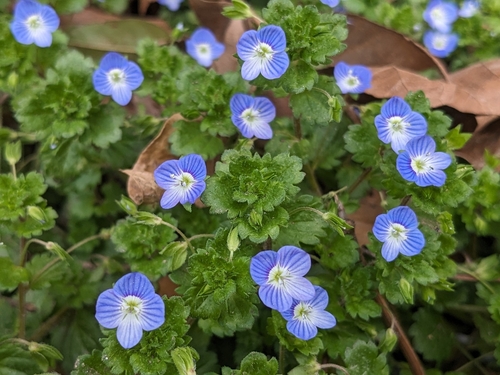
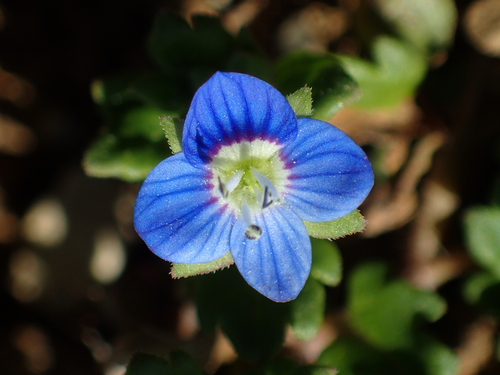
Veronica longifolia
L.
Garden Speedwell, Long-leaf Speedwell
iNaturalist· cc-by-nc-nd
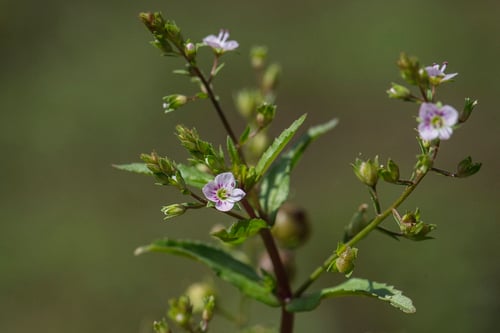
(c) --Tico--, some rights reserved (CC BY-NC-ND)
iNaturalist· cc-by-nc
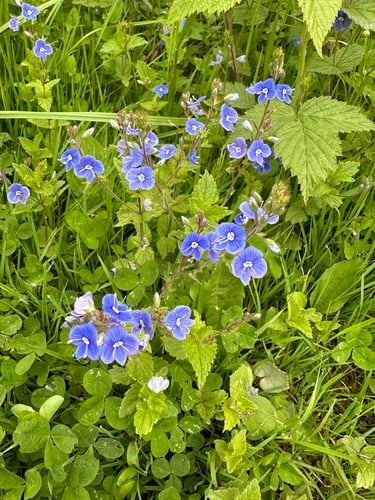
(c) tatyana-omck, some rights reserved (CC BY-NC)
iNaturalist· cc-by
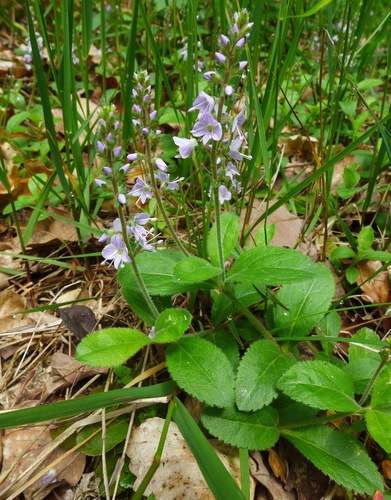
(c) Andre Hosper, some rights reserved (CC BY)
Summary
Source: WikipediaVeronica longifolia, known as garden speedwell or longleaf speedwell, is a flowering plant in the family Plantaginaceae.
Description
An erect herb. It grows 50-120 cm high and spreads 40-75 cm wide. The leaves are narrow and lance shaped. They have teeth along the edge and have some hairs. The leaves at the base are 10 cm long. the leaves higher up are smaller. The flowers are in spikes at the top of the plant. These are 25 cm long. They are made up of small blue flowers.
Edible Uses
Leaves and young shoots can be eaten raw or cooked. This is a famine food, used only when other options have been exhausted.
Traditional Uses
The shoots and leaves are eaten.
This uses section is brief — help expand it
Medicinal Uses
None known.
Distribution
It is a temperate plant. In Argentina it grows below 500 m above sea level. It suits hardiness zones 4-9.
Where It Grows
Argentina, Asia, Australia, Balkans, Belgium, Britain, Bulgaria, China, Europe, New Zealand, North America, Siberia, South America, USA,
Cultivation
Easily grown in a moderately fertile moisture retentive well drained soil. Prefers cool summers. A number of cultivars have been selected for their ornamental value.
Propagation
Sow seed in autumn in a cold frame. Prick seedlings into individual pots once large enough and plant out in summer. Divide in autumn or spring — larger divisions can go directly into permanent positions, while smaller ones do best potted up and grown on in light shade until established, then planted out in summer or the following spring.
Other Uses
None known.
Notes
There are about 250 Veronica species. Also put in the family Scrophulariaceae.
Synonyms
References (7)
- Bodkin, F., 1991, Encyclopedia Botanica. Cornstalk publishing, p 1010
- Brickell, C. (Ed.), 1999, The Royal Horticultural Society A-Z Encyclopedia of Garden Plants. Convent Garden Books. p 1046
- Cundall, P., (ed.), 2004, Gardening Australia: flora: the gardener's bible. ABC Books. p 1462
- Hibbert, M., 2002, The Aussie Plant Finder 2002, Florilegium. p 305
- Plants for a Future database, The Field, Penpol, Lostwithiel, Cornwall, PL22 0NG, UK. http://www.scs.leeds.ac.uk/pfaf/
Show all 7 references Hide references
- READ,
- Sp. pl. 1:10. 1753