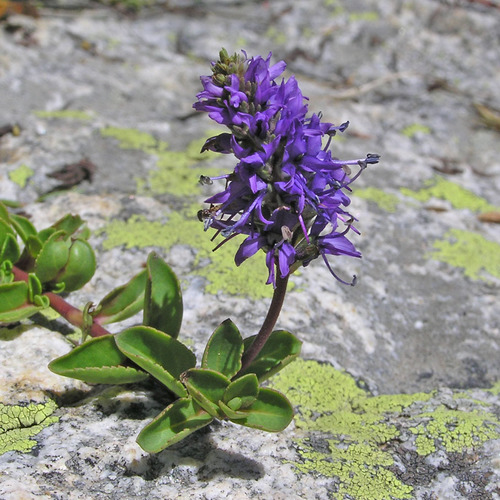
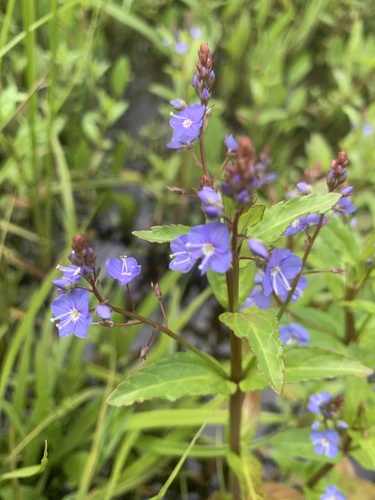
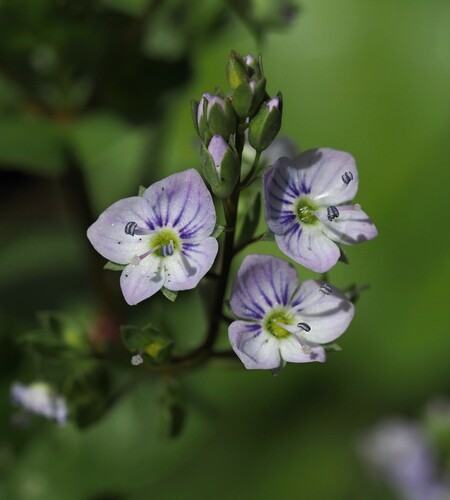
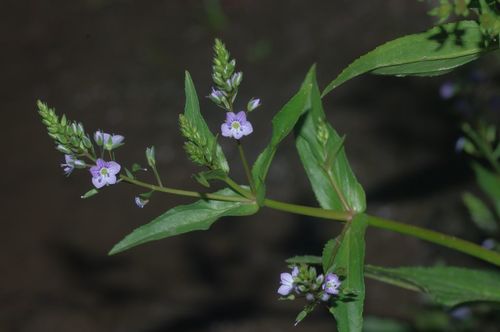
Plantago asiatica
L.
Chinese plantain
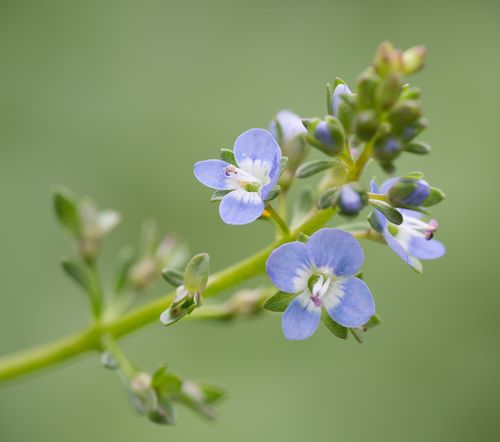
iNaturalist· cc0
no rights reserved, uploaded by 葉子
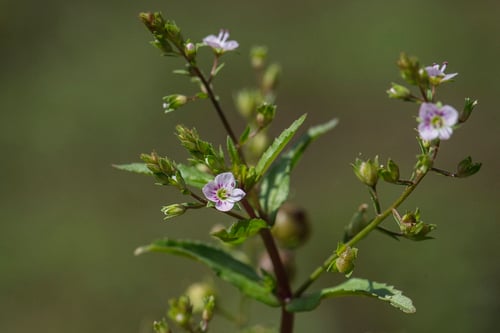
iNaturalist· cc-by-nc
(c) 傻子, some rights reserved (CC BY-NC), uploaded by 傻子
iNaturalist· cc0
no rights reserved, uploaded by 葉子
Summary
Source: WikipediaPlantago asiatica, is a self-fertile, perennial species of flowering plant in the plantain family Plantaginaceae. It is native to East Asia (China, Japan, Korea, etc.). It grows well in disturbed areas such as roadsides or even dirt roads. It is valued for its use in folk medicine and it also can be used in cooking. Common names include Chinese plantain, obako, arnoglossa, and Asiatic plantain.
Description
A herb. It keeps growing from year to year. It has a large root. The plant is 20-60 cm tall. The leaves are near the base. Leaves are oval and 11-12 cm long by 4-9 cm wide. The leaves are entire but curled along the edges. The leaf stalk is as long as the leaf blade. The flowers are in erect spikes 20-45 cm tall. The flowers are white and do not have hairs.
Edible Uses
Young leaves can be eaten raw or cooked. They are rather fibrous unless very young, with a slightly bitter flavour. The seeds are also edible.
Traditional Uses
The young leaves are cooked and eaten. They are boiled and also used in stir fries. They are used in soup. They are also fermented in Kimchi, a Korean dish.
Medicinal Uses
The leaves and seeds are anti-inflammatory, antiseptic, antitussive, cardiac, diuretic, expectorant, and haemostatic, and assist the repair of joints. The seed is used internally for a range of ailments including asthma, bladder problems, bronchitis, fever, hypertension, and rheumatism; the leaves serve the same purposes but are considered less powerful. Leaves can be harvested any time during the growing season and used fresh or dried. A decoction of the roots treats coughs. Plantain seeds contain up to 30% mucilage, which swells in the gut and acts as a bulk laxative while soothing irritated membranes; sometimes the husks are used without the seeds. Plant extracts have demonstrated antibacterial activity.
Known Hazards
The pollen has allergenic glycoproteins and components that can bind IgE which can mediated sensitization, contributing to seasonal allergy.
Distribution
It grows in tropical and temperate places. It grows in open humid areas. It grows in wetlands. In XTBG Yunnan. In Sichuan.
Where It Grows
Asia, Algeria, Bangladesh, Bhutan, Britain, Canada, Canary Is, Central America, Chile, China, Dominican Republic, Ecuador, Europe, Germany, Haiti, Hawaii, Himalayas, India, Indochina, Indonesia, Iran, Iraq, Japan, Korea, Kurdistan, Malaysia, Mexico, Middle East, Nepal, North Africa, North America, Northeastern India, Pacific, Panama, Peru, Poland, Russia, SE Asia, Siberia, South America, Spain, Sri Lanka, Taiwan, Tibet, Trinidad, Turkey, Türkiye, Venezuela, Vietnam, West Indies,
Cultivation
Succeeds in any moderately fertile soil in a sunny position. This species is hardy to at least -15°c. Closely related to P. major and included as a sub-species of that plant by some botanists.
Propagation
Seed - sow in spring in a cold frame. Prick seedlings into individual pots when large enough to handle and plant out in early summer. A direct sowing outdoors in situ can be made in mid to late spring if sufficient seed is available.
Other Uses
Dynamic accumulator.
Other Information
It is sold in local markets in China.
Notes
The plantains or Plantaginaceae are mostly in temperate regions. There are about 165 Plantago species.
Nutrition
| Part | Moisture | kJ | kcal | Protein | Vit A | Vit C | Iron | Zinc |
|---|---|---|---|---|---|---|---|---|
| Leaves | 91.3 | 101 | 24 | 2.1 | — | 31 | — | — |
Synonyms
Also Known As
A mei ye, Chengiancao, Che qian cao, Cheqiarizi, Ch'lgyong-i, Donyi hankeng, Hamaye, Jilgyeongi, Kaimenye, Ma de a, Ma de gan, Ma de thao, Ppaepjae-i, Sirapotta gida, Umeiheizhou, Xa thien, Ya yin ren
References (25)
- Ambasta, S.P. (Ed.), 2000, The Useful Plants of India. CSIR India. p 466
- Cao, Y., et al, 2020, Ethnobotanical study on wild edible plants used by three trans-boundary ethnic groups in Jiangcheng County, Pu’er, Southwest China. Journal of Ethnobiology and Ethnomedicine (2020) 16:66
- Chen, B. & Qiu, Z., Consumer's Attitudes towards Edible Wild Plants, Ishikawa Prefecture, Japan. p 24 www.hindawi.com/journals/ijfr/aip/872413.pdf
- Cheng, Z., et al, 2022, Ethnobotanical study on wild edible plants used by Dulong people in northwestern Yunnan, China. Journal of Ethnobiology and Ethnomedicine (2022) 18:3
- Crate, S. A., 2008, "Eating Hay": The Ecology, Economy and Culture of Viliui Sakha Smallholders of Northeastern Siberia. Human Ecology 36:161-174
Show all 25 references Hide references
- Geng, Y., et al, 2016, Traditional knowledge and its transmission of wild edibles used by the Naxi in Baidi Village, northwest Yunnan province. Journal of Ethnobiology and Ethnomedicine. 12:10
- Hwang, H., et al, 2013, A Study on the Flora of 15 Islands in the Western Sea of Jeollanamdo Province, Korea. Journal of Asia-Pacific Biodiversity Vol. 6, No. 2 281-310
- Hwang, HS, et al, 2014, Distribution characteristics of plant in the Ungseokbong Mountain, Gyeongsangnam-do, Korea. Journal of Asia-Pacific Biodiversity. 7(2014) e164-e178
- Ju, Y., et al, 2013, Eating from the wild: diversity of wild edible plants used by Tibetans in Shangri-la region, Yunnan, China, Journal of Ethnobiology and Ethno medicine 9:28
- Kang, Y., et al, 2012, Wild food plants and wild edible fungi in two valleys on the Qinling Mountains (Shaanxi, central China) Journal of Ethnobiology and Ethnomedicine; 9:26
- Kim, H. & Song, M., 2013, Ethnobotanical analysis for traditional knowledge of wild edible plants in North Jeolla Province (Korea). Genetic. Resour. Crop Evol. (2013) 60:1571-1585
- Li, D. et al, 2017, Ethnobotanical survey of herbal tea plants from the traditional markets in Chaoshan, China. Journal of Ethnopharmacology. 205 (2017) 195-206
- Luo, B., et al, 2019, Wild edible plants collected by Hani from terraced rice paddy agroecosystem in Honghe Prefecture, Yunnan, China. Journal of Ethnobiology and Ethnomedicine 15:56
- Martin, F.W. & Ruberte, R.M., 1979, Edible Leaves of the Tropics. Antillian College Press, Mayaguez, Puerto Rico. p 213 (As Plantago major var. asiatica)
- Mot So Rau Dai an Duoc O Vietnam. Wild edible Vegetables. Ha Noi 1994, p 154
- Ong, H. G., et al, 2015, Ethnobotany of the wild edible plants gathered in Ulleung Island, South Korea. Genet Resourc Crop Evol. Springer
- Pemberton, R. W. & Lee, N. S., 1996, Wild Food Plants in South Korea: Market Presence, New Crops, and Exports to the United States. Economic Botany, Vol. 50, No. 1, pp. 57-70
- Plants for a Future database, The Field, Penpol, Lostwithiel, Cornwall, PL22 0NG, UK. http://www.scs.leeds.ac.uk/pfaf/
- Sachula, et al, 2020, Wild edible plants collected and consumed by the locals in Daqinggou, Inner Mongolia, China. Journal of Ethnobiology and Ethnomedicine (2020) 16:60
- Song, M., et al, 2013, Traditional knowledge of wild edible plants in Jeju Island, Korea. Indian Journal of Traditional Knowledge. 12(2) pp 177-194
- Sp. pl. 1:113. 1753
- Tanaka, Y. & Van Ke, N., 2007, Edible Wild Plants of Vietnam. Orchid Press. p 114
- Taram, M., et al, 2018, Wild Food Plant Resources of Komkar Adi Tribe of Upper Siang District in Arunachal Pradesh, India. Bulletin of Arunachal Forest Research, Vol. 33(2), 27-35
- Wujisguleng, W., & Khasbagen. K., 2010, An integrated assessment of wild vegetable resources in Inner Mongolian Autonomous Region, China. Journal of Ethnobiology and Ethnomedicine 6:34
- Zhang, Y., et al, 2014, Diversity of wetland plants used traditionally in China: a literature review. Journal of Ethnobiology and Ethnomedicine. 10:72