Pittosporum revolutum
Dryander
Hairy pittosporum, Yellow Pittosporum, Rough-fruited Pittosporum, Mock orange
iNaturalist· cc-by-nc
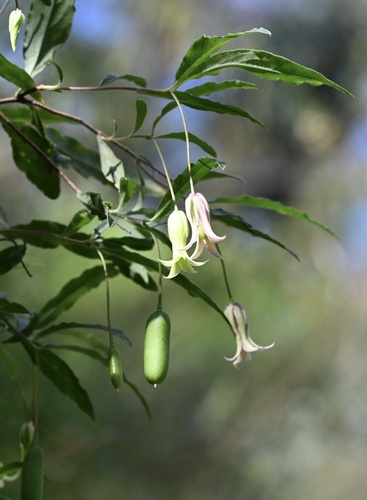
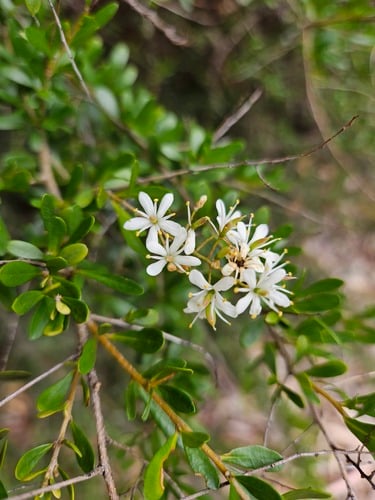
(c) David Chapman, some rights reserved (CC BY-NC), uploaded by David Chapman
iNaturalist· cc-by-nc
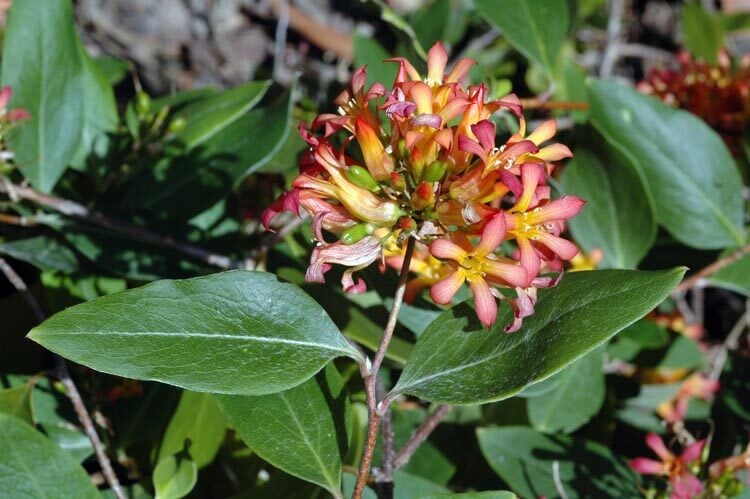
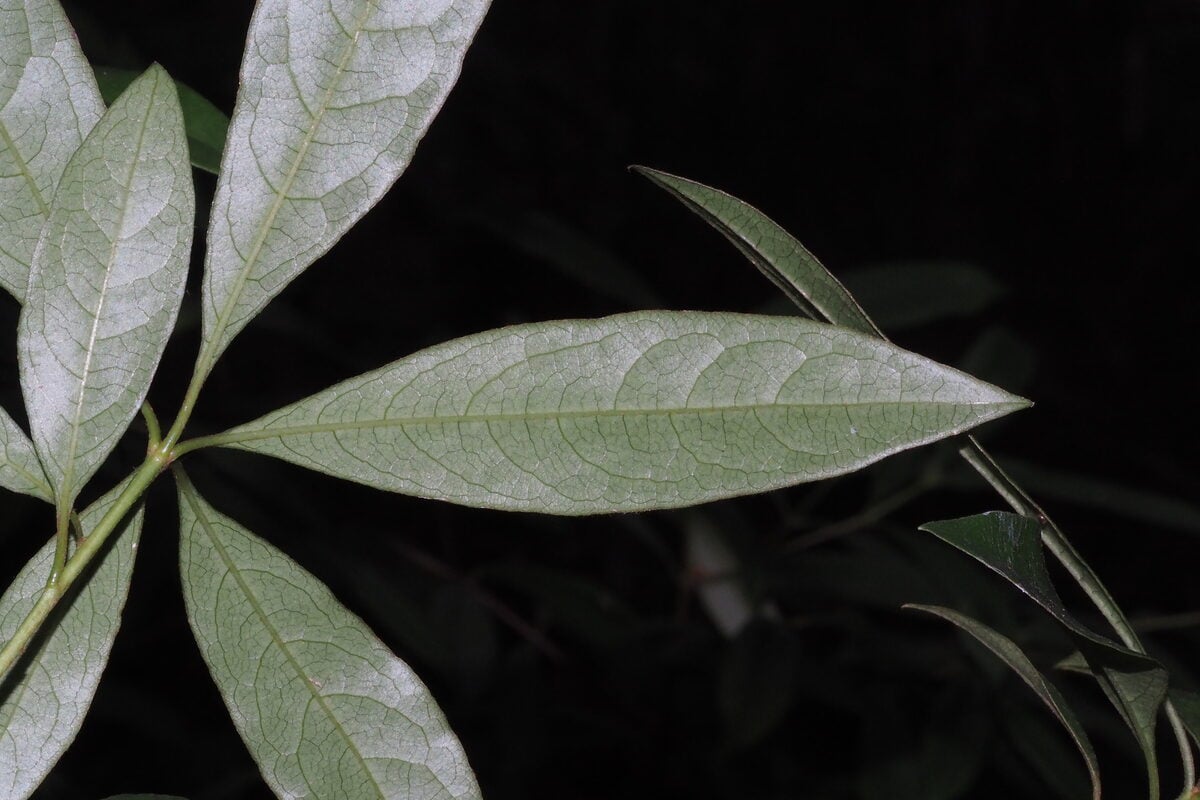
(c) Gab Abramowitz, some rights reserved (CC BY-NC), uploaded by Gab Abramowitz
iNaturalist· cc-by-nc
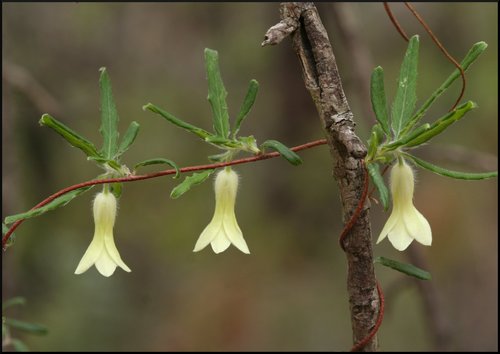
(c) Calbost2, some rights reserved (CC BY-NC), uploaded by Calbost2
Summary
Source: WikipediaPittosporum revolutum, commonly known as rough-fruited pittosporum, yellow pittosporum, Brisbane laurel or wild yellow jasmine, is a flowering plant in the family Pittosporaceae and grows in New South Wales, Victoria and Queensland. It is a small shrub with fragrant yellow flowers.
Description
A tall erect shrub. It can be 2-6 m tall. It can spread 2-5 m across. It has creeping underground stems. The young leaves are pink and silky. The mature leaves are deep green, glossy and narrowly oval. They are 5-15 cm long by 1.5-6 cm wide. The edges are slightly wavy. The veins are easy to see. The leaves can have rusty hairs underneath. The flowers are yellow and like tubes and have a sweet smell. They are 1.5 cm across. The lobes spread and roll back. Flowers are in small clusters at the ends of branches. The fruit is an orange capsule 2.5 cm across. It splits open to reveal bright red seeds.
Edible Uses
The seeds are bitter tasting but have been eaten, though the fruit itself is not eaten.
Traditional Uses
The seeds are bitter tasting but have been eaten. The fruit is not eaten.
This uses section is brief — help expand it
Known Hazards
Seeds are bitter tasting.
Distribution
It grows in temperate regions but can grow in the tropics and subtropics. It needs well drained soil. It is mostly near the coast. They can grow in sheltered open forest or in rainforest. It can grow in full sun or light shade. It can stand light frosts. It suits hardiness zones 9-11.
Where It Grows
Australia*, Britain, Europe,
Cultivation
Plants can be grown from seed or cuttings of young growth.
Notes
There are about 200 Pittosporum species.
Synonyms
References (16)
- Beasley, J., 2011, Plants of Tropical North Queensland - the compact guide. Footloose publications. p 160
- Cundall, P., (ed.), 2004, Gardening Australia: flora: the gardener's bible. ABC Books. p 1054
- Greig, D., 1996, Flowering Natives for Home Gardens. Angus & Robertson. p 288
- Grieg, D., 2002, A photographic guide to Wildflowers of South-eastern Australia. New Holland. p 101
- Haslam, S., 2004, Noosa's Native Plants. Noosa Integrated Catchment Assn. Inc. p 263
Show all 16 references Hide references
- Hibbert, M., 2002, The Aussie Plant Finder 2002, Florilegium. p 235
- Holliday, I., 1989, A Field Guide to Australian Trees. Hamlyn. p 284
- Hortus kew. ed. 2, 2:27. 1811 (As W. T. Aiton)
- Jackes, B.R., 2001, Plants of the Tropics. Rainforest to Heath. An Identification Guide. James Cook University. p 73
- Melzer, R. & Plumb, J., 2011, Plants of Capricornia. Belgamba, Rockhampton. p 273
- Molyneux, B. and Forrester, S., 1997, The Austraflora A-Z of Australian Plants. Reed. p 146
- Nicholson, N & H., 1996, Australian Rainforest Plants 2, Terania Rainforest Publishing. NSW. p 49
- Ratcliffe D & P., 1987, Australian Native Plants for Indoors. Little Hills press. p 115
- Ryan, M. (Ed.), 2003, Wild Plants of Greater Brisbane. Queensland Museum. p 189
- Townsend, K., 1994, Across the Top. Gardening with Australian Plants in the tropics. Society for Growing Australian Plants, Townsville Branch Inc. p 314
- Williams, J.B., Harden, G.J., and McDonald, W.J.F., 1984, Trees and shrubs in rainforests of New South Wales and Southern Queensland. Univ. of New England, Armidale. p 54