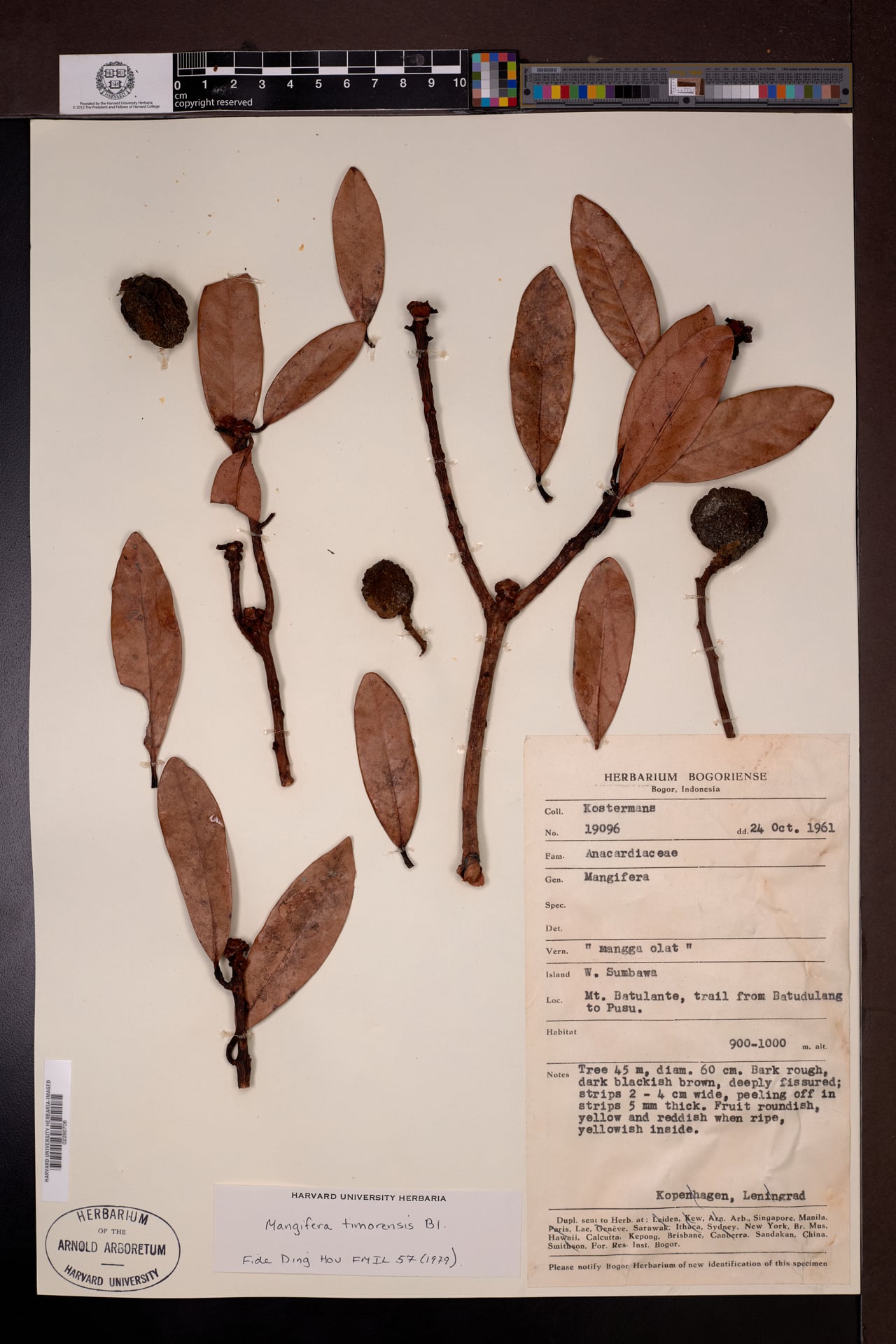
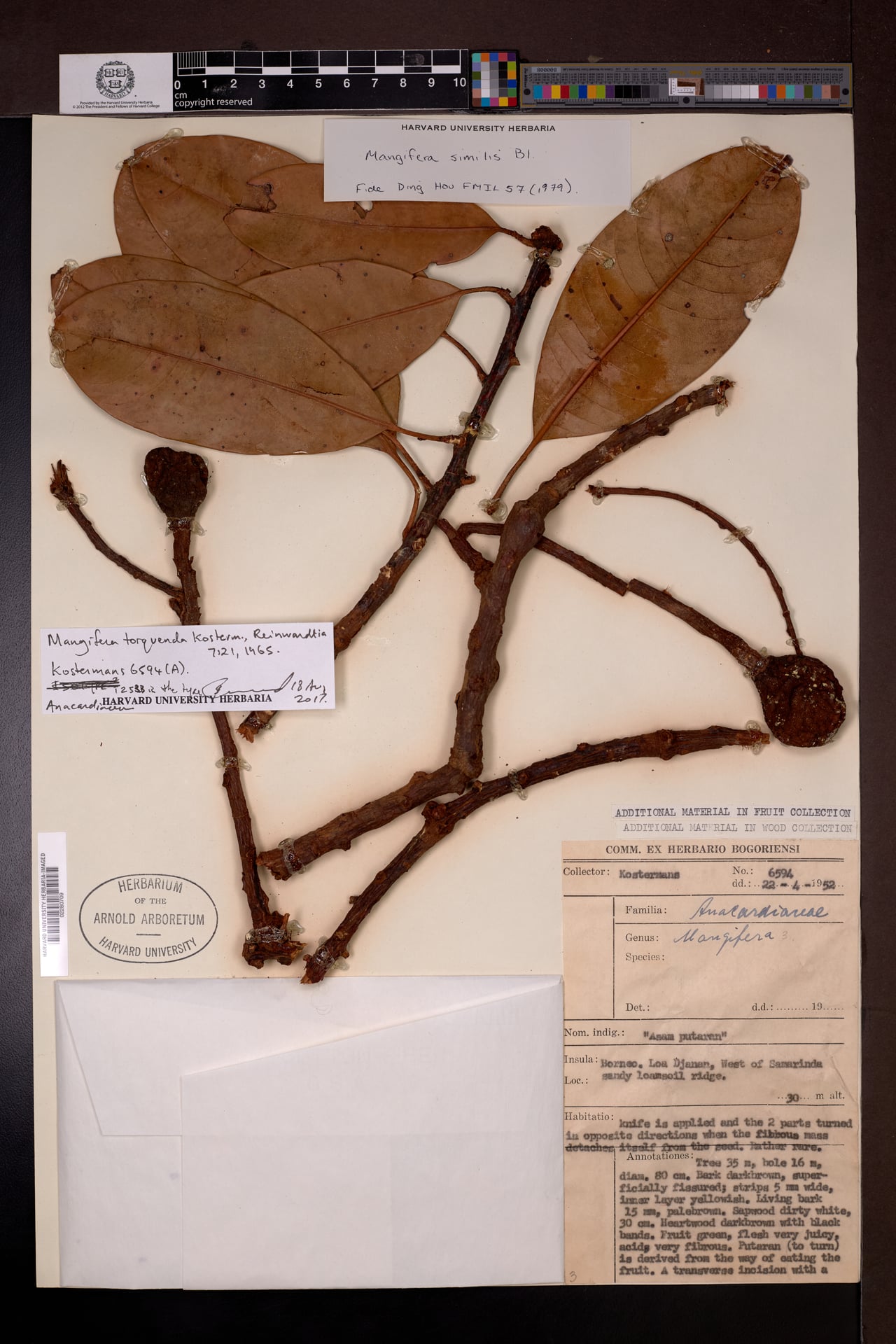
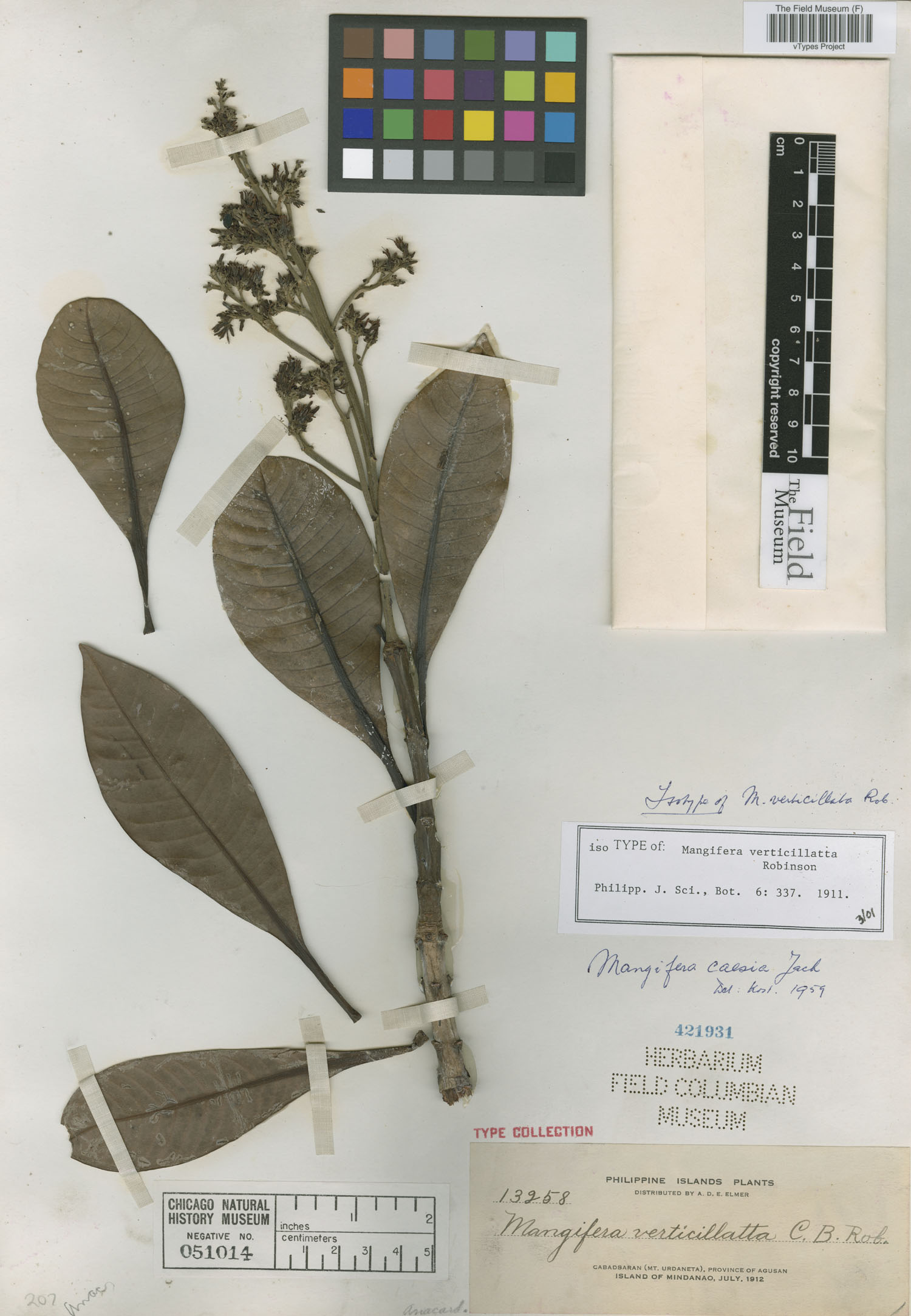
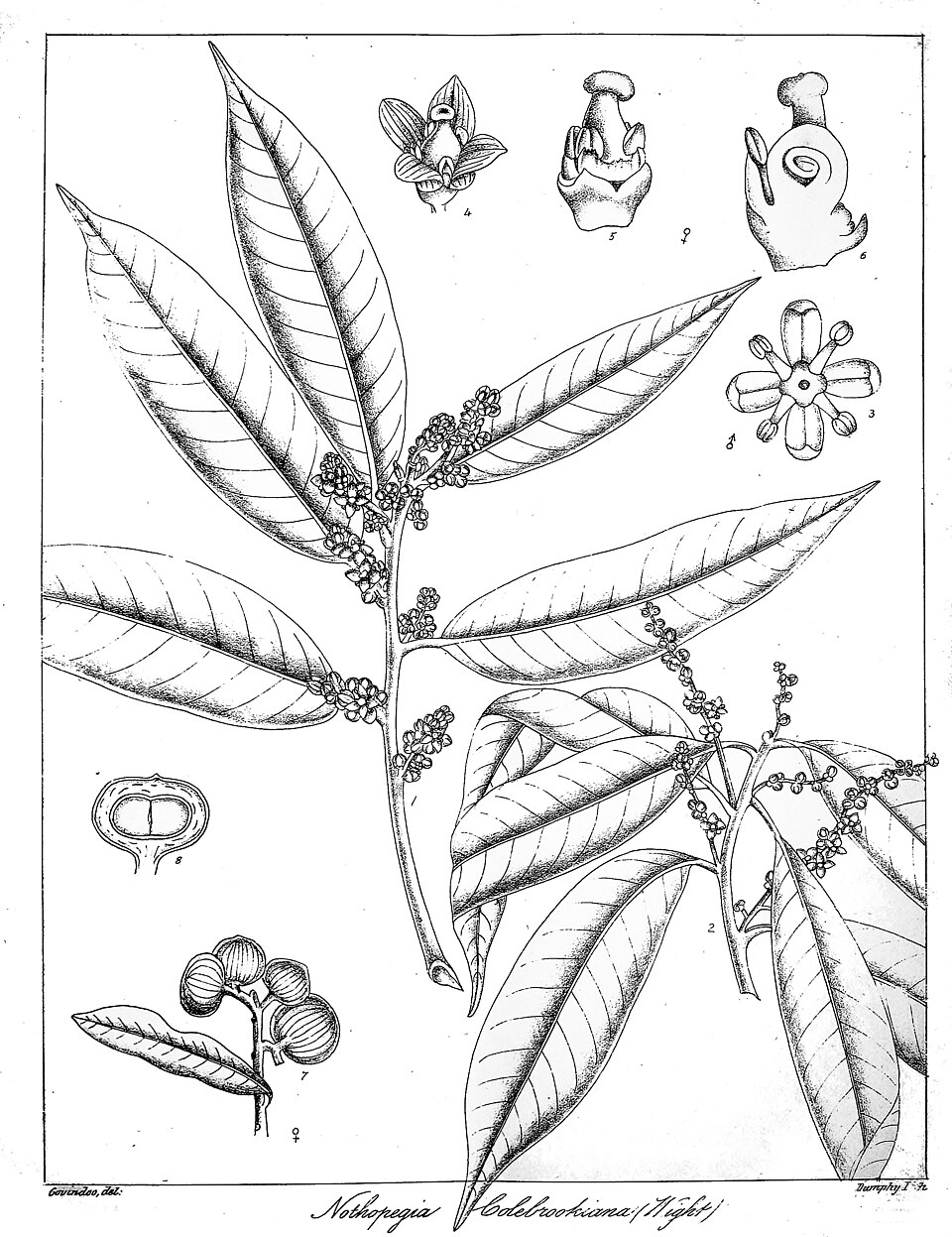
Mangifera oblongifolia
Hook.f.
gbif· cc0
President and Fellows of Harvard College
Description
A tree. It grows 40 m tall. The trunk can be 70 cm across. Possibly now Mangifera odorata
This description is brief — help expand it
Edible Uses
M. odorata is a fruit which can be consumed. While it can be consumed in its raw form, the fruit is usually made or incorporated into something else such as chutneys. M. odorata fruit pulp is also a good source of nutrition. When M.odorata has not reached maturity, its pulp is a good source for "dietary fibre, vitamin C, vitamin E". The mature pulp is good to eat because of "protein, ash, fat, soluble carbohydrate and B vitamin". The fruit's seed kernel is "rich in fat, protein, carbohydrate, and ash". The peel or skin is a great source of "fibre, minerals, β-Carotene and ascorbic acid".
Distribution
A tropical plant. It grows in lowland, evergreen rainforest.
Where It Grows
Asia, Indonesia, Malaysia, SE Asia,
Other Uses
The heartwood is a pinkish light brown to a light brick-red; it is not clearly demarcated from the thick band of pale brick-red sapwood. The grain is straight. The wood is not very durable outdoors. It seasons fairly well and works well with ordinary tools. A good timber, used in construction.
Notes
An unresolved name in The Plant List.
References (2)
- Ambasta, S.P. (Ed.), 2000, The Useful Plants of India. CSIR India. p 353
- Ferns, Useful Tropical Plants