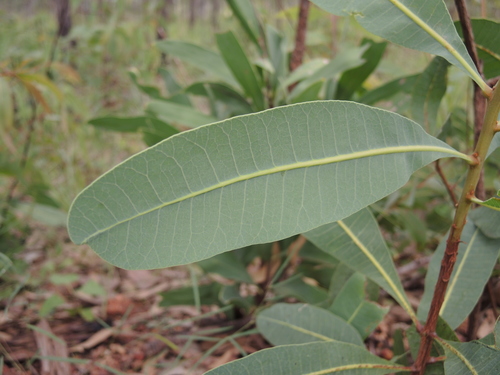
Pistacia terebinthus subsp. palaestina
L.
Palestinian terebinth
iNaturalist· cc-by-nc-nd
(c) Bill Kirby1, some rights reserved (CC BY-NC-ND)
iNaturalist· cc-by-nc
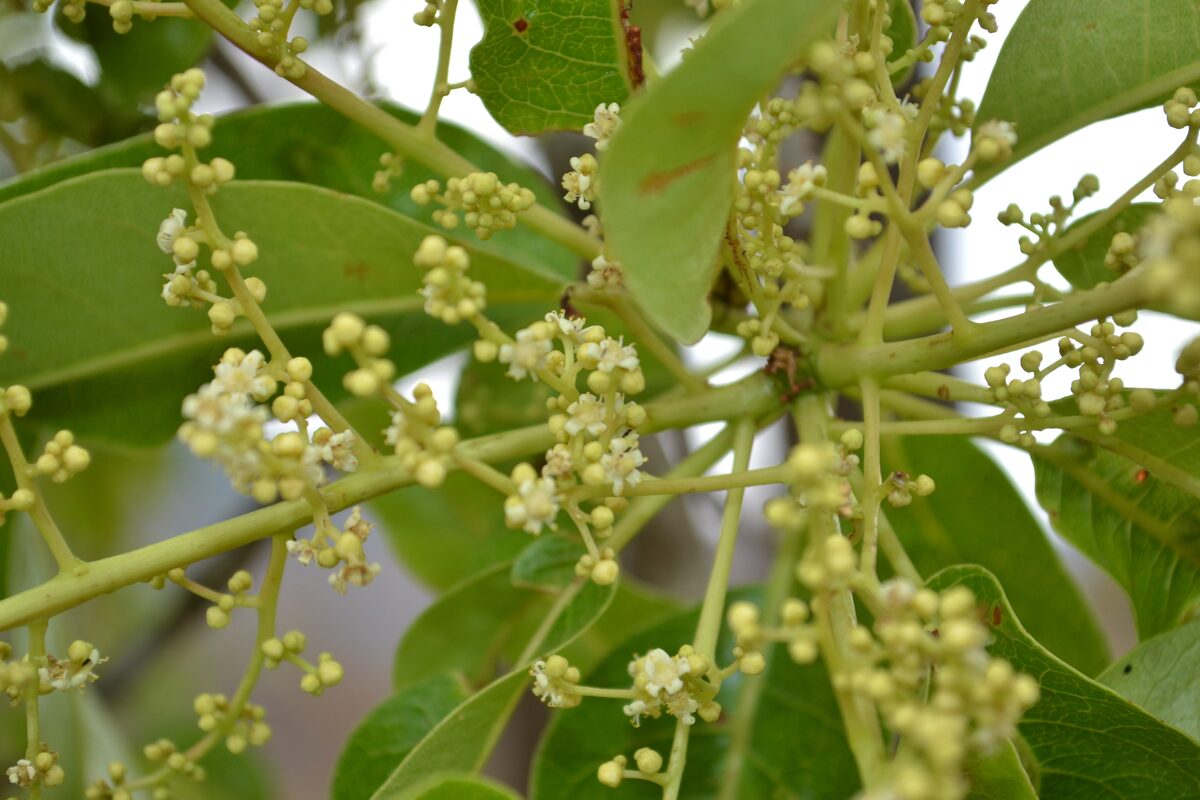
(c) Clement Rivier Photos, some rights reserved (CC BY-NC), uploaded by Clement Rivier Photos
iNaturalist· cc-by-nc
(c) Carlos Bernal, some rights reserved (CC BY-NC)
Summary
Source: WikipediaPistacia terebinthus, also called the terebinth, is a deciduous shrub species of the genus Pistacia, native to the Mediterranean region from the western regions of Morocco and Portugal to Greece and western and southeastern Turkey. At one time terebinths growing on the eastern shores of the Mediterranean Sea were regarded as a separate species, Pistacia palaestina, but these are now considered to be a synonym of P. terebinthus.
Description
A deciduous tree up to 5-9 m tall. It spreads to 5-6 m wide. The stem is erect, slender and branching. The leaves are shiny green and are compound. They are 10-20 cm long with 3-8 pairs of leaflets. The leaflets are narrow and oblong and there is a leaflet at the end. These leaflets are leathery, shiny and dark green. They have a smell. Trees are separately male and female. Flowers are small and greenish-red. The male flowers occur in dense panicles 10-16 cm long. The female flowers are in loose panicles 5-15 cm long. Fruit are red to purple and edible. The fruit is about 7 mm long and 6 mm wide. It contains a single seed.
Edible Uses
The word "turpentine" was originally used for the exudate of terebinth trees (P. terebinthus and related species such as P. atlantica), now called Chian, Chios, or Cyprian turpentine, and it was later transferred to the crude turpentine (oleoresin) and the oil of turpentine (essential oil) of conifer trees. The word turpentine derives (via Old French and Latin) from the Greek word τερεβινθίνη (terebinthínē), the feminine form (to go with the feminine Greek word for resin) of an adjective τερεβίνθινος (terebínthinos), derived from the Greek noun τερέβινθος (terébinthos), the name for the terebinth tree. However, the main source of the terebinth turpentine is P. atlantica which produces abundant resin instead of P. terebinthus of which the amount of resin is limited. The fruits are used in Cyprus for baking of a specialty village bread. In Crete, where the plant is called tsikoudia, it is used to flavor the local variety of pomace brandy, also called tsikoudia. In the Northern Sporades the shoots are used as a vegetable (called tsitsíravla). The plant is rich in tannins and resinous substances and was used for its aromatic and medicinal properties in classical Greece. A mild sweet scented gum can be produced from the bark, and galls often found on the plant are used for tanning leather. A triterpene has been extracted from these galls. In Turkey, it is known as menengiç or bıttım. A coffee-like beverage, Kurdish coffee or menengiç kahvesi, is made from the roasted fruit, and a soap is made from the oil. Terebinth resin was used as a wine preservative in the entire ancient Near East, as proven by many findings in areas such as the foot of the Zagros Mountains and Middle Bronze Age Galilee.
Traditional Uses
The immature fruit and stems are preserved in vinegar. They are also roasted and eaten. The young leaves are cooked and used as a vegetable. The fresh flowers are eaten. The resin from the trunk is used as a chewing gum. The seed kernels are eaten. They are also pressed for oil. The fruit are also used as coffee.
Distribution
A Mediterranean climate plant. It usually grows on calcareous soils often in stony places. It can grow on a range of soils. It needs a sunny position. It needs a deep well drained soil. It does well in a hot dry position. It suits hardiness zones 9-10.
Where It Grows
Africa, Albania, Algeria, Asia, Australia, Balkans, Britain, Bulgaria, Cyprus, Egypt, Europe, France, Greece, Iran, Israel, Italy, Jordan, Lebanon, Libya, Malaysia, Mediterranean, Middle East, Morocco, North Africa, North America, Palestine, Portugal, SE Asia, Spain, Syria, Tunisia, Turkey, Türkiye, USA, Yugoslavia,
Cultivation
Seed need to be presoaked in alkalized water or for 3-4 days in warm water before sowing. Seed germination can be slow and vary. If seed are required male and female plants must both be grown. Plants can be grown by cuttings taken from half ripe wood of young trees. They can also be grown by layering.
Synonyms
Also Known As
Batme, Bittim, Botum, Butum falastini, Cedene, Citlenbik, Cyprus terpentine tree, Cyprus Turpentine, Kizwan, Melengic, Menevis, Sarris, Terebinth
References (30)
- Al-Qura'n, S. A., 2010, Ethnobotanical and Ecological Studies of Wild Edible Plants in Jordan. Libyan Agriculture Research Center Journal International 1(4):231-243 (As Pistacia palaestina)
- Ali-Shtayeh, M. S., et al, 2008, Traditional knowledge of wild edible plants used in Palestine (Northern West Bank): A comparative study. J Ethnobiol Ethnomed. 2008; 4: 13.
- Blamey, M and Grey-Wilson, C., 2005, Wild flowers of the Mediterranean. A & C Black London. p 127
- Bodkin, F., 1991, Encyclopedia Botanica. Cornstalk publishing, p 805
- Brickell, C. (Ed.), 1999, The Royal Horticultural Society A-Z Encyclopedia of Garden Plants. Convent Garden Books. p 805
Show all 30 references Hide references
- Burkill, I.H., 1966, A Dictionary of the Economic Products of the Malay Peninsula. Ministry of Agriculture and Cooperatives, Kuala Lumpur, Malaysia. Vol 2 (I-Z) p 1786
- Cundall, P., (ed.), 2004, Gardening Australia: flora: the gardener's bible. ABC Books. p 1053
- Della, A., et al, 2006, An ethnobotanical survey of wild edible plants of Paphos and Larnaca countryside of Cyprus. J. Ethnobiol. Ethnomed. 2:34
- Ertug, F., 2004, Wild Edible Plants of the Bodrum Area. (Mugla, Turkey). Turk. J. Bot. 28 (2004): 161-174
- Ertug, F, Yenen Bitkiler. Resimli Türkiye Florası -I- Flora of Turkey - Ethnobotany supplement
- Facciola, S., 1998, Cornucopia 2: a Source Book of Edible Plants. Kampong Publications, p 172
- Flowerdew, B., 2000, Complete Fruit Book. Kyle Cathie Ltd., London. p 202
- Food Composition Tables for the Near East. http://www/fao.org/docrep No. 245
- Gunes, S. et al, 2018, Survey of wild food plants for human consumption in Karaisali (Adana-Turkey). Indian Journal of Traditional Knowledge. Vol. 17(2), April 2018, pp 290-298
- Gurdal, B. & Kultur, S., 2014, The edible and miscellaneous useful plants in Marmaris (Southwest Turkey). İstanbul Ecz. Fak. Derg. / J. Fac. Pharm. Istanbul 44(1) 2014 pp.69-78
- Hedrick, U.P., 1919, (Ed.), Sturtevant's edible plants of the world. p 502
- Kargioglu, M. et al, 2010, Traditional Uses of Wild Plants in the Middle Aegean Region. Human Ecology 38:429-450
- Ali-Shtayeh, M. S., et al, 2008, Traditional knowledge of wild edible plants used in Palestine (Northern West Bank): A comparative study. J Ethnobiol Ethnomed. 2008; 4: 13. (As Pistacia palaestina Boiss.)
- Menninger, E.A., 1977, Edible Nuts of the World. Horticultural Books. Florida p 53
- Plants for a Future database, The Field, Penpol, Lostwithiel, Cornwall, PL22 0NG, UK. http://www.scs.leeds.ac.uk/pfaf/
- Polat, R., et al, 2015, Survey of wild food plants for human consumption in Elazig (Turkey). Indian Journal of Traditional Knowledge. Vol. 1(1): 69-75
- Sfikas, G., 1984, Trees and shrubs of Greece. Efstathiadis Group. Athens. p 118
- Sfikas, G., 1984, Trees and shrubs of Greece. Efstathiadis Group. Athens. p 120 (As Pistacia palaestina)
- Sp. pl. 2:1025. 1753
- Tanaka,
- USDA, ARS, National Genetic Resources Program. Germplasm Resources Information Network - (GRIN). [Online Database] National Germplasm Resources Laboratory, Beltsville, Maryland. Available: www.ars-grin.gov/cgi-bin/npgs/html/econ.pl (10 April 2000)
- van Wyk, B., 2005, Food Plants of the World. An illustrated guide. Timber press. p 299
- Wickens, G.E., 1995, Edible Nuts. FAO Non-wood forest products. FAO, Rome. p 107
- Yesil, Y., et al, 2019, Wild edible plants in Yeşilli (Mardin-Turkey), a multicultural area. Journal of Ethnobiology and Ethnomedicine (2019) 15:52
- Yesil, Y., et al, 2019, Traditional knowledge of wild edible plants in Hasankeyf (Batman Province, Turkey). Acta Societatis Botanicorum Poloniae. 88(3):3633