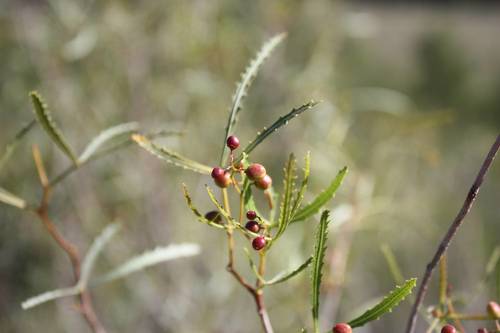
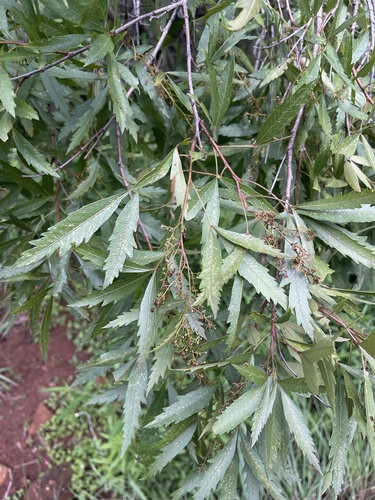
Buchanania lanzan
Spreng.
Almondette, Charoli Nut
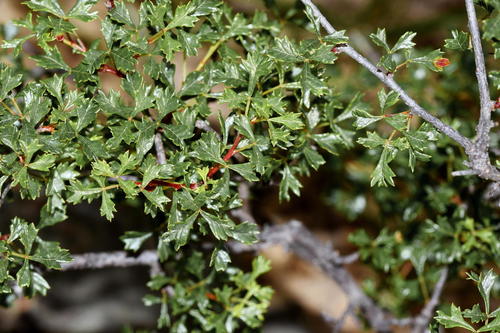
wikimedia· cc-by-sa
Delonix (via Wikimedia Commons)
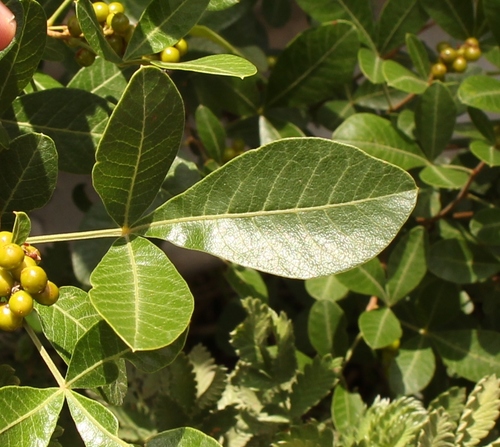
wikimedia· cc-by-sa
Badagnani at en.wikipedia (via Wikimedia Commons)
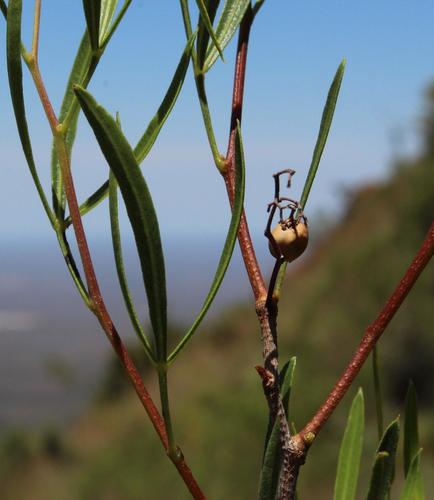
wikimedia· cc-by-sa
Dinesh Valke from Thane, India (via Wikimedia Commons)
Description
Buchanania lanzan is an evergreen Tree growing to 12 m (39ft) by 10 m (32ft) at a medium rate. See above for USDA hardiness. It is hardy to UK zone 10. Suitable for: light (sandy), medium (loamy) and heavy (clay) soils and can grow in nutritionally poor soil. Suitable pH: mildly acid, neutral and basic (mildly alkaline) soils. It cannot grow in the shade. It prefers dry or moist soil.
Edible Uses
Oil. Seed - raw or cooked. An excellent flavour, somewhat reminiscent of almonds or pistachios. Eaten as a dessert seed and also used in sweetmeats. In some parts of India the dried fruit and seed are baked together to make a sort of bread. They are ground into powders for thickening savory sauces and flavoring batters, and stewed into rich, meaty kormas. The seed contains about 50% oil. The seed is fairly small, about 7mm long. After the hard shell is cracked, the stubby seed within is as soft as a pine nut. The fruit hangs on the tree for quite a long while after it has ripened. Fruit - a pleasant, sweetish, subacid flavour. Eaten fresh, or dried for later use. The fruit is 15mm long. An oil is obtained from the seed. Light yellow with a sweet flavour and pleasant aroma, it can be used as a substitute for almond or olive oil. Carbon Farming - Staple Crop: protein-oil.
Medicinal Uses
Acrid Antiasthmatic Antidiarrhoeal Antitussive Astringent Depurative Leprosy Skin. The gum from the tree is used against leprosy in traditional medicine. Charoli seeds are used in the Ayurveda and Unani systems of medicine. The roots are acrid, astringent, cooling, depurative and constipating. They are useful in the treatment of diarrhoea. The leaves are used in the treatment of skin diseases. The fruits are used in treating coughs and asthma.
Distribution
E. Asia - southern China, India, Myanmar, Thailand, Laos, Vietnam, Malaysia.
Where It Grows
TROPICAL ASIA: India, Indonesia, Malaysia,
Cultivation
It grows best in areas where annual daytime temperatures are within the range 32 - 42°c, but can tolerate 5 - 48°c. It prefers a mean annual rainfall in the range 1,000 - 1,500mm, but tolerates 750 - 2,200mm. Grows well in full sun but can also tolerate considerable shade, especially when small. Succeeds in most soils, including dry soils. Prefers a pH in the range 5.5 - 6, tolerating 4.9 - 7.2. Carbon Farming - Cultivation: regional crop only. Management: standard.
Propagation
Seed
Other Uses
Charcoal Fuel Gum Oil Soil stabilization Tannin Wood. Other uses rating: Medium (3/5). Agroforestry Uses: A good species for afforesting bare hill slopes. Other Uses The bark is used in tanning. The tree yields a gum copiously in large, irregular pieces. It is only partially soluble in water (about 10% insoluble), but it gives a good mucilage and can be useful in cheap manufacturing processes. The gum has adhesive properties. An oil is obtained from the seed. The greyish-brown wood has a small, dark-coloured heartwood. It is moderately hard. Of poor quality, it is only used as firewood and for making charcoal
Synonyms
Also Known As
Buchanania lanzan, Charoli Nut or Almondette. Seeds are known as charoli or chironji. Achar, Almondette, Calumpang nut tree, Chara, Charee, Charkoli, Charoli, Cheronjee, Chirauli-nut, Chirauli, Chironji, Chivoli, Cuddapah almond, Erpe, Hak phuu, Kalompang, Lambo, Lone-hpo, Ma ca, Mamuang maeng wan, Men van, Morala, Munga pera, Nurkal, Pival, Piyar, Pyar, Rak muu, Tapasya-priya.