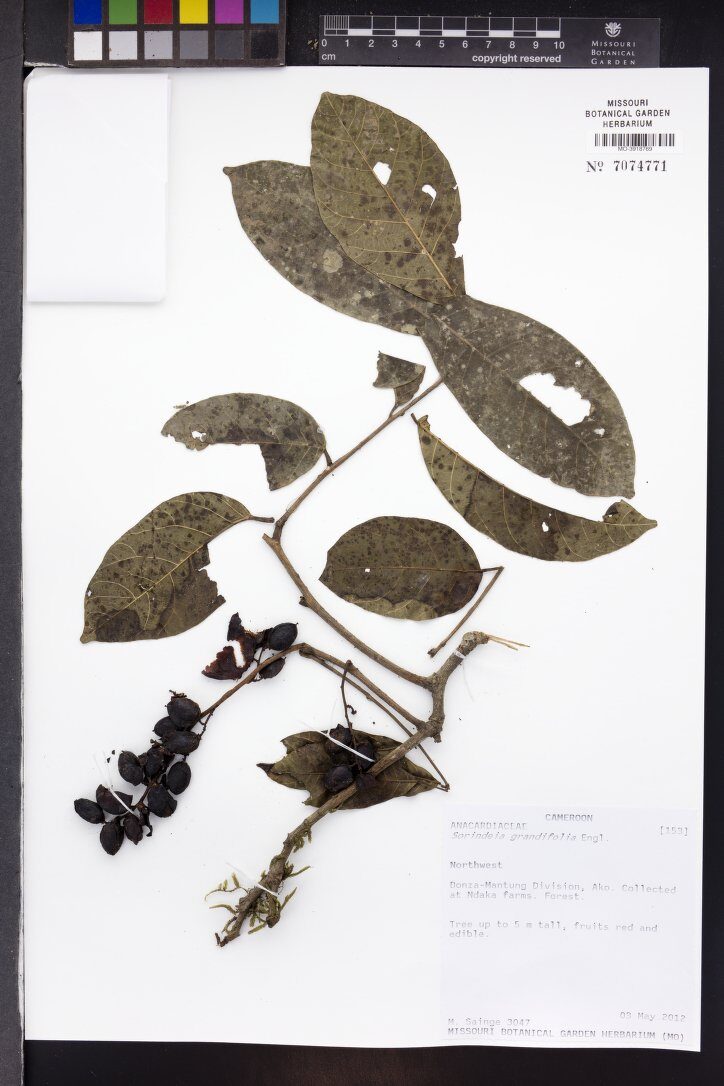
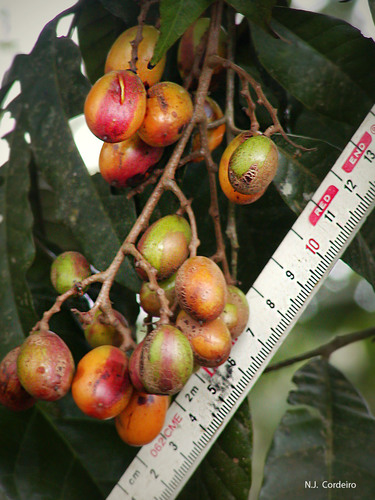
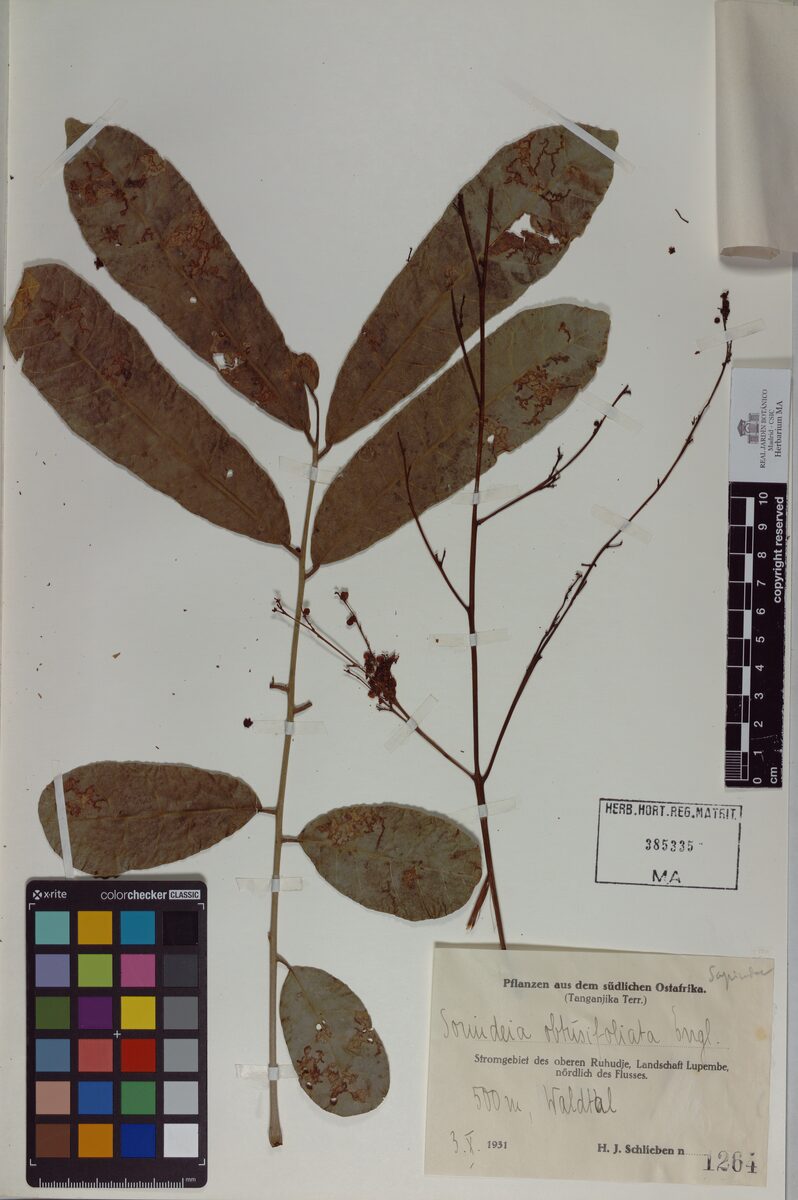
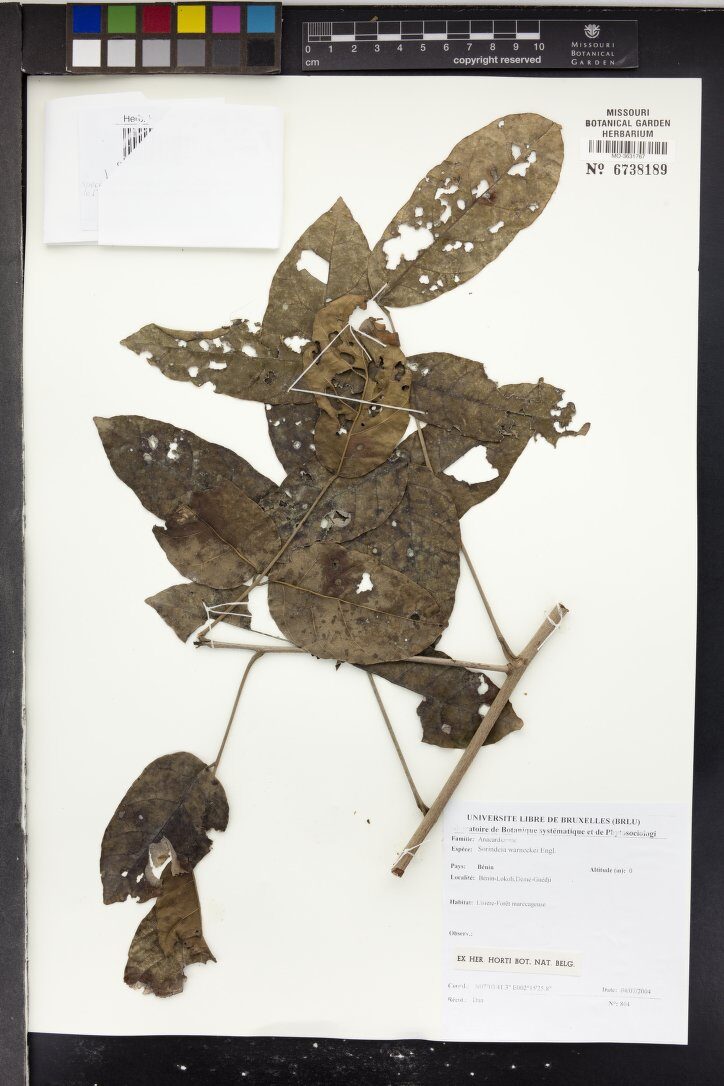
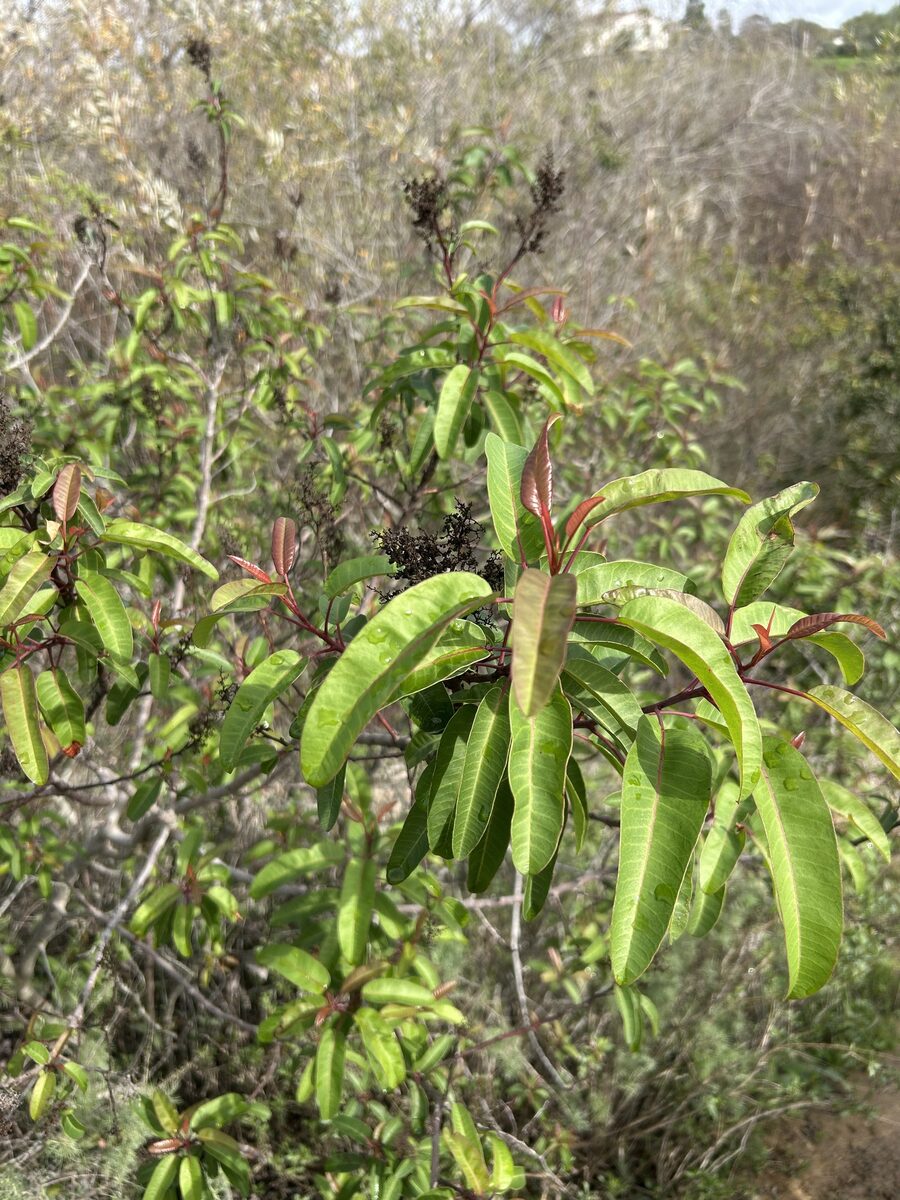
Pistacia chinensis subsp. integerrima
(J. Stewart.) Rech. f.
Pistachio wood, East Indies mastiche
gbif· cc0
Royal Botanic Garden Edinburgh
gbif· cc-by-nc
Suresh Ghimire
gbif· cc-by
Royal Botanic Gardens, Kew
Summary
Source: WikipediaPistacia chinensis, the Chinese pistache (Chinese: 黄連木; pinyin: huángliánmù), is a small to medium-sized tree in the genus Pistacia in the cashew family Anacardiaceae, native to central and western China. This species is planted as a street tree in temperate areas worldwide due to its attractive fruit and autumn foliage.
Description
A large deciduous tree. The bark is dark grey and very rough. The leaves are feathery and compound. There are 3-6 pairs of smooth leaflets with or without a leaflet at the end. The base of the leaflets is unequal. The tip is long and pointy. Male and female flowers are on separate trees. Male flowers are in short compact clusters and are red. Female flowers are larger and more loose. The fruit are small and in loose clusters. They are 6 mm across. They are pink at first and become wrinkled and grey-green when ripe.
Edible Uses
The ripe fruit are eaten raw and are notably oily. The leaves, seeds, and nuts are also edible.
Traditional Uses
The ripe fruit are eaten raw. They are oily.
This uses section is brief — help expand it
Distribution
A subtropical plant. It grows in hot, dry sub Himalayan slopes. It grows from 450-1,980 m above sea level.
Where It Grows
Afghanistan, Asia, Himalayas, India, Iran, Middle East, Myanmar, Nepal, Pakistan, SE Asia,
Synonyms
Also Known As
Kakarsingee, Kakkar, Kakra, Kakri, Kakrasingi, Kakrian, Kakri-singi, Kakroi, Kangar, Kankad singhe, Kankar silo, Karkat-shringi, Kattara-thinche, Pistacio, Shrewaniay
References (9)
- Abbasi, A. M., Khan, M & Zafar, M., 2013, Ethno-medicinal assessment of some selected wild edible fruits and vegetables of Lesser-Himalayas, Pakistan. Pak. J. Bot. 45 (SI):215-222 (As Pistacia integerrima)
- Ambasta, S.P. (Ed.), 2000, The Useful Plants of India. CSIR India. p 462
- Aryal, K. P., et al, 2018, Diversity and use of wild and non-cultivated edible plants in the Western Himalaya. Journal of Ethnobiology and Ethnomedicine (2018) 14:10
- Farooq, S., et al, 2012, Ethnobotanical Studies of the Flora of Tehsil Birmal in South Waziristan Agency, Pakistan. Pak. J. Weed Sci. Res. 18(3): 277-291 (As Pistacia integerrima)
- Fl. Iranica 63:8. 1969
Show all 9 references Hide references
- Flora of Pakistan.
- Ghimire, S. K., et al, 2008, Non-Timber Forest Products of Nepal Himalaya. WWF Nepal p 21
- Negi, P. S. & Subramani, S. P., 2015, Wild Edible Plant Genetic Resources for Sustainable Food Security and Livelihood of Kinnaur District, Himachal Pradesh, India, International Journal of Conservation Science. 6 (4): 657-668
- Plants for a Future database, The Field, Penpol, Lostwithiel, Cornwall, PL22 0NG, UK. http://www.scs.leeds.ac.uk/pfaf/