Sorindeia madagascariensis
Thouars ex DC.
Grape mango, Mpilivili tree
iNaturalist· cc-by-nc-sa
(c) TanzaniaPlantCollaboration, some rights reserved (CC BY-NC-SA)
iNaturalist· cc-by-nc
(c) CORDENOS Thierry, some rights reserved (CC BY-NC)
iNaturalist· cc-by-nc
(c) Tobias Spanner, some rights reserved (CC BY-NC)
Description
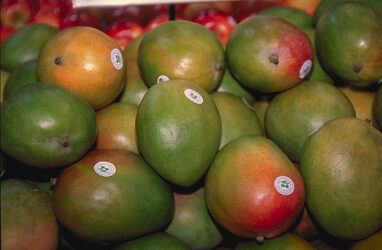
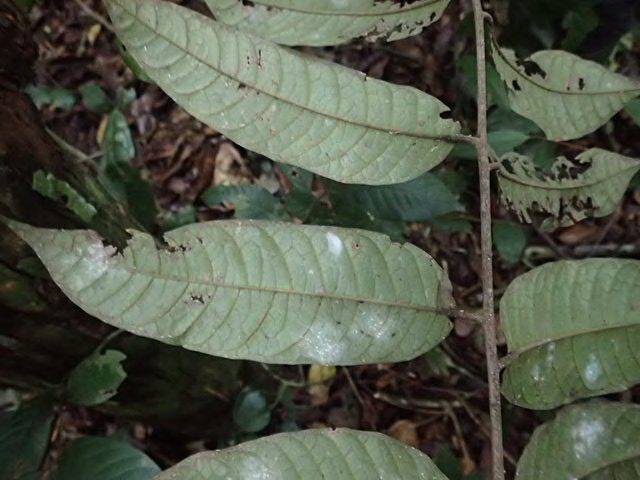
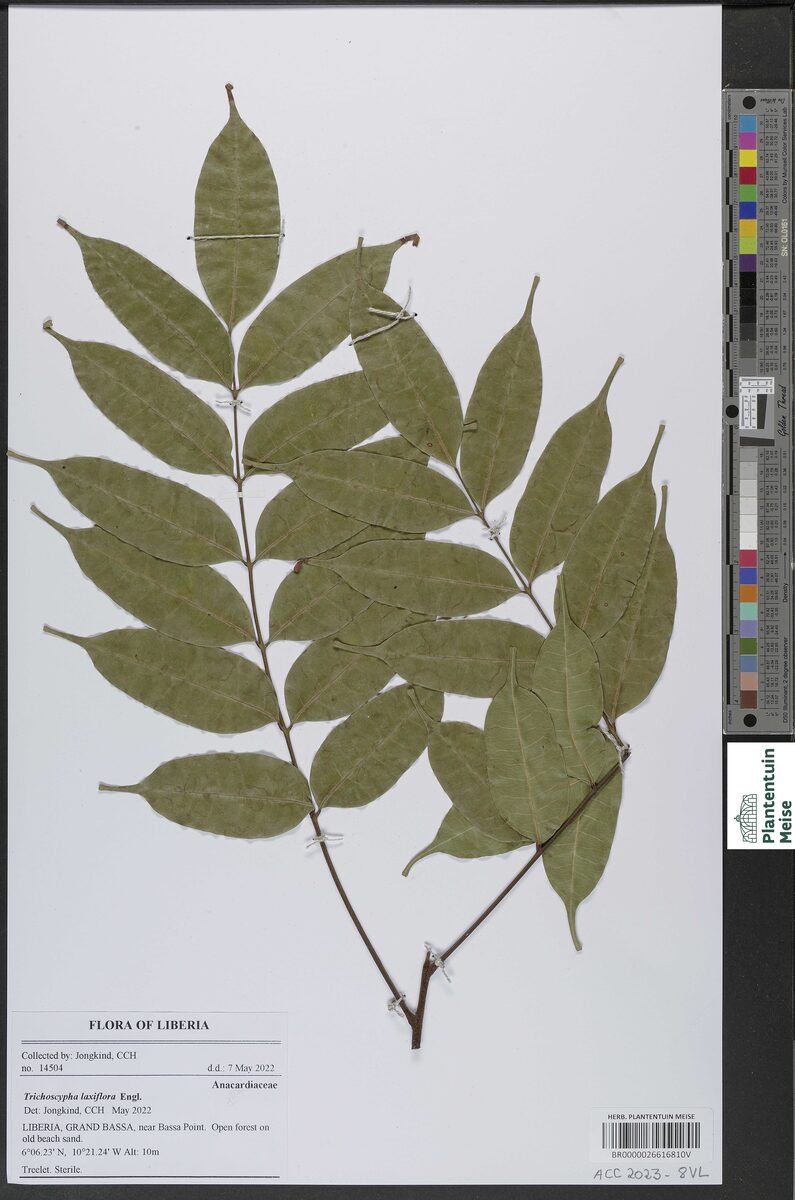
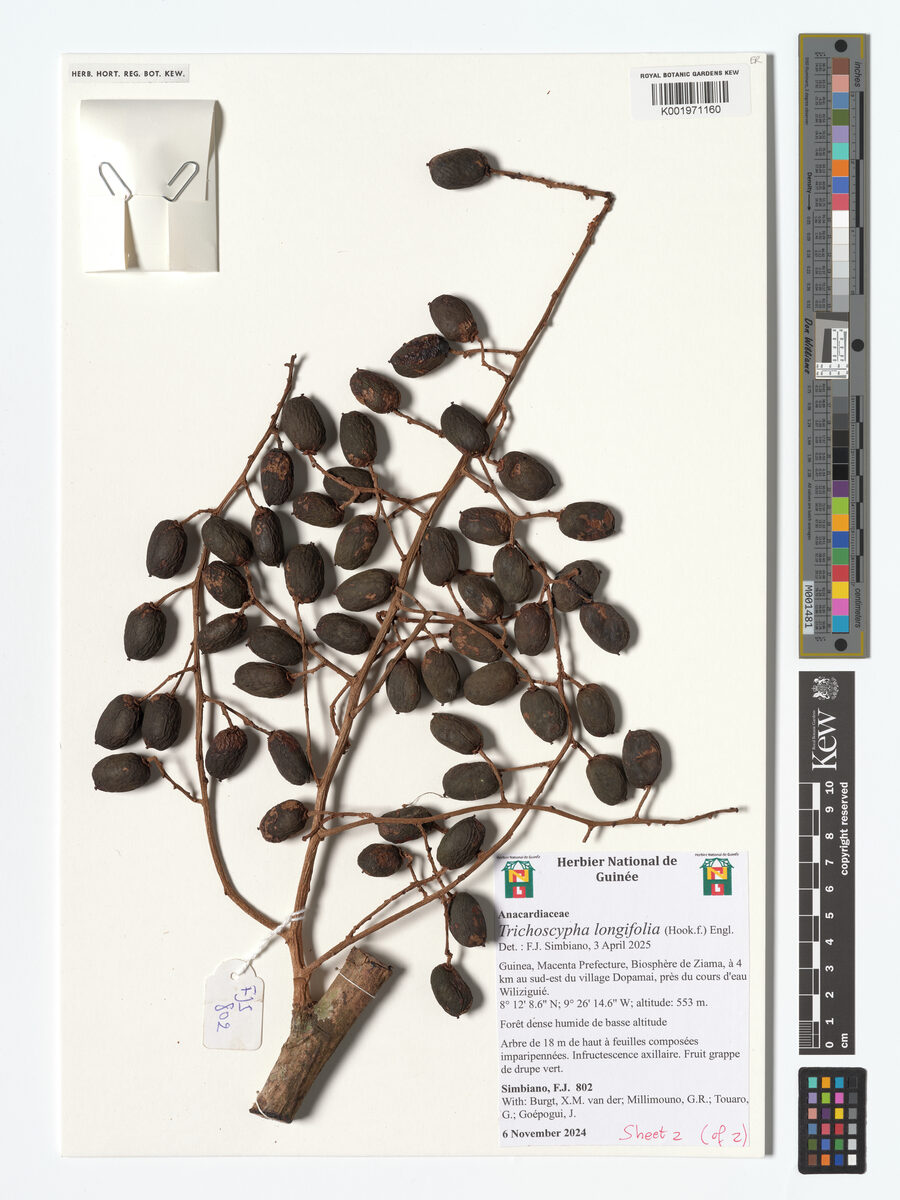
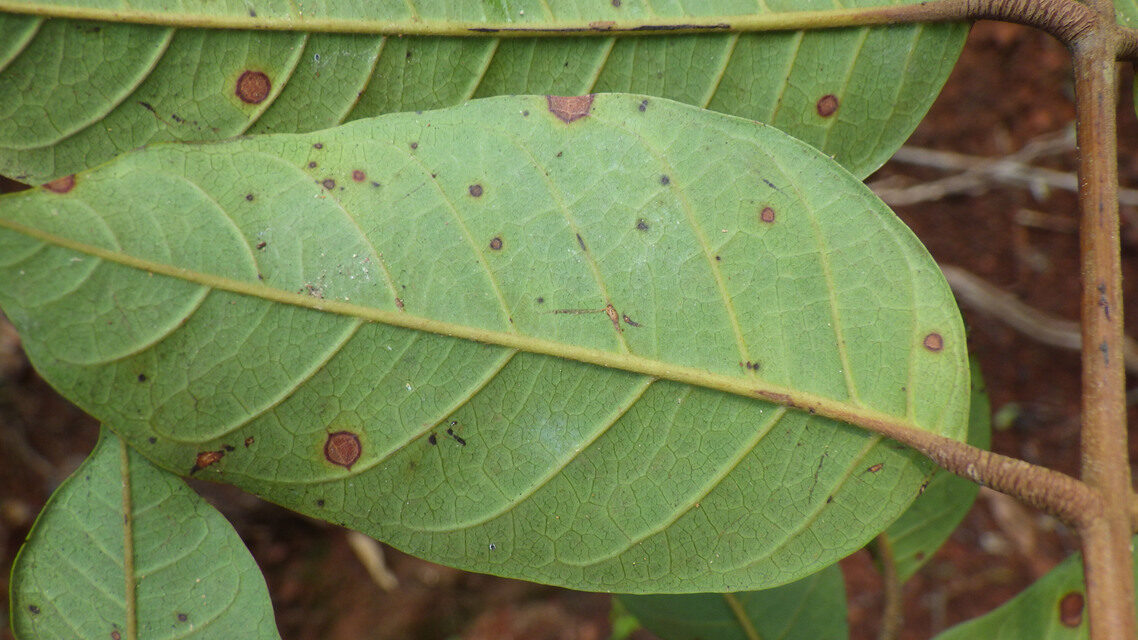
A large tree. It grows 20 m tall. The trunk can be 20 cm across. The leaves are compound. The leaflets are almost opposite. There are usually 4 pairs. The flowers are on the trunks and large branches. They are small and hang in long groups. The fruit are yellow and sweet. The bunches are 50 cm long. There can be 200 fruit in a bunch. They hang from the main trunk and branches. The fruit are 2-3 cm long by 1.3 cm across. They are yellow.
Edible Uses
The ripe, sweet fruit are eaten raw or processed into juice by soaking in warm water, squeezing, filtering, and adding sugar. The fruit are also used to make beer and are sold in local markets.
Traditional Uses
The ripe fruit are sweet and edible. They are eaten raw. They are also soaked in warm water, squeezed and filtered and sugar is added to make a juice drink. The fruit are also used for beer.
Medicinal Uses
The roots are used for the treatment of malaria, tuberculosis, schistosomiasis, hookworm and menstruation problems. A decoction of the roots, mixed with the roots of Mwinu (Cassia didymobotrya), Mkumba (Macaranga capensis) and Mshegheshe (Myrica salicifolia) is drunk as a treatment against mental illness. The stem bark is applied externally in the treatment of syphilitic sores.
Distribution
A tropical plant. It grows in the lowlands. It grows in humid and subhumid evergreen forest. In Madagascar it grows from sea level to 1,000 m altitude. It grows in places with an annual rainfall between 460-2,375 mm. It can grow in arid places. In Tanzania it grows from sea level to 1,800 m above sea level. It is often in seasonally flooded places.
Where It Grows
Africa, Asia, Comoros*, East Africa, India, Indonesia, Kenya, Madagascar*, Malawi, Mascarenes, Mauritius, Mozambique, SE Asia, Singapore, Somalia, South Africa, Southern Africa, Sudan, Tanzania,
Cultivation
Plants can be grown from fresh seeds.
Propagation
Seed - best sown as soon as it is ripe.
Other Uses
The wood is a good timber that is used for furniture, doors, spoons, milk pots, grain mortars, tool handles and canoe paddles, pestles and carvings. The wood is a good fuel. The tree provides good shade and is important in agroforestry.
Production
Fruit are collected from September to October in Tanzania.
Other Information
The fruit are sold in local markets.
Notes
There are 14 Sorindeia species.
Synonyms
Also Known As
Mfotofoto, Mgoda, Mgweda, Mgwego, Mhilihili, Mkunguma, Mkunguwa, Mkwingwa, Mkwingwina, Mndaraho, Mpilipili, Mpilipinzi, Mtikiza, Musele, Musgwe, Muzingilizi, Ngoweda, Nkunguma, Ntalawanda, Nyembedwa, Sasola, Sondriry, Tnirondro, Tsirindry, Tsirondrano, Tsirondro, Voantsirindry, Voasirindrina, Voasindrirna
References (25)
- Ambasta, S.P. (Ed.), 2000, The Useful Plants of India. CSIR India. p 590
- Arora, R. K., 2014, Diversity in Underutilized Plant Species - An Asia-Pacific Perspective. Bioversity International. p 87
- Burkill, I.H., 1966, A Dictionary of the Economic Products of the Malay Peninsula. Ministry of Agriculture and Cooperatives, Kuala Lumpur, Malaysia. Vol 2 (I-Z) p 2091
- FAO. 1983, Food and fruit-bearing forest species 1: Examples from Eastern Africa. FAO Food and Forestry Paper 44/1 p 95
- Hedrick, U.P., 1919, (Ed.), Sturtevant's edible plants of the world. p 629
Show all 25 references Hide references
- Herb., E. A., 1981, (As Sorindeia usambarensis)
- Jardin, C., 1970, List of Foods Used In Africa, FAO Nutrition Information Document Series No 2.p 162
- Jardin, C., 1970, List of Foods Used In Africa, FAO Nutrition Information Document Series No 2.p 162 (As Sorindeia obtusifoliolata and Sorindeia usambarensis)
- JSTOR Global Plants edible
- Lovett, J. C. et al, Field Guide to the Moist Forest Trees of Tanzania. p 11
- Macmillan, H.F. (Revised Barlow, H.S., et al) 1991, Tropical Planting and Gardening. Sixth edition. Malayan Nature Society. Kuala Lumpur. p 308
- Mpasiwakomu, R. A., 2017, The Diversity and Utilization of Wild Edible and Medicinal Plant Species found in Uvinza Miombo Woodlands, Tanzania. M. Sc. thesis University of Tanzania.
- Msuya, T. S., et al, 2010, Availability, Preference and Consumption of Indigenous Foods in the Eastern Arc Mountains, Tanzania, Ecology of Food and Nutrition, 49:3, 208-227
- Mutie, F. M., et al, 2023, Important Medicinal and Food Taxa (Orders and Families) in Kenya, Based on Three Quantitative Approaches. Plants 2023, 12, 1145
- Peters, C. R., O'Brien, E. M., and Drummond, R.B., 1992, Edible Wild plants of Sub-saharan Africa. Kew. p 53 (Also as Sorindeia usambarensis)
- Schatz, G.E., 2001, Generic Tree Flora of Madagascar. Royal Botanical Gardens, Kew and Missouri Botanical Garden. p 43
- Prodr. 2:80. 1825
- Reitveld, S., 2013, The Animals and Plants of the Zazamalala Forest in Western Madagascar. p 43
- Royal Botanic Gardens, Kew (1999). Survey of Economic Plants for Arid and Semi-Arid Lands (SEPASAL) database. Published on the Internet; http://www.rbgkew.org.uk/ceb/sepasal/internet [Accessed 28th March 2011]
- Ruffo, C. K., Birnie, A. & Tengnas, B., 2002, Edible Wild Plants of Tanzania. RELMA p 620
- Styger, E., et al, 1999, Indigenous fruit trees of Madagascar: potential components of agroforestry systems to improve human nutrition and restore biological diversity. Agroforestry Systems 46: 289-310
- Sukarya, D. G., (Ed.) 2013, 3,500 Plant Species of the Botanic Gardens of Indonesia. LIPI p 516
- Walsh, M., 2009, The Use of Wild and Cultivated Plants as famine Foods on Pemba Island, Zanzibar. Études océan Indien. 42-43
- White, F., Dowsett-Lemaire, F. and Chapman, J. D., 2001, Evergreen Forest Flora of Malawi. Kew. p 125
- Williamson, J., 2005, Useful Plants of Malawi. 3rd. Edition. Mdadzi Book Trust. p 233