Sorindeia juglandifolia
(A. Rich.) Planch. ex Oliver
Sorindeia, African damson
wikimedia· cc0
Wikimedia Commons (via Wikimedia Commons)
wikimedia· cc-by-sa
Ton Rulkens from Mozambique (via Wikimedia Commons)
gbif· cc-by-sa
Saint Fédriche NDZAI
gbif· cc-by-sa
Saint Fédriche NDZAI
gbif· cc-by-sa
Saint Fédriche NDZAI
Description
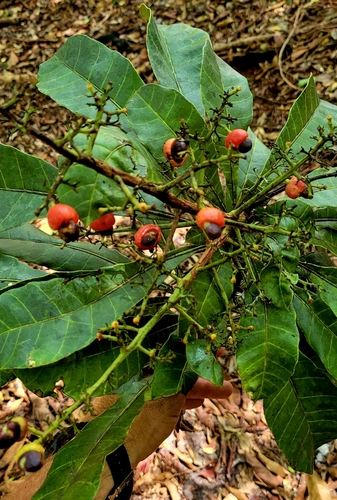
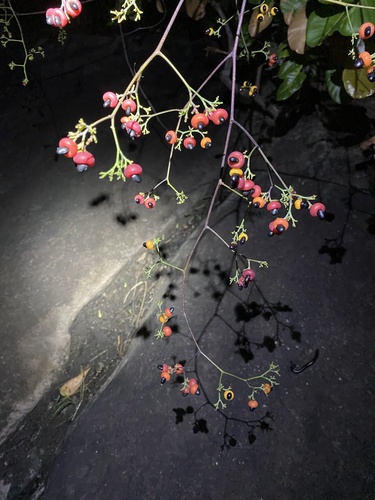
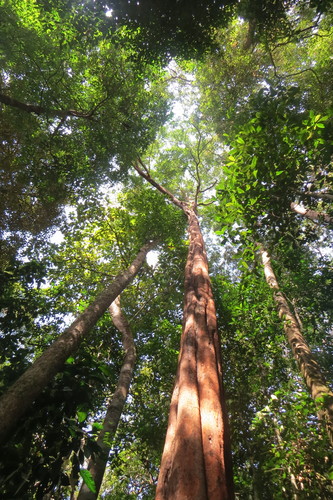
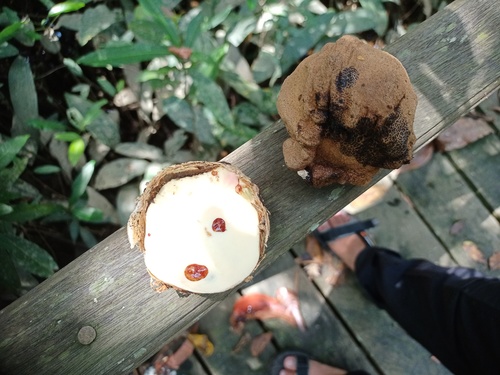
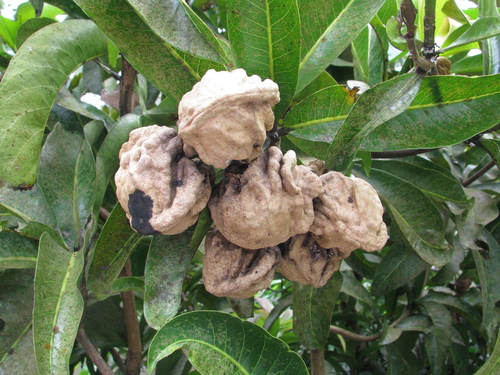
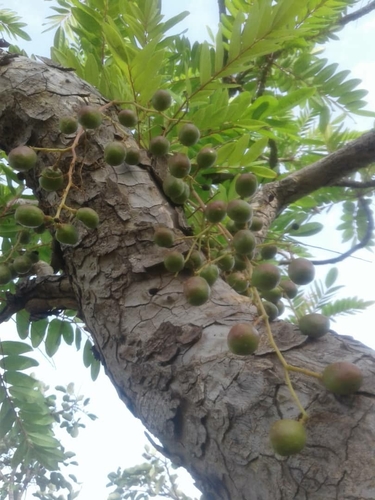
A climbing shrub or small tree. It can be 9 m high. The leaves are alternate and compound. There are 2-4 pairs of leaflets and one at the end. The leaflets are oval and 22 cm long by 11 cm wide. The end leaflet is the largest. The leaflets are leathery and both surfaces are green. The leaflet stalks are purplish, wrinkled, thick and 3-10 mm long. The flowers are small and creamy-white. They are tinged with pink. They occur in large loose branched heads. These can be 70 cm long. They occur in the axils of leaves or at the ends of branches. The sexes are separate on different trees. The fruit is broadly oval and fleshy. It is about 10 mm long. They are yellow when mature.
Edible Uses
The fruit and stems are eaten.
Distribution
A tropical plant. It occurs in dense coastal dune bush.
Where It Grows
Africa, Angola, Benin, Burkina Faso, Cameroon, Central Africa, Congo R, Cuba, East Africa, Gabon, Gambia, Ghana, Guinea, Guinée, Guinea-Bissau, Liberia, Mozambique, Sao Tome and Principe, Senegal, Sierra Leone, Southern Africa, West Africa, West Indies, Zambia, Zimbabwe,
Other Information
Fruit are sold in local markets.
Synonyms
Also Known As
Aionque, Ambilire, Balebari, Bu totol, Coxolouro, Cupote-cuxolouro, Daguru muda, Lagari, M'riuol, M'taluass, N'tata, N'tchaluas, Sandje-bombo, Sandji-bombro, Timba, Undebari, Untata, Untchalbiness
References (14)
- Abbiw, D.K., 1990, Useful Plants of Ghana. West African uses of wild and cultivated plants. Intermediate Technology Publications and the Royal Botanic Gardens, Kew. p 48
- Burkill, H. M., 1985, The useful plants of west tropical Africa, Vol. 1. Kew.
- Catarino, L., et al, 2016, Ecological data in support of an analysis of Guinea-Bissau's medicinal flora. Data in Brief 7 (2016):1078-1097
- Dalziel, J. M., 1937, The Useful plants of west tropical Africa. Crown Agents for the Colonies London.
- Djihounouck, Y., et al, 2018, Diversité Et Importance Socio-Economique Des Espèces Fruitières Sauvages Comestibles En Zone Kasa (Sud-Ouest Du Sénégal). European Scientific Journal December 2018 edition Vol.14, No.36 ISSN: 1857 – 7881
Show all 14 references Hide references
- Djihounouck, Y., et al, 2021, Ethnobotanical Uses of Non-cultivated Edible Fruit Species in the Department of Oussouye (South Senegal). Journal of Food Research; Vol. 10, No. 4 p 20
- Fl. trop. Afr. 1:440. 1868
- Grivetti, L. E., 1980, Agricultural development: present and potential role of edible wild plants. Part 2: Sub-Saharan Africa, Report to the Department of State Agency for International Development. p 27
- Jardin, C., 1970, List of Foods Used In Africa, FAO Nutrition Information Document Series No 2.p 162
- JSTOR Global Plants edible
- Miguel, E., et al, 1989, A checklist of the cultivated plants of Cuba. Kulturpflanze 37. 1989, 211-357
- Nkeoua, G. & Boundzanga, G. C., 1999, Donnees sur les produits forestieres non ligneux en Republique du Congo. FAO. p 37
- Palgrave, K.C., 1996, Trees of Southern Africa. Struik Publishers. p 462
- Peters, C. R., O'Brien, E. M., and Drummond, R.B., 1992, Edible Wild plants of Sub-saharan Africa. Kew. p 53