Pinus koraiensis
Siebold & Zucc.
Korean Nut Pine, Cedar Pine, Chinese pinenut
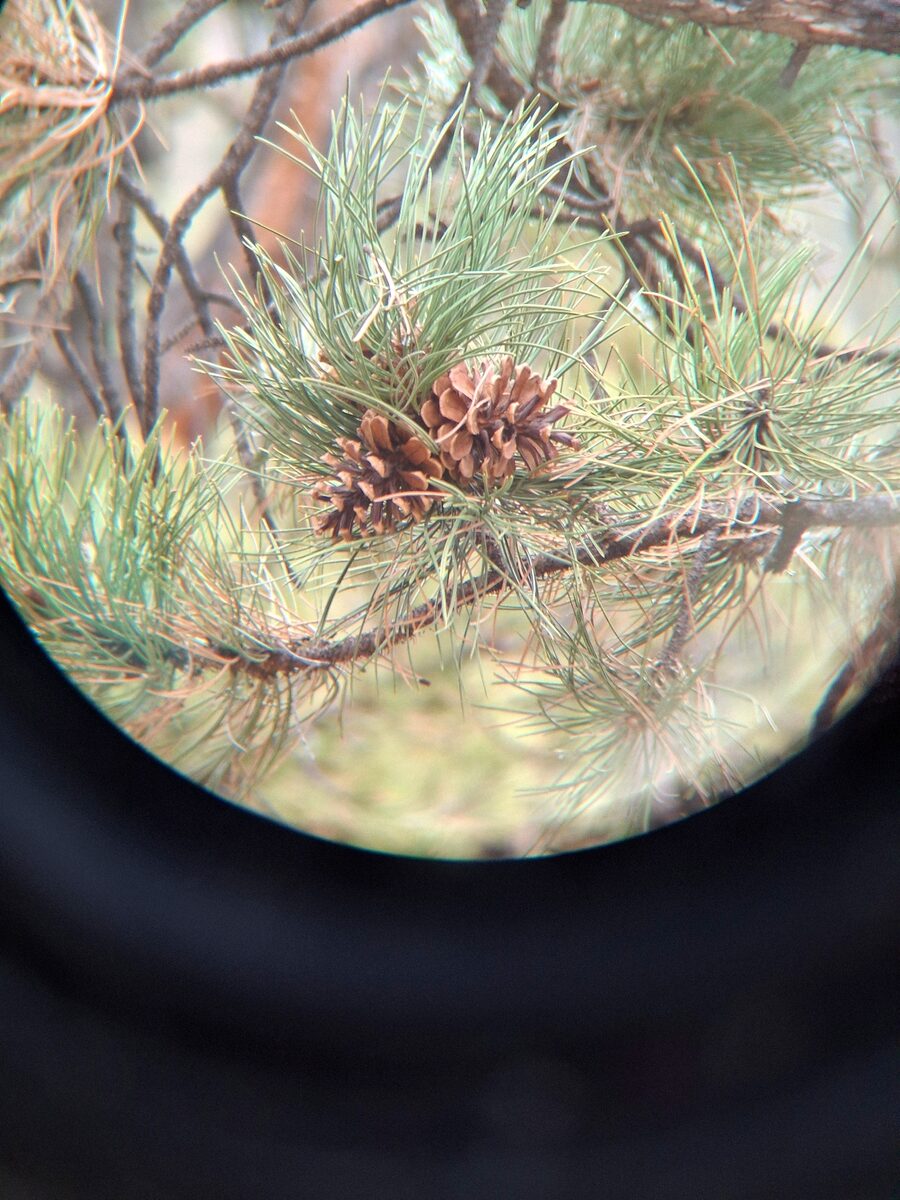
iNaturalist· cc-by-nc
(c) Alexander Ganse, some rights reserved (CC BY-NC), uploaded by Alexander Ganse
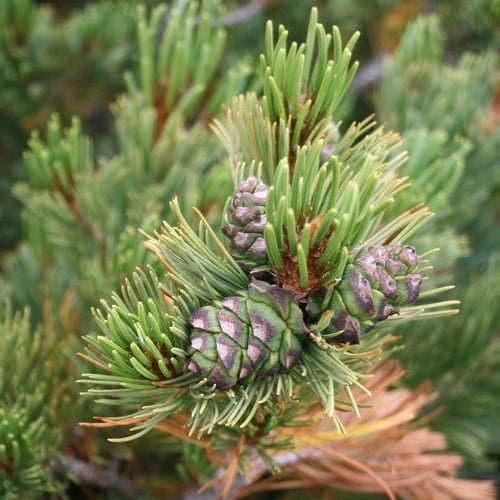
iNaturalist· cc-by-nc
(c) sergeyprokopenko, some rights reserved (CC BY-NC), uploaded by sergeyprokopenko
iNaturalist· cc-by-nc
(c) sergeyprokopenko, some rights reserved (CC BY-NC), uploaded by sergeyprokopenko
Summary
Source: WikipediaPinus koraiensis is a species of pine known commonly as the Korean pine. It is a relic species of the Tertiary, identified as a rare tree species by United Nations. It is native to eastern Asia, in Korea, northeastern China, the temperate rainforests of the Russian Far East, and central Japan. In the north of its range, it grows at moderate elevations, typically 600 to 900 metres (2,000 to 3,000 feet), whereas further south, it is a mountain tree, growing at 2,000 to 2,600 m (6,600 to 8,500 ft) elevation in Japan. Other common names include "Chinese pinenut". The ancient woodland of P. koraiensis on the earth is about 50 million hectares, and China has about 30 million hectares, accounting for 60%. It is a second-class national key protected plant in China. P. koraiensis is a tree species with high economic and ecological value. The official name in Chinese is "红松 hóng sōng/red pine", because almost every part of it is related to red. According to some research, P. koraiensis can be divided into two natural types according to the thickness of the bark, namely Pinus koraiensis Sieb. et Zucc. f. pachidermis Wang et Chi and Pinus koraiensis Sieb. et Zucc. f. leptodermis Wang et Chi, though these are not accepted as distinct by the Plants of the World Online database.
Description
A tree. It grows to 50 m tall. The trunk is 1 m across. The bark is grey-brown. It is cracked along its length into irregular plates. The young branches are red-brown. There are 5 needles per bundle. They are dark green and straight. The are triangle shape in cross section. They are 6-12 cm long. The seed cones can occur singly or as several clustered together near the end of a first year branch. They are erect and have a stalk 1-1.5 cm long. The cone is oval to oblong and 9-14 cm long by 6-8 cm wide. The seeds are exposed but not shed at maturity. The seeds are oval or triangle shaped and 1.2-1.6 cm across. They do not have wings.
Edible Uses
The seeds are rich in oil and can be eaten raw or cooked. They have a soft texture with a hint of resin and make a delicious snack; they can also serve as a staple food. Dried and ground, they can be used as a flavouring and thickener in soups. The seeds are fairly large, up to 16mm x 12mm. A vanillin flavouring is also obtained as a by-product of resins released from the pulpwood.
Traditional Uses
The seeds are eaten raw or roasted. They are used in candies, sweet cakes, rice desserts, and savoury dishes. The pollen is used in cookies. The green cones are used for making wine. The seeds are finely ground and the powder sprinkled on food.
Medicinal Uses
The seed contains several medicinally active compounds and is analgesic, antibacterial, and anti-inflammatory. In Korea it is used to treat earache and nosebleeds, and to promote milk flow in nursing mothers. Turpentine from the resin of pine trees is antiseptic, diuretic, rubefacient, and vermifuge. Taken internally, it is a valuable remedy for kidney and bladder complaints, and is used both internally and as a rub or steam bath for rheumatic conditions. It benefits the respiratory system and is useful against mucous membrane diseases, coughs, colds, influenza, and TB. Externally, it treats skin complaints, wounds, sores, burns, and boils, applied via liniment plasters, poultices, herbal steam baths, and inhalers. The stem bark is used in treating burns and skin ailments.
Known Hazards
The wood, sawdust and resins from various species of pine can cause dermatitis in sensitive people.
Distribution
It is a temperate plant. It grows in the mountains in N China between 200-1800 m altitude. It grows naturally in river valleys and on low mountain slopes. It is very hardy. It suits hardiness zones 3-9. Arboretum Tasmania.
Where It Grows
Asia, Australia, Britain, China, Europe, Japan, Korea, Manchuria, Russia, Siberia, Tasmania, USA,
Cultivation
Thrives in a light well-drained sandy or gravelly loam. Dislikes poorly drained moorland soils. Established plants tolerate drought. This species prefers a cool moist climate. Leaf secretions inhibit the germination of seeds, thereby inhibiting the growth of other plants below the tree. This species is sometimes cultivated for its edible seed, there are some named varieties. It is one of the main species utilized for its edible seeds, being gathered from cultivated and wild trees. Large quantities of the seeds are exported as a food crop from N. China. Plants bear cones when they are 3.5 metres tall in Cornwall. Trees are slow growing when young. Growth in the south-east of Britain is generally poor but trees in the west and north are healthy and growing well with average annual height increases of around 25cm and girth increases of 3cm or more. Plants are strongly outbreeding, self-fertilized seed usually grows poorly. They hybridize freely with other members of this genus. The cones do not open, seed is extracted by breaking up the soft scales of the cone. Plants in this genus are notably susceptible to honey fungus. An evergreen.
Propagation
Sow seed in individual pots in a cold frame as soon as it is ripe, or in late winter if not. Stored seed benefits from a short stratification of 6 weeks at 4°c to improve germination. Seedlings should be planted into their permanent positions as soon as possible and protected for the first winter or two. Because the root system is very sparse, early transplanting is essential for good establishment. Plant trees when small, between 30 and 90cm — ideally at around 5–10cm tall. A thorough weed-excluding mulch greatly aids establishment. Larger transplants check badly and show little growth for several years, with poor root development and wind resistance as a result. Cuttings can be taken, but only from trees less than 10 years old. Use single leaf fascicles with the base of the short shoot. Disbudding the shoots several weeks before taking cuttings can help, though cuttings are generally slow to establish.
Other Uses
A tan or green dye can be obtained from the needles. The seeds yield soap and lubricating oil. Tannin is obtained from the bark. The needles release a substance called terpene when washed by rain, which inhibits germination of some plants including wheat. The tree yields turpentine and tar. Oleo-resins occur in the tissues of all pines, obtained by tapping the trunk or by destructive distillation of the wood; trees from warmer regions generally yield more. Turpentine makes up an average of 20% of the oleo-resin and is separated by distillation, with uses including as a solvent for waxes, in varnish, and medicinally. The remaining rosin is used by violinists on their bows and in sealing wax and varnish. Pitch derived from the resin is used for waterproofing and as a wood preservative. The timber is used for construction, bridge building, vehicles, furniture, and wood pulp.
Production
It is fast growing.
Other Information
Large amounts are exported from China.
Notes
There are over 100 species of Pinus.
Synonyms
Also Known As
Hong song, Channamu
References (25)
- Arora, R. K., 2014, Diversity in Underutilized Plant Species - An Asia-Pacific Perspective. Bioversity International. p 96
- Brickell, C. (Ed.), 1999, The Royal Horticultural Society A-Z Encyclopedia of Garden Plants. Convent Garden Books. p 801
- Ciesla, W.M., 1998, Non-wood forest products from conifers. Non-wood forest products 12, FAO, Rome, p 72
- Coombes, A.J., 2000, Trees. Dorling Kindersley Handbooks. p 69
- Cundall, P., (ed.), 2004, Gardening Australia: flora: the gardener's bible. ABC Books. p 1048
Show all 25 references Hide references
- Facciola, S., 1998, Cornucopia 2: a Source Book of Edible Plants. Kampong Publications, p 170
- Fan, L., et al, The Use of Edible Wild Plants and Fungi in Korean-Chinese Villages. Journal of Environmental Information Science 44-5 p 71-79
- Fl. jap. 2:28, t. 116. 1842
- Fu Liguo, Li Nan, Mill, R.R., Pinaceae. Flora of China. Vol. 4 p. 22
- Glowinski, L., 1999, The Complete Book of Fruit Growing in Australia. Lothian. p 136
- Hedrick, U.P., 1919, (Ed.), Sturtevant's edible plants of the world. p 498
- Hibbert, M., 2002, The Aussie Plant Finder 2002, Florilegium. p 234
- Hu, Shiu-ying, 2005, Food Plants of China. The Chinese University Press. p 277
- Jackes, D. A., Edible Forest Gardens
- Lyle, S., 2006, Discovering fruit and nuts. Land Links. p 328
- Menninger, E.A., 1977, Edible Nuts of the World. Horticultural Books. Florida p 155
- Pemberton, R. W. & Lee, N. S., 1996, Wild Food Plants in South Korea: Market Presence, New Crops, and Exports to the United States. Economic Botany, Vol. 50, No. 1, pp. 57-70
- Plants for a Future database, The Field, Penpol, Lostwithiel, Cornwall, PL22 0NG, UK. http://www.scs.leeds.ac.uk/pfaf/
- Solomon, C., 2001, Encyclopedia of Asian Food. New Holland. p 281
- Valder, P., 1999, The Garden Plants of China. Florilegium. p 83
- van Wyk, B., 2005, Food Plants of the World. An illustrated guide. Timber press. p 297
- Wickens, G.E., 1995, Edible Nuts. FAO Non-wood forest products. FAO, Rome. p176
- Wiersema, J. H. & Leon, B., 2013, World Economic Plants. A Standard Reference CRC Press. 2nd Ed. p 531
- Woo, Y., et al, 2017, Antioxidant Potential of Selected Korean Edible Plant Extracts. Hindawi BioMed Research International Volume 2017, Article ID 7695606
- World Checklist of Useful Plant Species 2020. Royal Botanic Gardens, Kew