Pinus ponderosa
Douglas ex C. Lawson
Ponderosa pine, Yellow pine
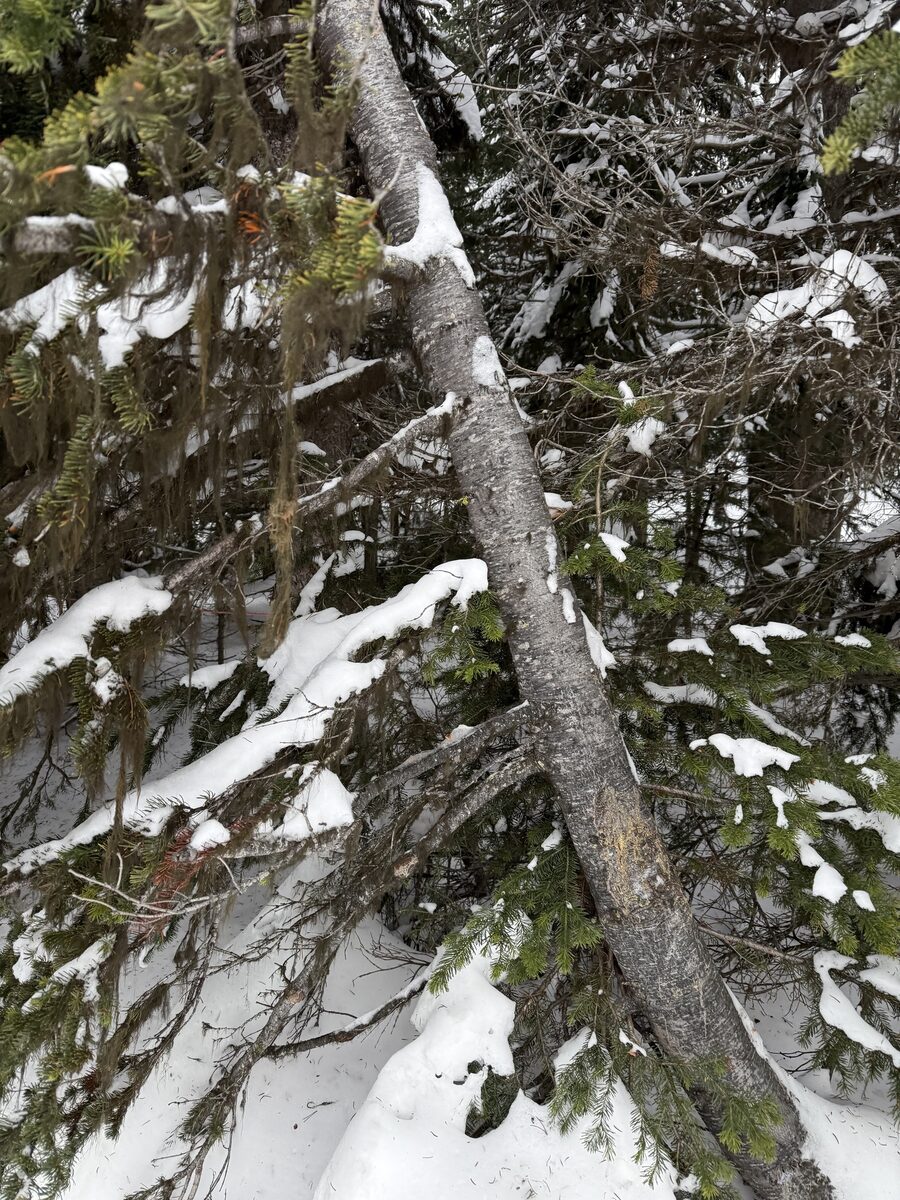
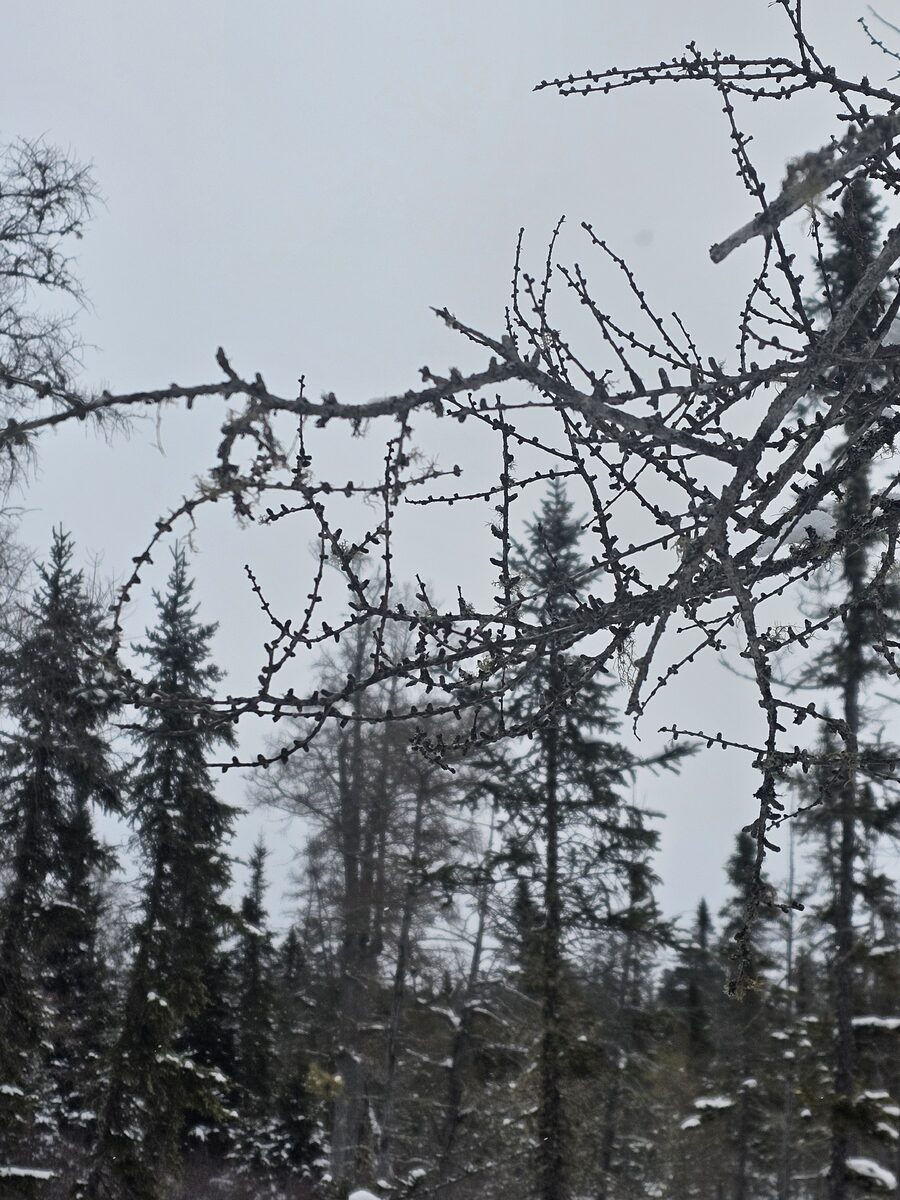
iNaturalist· cc-by-nc
(c) Mart Hughes, some rights reserved (CC BY-NC), uploaded by Mart Hughes
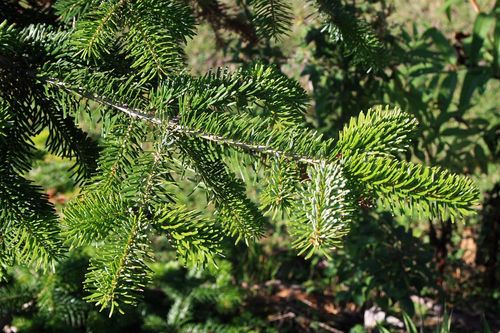
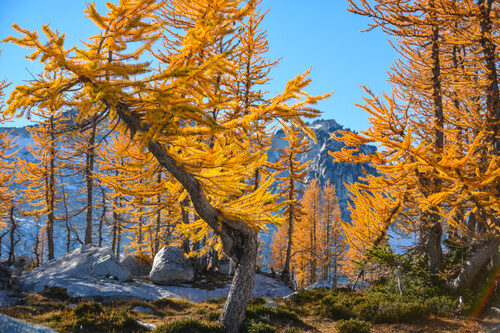
iNaturalist· cc-by-nc
(c) mattstrieby, some rights reserved (CC BY-NC)
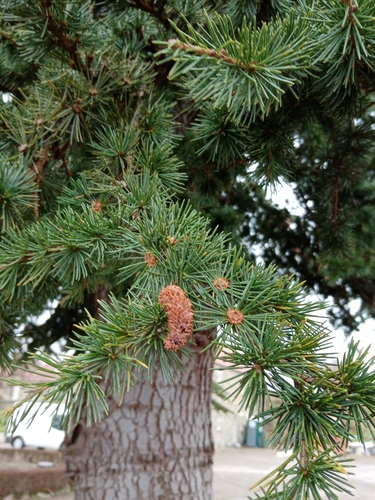
iNaturalist· cc-by-nc
(c) Angelina, some rights reserved (CC BY-NC), uploaded by Angelina
Summary
Source: WikipediaPinus ponderosa, commonly known as the ponderosa pine or western yellow pine, is a very large pine tree species of variable habitat native to mountainous regions of western North America. It is the most widely distributed pine species in North America. Pinus ponderosa grows in various erect forms in 16 western U.S. states as well as British Columbia in Canada and has been introduced in temperate regions of Europe and in New Zealand. It was first documented in modern science in 1826 in eastern Washington near present-day Spokane (of which it is the official city tree). On that occasion, David Douglas misidentified it as Pinus resinosa (red pine). In 1829, Douglas concluded that he had a new pine among his specimens and coined the name Pinus ponderosa for its heavy wood. In 1836, it was formally named and described by Charles Lawson, a Scottish nurseryman. It was adopted as the official state tree of Montana in 1949. Other vernacular names that have been used for the species are "bull pine" and "blackjack pine", but these are general woodsmans terms applied to growth stages of several different pines, rather than specific to Pinus ponderosa.
Description
Pinus ponderosa is an evergreen tree growing to 25m tall by 7m wide at a medium rate. Monoecious with wind-pollinated, non-self-fertile flowers blooming in June and seeds ripening in October. Hardy to UK zone 4. Year-round evergreen foliage. Thrives in light sandy to medium loamy, well-drained soils tolerating poor fertility. Suitable for mildly acidic and neutral pH. Requires full sun and cannot grow in shade. Tolerates both drought and moist soils, withstands strong winds but not maritime exposure.
Edible Uses
The inner bark can be eaten raw or cooked and is mucilaginous. Spring is the best time to harvest it. While it can be eaten fresh, it is more commonly dried, ground into a powder, and used as a soup thickener or mixed with flour for baking. The seeds can be eaten raw or cooked and are oil-rich with a slightly resinous flavour, though they are quite small at only about 8mm long. Ground seed can also be used in bread-making. The resin is chewed as a gum, and young male cones have been chewed for their juice. A vanillin flavouring is obtained as a by-product of resins released from the pulpwood.
Traditional Uses
The soft layer under the bark is used to extract sap. The green cones are partly roasted and the seeds eaten.
This uses section is brief — help expand it
Medicinal Uses
Ponderosa pine was used medicinally by several Native North American tribes, who valued it particularly for its antiseptic and vulnerary properties in treating skin problems, cuts, wounds, burns, and similar injuries. It was also used to treat chest and lung complaints. The turpentine derived from pine resin is antiseptic, diuretic, rubefacient, and vermifuge. Taken internally, it is a valuable treatment for kidney and bladder complaints, and is used both internally and as a rub or steam bath for rheumatic conditions. It benefits the respiratory system and is useful against diseases of the mucous membranes, including coughs, colds, influenza, and TB. Externally, it treats skin complaints, wounds, sores, burns, and boils, applied as liniment plasters, poultices, herbal steam baths, or inhalers. Branches are used in herbal steam baths for muscular pain. A decoction of the plant tops has been used for internal bleeding and high fevers, and an infusion of dried buds has been used as an eye wash.
Known Hazards
The wood, sawdust and resins from various species of pine can cause dermatitis in sensitive people.
Distribution
It is a temperate plant. Arboretum Tasmania.
Where It Grows
America, Australia, Canada, North America, Slovenia, Tasmania, USA,
Cultivation
Thrives in a light well-drained sandy or gravelly loam. Dislikes poorly drained moorland soils. Established plants tolerate drought. Seedlings strongly dislike growing in the shade and are unable to succeed under the canopy of the parent trees. Plants are fairly wind tolerant. Extensively used in cool temperate forestry, this species is occasionally planted for timber in central and southern Europe. Growth can be quite fast when young but it soon drops of and averages around 30cm per year. The best trees in Britain are found in a belt running from Kent through the Midlands to N. Wales and also in S. Scotland. Trees live 300 - 600 years in the wild, they seem to be long-lived and healthy in Britain. Seed production commences when the tree is about 20 years old. There are usually several years of low to medium yields between each year of high yields. The cones are 8 - 15cm long, they open and shed their seed whilst still attached to the tree and then soon fall from the tree. Plants are strongly outbreeding, self-fertilized seed usually grows poorly. They hybridize freely with other members of this genus. Leaf secretions inhibit the germination of seeds, thereby reducing the amount of plants that can grow under the trees. Plants in this genus are notably susceptible to honey fungus.
Propagation
Sow seed in individual pots in a cold frame as soon as it is ripe, or in late winter if necessary. A short stratification of 6 weeks at 4°C can improve germination of stored seed. Plant seedlings into their permanent positions as soon as possible and protect them through their first winter or two. Because plants have a very sparse root system, early transplanting is important for good establishment. Trees should be moved to their final positions when small — between 30 and 90cm — though in practice planting out at around 5–10cm tall works well, provided a thorough weed-excluding mulch is used. Larger transplants establish poorly, putting on little growth for several years, which also compromises root development and wind resistance. Cuttings can be taken, but this method only works on trees less than 10 years old. Use single leaf fascicles with the base of the short shoot attached. Disbudding the shoots a few weeks before taking cuttings can improve success. Cuttings are generally slow to grow away.
Other Uses
A tan or green dye comes from the needles, a yellow dye from the pollen, and a blue dye from the roots. The needles contain terpene, which is released by rain and inhibits germination of some plants, including wheat. Branches are used as a strewing herb, and a decoction of the plant tops has been used as a conditioning wash for the skin. The tree is fairly wind-tolerant and suits shelterbelt plantings. It produces resin, though not exploited commercially. Oleo-resins are present in all pines but are often insufficient for economical extraction; they are obtained by tapping the trunk or by destructive distillation of the wood, with warmer-region trees giving higher yields. Turpentine makes up an average of 20% of the oleo-resin and is separated by distillation for use as a solvent, in varnish-making, and medicinally. The remaining rosin is used on violin bows and in sealing wax and varnish. Pitch from the resin is used for waterproofing, wood preservation, and as an adhesive, and burns well enough to make torches. Root fibres have been used in basket-making. The tree also provides insulation material and tinder; cones make a quick fire, and trunk bark scales burn easily, produce no smoke, and cool rapidly. The wood is light, strong, fine-grained, and pleasantly aromatic, ranging from soft to hard, and is an important lumber tree used for furniture, boxes, and toys, as well as fuel. Some stumps contain high concentrations of pitch, making them rot-resistant and useful for fence posts and kindling.
Also Known As
Rumeni bor, Tiba, Tyba
References (5)
- Couture, M. D., 1978, Recent and Contemporary Foraging Practices of the Harney Valley Paiute. Thesis, Portland State University
- Coutre, M. D., et al, 1986, Foraging Behaviour of a Contemporary Northern Great Basin Population. Journal of California and Great Bason Anthropology Vol. 8(2) pp 150-160
- http://www.botanic-gardens-ljubljana.com/en/plants
- Kuhnlein, H. V. and Turner, N. J., 1991, Traditional Plant Foods of Canadian Indigenous Peoples. Food and Nutrition in History and Anthropology Volume 8. Gordon and Breach. p 41
- Stubbs, R. D., 1966, An investigation of the Edible and Medicinal Plants used by the Flathead Indians. MA thesis University of Montana. p 57