Pinus pinceana
Gordon & Glend.
Pinceana pine, Weeping pinyon
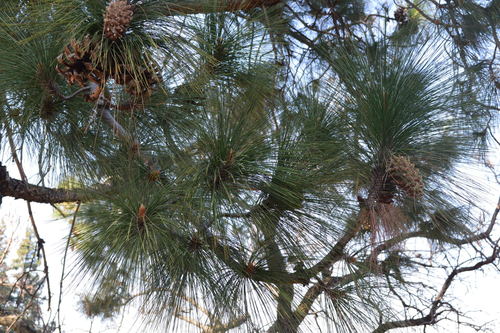
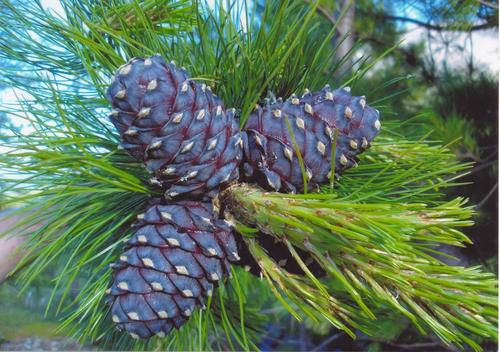
iNaturalist· cc-by-nc
(c) CARLOS VELAZCO, some rights reserved (CC BY-NC), uploaded by CARLOS VELAZCO
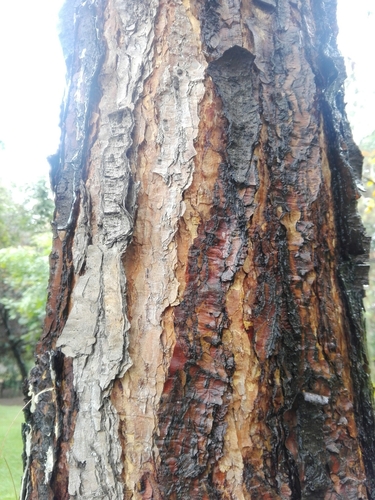
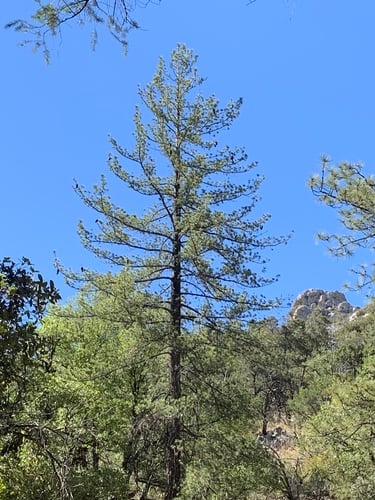
iNaturalist· cc-by-nc
(c) ADOLFO PERALES HUERTA, some rights reserved (CC BY-NC)
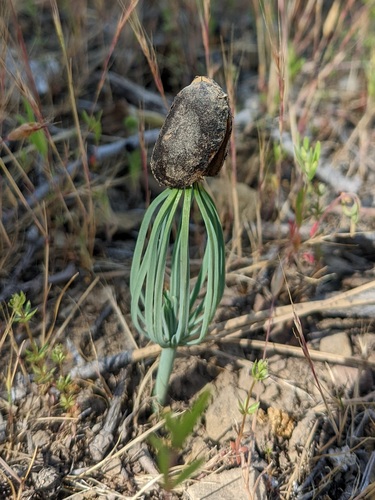
iNaturalist· cc-by-nc
(c) ADOLFO PERALES HUERTA, some rights reserved (CC BY-NC)
Summary
Source: WikipediaPinus pinceana, with the common names weeping pinyon and Pince's pinyon pine, is a species of conifer in the family Pinaceae.
Description
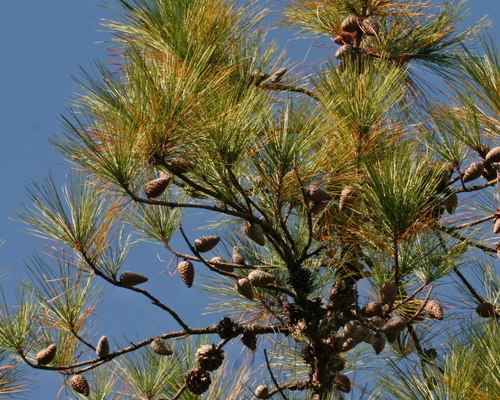
A subtropical conifer (Pinaceae) growing 5-10 m tall with a trunk about 25 cm across, found at elevations of 1,500-2,300 m. It is a rare and endangered species.
Edible Uses
The seeds and nuts are edible and are sold in local markets.
Distribution
It is a subtropical plant. It grows between 1,500-2,300 m above sea level.
Where It Grows
Australia, Central America, Mexico, North America,
Other Information
The seeds or nuts are sold in local markets.
Notes
There are over 100 species of Pinus. It is a rare and endangered species.
Synonyms
Also Known As
Pinonero lloron
References (9)
- Ciesla, W.M., 1998, Non-wood forest products from conifers. Non-wood forest products 12, FAO, Rome, p 73
- Farjon, A., and Styles, B. T., 1997, Pinus (Pinaceae): Flora Neotropica, Vol. 75, pp. 1-291
- Ferns, Useful Temperate Plants.
- Grandtner, M. M., 2008, World Dictionary of Trees. Wood and Forest Science Department. Laval University, Quebec, Qc Canada. (Internet database http://www.wdt.qc.ca)
- Kermath, B. M., et al, 2014, Food Plants in the Americas: A survey of the domesticated, cultivated and wild plants used for Human food in North, Central and South America and the Caribbean. On line draft. p 662
Show all 9 references Hide references
- Mapes, C. & Basurto, F., 2016, Biodiversity and Edible Plants of Mexico. Chapter 5 in R. Lira, et al. (eds.), Ethnobotany of Mexico, Ethnobiology, Springer. p 91
- Piedra-Malagón, E. M., et al, 2022, Edible native plants of the Gulf of Mexico Province. Biodiversity Data Journal 10: e80565 p 27
- Pinetum 204. 1858
- Segura, S., et al, 2018, The edible fruit species in Mexico. Genet Resour Crop Evol (2018) 65:1767–1793