Pinanga samarana
Becc.
Samar abiki
gbif· cc-by
Royal Botanic Gardens, Kew
gbif· cc-by
The Trustees of the Natural History Museum, London
Description
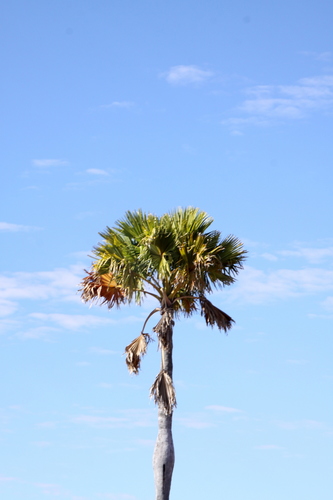
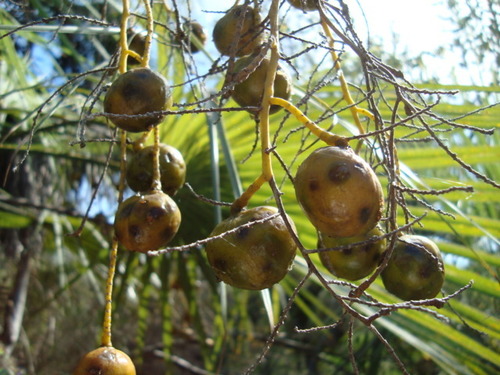
A small slender palm. The leaf segments are sword shaped tapering to a point. They are unequal and straight, 60 cm long by 3.5 cm wide. The lower surface is sprinkled with light coloured dots on a reddish leaf. The flowers are along a central axis with strongly flattened branches. The fruit is shaped like a spindle tapering at both ends. They are 15 to 18 mm long and 1 cm thick.
Edible Uses
The unopened leaf bud is cooked and eaten, and palm heart is consumed as food.
Traditional Uses
The bud is cooked and eaten.
This uses section is brief — help expand it
Distribution
A tropical plant. They occur in forests at low and medium altitudes. Reported only from Samar in the Philippines.
Where It Grows
Asia, Pacific, Philippines, SE Asia,
References (2)
- Monsalud, M.R., Tongacan, A.L., Lopez, F.R., & Lagrimas, M.Q., 1966, Edible Wild Plants in Philippine Forests. Philippine Journal of Science. p 526
- World Checklist of Useful Plant Species 2020. Royal Botanic Gardens, Kew