Pinanga curranii
Becc.
Curran abiki
iNaturalist· cc-by
(c) Ben Jobson, some rights reserved (CC BY), uploaded by Ben Jobson
Description
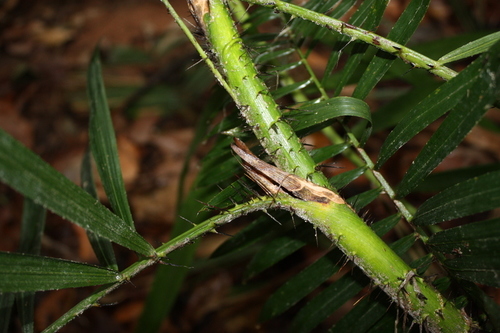
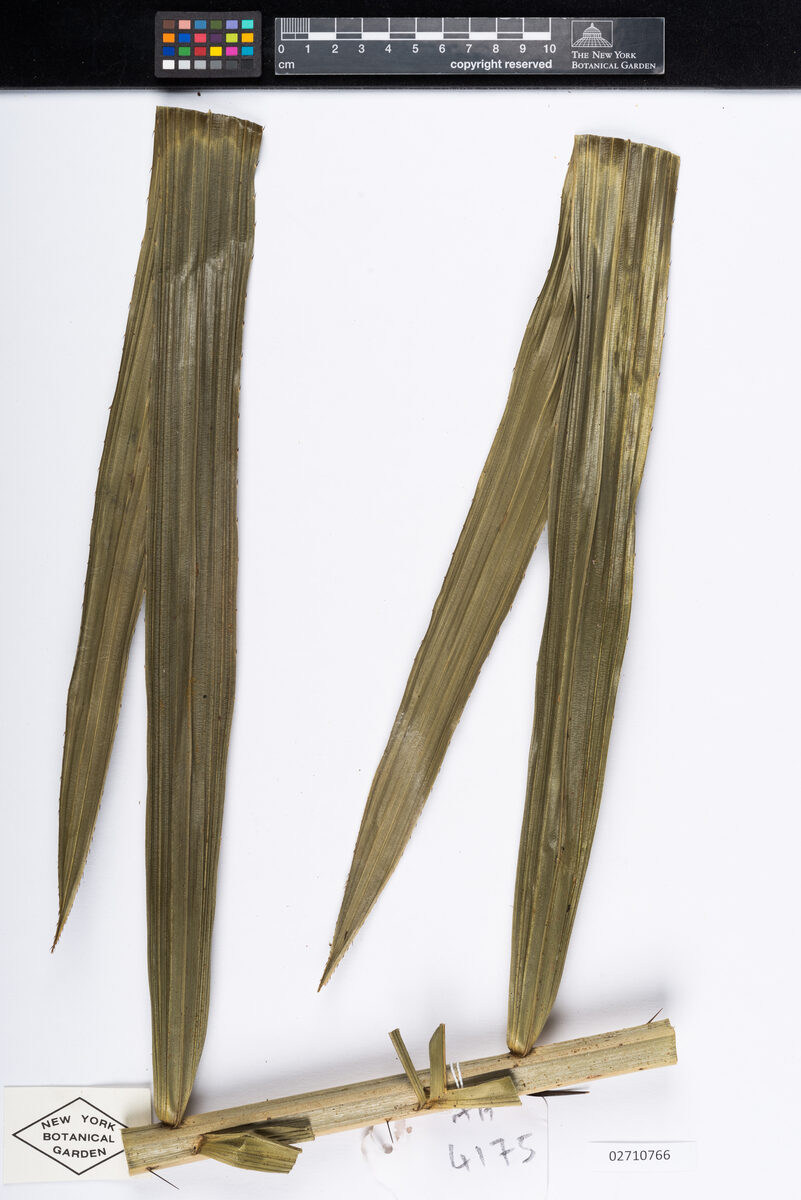
A slender clumping palm. It is a very small palm. The leaves have leaflets along the stalk. The leaves can be 2.5 m long. There are about 50 leaflets 60 cm long by 4 cm wide. They are almost straight and not deeply cut into at the tip. They are dark green above and greyish underneath. The leaflet at the end is broad and fishtail like. The crown-shaft is long and dark green. It is covered with brown scales. The fruiting stalk is branched and bears red fruit. The fruit are oval and 15 mm by 9 mm. The seed has an embryo at an angle.
Edible Uses
The bud is cooked and eaten, and the palm heart (cabbage) is also consumed.
Traditional Uses
The bud is cooked and eaten.
This uses section is brief — help expand it
Distribution
It is a tropical plant. They occur at low altitudes in primary forests in Palawan in the Philippines.
Where It Grows
Asia, Pacific, Philippines, SE Asia,
References (4)
- Jones, D.L., 1994, Palms throughout the World. Smithtonian Institution, Washington. p 297
- Monsalud, M.R., Tongacan, A.L., Lopez, F.R., & Lagrimas, M.Q., 1966, Edible Wild Plants in Philippine Forests. Philippine Journal of Science. p 518
- Riffle, R.L. & Craft, P., 2003, An Encyclopedia of Cultivated Palms. Timber Press. p 412
- World Checklist of Useful Plant Species 2020. Royal Botanic Gardens, Kew