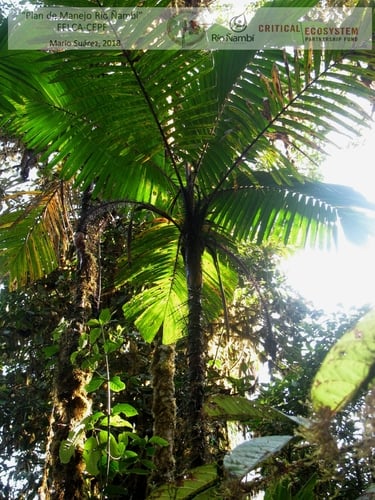
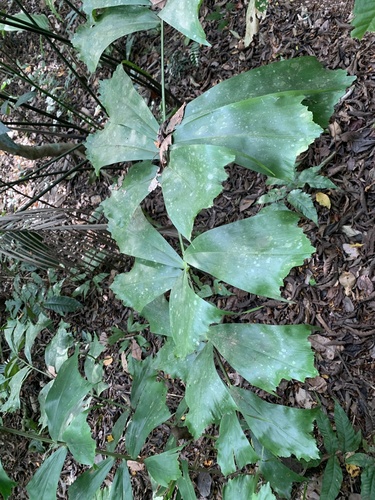
Astrocaryum mexicanum
Liebm. ex Mart.
Waree palm
iNaturalist· cc-by-nc
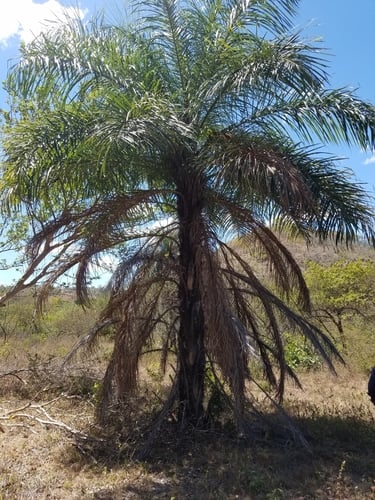
(c) Juan Carlos Pérez Magaña, some rights reserved (CC BY-NC), uploaded by Juan Carlos Pérez Magaña
iNaturalist· cc-by
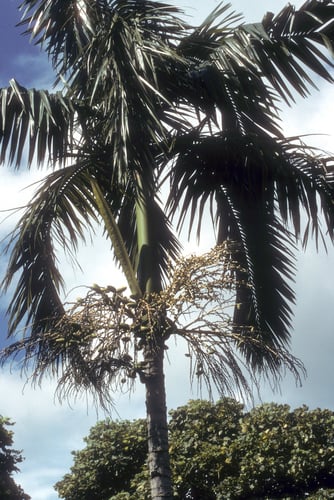
(c) Jorge Armín Escalante-Pasos, some rights reserved (CC BY), uploaded by Jorge Armín Escalante-Pasos
iNaturalist· cc-by-nc
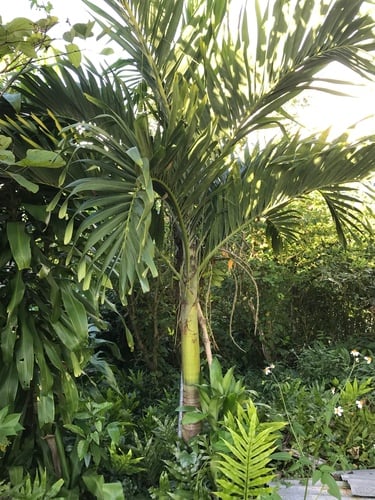
(c) Luis Alberto, some rights reserved (CC BY-NC), uploaded by Luis Alberto
Summary
Source: WikipediaAstrocaryum mexicanum, the chocho palm, cohune palm, or chapay, is a species of cocosoid palm in the family Arecaceae, native to Mexico and parts of Central America. It is very long-lived for a palm, reaching 140 years. Local people harvest its young inflorescences, its seeds, and its hearts for food. Covered with stout spines, it is hardy to USDA zone 10a, and is occasionally planted as an ornamental in places such as Hawaii and Southern California.
Description
A solitary palm. The palm is covered with armed prickles. The plant grows about 2.5 m high. Young plants have large, simple, or slightly divided leaves. The leaf stalks are spiny. Older fronds are divided. The leaflets vary in size. The end pair of leaflets are united and like a fishtail. Leaflets are dark green above and silvery underneath. The large bract underneath the flower stalk is deeply cup-shaped and very spiny. The flowering stalk is branched and the flowers are of one sex. They are small and brown or white. The flowers are compact. The fruit are like small coconuts. They are covered with a spiny skin and the shell is very hard. The fruit are about 3.5 cm across. The fruit are borne in clusters. The seeds have an edible kernel.
Edible Uses
The palm heart, young flowers, endosperm (seeds), and fruit are eaten. The flowers and fruit kernels are consumed.
Traditional Uses
Young flower eaten. Endosperm eaten.
This uses section is brief — help expand it
Distribution
A tropical plant. They grow well in the subtropics. It grows in lowland rainforest on non flooded soils. It needs regular moisture and humidity. It needs fertile, well drained soil. It does best in full sun or light shade. Mt Cootha Botanical Gardens. In XTBG Yunnan.
Where It Grows
Asia, Australia, Belize, Central America*, China, El Salvador, Guatemala, Honduras, Indonesia, Mexico, Nicaragua, North America, SE Asia, Singapore, USA,
Cultivation
Found from the subtropics to the tropics. Succeeds in full sun to light shade.
Other Uses
The leaves are used for thatching. The stems are used for making tool handles.
Notes
There are about 40-50 Astrocaryum species.
Synonyms
Also Known As
Chapaya, Chichon, Chipi, Chocho, Chocon, Lancetilla, Star-nut palm, Tzin-tzun
References (16)
- Balick, M.J. and Beck, H.T., (Ed.), 1990, Useful palms of the World. A Synoptic Bibliography. Colombia p 558 (As Hexopetion mexicanum), 658,
- Burkill, I.H., 1966, A Dictionary of the Economic Products of the Malay Peninsula. Ministry of Agriculture and Cooperatives, Kuala Lumpur, Malaysia. Vol 1 (A-H) p 266
- Chizmar Fernandez, C., et al, 2009, Plantas comestibles de Centroamerica. Instituto de Biodiversidad, Costa Rica. p 71
- Haynes, J., & McLaughlin, J., 2000, Edible palms and Their Uses. University of Florida Fact sheet MCDE-00-50-1 p 2
- Henderson, A., Galeano, G and Bernal, R., 1995, Field Guide to the Palms of the Americas. Princeton. p 205
Show all 16 references Hide references
- Hist. nat. palm. 3:323. 1853
- Ibarra-Manriquez, G., et al, 1997, Useful Plants of the Los Tuxtlas Rain Forest (Veracruz, Mexico): Considerations of their Market Potential. Economic Botany, Vol. 51, No. 4, pp. 362-376
- Janick, J. & Paul, R. E. (Eds.), 2008, The Encyclopedia of Fruit & Nuts. CABI p 89
- Jones, D.L., 1994, Palms throughout the World. Smithtonian Institution, Washington. p 56, 138
- Jones, D.L., 2000, Palms of Australia 3rd edition. Reed/New Holland. p 122
- Llamas, K.A., 2003, Tropical Flowering Plants. Timber Press. p 92
- Menninger, E.A., 1977, Edible Nuts of the World. Horticultural Books. Florida p 126
- Piedra-Malagón, E. M. et al, 2022, Edible native plants of the Gulf of Mexico Province. Biodiversity Data Journal 10: e80565 p 11
- Riffle, R.L. & Craft, P., 2003, An Encyclopedia of Cultivated Palms. Timber Press. p 40, 264
- Segura, S. et al, 2018, The edible fruit species in Mexico. Genet Resour Crop Evol (2018) 65:1767–1793
- World Checklist of Useful Plant Species 2020. Royal Botanic Gardens, Kew