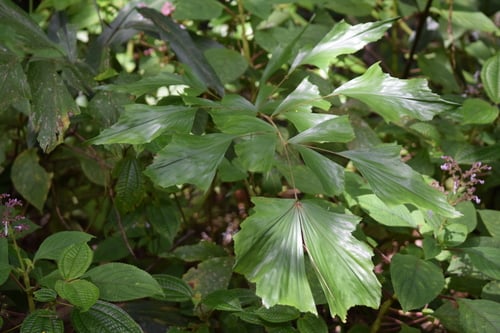
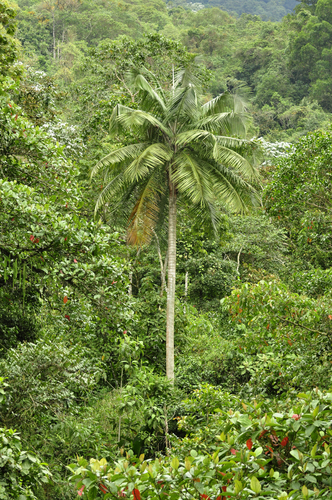
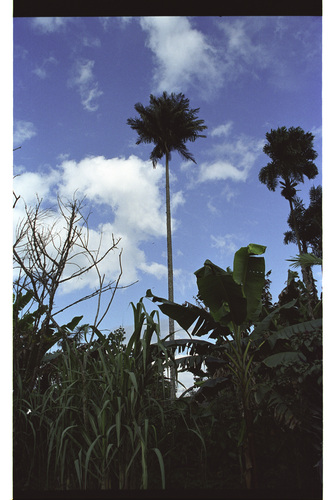
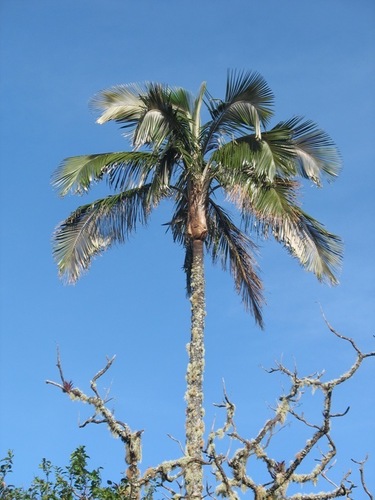
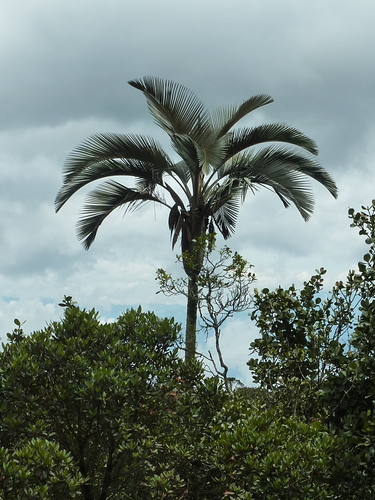
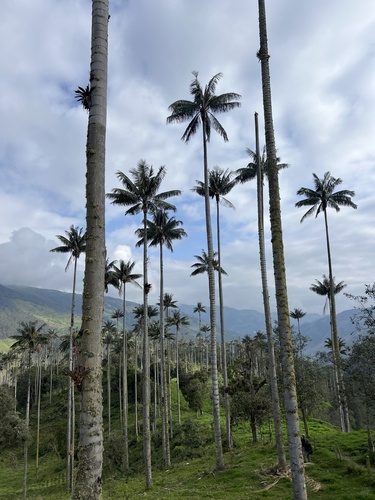
Astrocaryum macrocalyx
Burret
Huicongo
gbif· cc-by
The New York Botanical Garden
gbif· cc-by
The New York Botanical Garden
gbif· cc-by
The New York Botanical Garden
Description
A tropical palm in the family Arecaceae.
This description is brief — help expand it
Edible Uses
The liquid endosperm of the unripe fruit is drunk. The dark brown, obovate to oblong fruit is 72 - 90mm long and 29 - 34mm wide with a thin, fibrous to fleshy, orange-coloured mesocarp and a single large seed. The palm heart (the inner core and growing bud of the plant) is harvested from various species in this genus. It provides a crispy food, rich in nutrients, that can be eaten raw or cooked. Harvesting the heart will lead to the death of the plant, however, since it is unable to produce new shoots. We have no specific information for this species, but the fruits and seeds of various species are reported to be used for oil production in the Amazon region. Existing analyses of fruit fat content show a relatively homogeneous composition among species, with around 20% of fat content in the mesocarp, mostly composed of oleic and palmitic acids, and 20-35% of fat content in the endosperm, with a predominance of lauric acid.
Distribution
It is a tropical plant.
Where It Grows
Amazon, Colombia, Peru, South America,
Other Uses
The hard endocarp of various Amazonian species is commonly used to make beads and ornaments for necklaces
Synonyms
Also Known As
Chida ni, Wicungo
References (5)
- Gilmore, M. P., et al, 2013, The socio-cultural importance of Mauritia flexuosa palm swamps (aguajales) and implications for multi-use management in two Maijuna communities of the Peruvian Amazon. Journal of Ethnobiology and Ethnomedicine 2013, 9:29
- Henderson, A., Galeano, G and Bernal, R., 1995, Field Guide to the Palms of the Americas. Princeton. p 205 (As Astrocaryum murumuru var. macrocalyx)
- Lamont, S.R., et al, 1999, Species composition, and use of Homegardens among three Amazonian Villages. Economic Botany 53(3) pp 312-326 (As Astrocaryum macrocalyx)
- Marcia, M. J., et al, 2011, Palm Uses in Northwestern South America: A Quantitative Review. Bot. Rev. (2011) 77:462-570
- World Checklist of Useful Plant Species 2020. Royal Botanic Gardens, Kew