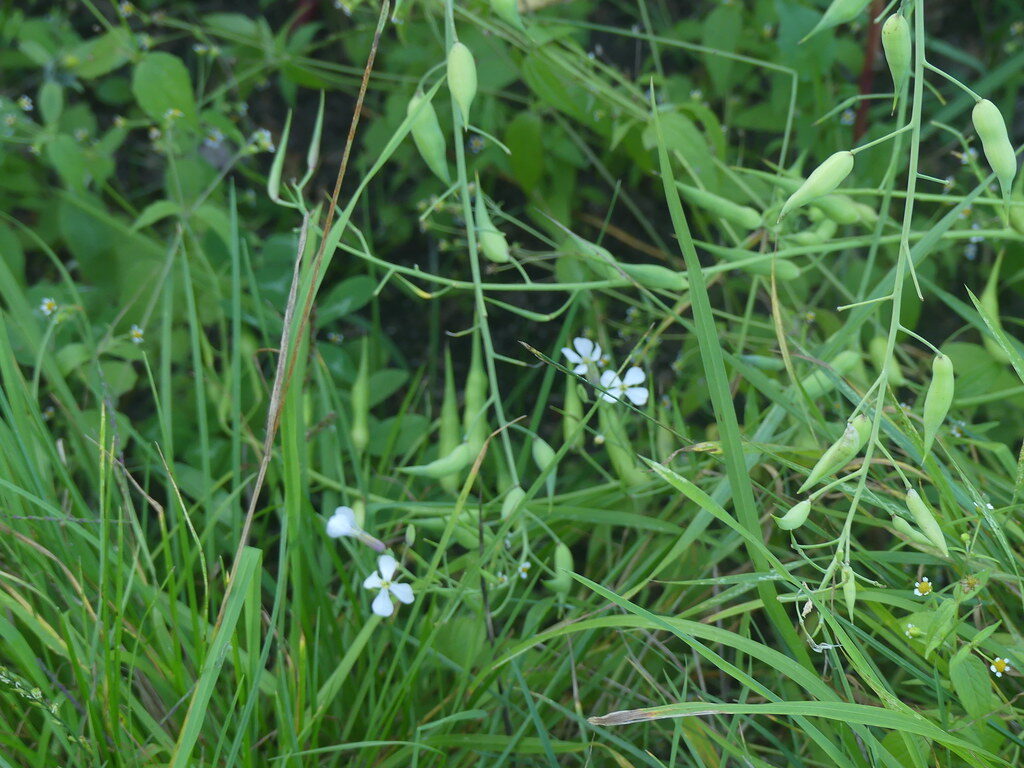
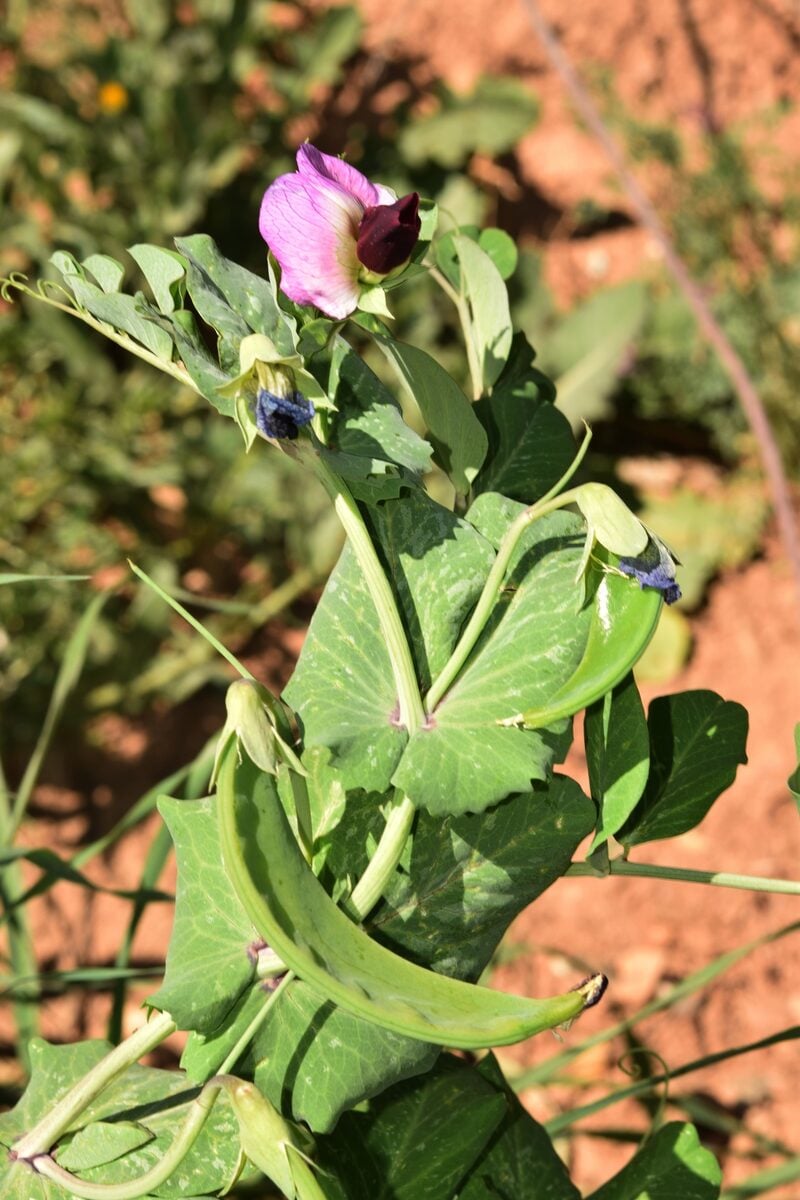
Piliostigma malabaricum var. acidum
(Roxb.) Benth., (Korth.) de Wit
Malabar mountain Ebony
iNaturalist· cc-by-sa
(c) Dinesh Valke, some rights reserved (CC BY-SA)
iNaturalist· cc-by-nc
(c) Shiwalee Samant, some rights reserved (CC BY-NC), uploaded by Shiwalee Samant
iNaturalist· cc-by-nc
(c) Radha Veach, some rights reserved (CC BY-NC), uploaded by Radha Veach
Summary
Source: WikipediaPiliostigma malabaricum is a small (sometimes ornamental) tree species in the family Fabaceae. It was previously placed in the genus Bauhinia, but names changed with reorganisation of the subfamily Cercidoideae and the tribe Bauhinieae. This species is native to Tropical Asia and N. Australia; it has been called the "Purple Orchid Tree" (although not to be confused with Bauhinia purpurea or Bauhinia variegata) and names in Vietnamese are: chân trâu and móng bò tai voi. There are no intraspecific names according to Plants of the World Online.
Description
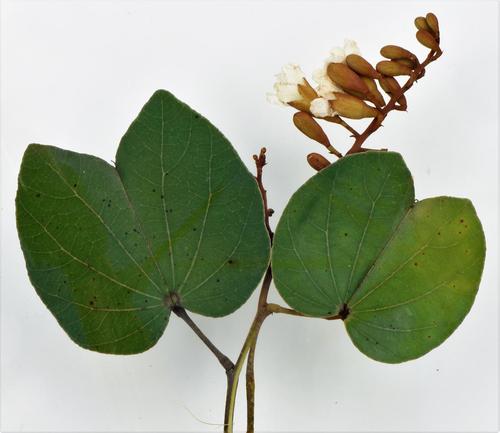
A small tree. It grows 4-8 m high and spreads 2-4 m wide. The bark is grey to brown. It loses its leaves in the dry season. The leaves are 4-10 cm long by 6-12 cm wide. The leaves are alternate and heart shaped at the base. They are deeply notched and usually wider than long. They are dark green above and greyish underneath. The flowers are white and rather large. They are 3-4 cm across. The pods are long, narrow and flattened. They are 10-30 cm long by 1-1.2 cm wide. They are dark brown and flattened. The seeds are 0.5 cm long.
Edible Uses
Young leaves are used to flavour meat and fish dishes. Seeds and other vegetable parts are also edible.
Traditional Uses
The young leaves are used to flavour meat and fish dishes.
This uses section is brief — help expand it
Distribution
A tropical plant. It grows in the tropics in places with a seasonally dry period. It needs well drained soil and a sunny position. They are common in open places and second growth forests in the Philippines.
Where It Grows
Asia, Australia, India, Indochina, Myanmar, Pacific, Philippines, SE Asia, Sierra Leone, Thailand, West Africa,
Cultivation
Plants are grown from seed. The seed need treatment to soften them before growing.
Notes
There are about 6 Piliostigma species. They grow in the tropics. Also as Caesalpinaceae. Piliostigma malabaricum var. acidum is probably now Bauhinia while Piliostigma malabaricum is an accepted name.
Synonyms
Also Known As
Alibangbang, Amli, Koinarpoinar
References (8)
- Burkill, H. M., 1985, The useful plants of west tropical Africa, Vol. 3. Kew.
- Dunlop, C.R., Leach, G.J. & Cowie, I.D., 1995, Flora of the Darwin Region. Vol 2. Northern Territory Botanical Bulletin No 20. p 36
- Elliot, W.R., & Jones, D.L., 1997, Encyclopedia of Australian Plants suitable for cultivation. Vol 7. Lothian. p 297
- Grubben, G. J. H. and Denton, O. A. (eds), 2004, Plant Resources of Tropical Africa 2. Vegetables. PROTA, Wageningen, Netherlands. p 564
- Martin, F.W. & Ruberte, R.M., 1979, Edible Leaves of the Tropics. Antillian College Press, Mayaguez, Puerto Rico. p 200
Show all 8 references Hide references
- Monsalud, M.R., Tongacan, A.L., Lopez, F.R., & Lagrimas, M.Q., 1966, Edible Wild Plants in Philippine Forests. Philippine Journal of Science. p 486
- Singh, H.B., Arora R.K.,1978, Wild edible Plants of India. Indian Council of Agricultural Research, New Delhi. p 32, 83
- Wheeler, J.R.(ed.), 1992, Flora of the Kimberley Region. CALM, Western Australian Herbarium, p 351